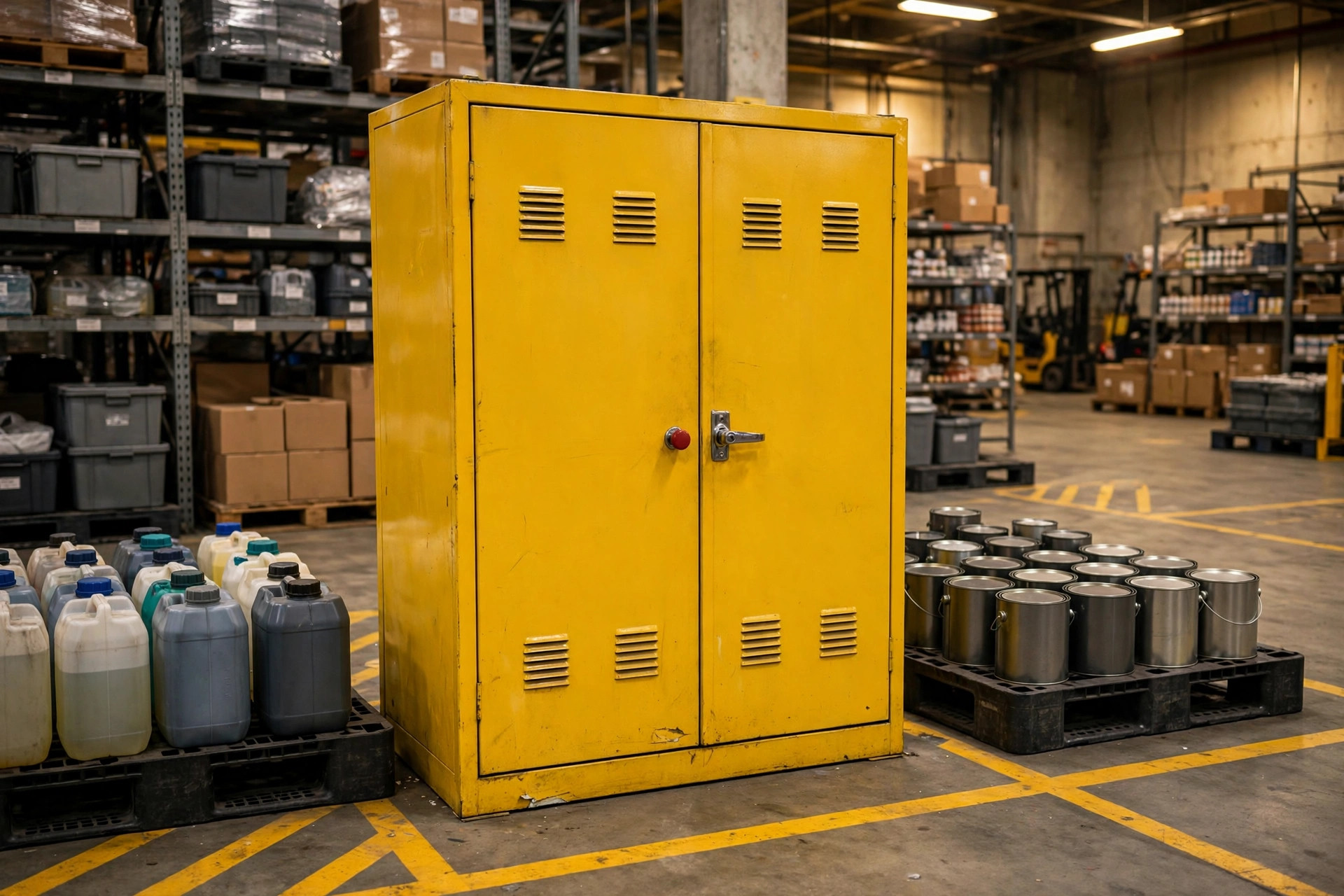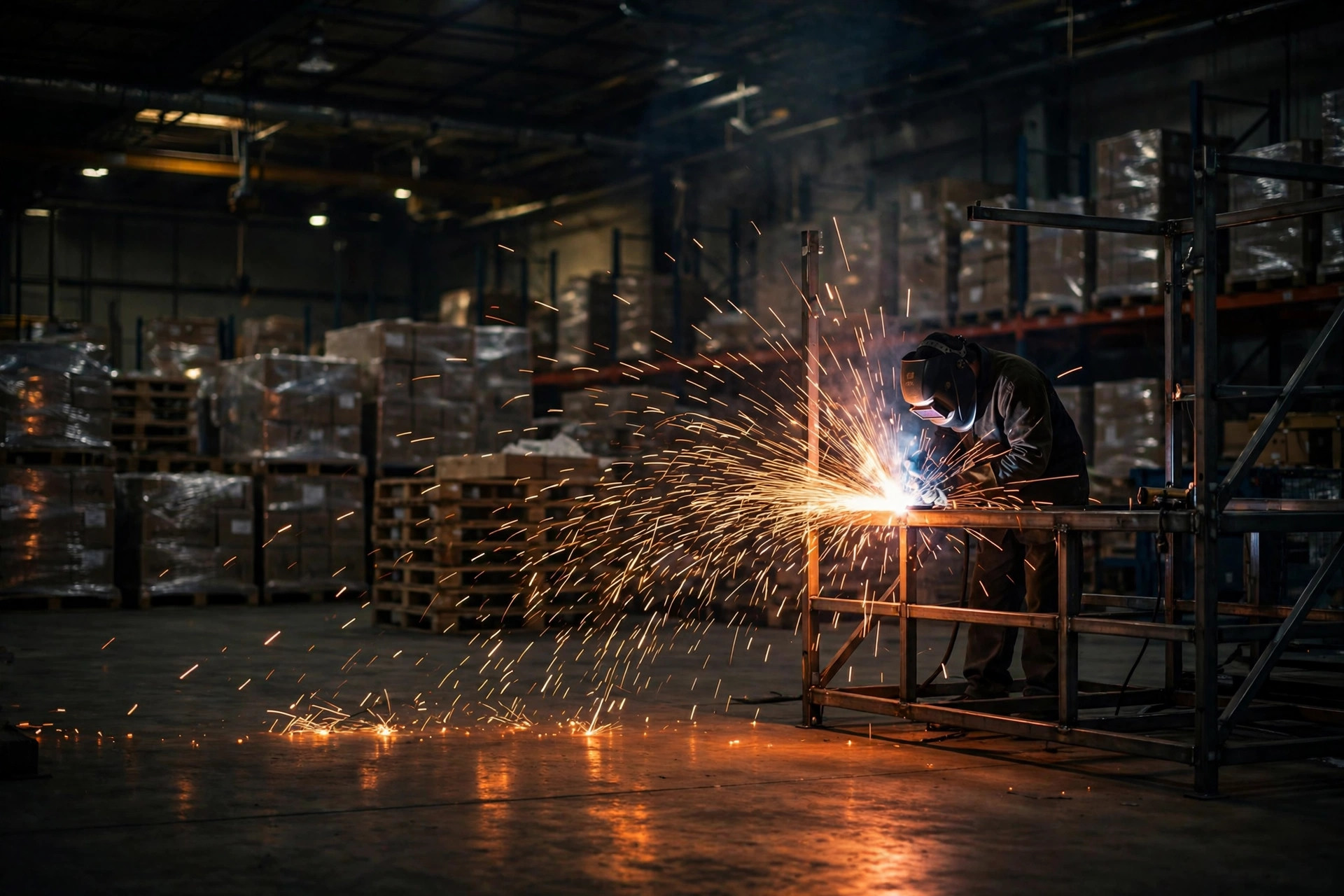
When I ran the technical team at an automation integrator, hot work in warehouses almost always crossed my desk: adding a divert branch to a sort conveyor, raising a row of pallet racking, or welding a guard rail around the forklift charging area. Here's the thing — hot work is almost always "a quick job while we're doing maintenance." And nine times out of ten, nothing happens. The tenth time can take down the entire building.
Let me say it plainly: "just tell me when you're going to weld and go ahead" is not a procedure. It's a bet against the odds. OSHA's hot work rule — 29 CFR 1910.252 — spells out exactly what's required, and if you can't be bothered to read it, the citation will read it for you.
Why hot work in a warehouse is a different animal
Welding and cutting hazards come in three flavors. Think of them as three different enemies:
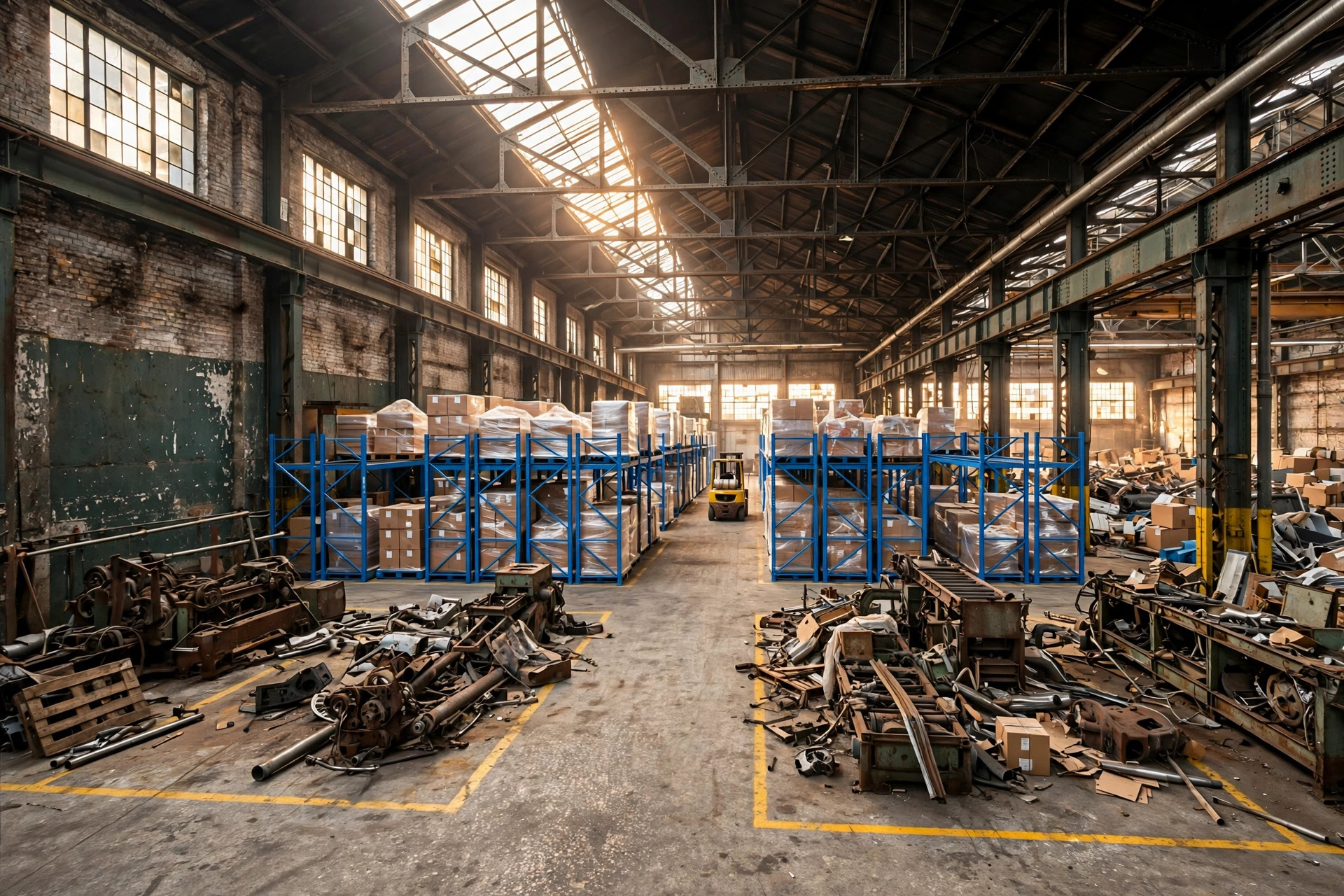
First, sparks and slag. Arc-welding slag comes off at over 1,500°C, and sparks travel 20 to 35 feet like it's nothing. Picture a swarm of tracer rounds fired blind into a room — cardboard, wood pallets, stretch film, foam dunnage. A warehouse is a target range of fuel.
Second, conducted heat. Heat from the weld travels along the steel — rack uprights, partition walls, conduit. The cardboard on the other side of the steel can start smoldering half an hour after the welder has packed up. That's exactly why OSHA requires the fire watch to stay on station for at least 30 minutes after the work is done (1910.252(a)(2)(iii)(B)). Smoldering fires are sneakier than open flame.
Third, the environment. A warehouse is not a weld shop. In a weld shop the floor is fire-rated and an extinguisher is within reach. In a warehouse, racks are full of goods, floors have gaps, slabs have openings, and sparks can drop to the level below. That's why 1910.252(a)(2)(i) specifically requires precautions at floor openings and wall cracks.
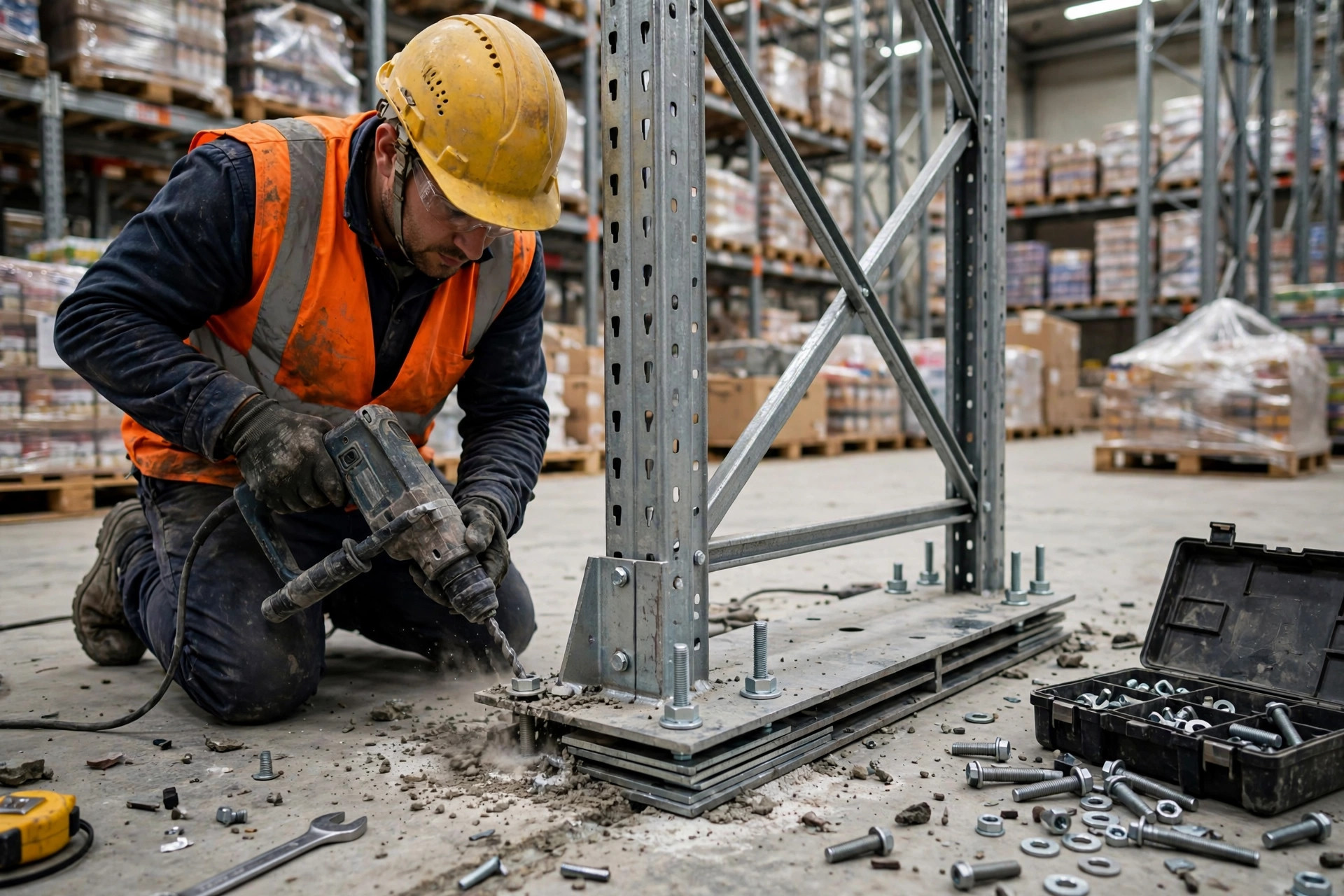
Scene one. Winter 2024, a 3PL warehouse in Ontario, California. Night shift, 10 PM to 2 AM: four rows of heavy-duty pallet racking needed to be raised — cut the uprights, weld on two additional beam levels. Fifteen feet from the weld point sat three pallets of cartons; twenty feet away, a stack of wooden pallets. Under 1910.252(a)(2)(vii), combustibles within 35 feet (10.7 m) get moved where practicable, or shielded with flameproofed covers or metal guards. We moved the three carton pallets, blanketed the wood pallets, posted one dedicated fire watch with an ABC extinguisher at arm's reach, and kept the watch a full 30 minutes after the last arc went cold. Three nights of work, zero fires.
Scene two. March 2025, an e-commerce fulfillment center in Dallas, Texas. A new divert spur was being added to the sort conveyor, with support brackets to weld. Eighteen feet below the weld point, a slab opening dropped straight into the first-floor returns processing area — within the 35-foot radius, and stacked with return cartons below. Per 1910.252(a)(2)(iii)(A)(3), that opening had to be protected or closed off, and the lower level got its own watch. Here's the lesson it taught us: 25 minutes after the work ended, the downstairs watcher smelled smoke. A spark had dropped into a pile of paper debris and smoldered for twenty minutes before showing itself. If the 30-minute watch had been cut short, the returns area would have been gone that night.
The four triggers and the piece of paper
1910.252(a)(2)(iii)(A) lists four conditions, and any one of them mandates a fire watch. In plain English:
- Appreciable combustible material — building construction or contents — within 35 feet of the operation.
- Combustibles beyond 35 feet that are easily ignited by sparks.
- Wall or floor openings within a 35-foot radius that expose combustibles in adjacent areas, including concealed spaces in walls or floors.
- Combustibles on the opposite side of metal partitions, walls, ceilings, or roofs, likely to ignite from conducted or radiated heat.
Here's what most people get wrong: the 35-foot rule is not "clear a 35-foot radius." The regulation says "where practicable" — relocate the combustibles if you can; if not, cover them with flameproofed blankets or metal guards. But here's the kicker: whether you moved them or shielded them, if combustibles are still in play, the fire watch is still mandatory. Clearing is subtraction; the watch is insurance. Different things.
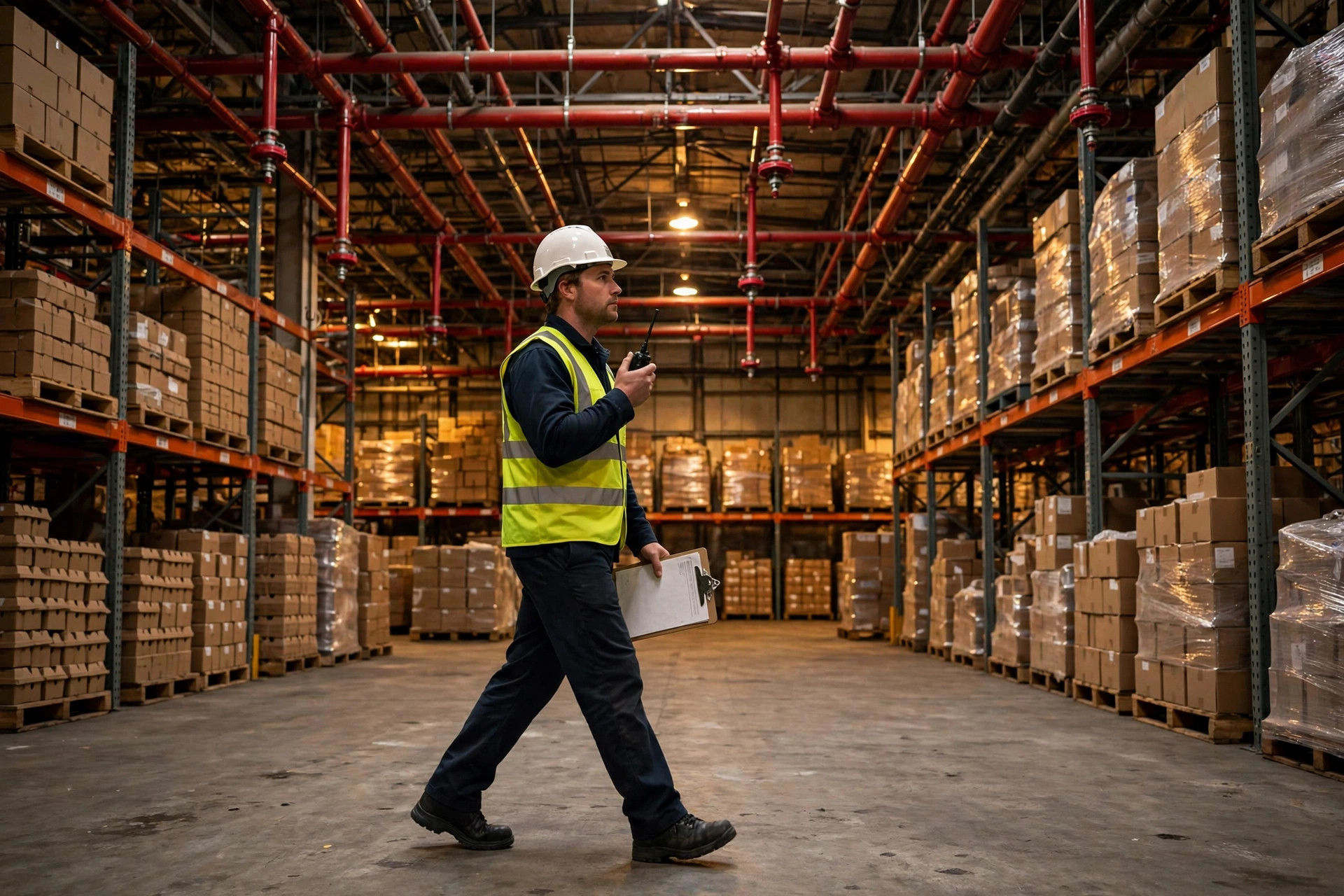
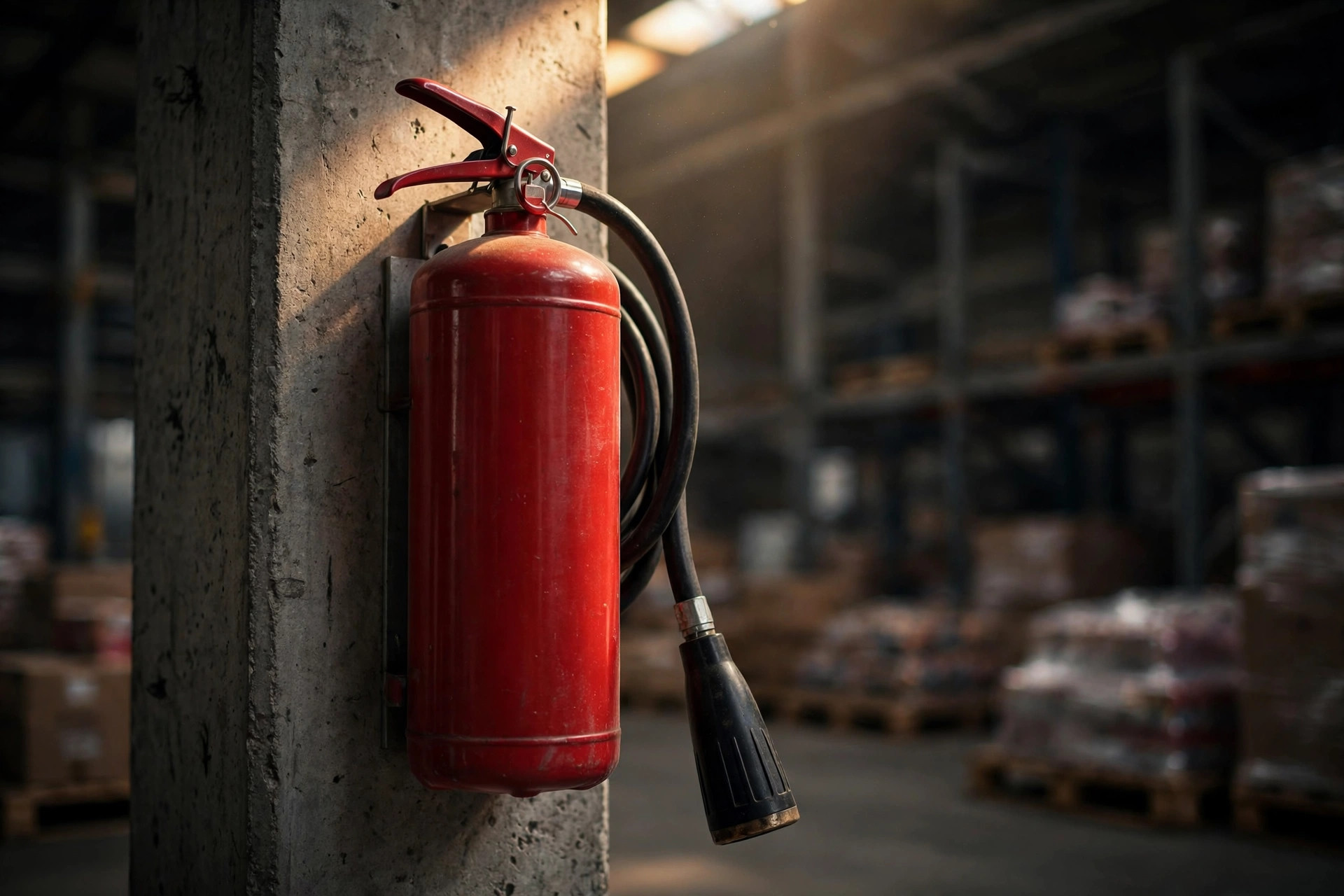
And the fire watch is not just "someone standing around." Per 1910.252(a)(2)(iii)(B), the watcher must have fire extinguishing equipment readily available and be trained to use it, must know how to sound the alarm, must watch all exposed areas, may only try to extinguish a fire when it's obviously within the equipment's capacity — otherwise, sound the alarm immediately — and must maintain the watch for at least half an hour after welding or cutting is complete. A guy holding an extinguisher while scrolling his phone is not a fire watch. He's a coat rack.
Then there's the hot work permit. Honest talk: 1910.252(a)(2)(iv) says the authorizing individual should inspect the area before work is permitted, designating precautions "preferably in the form of a written permit." Preferably. Not shall. That softness is the trap — the law doesn't force you to put it on paper, but when a fire happens, the investigator's first question is "where's the authorization record?" And "I told him verbally" is the same as nothing. The permit isn't paperwork for OSHA. It's your alibi.
This is the three-phase checklist I used back at the integrator. If any line can't be answered, nobody strikes an arc today.
| Phase | Check | Owner |
|---|---|---|
| Before | Combustibles within 35 ft: relocated or covered with flameproofed blankets / metal guards | Work supervisor |
| Before | Slab openings, wall holes, door gaps sealed; ducts and conveyors that could carry sparks shut down or protected | Work supervisor |
| Before | Extinguishing equipment (extinguishers, water pails, sand buckets, hose) staged at the work point, verified serviceable | Fire watch |
| Before | Permit signed: location, time window, scope of work, precautions taken, authorizer's signature | Authorizer |
| During | Fire watch on station for the entire job — never out of sight, never on a phone | Fire watch |
| During | Continuous observation of spark direction; reposition guards immediately if they shift | Fire watch |
| After | Watch continues at least 30 minutes; inspect the work point and surroundings, below openings, and the back side of metal structures | Fire watch |
| After | No smoldering, no smell after 30 minutes — watcher signs the permit closed | Fire watch |
Four fake procedures I've watched with my own eyes
One: "a verbal heads-up is fine." The maintenance lead radios "we're welding a bracket on the mezzanine" and the welder fires up. No permit, nobody walks the area, nobody measures the 35 feet. This is the granddaddy of fake procedures — the outcome is pure luck.
Two: the part-time watcher. The welder "keeps an eye on it" while working, or a passing forklift driver is asked to "just watch for a minute." OSHA expects a dedicated watch. If your watcher is doing another job, nobody is watching the fire.
Three: everyone leaves when the arc stops. Welder packs up, watcher drifts off, and the security guard's rounds are expected to "keep an eye out." Smoldering has a latency measured in hours — 30 minutes is OSHA's floor, not its ceiling. I'd stretch it to 60 in a rack-dense area.
Four: the decorative extinguisher. The worst I ever saw had its gauge in the red, two years past service. If a fire had started, the watcher would have been holding a paperweight. Extinguisher condition is a mandatory pre-job check.
One more, free of charge: welding on a metal partition with a combustible covering, or sandwich-panel construction, is flat-out prohibited (1910.252(a)(2)(xi)). You weld on this side, it burns on the other, and your watcher standing next to you sees nothing. Change the plan; don't gamble.
Is it worth the money? Look at this one number
NFPA data, 2020–2024: U.S. fire departments responded to an average of 1,544 warehouse structure fires per year, with annual direct property damage averaging $314 million. Do the math and a single warehouse fire averages over $200,000 in direct property damage — before you count the downtime, the customer claims, the insurance spike, and the OSHA citations.
Now the other side: what does one hot work permit cost? A form, a few minutes of paperwork, moving some pallets, one watcher for half a day. At $25 an hour, that's a few hundred dollars at most.
A few hundred dollars versus $200,000. The permit looks like it slows the job down — it costs you maybe an hour. A fire costs you months of business, plus customers who may never come back. That arithmetic doesn't need an engineering degree.
By Da Liu, Automation Engineer