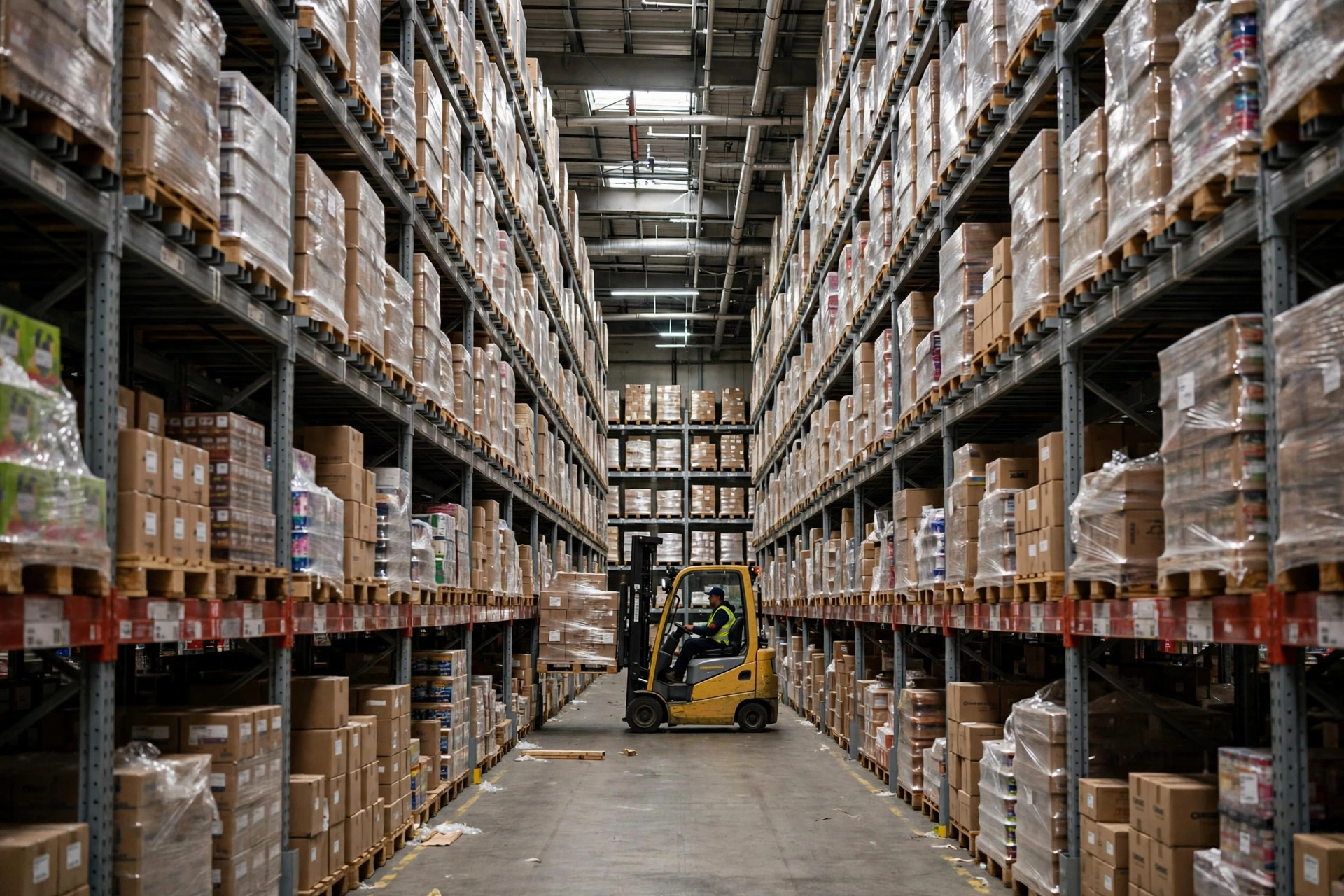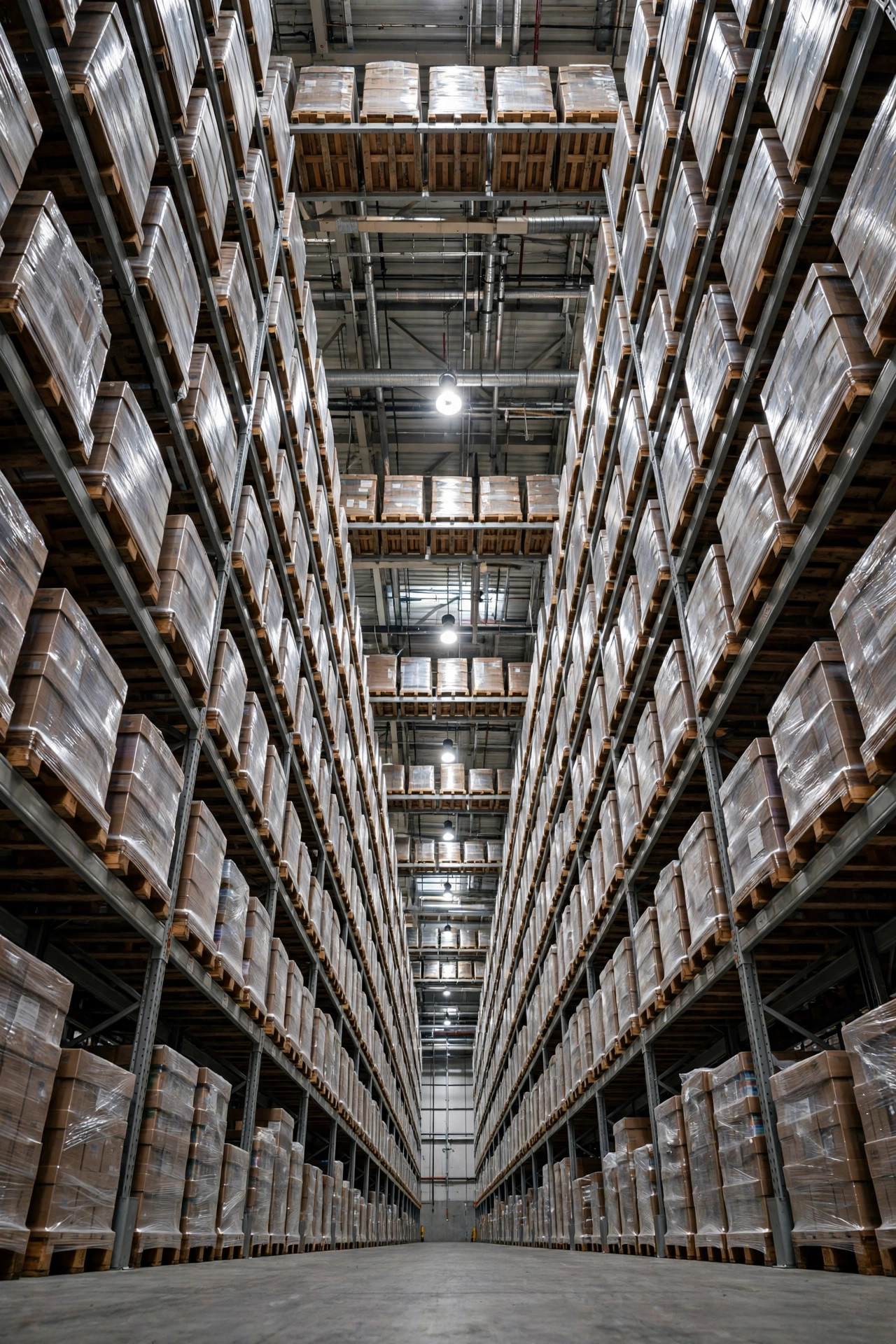
We have a client who signed a 3PL contract in Ontario last year — 6,000 pallet positions, decent rate, everyone shook hands happy. Three months after move-in he called, unhappy: "Susan, take a look at my contract. I'm paying for 6,000 pallet positions every month, but I walked the whole building — the top level, all 600 positions, my forklifts can't even reach it. Not a single pallet has ever touched those beams. Am I getting robbed?"
Yes. He was getting robbed. And here's the uncomfortable truth I have to tell you as someone on the 3PL side of the table: this is not an exception. In virtually every high-bay warehouse, roughly 10% of rack locations sit in a "dead zone" at the top — too high for a standard sit-down forklift, which typically tops out around the fifth beam level. Those positions exist on paper, you pay for them on the invoice, and they store nothing but air.
Most shippers negotiate the rate per pallet and never ask a simpler question: of the pallet positions I'm paying for, how many can a forklift actually reach?
Do the Math: What the Empty Top Level Really Costs You
Let me run the numbers the way we do on the 3PL side, because that's where it hurts most.
3PL storage is usually billed per pallet position per month — anywhere from a few dollars to the mid-teens depending on the market. Say your building has 5,000 pallet positions and about 500 of them — one in ten — sit in the unreachable top level. That's several thousand dollars a month. Yearly, you pay a six-figure sum for a layer of air that has never held a single pallet.
Here's the part nobody on my side of the desk volunteers: the racking was installed at full height, and the landlord charges rent on the whole building. The cost of that dead layer gets baked into every pallet position's rate. So the empty top level is rent you pay on the landlord's behalf, and your 3PL pockets it with a sympathetic nod. I probably shouldn't say that out loud as a sales director. But it's true, and you deserve to know.
That 10% is not a rounding error. It's a rent black hole. There are three ways to deal with it.
Option 1: Buy Reach — Get Equipment That Actually Gets Up There
The most direct fix: if the forklift can't reach, get one that can. A high-level order picker with a rising operator platform, or a narrow-aisle turret truck, will happily work the top beam. Equipment arrives, and 500 dead positions become live overnight. Utilization jumps from 90% to 100%.
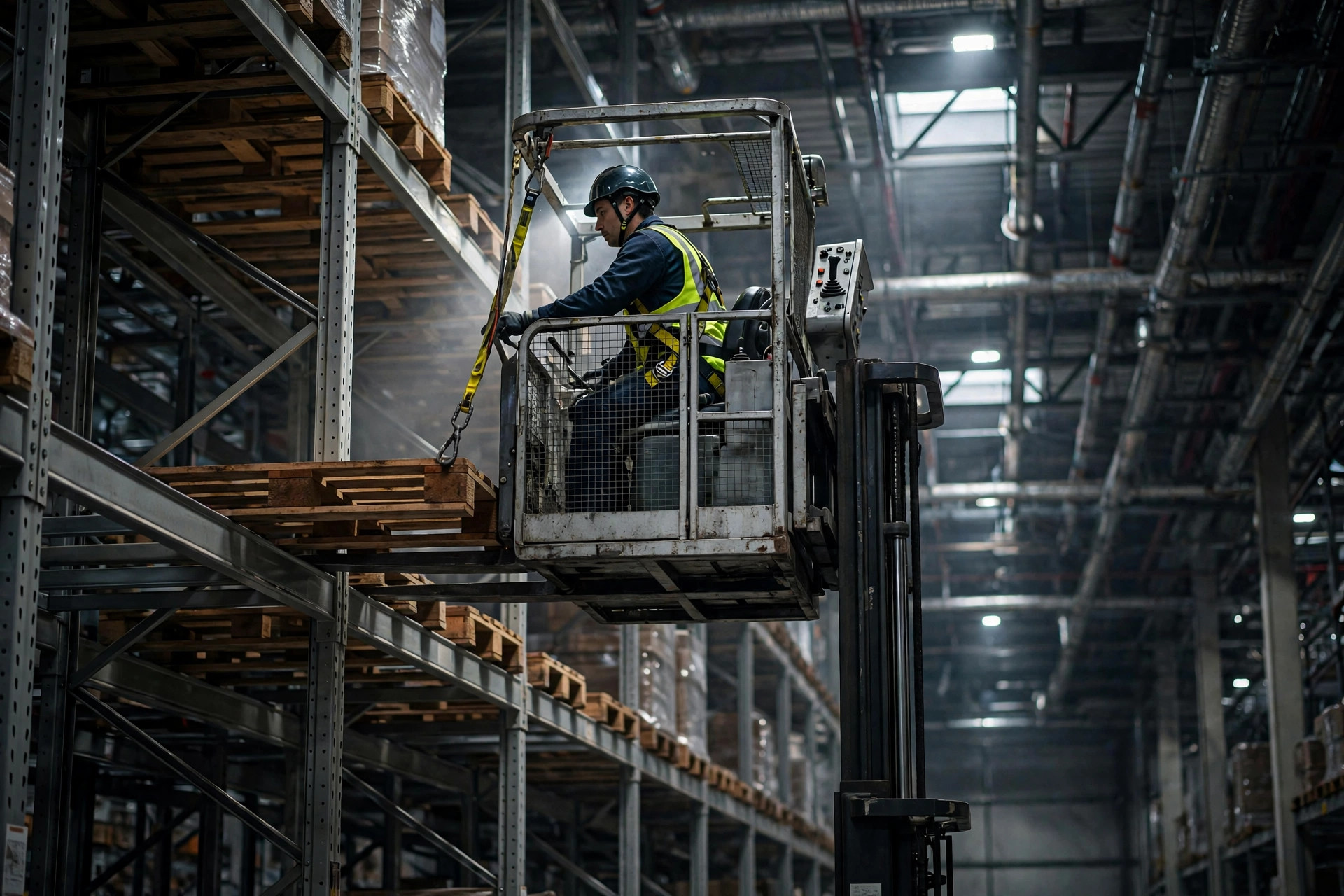
We have an auto-parts client in Fontana who did exactly this in 2024. Twelve-meter clear height, seven beam levels; standard reach trucks left the top two levels — 400-plus positions — permanently empty. They leased two order pickers, filled the top with slow-moving full pallets, and a year later the math was simple: recovered positions equal to a free small warehouse.
But here's the trade-off your 3PL won't put in the proposal: a put-away at height takes two to three times longer than a normal one. The operator rides up ten-plus meters, clips in, creeps into position — several minutes per pallet. Put fast movers up there and the labor and equipment depreciation will eat every dollar of rent you saved. The top level is for freight that barely moves. That rule is non-negotiable.
Option 2: Change the Strategy — Park Slow Freight Up Top for Free
This is my favorite option, and the highest-ROI one by a mile: no new equipment, no racking changes. Just a different slotting strategy.
The logic is simple. Every warehouse has three kinds of freight that belong in the sky:
- Slow-moving SKUs in full pallets — the stuff that turns a few times a year. Height doesn't hurt it.
- Seasonal pre-builds — a holiday-gift client can stage next season's inventory up top during the off-season, then bring it down before the rush.
- Dead and obsolete stock — before you dispose of it, send it upstairs. Stop letting it squat in prime ground-level locations.
We have a seasonal-toy client whose post-Christmas leftovers used to clog the entire building every January. We set one rule: every SKU in the bottom 20% of velocity goes to the top level in full pallets. That single move freed up roughly a fifth of the golden first-to-third-level positions, and peak-season picking got visibly faster. The top level isn't waste — it's nature's "cold storage," a retirement home for freight that doesn't deserve a downtown address.
The only cost is occasional access — rent a picker by the day — plus one slotting rule in the WMS: carve the top level out as a dedicated slow-move zone and hard-code it into the put-away logic.
Option 3: Lower the Beams — Reclaim the Space Downward
If your freight simply doesn't need that much height, there's a third path: take the top level down and give the clearance back to the levels below.
In practice: drop the top beams, compress the beam spacing, turn seven levels into eight — or remove the top level entirely and shift everything down. Racking reconfiguration costs money up front and means moving freight during the work, but every remaining level becomes reachable with the fleet you already own.
Who is this for? Shippers with consistently short freight. We have an apparel client whose full pallets rarely exceed 1.2 meters, but their racking was built at 1.8-meter beam spacing — half a meter of wasted air on every level. They reconfigured seven levels into eight, gained total pallet positions, and didn't spend a dime on new equipment.
The trade-off is real, though: the work disrupts an operating building, and once you lower the beams, tall freight is off the table forever. Only do this if your product heights are stable and will stay that way for years.
Comparing the Three: What Are You Short On — Money, Time, or Equipment?
| Option 1: High-reach equipment | Option 2: Slotting strategy | Option 3: Reconfigure beams | |
|---|---|---|---|
| Up-front cost | High (buy or lease) | Near zero | Medium (racking work + moves) |
| Speed to value | Fast, once equipment arrives | Fastest — just change the rules | Slow, disruptive install |
| Best freight fit | Slow full-pallet reserve | Slow / seasonal / dead stock | Short, dimensionally stable product |
| Risk | Slow high-bay cycle times, safety demands | Almost none | Can't store tall freight afterward |
| Long-term cost | Depreciation + high-bay labor | Lowest | One-time, then permanent gain |
The Counterintuitive Take: 100% Top-Level Utilization Can Be a Bad Deal
Now for the insider bit — the most counterintuitive line in this whole piece, from someone who sells 3PL contracts for a living:
Don't fill the top level just to fill it.
I've watched shippers chase 100% top-level utilization — leased the pickers, staffed the shifts — then stocked it with medium-velocity freight. Slow cycles, creeping labor, and at year-end the "saved" rent didn't cover the extra equipment and hours. Spending money to save money: the most common self-deception in warehousing.
The right logic runs backward: cost out one put-away cycle first, then decide what belongs up top. If the all-in cost of one high-bay move (depreciation share + labor + safety overhead) exceeds a month's rent for that pallet position, then that position is rationally, correctly empty. The goal was never "every location full." The goal is "every dollar working."
Next Time You Negotiate a 3PL Contract, Ask These Three Questions
Back to my Ontario client. As someone who has signed over a hundred warehouse contracts, here are the three questions that cure the top-level black hole. Ask them and watch the room change:
One: "Of the pallet positions on this quote, how many can a forklift actually reach?" Make them split "theoretical positions" from "reachable positions" as two line items. Plenty of quotes list total rack positions with the dead 10% quietly blended in. They won't mention it unless you ask.
Two: "If I can't use the top level, how is it priced?" Some 3PLs will discount it or bill on actual utilization. The moment you ask, they know you've done the math — and the padding comes out of the quote.
Three: "If I bring my own high-reach equipment, can we talk about the handling rate?" High-bay work is slow, and handling rates often carry a quiet premium for it. Proposing your own equipment tells them you've costed the whole picture, and the negotiation shifts in your favor.
Remember: in a 3PL contract, the most expensive thing is never the rate — it's the air you didn't notice you were buying. That top 10% of rack locations: either put it to work, or negotiate it off the bill. Both are profit.
By Susan, 3PL Sales Director