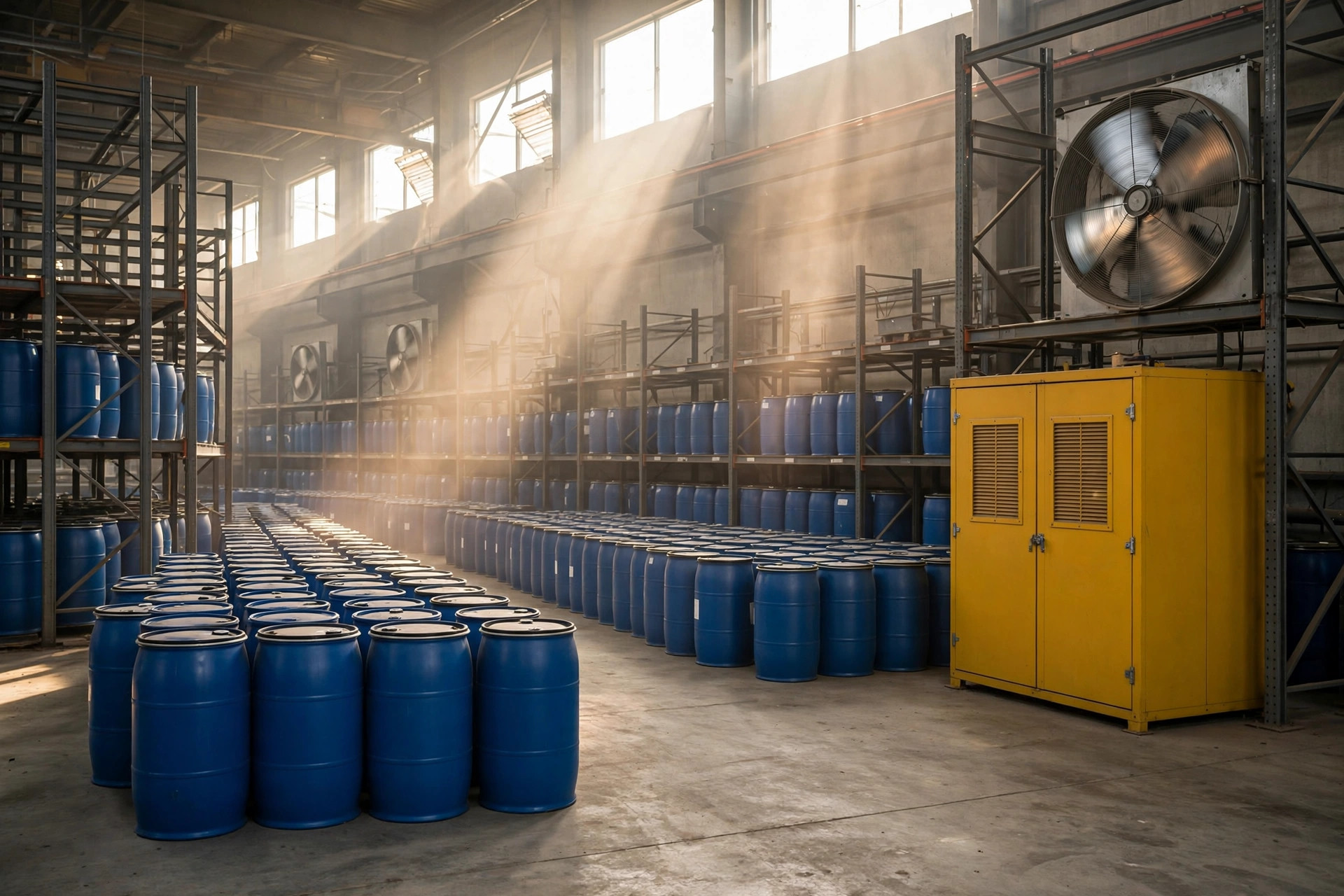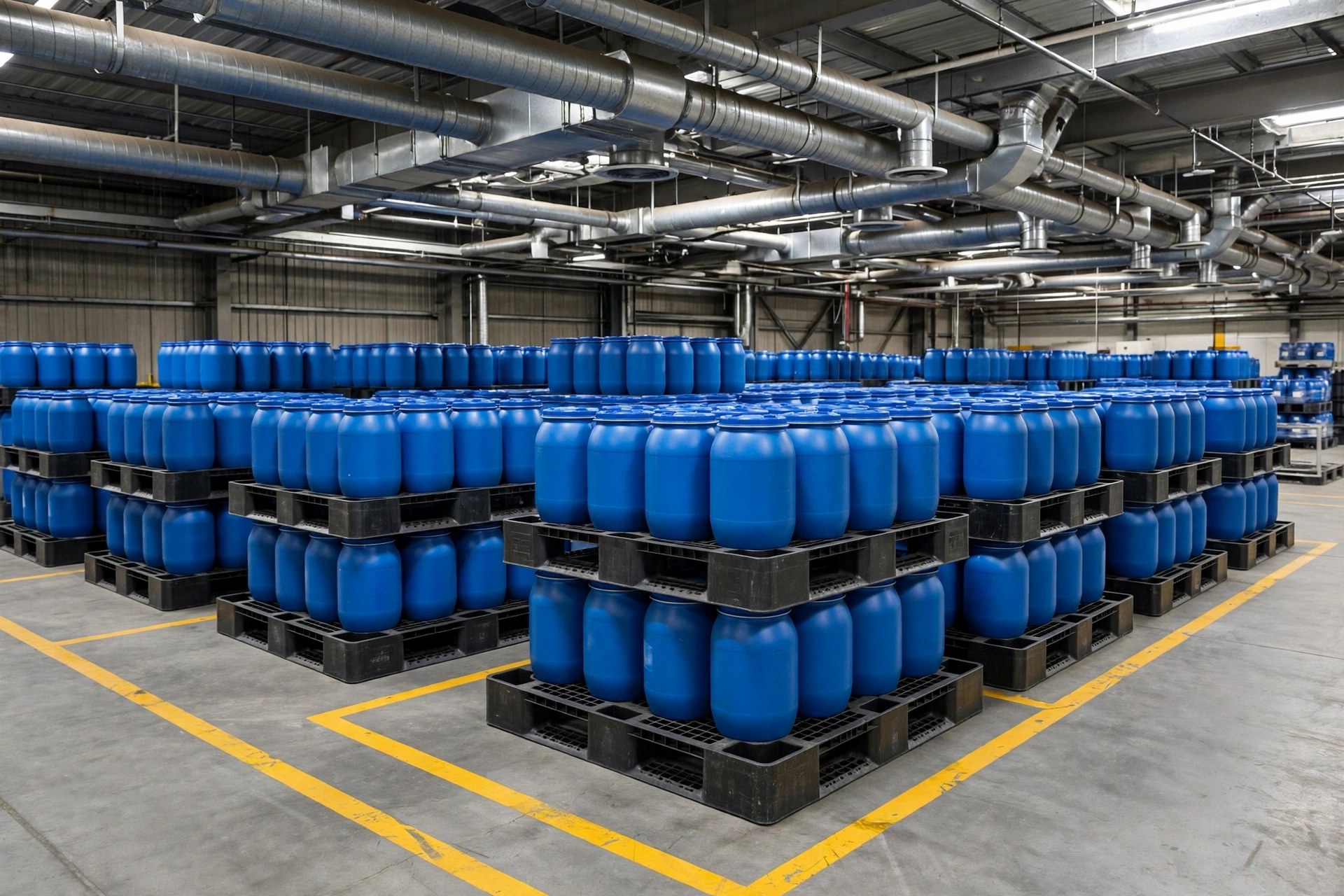
On August 12, 2015, a warehouse operated by Ruihai International Logistics at the Port of Tianjin exploded: 165 dead, 8 missing, about 6.87 billion yuan in direct losses, per the official investigation. The report's account of the stacking conditions is damning: nitrocellulose drums stored in the open, self-igniting in summer heat, surrounded by incompatibles — in quantities far beyond the operating license. Stacking is never a question of "how to put things." It is always chapter one of the accident report.
Tianjin was not an outlier. On August 4, 2020, the Port of Beirut exploded after roughly 2,750 tonnes of ammonium nitrate had sat in warehouse No. 12 for nearly seven years, killing about 200 people. Five years apart, on different continents, the investigations traced the same chain: storage conditions drifted from design intent, and nobody turned that drift into a stop-work order. Hazmat accidents are rarely single-point failures; they are systemic failures of constraints — and height limits, weight limits, and inspection aisles are what constraints look like on the warehouse floor.
When Stacks Fail, the Investigation Starts With Stacking
Three recurring problems emerge from the two cases.
The first is over-limit storage. Tianjin's investigation found quantities and varieties of hazardous goods far exceeding the operating license; in Beirut, 2,750 tonnes of ammonium nitrate sat unmanaged in warehouse No. 12 since 2013. The essence is treating the warehouse as a capacity container rather than a risk system — one extra tonne is a capacity question in the first framing, a risk question in the second.
The second is incompatible co-storage. Tianjin documented nitrocellulose alongside incompatibles; once self-heating began, fire spread rapidly to surrounding flammables. Beirut's warehouse No. 12 similarly held fireworks, which investigators found accelerated the initial fire. Once incompatible chemicals share a stack, one product's risk becomes systemic.
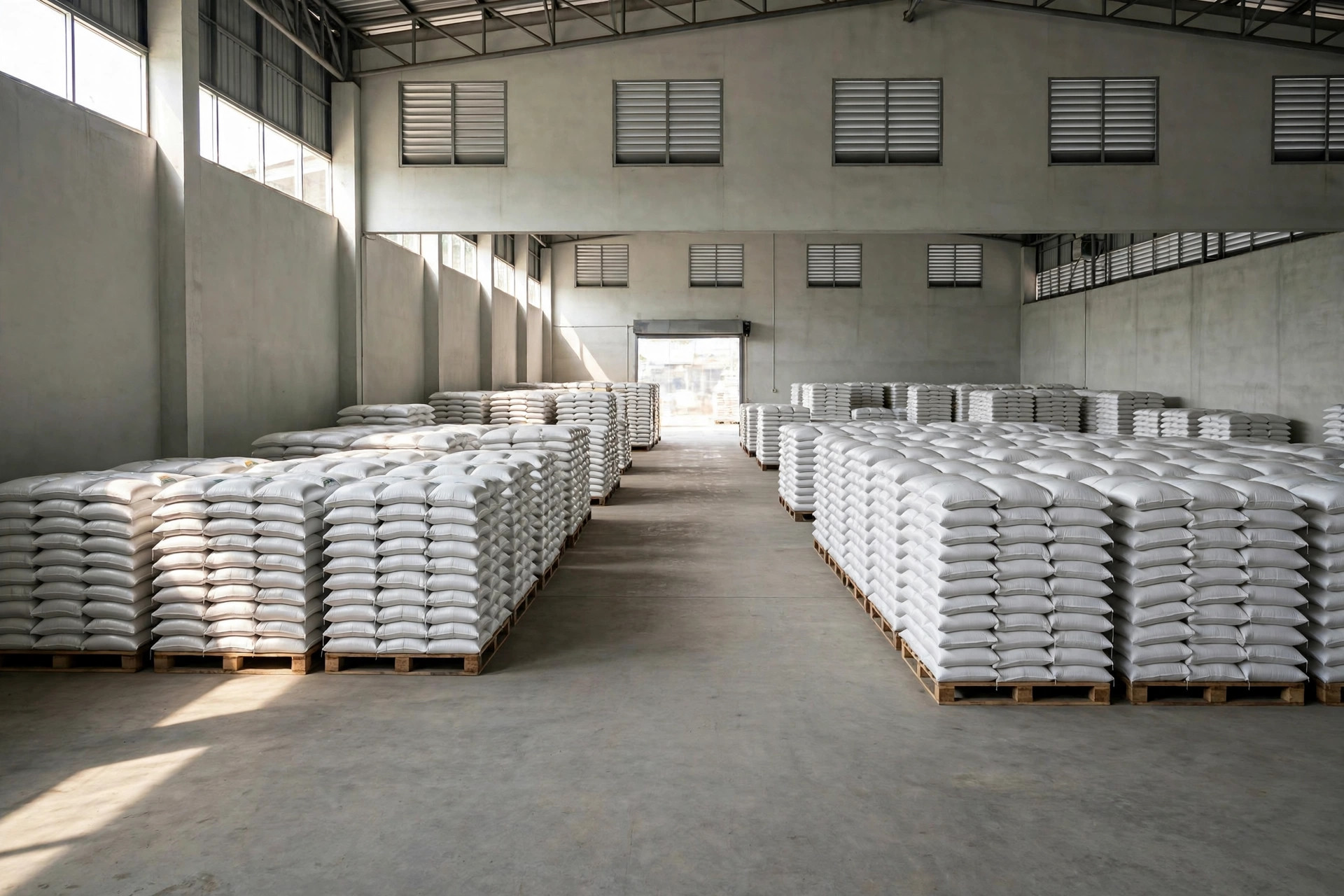
The third is uncontrolled height and weight. Drums stacked multiple layers high in the open air lost the ability to dissipate heat. The U.S. Chemical Safety and Hazard Investigation Board has repeatedly linked uncontrolled stack height to heat dissipation, structural stability, and accessibility. Heat dissipation is the most overlooked variable: the denser and taller the stack, the harder core heat escapes — for thermally sensitive substances, effectively insulating a self-heating reaction.
The research judgment: the true object of stacking management is not the goods, but the deviation. Every over-limit load, every incompatible stack, every over-height pile is a deviation — and accidents rarely happen on the day of the deviation, but on the Nth day it is tolerated — as Tianjin's record shows.
What the Regulations Actually Say: Three Layers of Logic
Scope note: this article covers the federal framework for U.S. warehouses; enforcement layers on top of state fire codes and local plan reviews. Three interlocking logics apply.
OSHA carries the worker-protection logic. 29 CFR 1910.106 (Flammable Liquids) sets systematic storage requirements, including stacking stability; 29 CFR 1910.176(a) provides that storage of material shall not create a hazard to employees; and 29 CFR 1910.37 requires exit aisles to be kept clear. It is outcome-oriented: it may not state exact layer counts, but it defines what counts as a hazard — after an incident, over-height stacking itself can be cited as the violation.
NFPA supplies the technical-standard logic. NFPA 30 (Flammable and Combustible Liquids Code) sets maximum allowable quantities and stacking limits by liquid class and control area; NFPA 400 (Hazardous Materials Code) covers storage across hazard classes; and NFPA 13 governs sprinkler installation — with the caveat that sprinkler effectiveness depends on stack height. A pile exceeding sprinkler design coverage downgrades the entire fire protection system. Note: NFPA figures change with each edition, so no clause numbers or limit values are cited here — refer to the latest official policy.
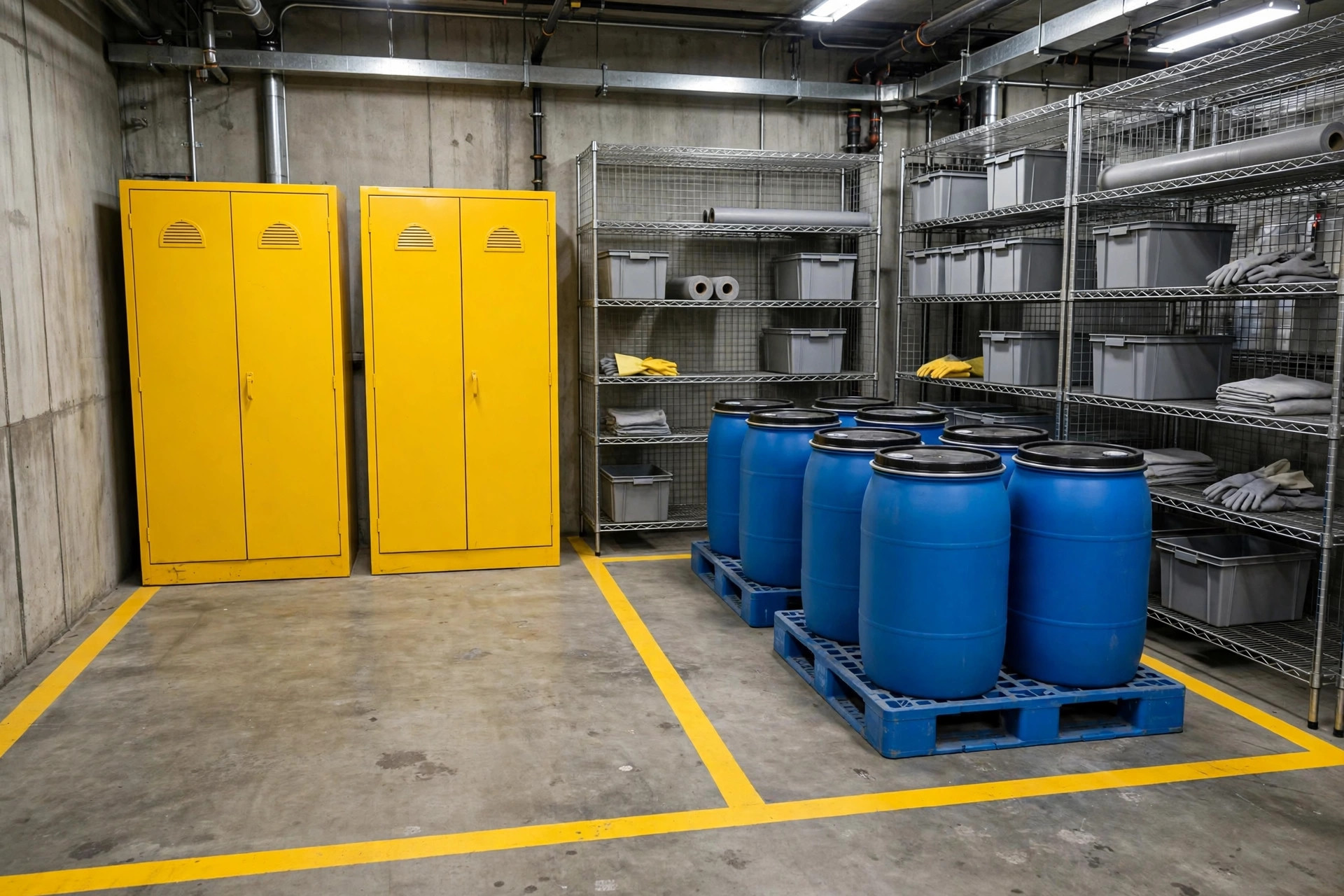
EPA owns the environmental-release logic. 40 CFR 264.175 requires container storage areas to have secondary containment holding at least 10 percent of total container volume or the largest single container's volume, whichever is greater, with an impervious, crack-free base. Often read as environmental, it works on the floor as a hard stacking constraint: a spill pallet's load rating and footprint dictate, in reverse, how many drums one stack unit can hold and how high.
The structural judgment: no single American "stacking law" exists. Hazmat stacking is constrained from three directions — worker protection, fire technology, environmental protection — and the real challenge is where they intersect: OSHA demands clear aisles, NFPA demands heights matched to sprinklers, EPA demands containment capacity, all on the same pallet position.
A Working Framework: Stacking Limits and Aisle Design
The table below maps hazard classes to control logic. Confirm exact figures against the regulation text and local fire review.
| Hazard class | Hard constraint (control logic) | Source |
|---|---|---|
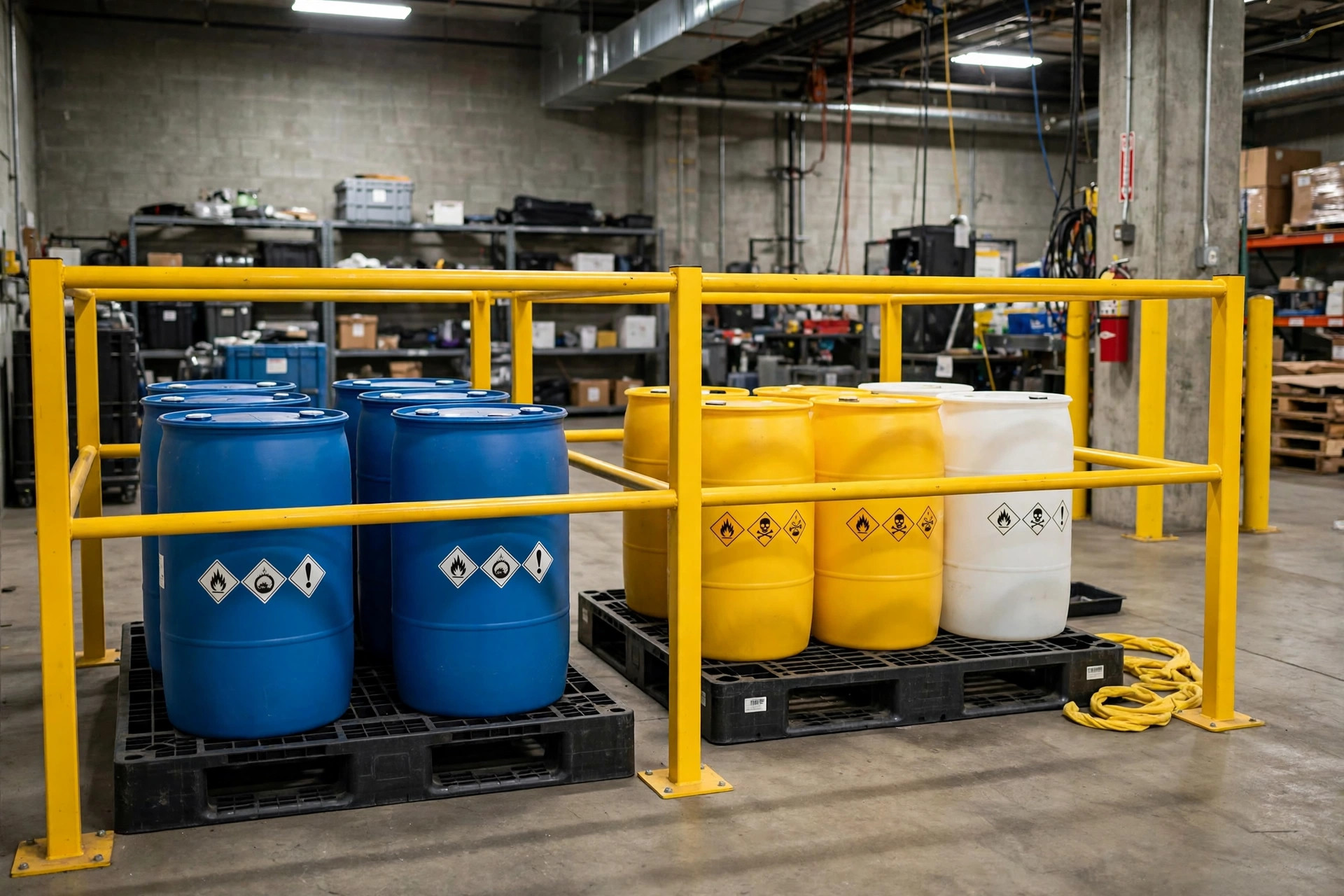
| Drummed flammable liquids | Two-high per pallet is the common ceiling; control pile height and pile-to-pile spacing to preserve sprinkler coverage | OSHA 29 CFR 1910.106; NFPA 30 |
| Corrosive liquids | Large containers at the bottom only; spill pallets mandatory, sized at the larger of the biggest drum or 10% of total volume | EPA 40 CFR 264.175; supplier SDS |
| Oxidizers, water-reactive materials | Segregate from incompatibles; temperature- and humidity-sensitive — avoid long-term open-air multi-layer stacking | NFPA 400; supplier SDS |
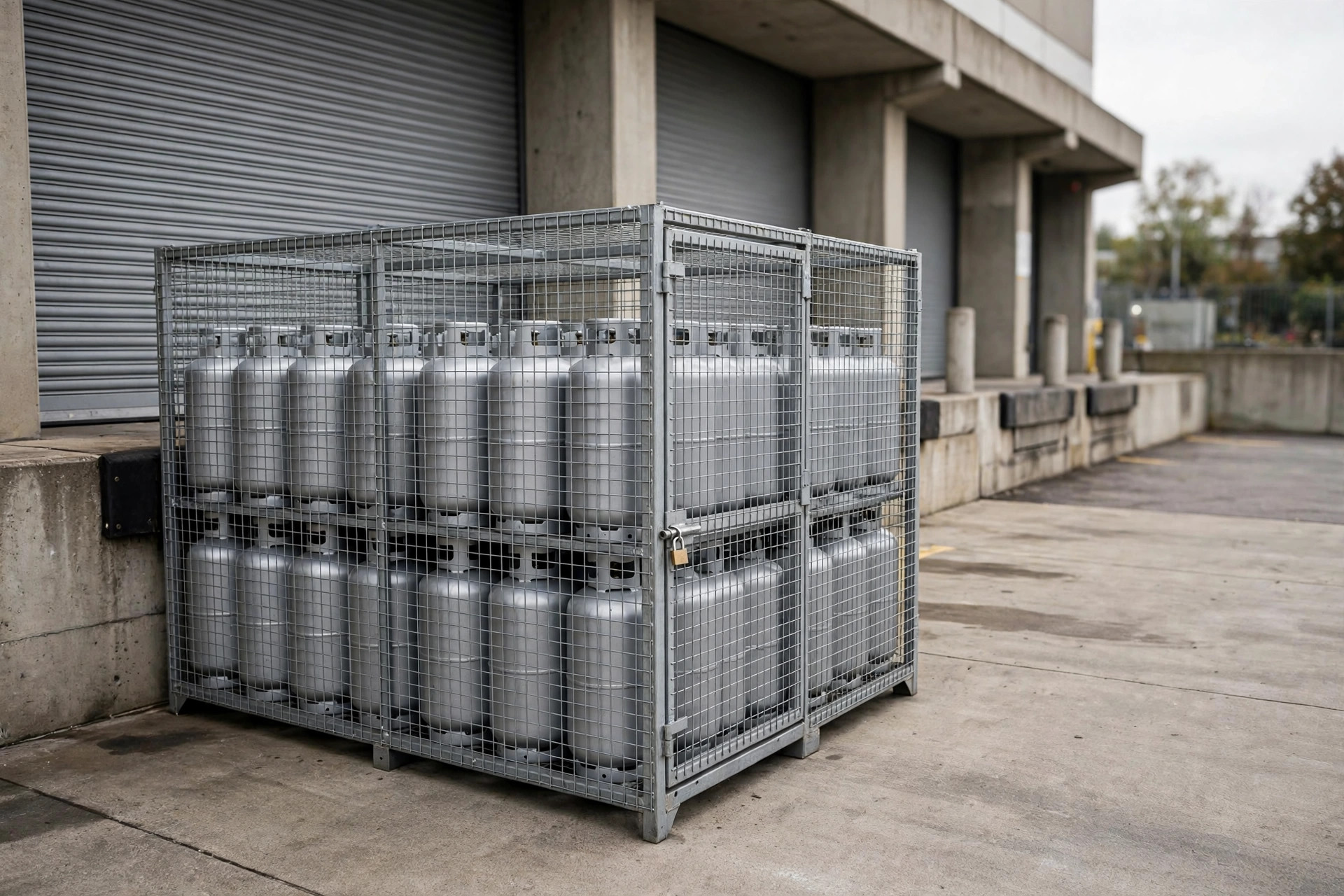
| Compressed gas cylinders | Upright and secured against tipping; separate full and empty cylinders | Relevant OSHA provisions; NFPA 55 |
| Highly toxic materials | Restricted quantities in dedicated zones; damaged packaging isolated immediately | Relevant EPA provisions; local fire codes |
A control-logic framework, not fixed numbers: exact layer counts, heights, and load ratings vary by hazard class, packaging, and building type — defer to the official text.
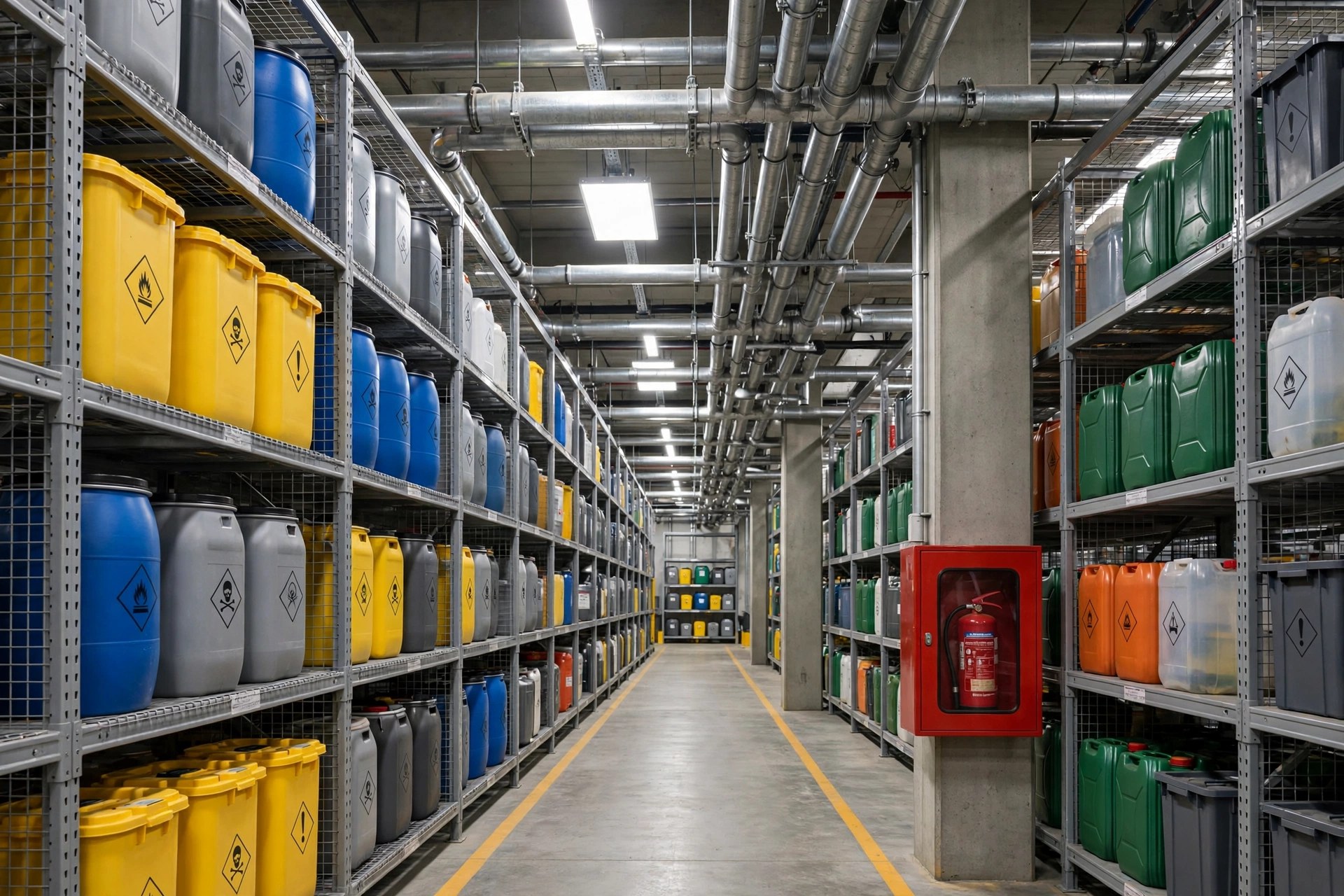
Aisle design deserves a framework, not a fixed number. At minimum, answer five questions: the forklift's minimum turning radius; the narrowest passage a firefighting crew with equipment can enter; whether inspections can run two side by side — one inspecting, one recording; whether evacuation paths align with the aisle without dead-end reversals; and whether sprinklers and extinguishers are reachable from both sides. The answers constrain each other — take the most demanding as the lower bound. More reliable than any memorized fixed width.
Now the arithmetic. Standard 55-gallon (about 208-liter) drums, four per pallet: two-high gives 8 drums per position; three-high gives 12. Dropping from three layers to two cuts per-position capacity by one-third — a 100-position building goes from 1,200 to 800 drums, a 400-drum gap. Multiplied by average monthly revenue per drum, that is a concrete monthly loss, and the precise incentive behind quietly stacking a third layer.
But a second ledger rarely gets calculated. A failed fire inspection leading to a stop-work order is measured in days, with rent, payroll, and penalties running throughout — before cleanup, EPA fines, and criminal exposure. Tianjin's 6.87 billion yuan is extreme, but even a small spill can easily cost more in cleanup and fines than a year's storage revenue. Height limits cost a certain, linear amount; exceeding them costs an uncertain amount on a different order of magnitude — the most basic risk equation in stacking management, and the one most operators get wrong.
The Counterintuitive Case: One Fewer Layer Can Earn More
Denser, taller stacking should mean more revenue per square foot. In hazmat warehousing, it fails in three places.
Floor space spent on aisles comes back through insurance. Underwriters and fire reviewers weigh aisle compliance and sprinkler coverage heavily: disciplined aisles and enforced height limits sit materially better at renewal. Premium saved, plus first-round plan review approval, often exceeds the marginal revenue of an extra layer — a calculation for the insurance broker, not just the warehouse manager.
Lower stacks speed up daily inspection. Patrols of package integrity, leak traces, and label legibility are a different exercise at two-high versus three-high — and the bottom of an upper-tier drum is exactly where leaks first appear and where they are hardest to see. Putting the most consequential products at the bottom layer, aisle-side, improves inspection efficiency and discovery: a rare case of safety investment converting directly into operational efficiency.
Height and weight constraints also force better inventory structure. Product that no longer fits after the limit forces a dodged question: which inventory must be on hand, and which could ship direct. Many facilities find slow-moving hazmat was consuming large amounts of compliant capacity; clearing it cut compliance cost by more than the capacity lost. Textbook constraint-driven optimization.
The trend judgment: as enforcement evolves and underwriting tightens, stacking compliance is shifting from a cost item to a capability item. For operators who get it right, compliance becomes a qualification for large accounts — EHS audit weight in 3PL selection by major chemical shippers has risen noticeably, a direction multiple industry reports agree on.
An open question: if height limits, weight limits, and inspection aisles are a risk-pricing mechanism rather than bureaucratic obstruction, which constraints in your warehouse could become competitive advantage? As regulators and insurers raise the price of noncompliance, will the operators who systematize stacking first hold the better position in the next shakeout? The answer is not in any regulation text — it is emerging, line by line, on every operator's balance sheet.
By Dr. Chen, Supply Chain Researcher