Verdict first: if you want a piece of South American oilfield logistics, the shore base warehouse is your ticket in — and the place most likely to trip you. Four FPSOs are pumping 900,000-plus barrels a day offshore Guyana; the fifth arrived in August 2026 and pushes the country past one million barrels a day. But the real fight isn't offshore. It's onshore: nowhere to stack the pipe, a drilling-fluid gap that stops a rig cold, customs clearance running three days late while a supply vessel burns money at the berth. Guyana's Minister of Public Works, Bishop Juan Edghill, put it bluntly: "We will need more warehouses." When a minister is publicly asking for warehouses, the demand story needs no embellishment from me.
The numbers, all checkable. Guyana's Department of Public Information puts the four existing Stabroek Block FPSOs — Liza Destiny, Liza Unity, Prosperity, One Guyana — at roughly 900,000 to 920,000 barrels per day combined. The fifth and largest, the Errea Wittu, sailed in from Singapore in August 2026 for the US$12.7 billion Uaru development (per the Ministry of Natural Resources), with design capacity around 250,000 barrels a day and first oil targeted for Q4 2026. The U.S. Energy Information Administration has Guyana's output up nearly tenfold since 2020, averaging about 750,000 barrels a day in 2025. A country that produced its first offshore barrel in December 2019 is now a million-barrel-a-day producer. Onshore warehousing and logistics are being dragged forward by production, not leading it.
How big is this fight, really
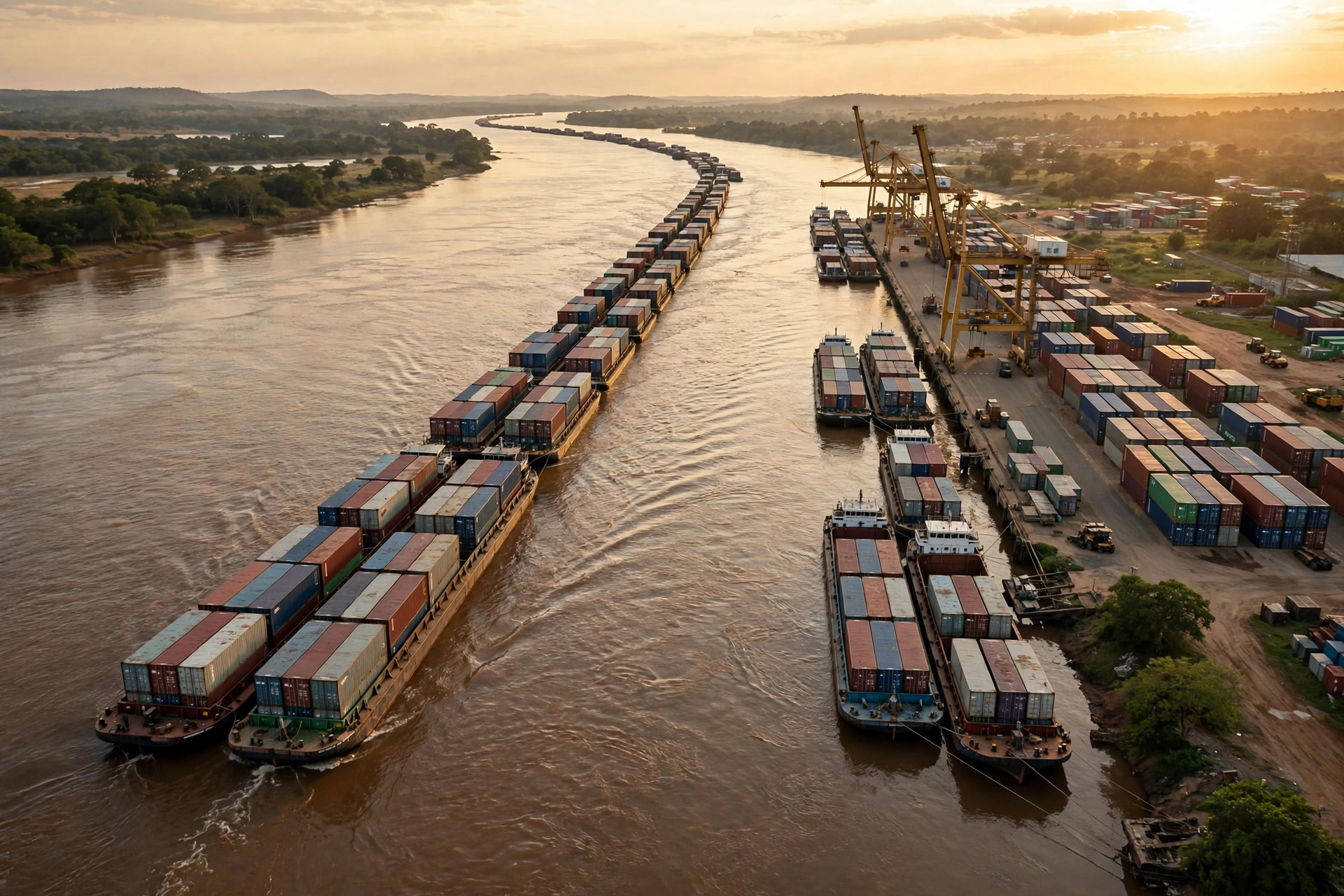
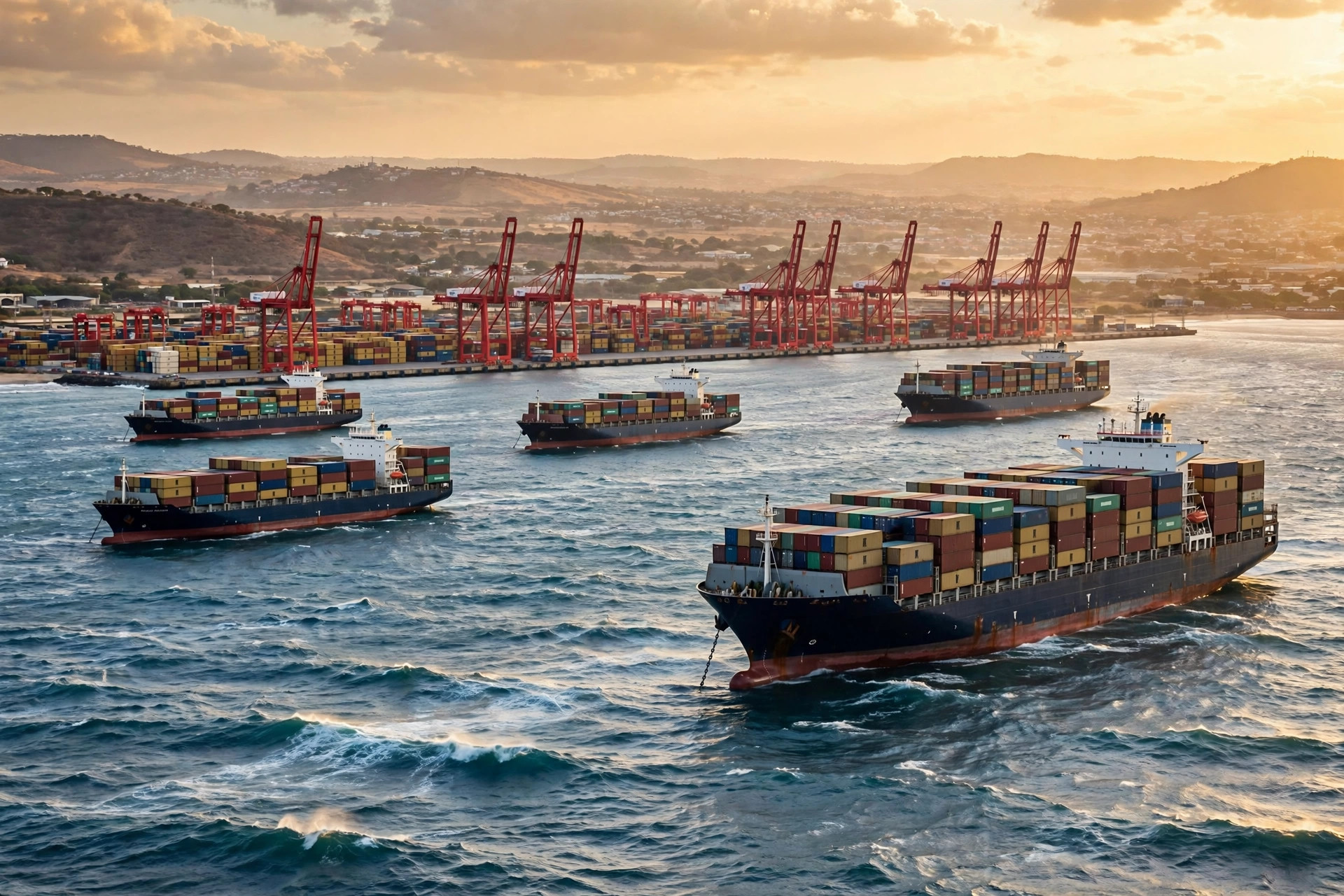
The government knows exactly what's missing onshore. At a shore base job fair, Minister Edghill said: "You will need more ports. We will need definitely more laydown yards. We will need more warehouses. We will need more berthing facilities for ships coming in… GYSBI cannot alone handle everything that will be happening." Eight new shore base projects have already received government "no-objections," on top of expansions at the existing bases. Weekly vessel traffic on the Demerara River went from 7–9 ships to an average of 52, and the maritime authority expects another 70–80% jump when the next FPSO comes onstream.
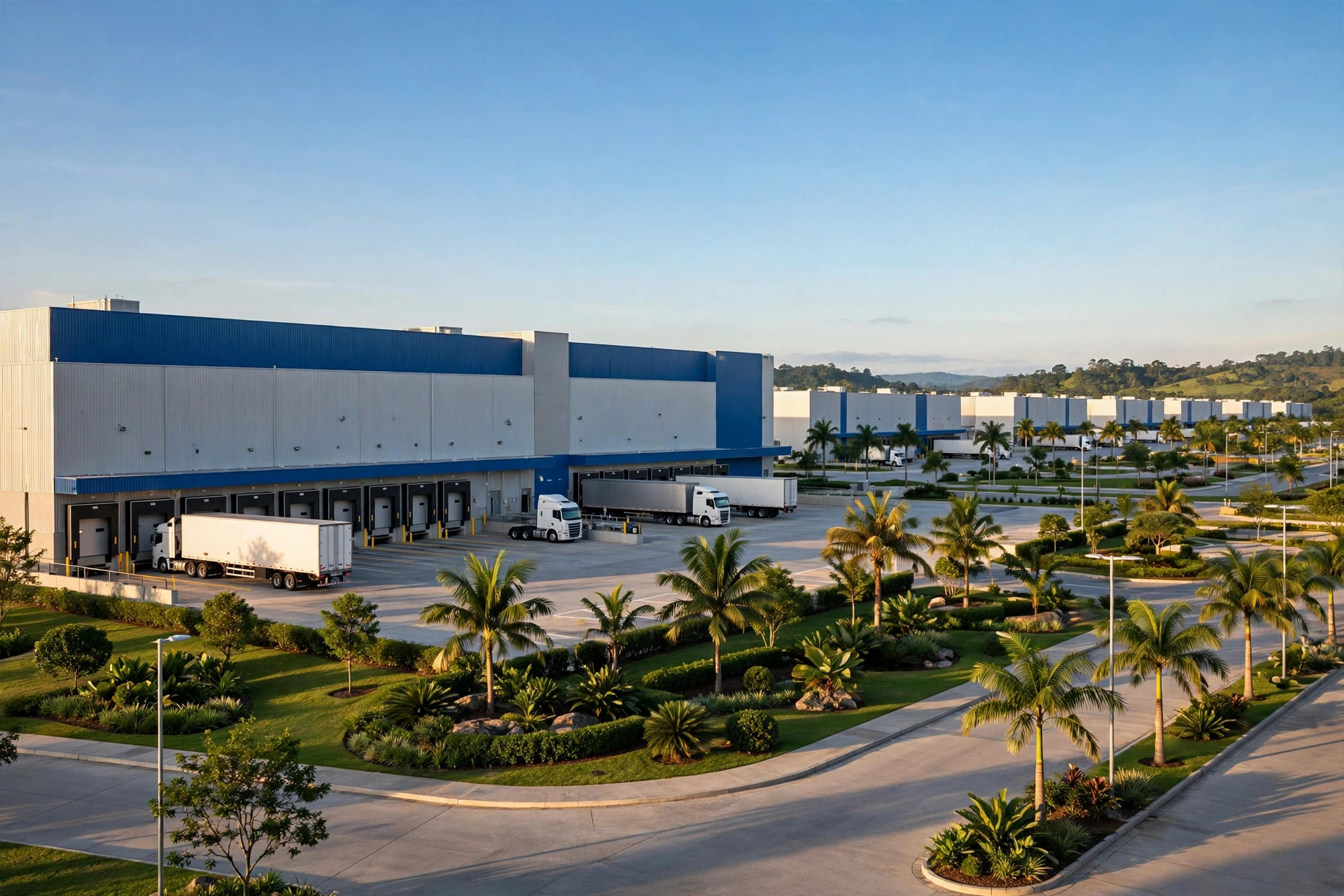
This is not a question of whether there is business. It's business arriving faster than the shore can absorb it. The US$300 million Vreed-en-Hoop shore base sits on a 400-acre stretch of the West Bank (OilNOW), with phases one through three occupying 44 acres of artificial island — a big footprint, but the offshore tempo is faster. Drill ships grew from four to six, heavy-lift work and emergency capping-stack storage are moving from Trinidad to Guyana, and Guyana Shore Base Inc. (GYSBI) has already committed US$16 million for two heavy-lift berths to pull that work onshore.
Guyana shore base warehousing is four businesses, not one
Most people hear "shore base warehousing" and picture renting a shed. Wrong. Oilfield shore base warehousing is four distinct businesses with different capital, returns, and barriers. Know which one you're playing before you enter:
| Business | What it does | Capital scale | Return profile | Barrier |
|---|---|---|---|---|
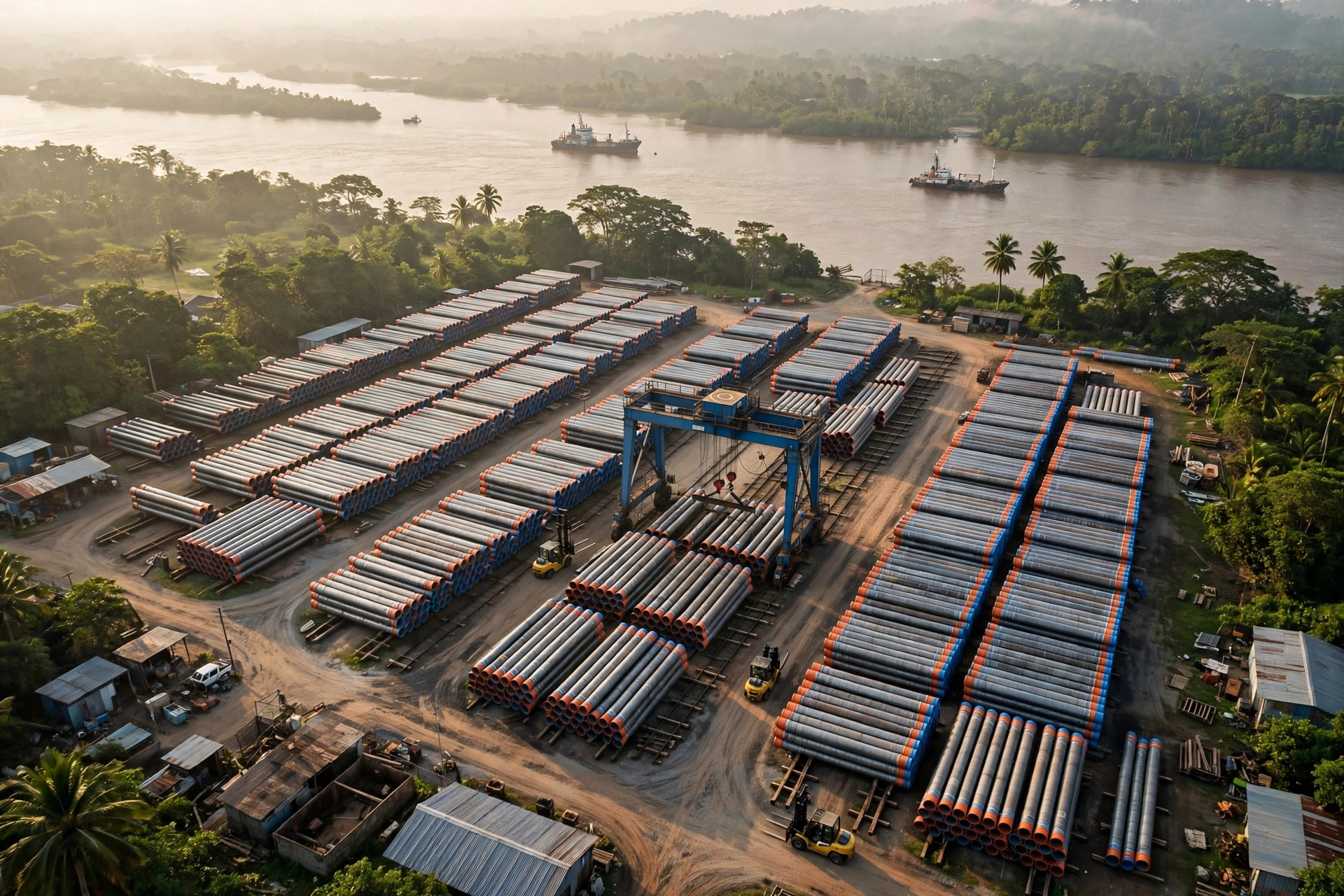
| Pipe yard | Stack, preserve, and issue tubing/casing by batch | Dozens of acres + gantry cranes | Follows the drilling program; big volume, long payment terms | Batch traceability — don't touch it without one |
| Laydown yard | Stage oversize cargo: wellheads, subsea terminations | Heavy-duty pavement + high-tonnage cranes | Project-based, big ticket sizes | Berth and lifting capacity |
| Bonded warehouse + customs clearance | Bonded storage and release of imported equipment | Warehouse + bonded license | Fast turnover, good cash flow | Local Content Act: customs brokerage 100% Guyanese-owned |
| Drilling fluid / chemicals management | Mud and chemical storage, blending, dispatch | Tank farm + environmental permits | Steady, extremely sticky customers | Safety compliance — one spill and you're done |
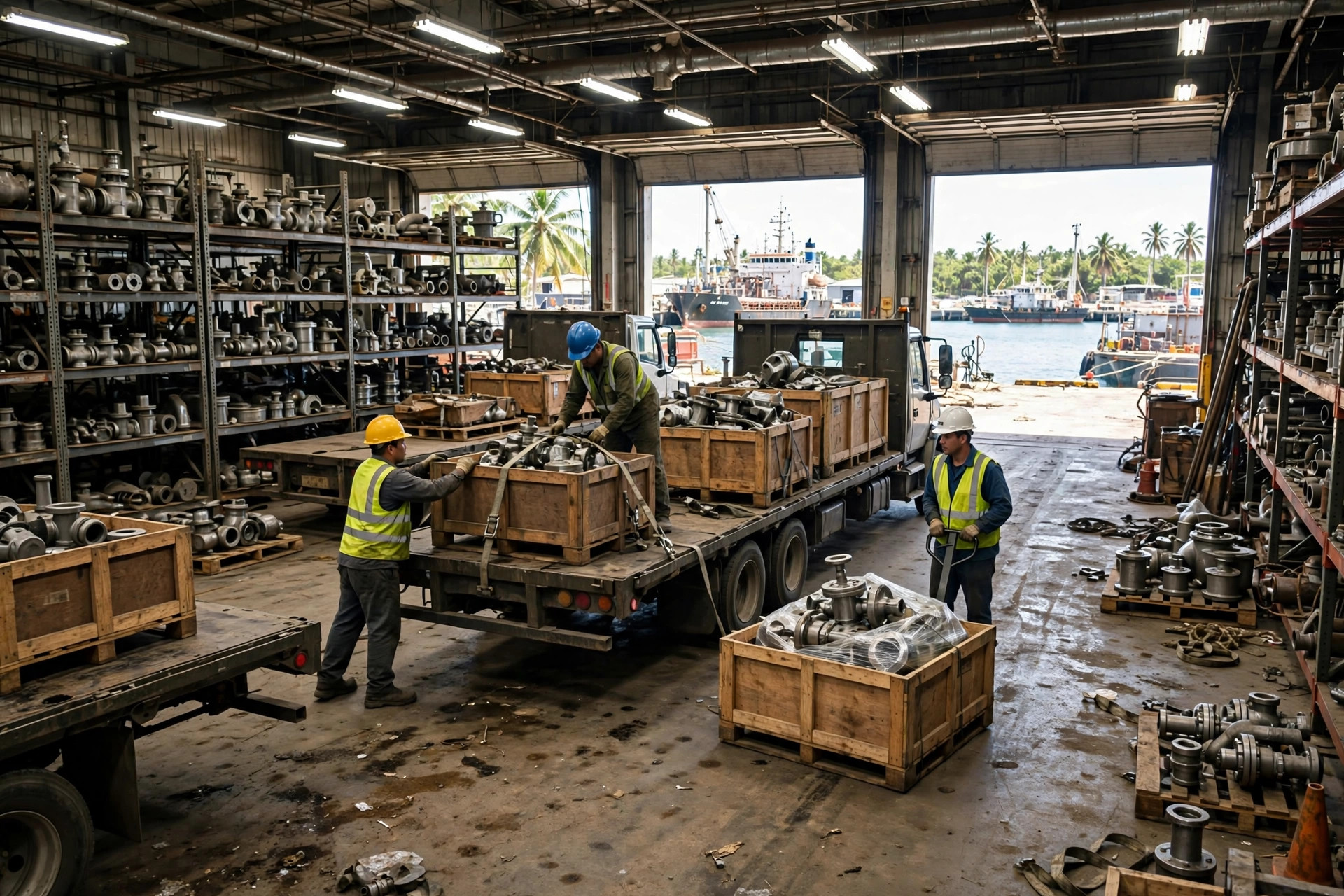
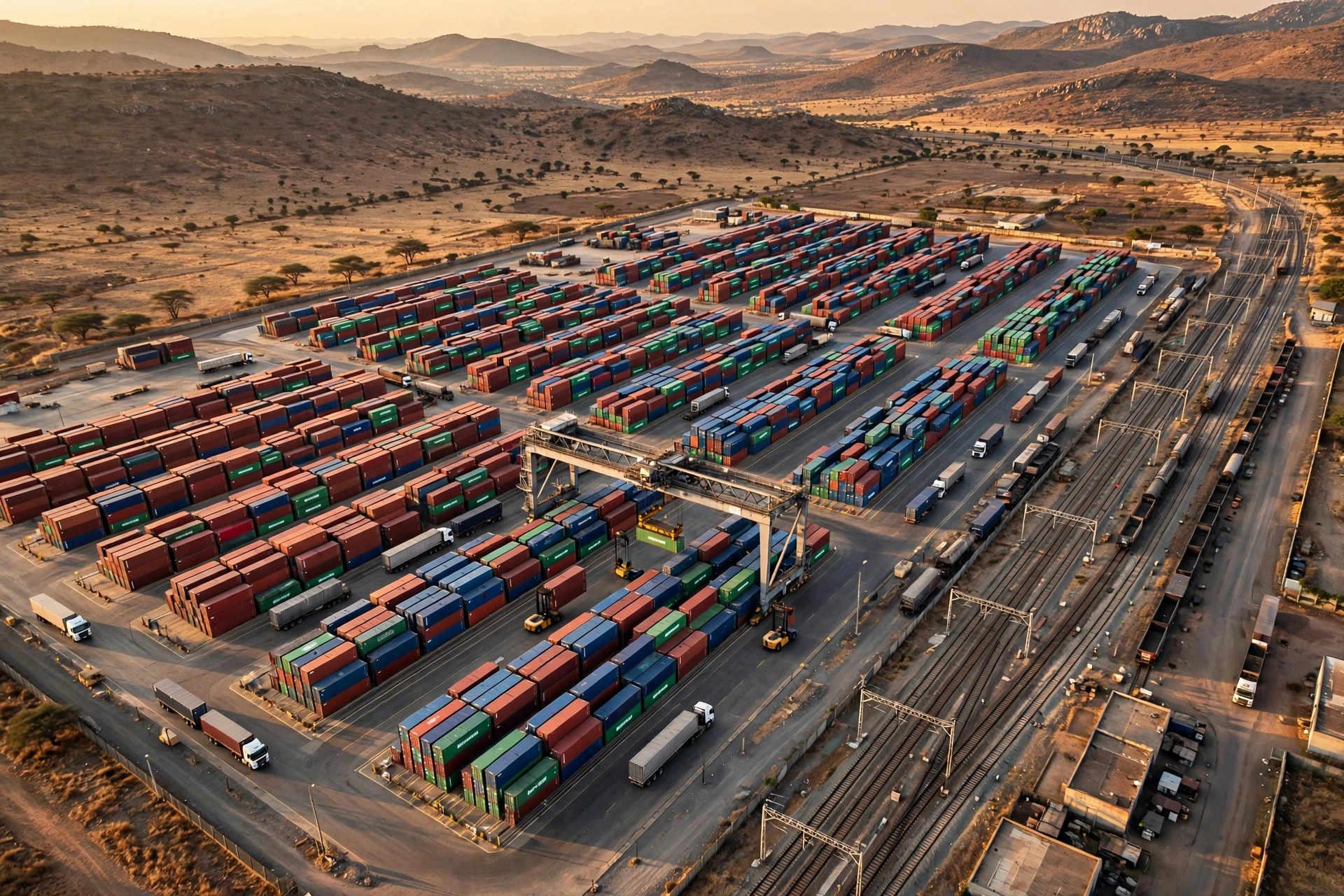
I've watched too many operators fail at the first one. A pipe yard looks the most like "a warehouse" and behaves the least like one: tens of thousands of joints, each with a steel grade, wall thickness, thread type, and heat number. Offshore callouts always read like "this well section, this spec, this batch" — and at 3 a.m. you have 30 minutes to find 200 joints across 40 acres, load them, and get them to the berth. Without a rack-location-to-batch traceability system, forklifts can turn three stacks upside down and still come up empty. I've seen a project ship the wrong coupling batch; the vessel waited two days offshore. The pipe itself was cheap. Two days of idle rig time cost more than the yard operator's annual profit. A pipe yard's real asset was never the land. It's traceability. Land can be leased. Traceability can't.
Drilling-fluid management is the quiet money. A rig cannot drill a single day without mud; formulations change by well section, and the shore base blends and dispatches to schedule. Once a customer trusts you, they rarely switch — switching means revalidating formulations, and no drilling team volunteers for that risk. The trade-off: the environmental and safety bar is brutal. One tank-farm leak and your name is finished in Guyana's oilfield circle. The steadiest business has the highest gate.
Two stories: one playbook, one tuition bill
The playbook first. GYSBI started from zero in 2017: 8 acres, 2 berths, 1 warehouse, 5 people, on a five-year ExxonMobil contract. Five years later: 170 acres, 4 berths, 8 warehouses, 616 employees — 95% Guyanese — and an 11-year ExxonMobil extension (per GYSBI/Exxon signing announcements). How did it grow? It expanded with the offshore tempo: one more drill ship, one more berth; more projects, more warehouses. More importantly, it turned local content into a moat. Guyana's Local Content Act reserves customs brokerage 100% and catering 90% for Guyanese firms. GYSBI was already a joint venture of four Guyanese companies — when the law landed, everyone else was hunting for a local partner while GYSBI was already seated at the table.
The tuition bill, from a project I watched in the Middle East: an oilfield subcontractor won a pipe yard contract with the land and cranes in place but no batch-management system — the old hands "knew the pipe." Three quiet months, then two wells called for material the same night. The night shift issued two batches of the wrong steel grade; the rig caught it after half the string was run. Rework, replacement, idle rig time. The main contractor let them off the hook once, but that subcontractor never won another pipe contract. In shore base warehousing, one bad issue doesn't just lose a shipment — it loses the whole category.
The counterintuitive part: you sell uptime, not square meters
Here's the most important counterintuitive call in this piece: a shore base warehouse operator's real product isn't square meters. It's "the rig never waits." One FPSO produces 250,000 barrels a day — at oil prices, that's many millions of dollars of daily output. Your yard rent and storage fees are a rounding error next to one hour of offshore downtime. Customers don't pay for "a place to store things." They pay for certainty that the material will be there when called. Reuters reporting (via MarineLink) notes the Vreed-en-Hoop base letting larger vessels berth cut supply shipping costs by about 12% — but cost savings are the side dish. Uptime is the meal.
The other side of the trade deserves honesty: the government is urging more warehouses and eight new shore bases are queuing up, but offshore development peaks in the latter half of this decade and then the growth curve flattens. The 400 acres you build for the peak could be half-empty in ten years. Build too big and vacancy eats you; build too small and the next FPSO startup overwhelms you. That's why the veterans build in phases — GYSBI from 8 acres to 170, Vreed-en-Hoop's 44-acre island first with expansion room. Nobody goes all-in on day one.
One piece of advice to close. Thinking about Guyana? Don't start with berth tariffs or warehouse rents. Ask yourself three questions: do you have a local partner (customs brokerage is 100% local — no partner, no seat at the table)? Do you have a batch-traceability system for the pipe yard (without one, stay away from pipe)? Can your crew issue material in 30 minutes at 3 a.m.? If all three are yes, then go talk about the ticket in. In this business the barrier looks like money and land, but it's really certainty — because a million barrels a day offshore won't wait for you.
By Lao Mi, Supply Chain Veteran (20 yrs)