Let me tell you something. After all these years on the road, the thing I dread most is not a long haul. It is arriving at a warehouse gate and finding out the freight cannot come out.
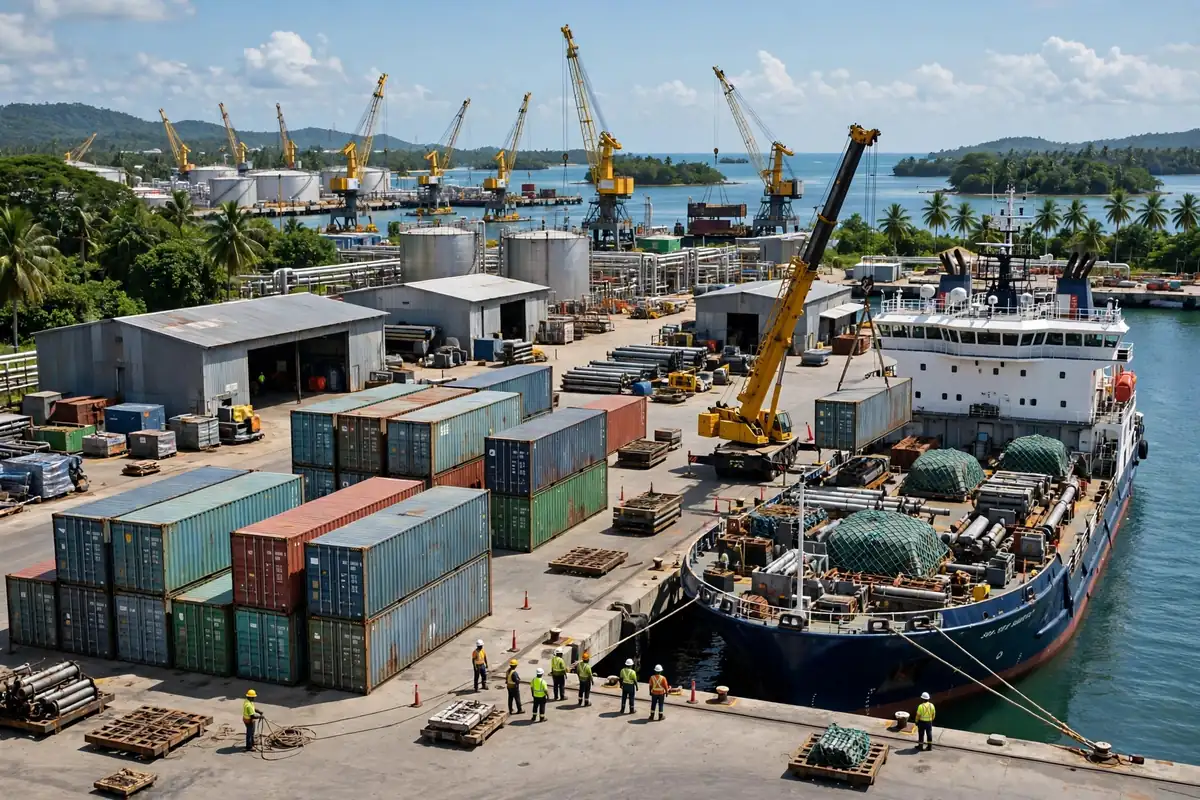
A buddy of mine who runs the South America lanes came back from Guyana not long ago. He said Georgetown is buzzing now, with ships at the quay every day and shorebase work piling up faster than anyone can take it. But busy is not the same as smooth. He watched it happen once: a supply boat was berthed, the crew was waiting on deck, the crane was ready, and everything stopped for one pump spare. The part was in the warehouse. It took almost a full day to find it, and the boat waited an extra day.
That is how Guyana's oil boom reaches the shorebase warehouse. According to ExxonMobil's announcement in November 2026, the Uaru project in the Stabroek Block started production on November 16, 2026, lifting Guyana's installed offshore capacity to 1.1 million barrels per day. It is the fifth development there, and its floating production, storage and offloading vessel, the Errea Wittu, can produce 250,000 barrels per day. Every vessel added offshore means a longer list of jobs onshore, and the shorebase warehouse is the last stop before everything leaves land.
Guyana Shorebase Warehouse Logistics Starts With the Boat, Not the Building
Offshore supply does not move whenever you feel like it. Weather, sailing schedules, and maintenance windows on the production vessel all set the clock. Spare parts, chemicals, fuel, and living supplies each run on a different rhythm, and Guyana oil shorebase warehouse logistics lives or dies on that rhythm.
Spare parts are the hardest. Pumps, valves, seals, instruments — small pieces, endless variety. They sit still for weeks, then suddenly everything is urgent. That is what happened in my buddy's story. A critical piece of equipment needed a replacement, the boat was already scheduled, and the pick list did not match what was actually on the shelf. Two people searched several zones before they found it. The part was there. The window was gone, and the boat had to wait for the next sailing.
Chemicals are a different problem. Some cannot sit next to ordinary spares. They need separate storage, separate records, and batch checks on the way out. Living supplies look simple — food, drink, daily goods, large volumes, fast turnover — but mix them with project cargo and pickers walk extra miles while urgent parts end up buried behind slow-moving stock.
So the first job for a Guyana shorebase warehouse is not to build a bigger shed. It is to learn the supply boat schedule cold: when the boat comes, how much it carries, what must go on this sailing, and what can wait. Get that wrong and a bigger warehouse only makes the mess bigger.
Three Kinds of Cargo, Three Kinds of Storage
After all these years, I have seen too many warehouses pile everything together to save space, then pay it all back in search time. Shorebase cargo should be split three ways, and the lines should stay firm.
Project cargo comes first. Drilling, construction, and installation materials arrive in big batches, get used, and leave. Keep them near the quay, in open yards and heavy-lift areas, with lifting lanes kept clear. Block the lane and a heavy lift turns into three reverses and a wasted morning.
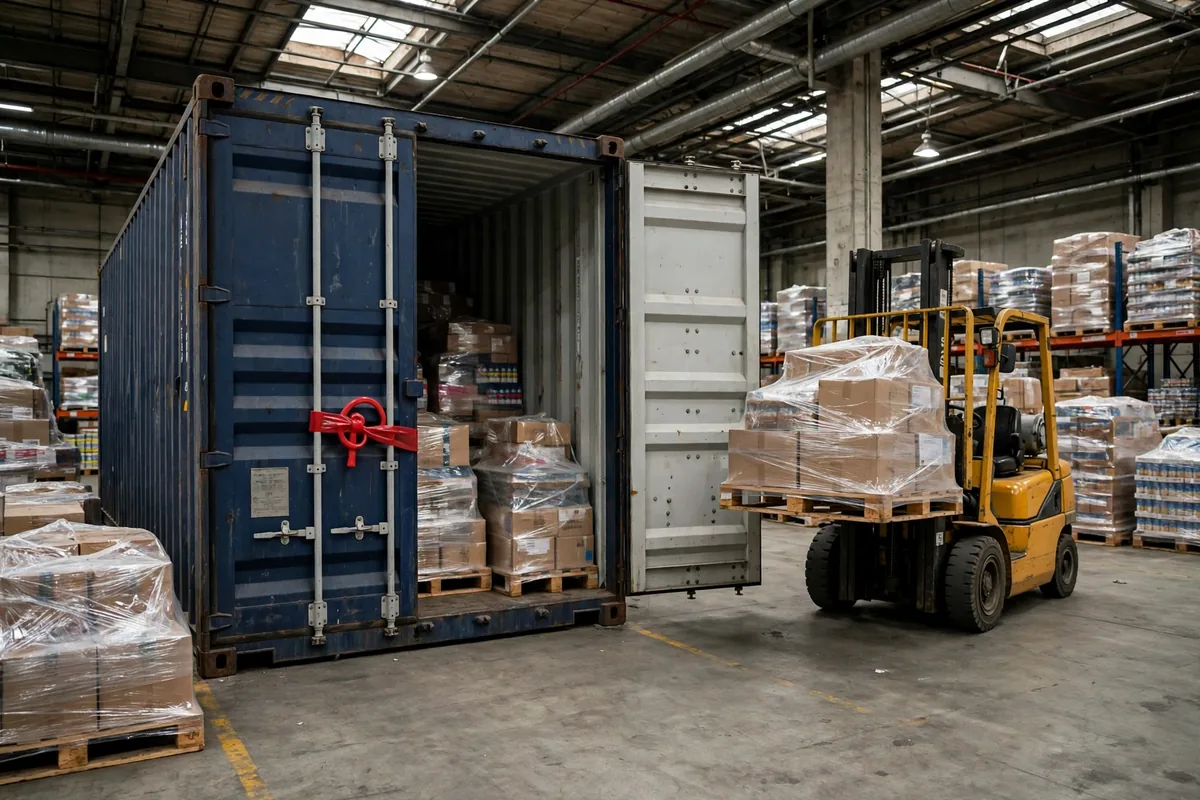
Maintenance spares come second. Many kinds, small pieces, needed at short notice. They belong indoors, on racks, grouped by equipment and system, with clear labels and a pick path drawn out. In a spares warehouse, the contest is not floor space. It is search time. If finding one part takes more than ten minutes, the layout has already failed.
Daily supplies come third. Food, consumables, protective gear, fuel — high volume, fast turnover, and expiry dates that need watching. Give them their own zone and run first-in, first-out as a rule on the wall. An expired pallet is a small loss. A missed sailing is not.
Here is a simple table, built from what my buddy described. The numbers are an illustrative scenario, not real Guyana rates, just to show why the three kinds cannot share one zone:
| Cargo type | What it fears most | Where it belongs | Cost of getting it wrong |
|---|---|---|---|
| Project cargo | Blocked lifting lanes | Yard by the quay, heavy-lift area | Boat waits, window lost |
| Maintenance spares | Cannot be found, code mismatch | Indoor racks, grouped by equipment | Urgent part turns slow, maintenance slips |
| Daily supplies | Expiry, mixing, wrong picks | Separate fast-turn zone, first-in first-out | Supply gap offshore |
Each kind fears something different. Store them together and you save on building costs and pay for it in sailing delays.
Bonded and Local Warehouses Need a Clear Split
There is another split in Guyana: bonded warehouses and local warehouses. Some imported equipment and spares move through bonded procedures. Some go straight into local storage. If that split is not agreed in advance, freight gets stuck on paperwork the moment it lands.
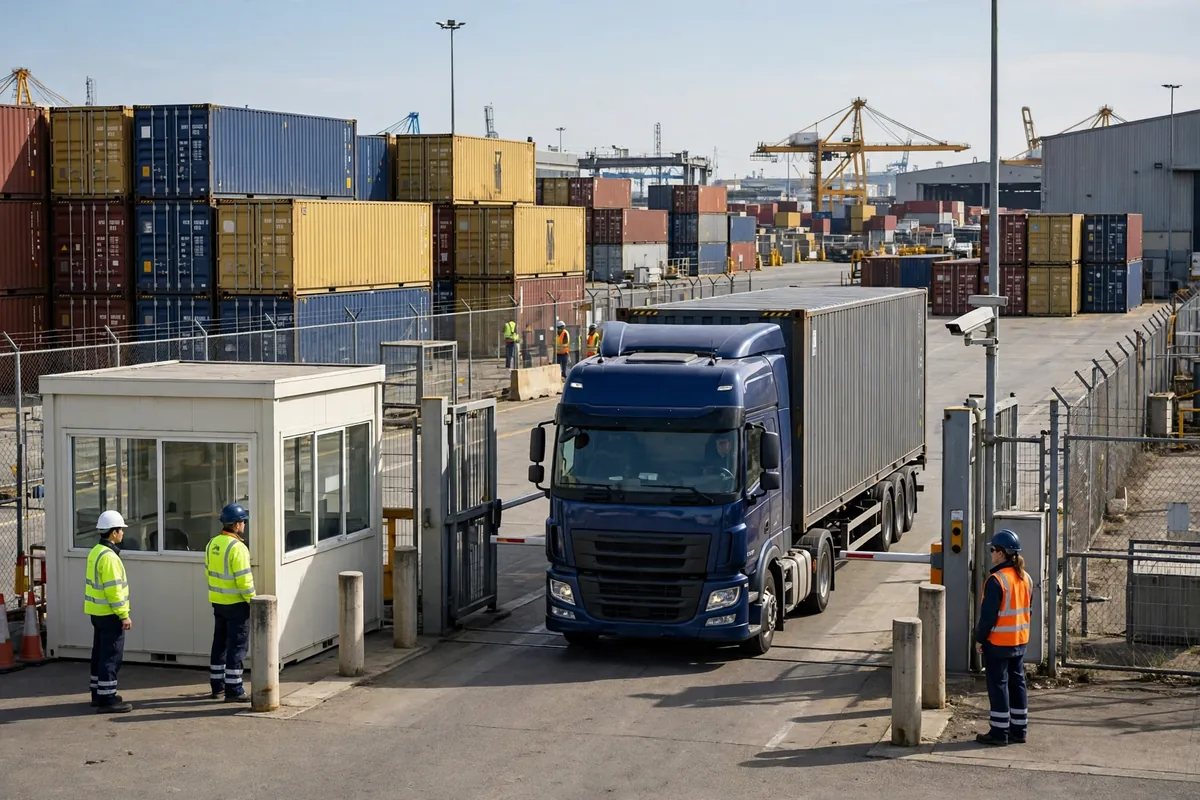
Public information says loading is handled mainly by two shorebases: Guyana Shore Base Inc., known as GYSBI, with four berths south of Georgetown, and Vreed-en-Hoop Shorebase, known as VEHSI. They do different jobs, so ask before the cargo arrives: which base, which berth, and who checks the documents? Ask after the boat is in and it is already too late.
Guyana's Minister of Public Works put it plainly: the country needs more laydown yards, more warehouses, and more berths. That sounds like a construction message. Read it the other way and it means shorebase capacity is tight. When capacity is tight, first come, first served is a fantasy. Clear plans and a queue are real. Bonded cargo needs time for documents. Local cargo needs time for picking and loading. The two rhythms are different, so they cannot share one schedule.
My buddy saw the other trap too. A batch of chemicals arrived missing one document for bonded clearance and sat in the port area for two extra days. Nothing was damaged, but the supply boat had already been scheduled and the chemicals missed that sailing. Offshore stock had to cover the gap. If it holds, that is luck. If it does not, work stops. A warehouse cannot fix that. Documents and planning have to move ahead of the freight.
Three Things to Settle Before Entering Guyana's Shorebase Market
Plenty of logistics providers and 3PLs want in now. After all these years on the road, my advice is to slow down first. The counterintuitive truth is that an oilfield warehouse is not better when it is bigger. The supply window is the real bottleneck. A big warehouse with slow picking loses to a smaller warehouse that puts freight at the quayside before the window opens.
First, do not lease a big warehouse first. Get the boat schedule first. Take the sailing dates, the windows, and the loading order, then work backwards to how much space, how many zones, and how many people you need. Leasing space without a sailing schedule is like driving out without looking at a map.
Second, price the spares warehouse on search time, not on tonnes. Spares have to be priced by how fast the most urgent part leaves the shelf. Before taking a spares job, ask the customer: how fast must the most urgent part be out? Put that time in the contract. If you cannot meet it, do not take the job. Taking it and failing hurts your name more than turning it down.
Third, you need local people, local trucks, and local warehouses — all three. Arriving with only your own crew and vehicles will not carry you far in a place you do not know. Build working ties with local warehouses, fleets, and customs brokers, so somebody can help when trouble shows up. Guyana has real opportunity now, and real traps too.
In the end, the oil boom is not offering Guyana's shorebase a chance to build the biggest warehouse. It is offering a chance to get the timing right. Five developments offshore and 1.1 million barrels per day of capacity sound huge, but on land they come down to one boatload of spares, one truckload of supplies, and one window after another. Whoever gets freight onto the boat on time is the one who lasts.
There is an old saying among drivers: there is always a road ahead when you reach the mountain. But if there is no road at the warehouse gate, there is no road. Before you enter, settle the sailing schedule, the zoning, and the documents. Then talk about how big a warehouse to lease.
By Shifu Zhao, Trucking Veteran (15 yrs)