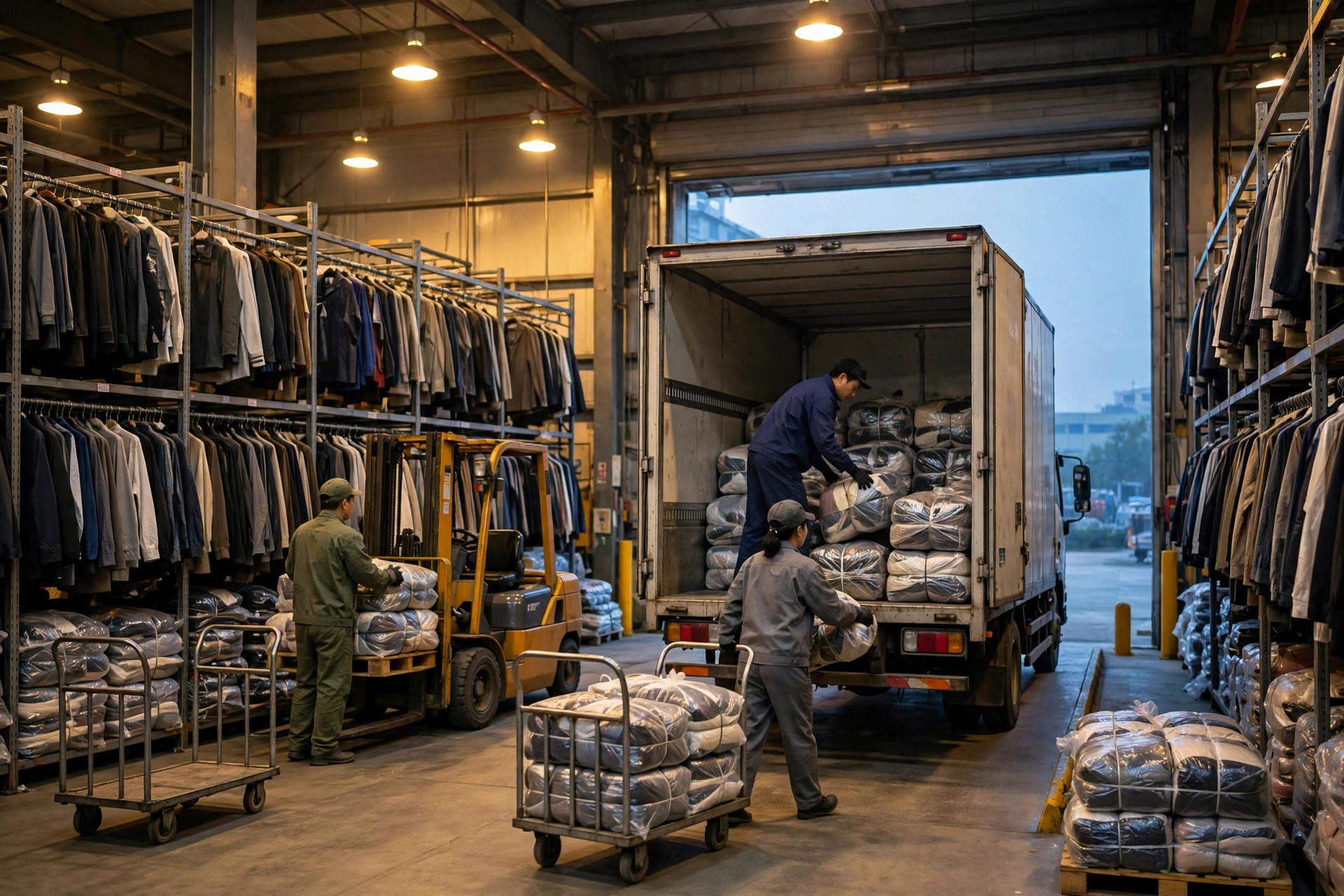
At four thirty in the morning, I backed my truck into the yard outside a Guangzhou apparel wholesale warehouse and the place was already lit up like daytime. Let me tell you, after all these years on the road, the wholesale clothing trade in Guangzhou runs on a different clock from anywhere else. Other warehouses wake up at eight; here, the real work happens before dawn. Stall owners need their shelves restocked before the doors open, drivers need to unload and reload before morning traffic builds, and the warehouse crew needs the overnight arrivals sorted before anyone shows up to collect. If any of the three slips by half an hour, a stall opens with nothing to sell.
That is the part outsiders miss. Deals in Guangzhou's wholesale markets are struck during the day but kept or broken at night. A stall owner will not stock deep on any one style, so they take small batches and come back every day or two. That turns warehouse work into a tide: a surge from around two to seven or eight in the morning, then a long slack stretch. A staffing plan built for a steady daytime shift falls apart at two in the morning, right when it matters most.
Two winters ago I hauled a load into the Shahe area. The factory truck arrived a little after one in the morning, with only two night-shift hands on duty and one forklift running. That night happened to be a big restock night, seven or eight stalls' orders piled together. The two lads got the truck unloaded by five, but the sorting never caught up. At six thirty, a stall sent a man to collect, and three bundles on his pick list turned up only after someone dug them out from under a second-layer pallet. The order still made it before opening, but the stall owner was not happy, and the shift lead told me later he had not had a sip of water all night. In my experience, most warehouse trouble is bad scheduling, not laziness.
How Dawn Replenishment Works in a Guangzhou Apparel Wholesale Warehouse
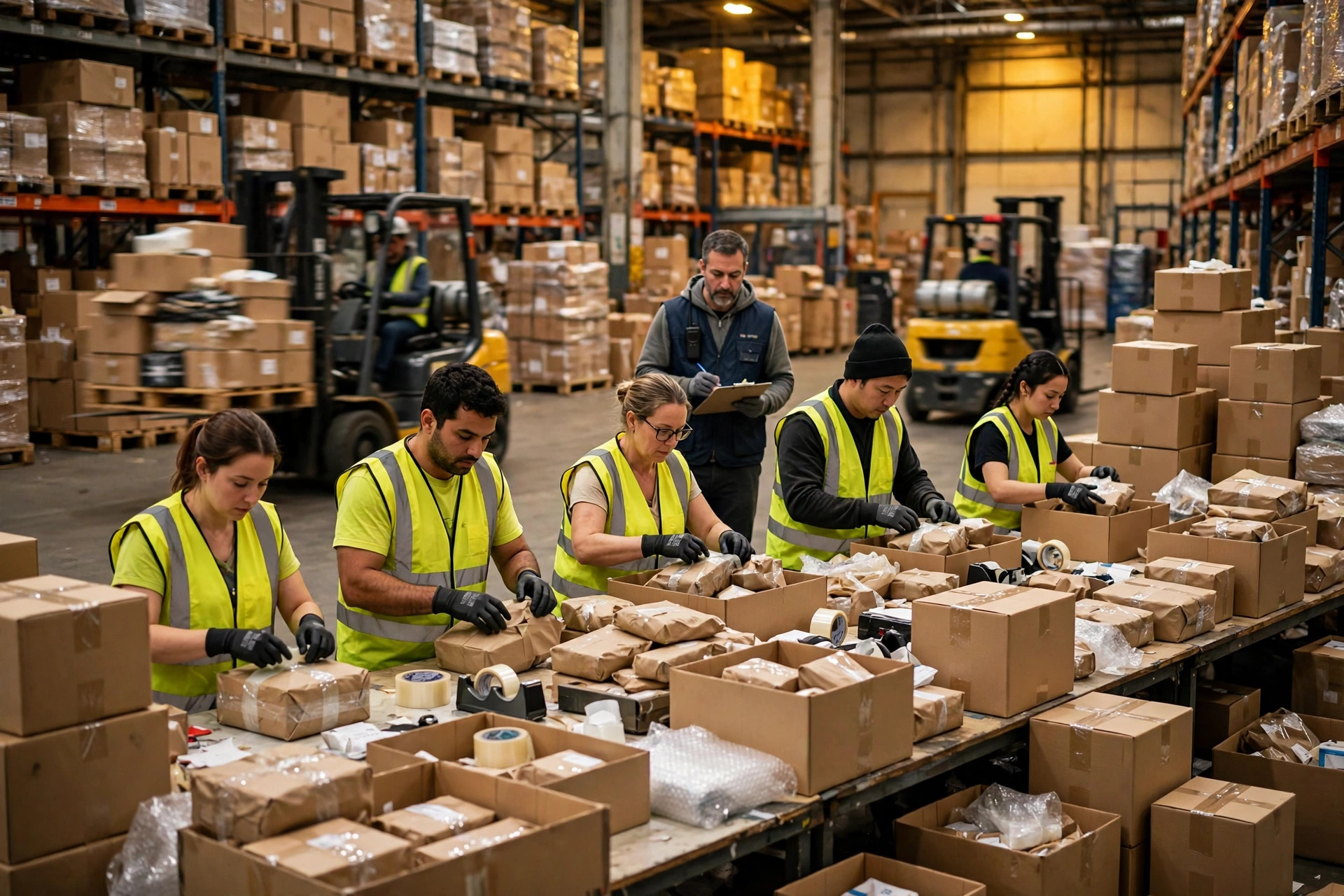
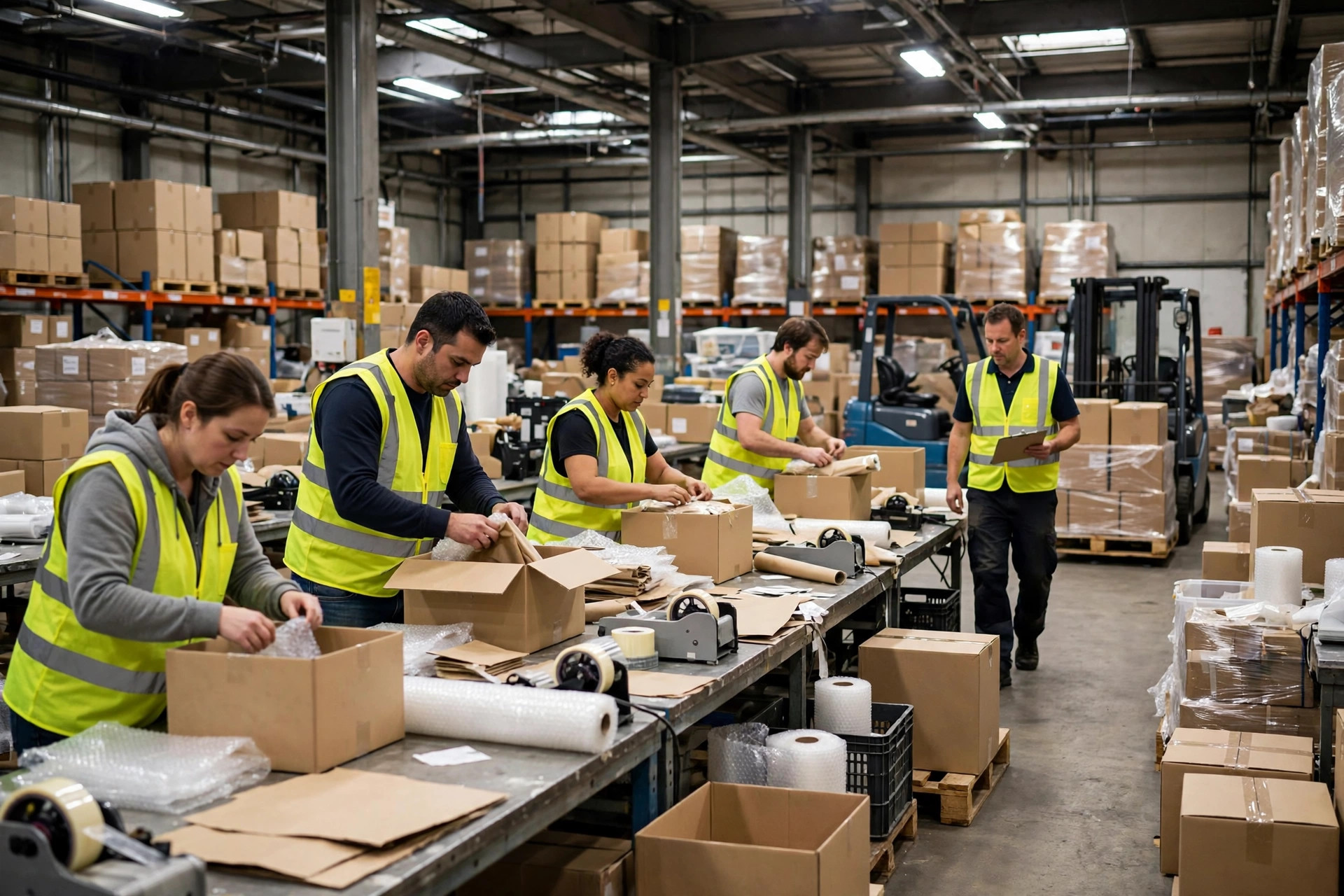
Restocking a stall sounds simple until you watch it done properly. Every incoming bundle has to be checked against the order: style number, color, size, no exceptions. One wrong style tucked into a bundle and the stall's rack is a mess before the day starts. After checking comes sorting, by stall and by style, and then the sorted bundles go onto shelves or into a ready-to-collect pile. When the stall's man arrives in the morning, pick list, bundle count, and style numbers all have to match before anything leaves. The labor-heavy part is sorting and double-checking, not unloading. Plenty of warehouses pile staff onto unloading and leave one or two people to sort, so the yard fills with goods that go nowhere and the dock jams solid.
There is another wrinkle. A Guangzhou apparel wholesale warehouse usually serves many stalls supplied by many small factories, and two or three in the morning often brings three or four trucks within an hour. There are only so many dock doors, so trucks queue, goods queue, people queue. Without an agreed arrival order set the night before, or a clear rule that rush orders unload first, tempers flare. I have watched a driver and a warehouse man argue on the dock at three in the morning because two trucks arrived at once and neither wanted to wait. One warehouse I know fixed it the plain way: every evening they post the next morning's arrival order in the group chat, rush orders marked, so everyone knows where they stand.
Fast Response and Staffing in the Guangzhou Apparel Wholesale Warehouse
Fast response is the work that wears these warehouses down. A stall sells out of one style today and wants two or three hundred pieces tomorrow, then switches to a different style the day after. Small orders, urgent orders, several batches a day. A fixed roster cannot keep up with that shape: too few hands when busy, idle hands when quiet, wages paid either way.
The shift leads I talk to mostly split their shifts now. A core crew covers the main peak, two to eight in the morning, with sorting and checking fully staffed. A small daytime crew handles returns and odd orders. In the early evening, they look at the day's sales and decide on extra hands for the night. The hard part: in the early evening, not all the sales feedback is in yet, so the lead guesses from experience. Guess right and the night runs smooth. Guess wrong and you are calling people in at midnight, and latecomers who do not know the routines push the error rate up instead.
The money side has to be faced honestly too. Night-shift premiums and day-labor rates vary by local market, so check current local rates before you build a roster around last year's numbers. I have seen a warehouse cut two people from the peak shift to save on night premiums, then mis-ship two orders that night. The stalls sent them back, and the return freight plus the make-good cost came to far more than the premiums saved. Thinning the peak shift is the most expensive saving there is in this trade.
| Staffing approach | When it is busy | When it is quiet | Best fit |
|---|---|---|---|
| Fixed day shift plus two night hands | Sorting falls behind, orders pile up | Idle hands, wages paid anyway | Stable volume, little fast-response work |
| Core peak crew plus on-call crew | Peak covered, extra hands called by order volume | Small crew only, costs stay under control | Many stalls, frequent fast-response orders |
| All temp labor at night | Headcount looks fine, but unfamiliar hands make more errors | Day rate looks cheap, rework is not | Small volume, simple styles only |
That table is not a rulebook, just three ways of living I have actually seen. Pick by two questions: how much does your order volume swing day to day, and what does one wrong shipment cost you? Big swings and costly errors mean the core peak crew is not optional.
Dock Handoffs: Where Drivers and Warehouse Crews Stop Arguing
Let me tell you, the dock at three in the morning is where most fights start, and they almost always start with unclear handoffs. The driver arrives and the warehouse says the paperwork has not come through; the warehouse says the goods are here and the driver says the style numbers do not match. Neither side is lying. The information just never met in the middle. The fix is plain: before the truck arrives, the factory sends the paperwork ahead, style numbers, piece counts, colors and sizes written out clearly. When the truck gets there, driver and warehouse man count it together, and anything off gets written down on the spot. Once both sides sign, nobody reopens the argument after the truck has left.
One small detail saves a lot of grief. Garment bundles all look alike, and under dim night lighting a dark bundle and a light one are easy to confuse. Some warehouses mark out the ready-to-collect area by stall, lines on the floor and a signboard for each stall, so the man collecting walks to his sign instead of hunting through a mountain. It costs almost nothing. Where everything is piled in one heap, the morning is chaos.
Here is what a stall owner or warehouse lead can use tomorrow:
- Run a check the evening before: which trucks arrive overnight, which styles need restocking, which orders are urgent. Put it in the group chat.
- Set peak-shift headcount by sorting and checking needs, not unloading needs. Those are the hands you do not cut.
- Mark the collection area by stall, with floor lines and signs, so pickup follows signs instead of memory.
- Count and sign at handoff, problems written down on the spot. No reopening settled counts after the truck leaves.
- Track mis-shipments, piled-up orders, and emergency call-ins. Review them weekly, and the roster gets sharper every week.
When you boil it down, the dawn arithmetic of a Guangzhou apparel wholesale warehouse is not about headcount. It is about timing. Goods have to be on the shelf before the stall opens, people have to be in place before the goods arrive, and information has to be matched before the truck gets there. Get those three in order and even a frantic morning stays manageable. Miss one and extra hands will not save you. After all these years on the road, I hold to one thing: a warehouse should not fear being busy, only being busy with no order to it.
By Shifu Zhao, Trucking Veteran (15 yrs)