Let me be straight with you: if your peak season hiring plan starts in November, it has already failed.
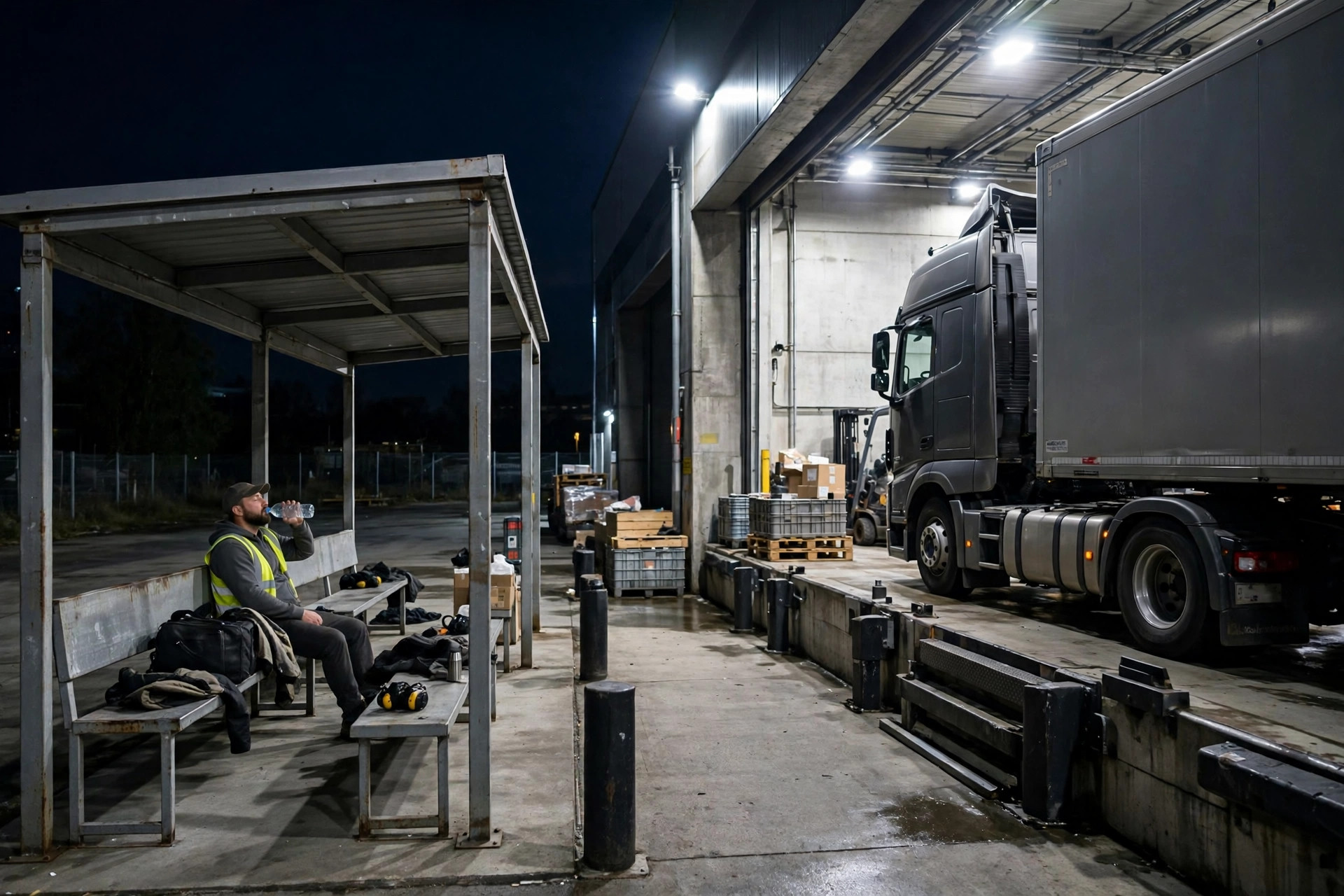
Last year, on the morning of November 3, I walked into our receiving dock at 6:40 a.m. and found 17 trucks still waiting from the night shift. The roster said 41 people should have been on the floor. Twenty-three showed up. Our lead, Xiao Liu, came over and said, "Feng, six of today's crew started yesterday. They can't even find a bin location yet." Nine hundred orders were already sitting in the queue. In that moment I knew we had made the same mistake again.
I run a warehouse in California with about 200 people. Most of the year, life is manageable. Then late October arrives, and volume climbs like someone opened a floodgate: Black Friday, Cyber Monday, Christmas, three waves back to back with no breathing room in between. For years I told myself hiring could wait until volume showed up. After three painful peak seasons, I changed that belief completely. A peak season hiring plan is not a November job. It is an August job.
Why Peak Season Hiring Always Breaks Down in November
The breakdown never happens in a single day. Every September I hear the same line: "Let's wait and see if volume really picks up." By the time volume really picks up, the workers are gone. Every big warehouse in the area is hiring at the same moment, hourly pay gets bid up week after week, and every week you delay posting a job, fewer people see your posting.
Our worst year was 2023. We started hiring on October 20, aiming for 45 people, and by November 10 we had only 29. So what did we do with the gap? We leaned on overtime. For three straight weeks, our veterans worked more than 60 hours a week. By the end of November, four experienced people had quit. And here is the part nobody puts in a spreadsheet: when veterans leave, there is nobody left to train the newcomers, and errors climb fast. Our mispick rate went from 0.8% to 2.1% in a single month. Returns, reships, and rework that month cost us more than keeping 20 extra people on payroll for two months. Hiring early looks wasteful on paper. Hiring late is what actually burns money.
There is a second trap, and it is quieter: interview standards slip when you are desperate. A hiring manager under pressure starts passing people who move slowly or cannot follow a spoken instruction. Those hires do not just underperform; they drain the trainers and drag the whole team's morale down. I now have a hard rule, and I enforce it even when we are short: the interview bar does not drop in peak season. I would rather be one person short than hire someone who quits after three days. A three-day quit wastes the trainer's hours, the uniform, the system account, and the patience of the veteran who trained them.
Our Peak Season Hiring Timeline: Twelve Weeks, Week by Week
This is how we do it now. A timeline hangs on our office wall, counting back twelve weeks from peak, starting in the last week of August. This is the version we used this year.
| Timing | What we do | The number that matters |
|---|---|---|
| Last week of August | Set the headcount: last year's peak volume plus 20% | Gap of 40 people, hiring target of 48 |
| Weeks 1–2 of September | Post jobs, call staffing agencies, double the employee referral bonus | Referrals targeted at 30% of hires |
| Weeks 3–4 of September | First interviews, two sessions per week, 20-minute hands-on test | Offer rate held near 40% |
| Weeks 1–2 of October | First cohort starts, three days of buddy training, one veteran to two newcomers | Mispick rate tracked separately during training |
| Weeks 3–4 of October | Second cohort starts, night shift always paired with veterans | Newcomers capped at 40% of any night shift |
| Week 1 of November | Stop large-scale hiring, fill only individual departures | No new headcount, replacements only |
| Week 2 of November onward | Full peak roster, no non-essential time off | Weekly review of mispicks and attendance |
Let me be straight about the most counterintuitive row in that table: we stop hiring in the first week of November. People hear that and say, "How can you stop hiring right when it gets busy?" My answer comes from experience. A person hired in mid-November cannot learn the job in time. A peak warehouse is not a school; the conveyor does not slow down so a newcomer can catch up. For their first two weeks, a mid-November hire produces almost nothing and still occupies a veteran as a trainer. A November staffing gap has to be covered by October hires working overtime, not by November hires who are still learning where the bathrooms are.
In 2024 we followed this timeline properly, and I still remember the difference. The first cohort of 22 people started on September 15. The second cohort of 26 started on October 10. During Black Friday week, all 196 people on our roster showed up, our mispick rate held at 0.9%, and not a single night shift stopped for lack of staff. Xiao Liu told me, "Feng, I actually got off on time during Black Friday night." Brothers, when your lead gets off on time during Black Friday, your hiring plan worked.
After Hiring: Buddy Training Is the Real Peak Season Hiring Plan
Hiring is only the first half. Training is the second half, and it is where most plans quietly die. Our buddy rule is simple and old-fashioned: one veteran trains at most two newcomers. For the first three days, the newcomer does exactly one thing — follow the veteran and watch. Only after watching enough do they touch the work. From day four, they work on their own while the veteran stands nearby, correcting mistakes on the spot instead of saving them up for the end of the shift.
Night shift has one detail people overlook. A newcomer on nights must share the shift with their veteran trainer for the first week. Never pair two newcomers together on nights. We made that mistake in 2022: two newcomers put more than 300 cases in the wrong locations overnight, and the day shift spent the whole next morning hunting for them. After that I made it a rule: if newcomers exceed 40% of a night shift, I send the roster back for a redo.
Drivers are another peak-season pressure point. A driver who has waited at the dock gets angry, and a nervous newcomer is likely to argue back. Our training includes thirty minutes on exactly this. The line we teach is: "Right away, let me confirm that for you." Do not argue about who is right at the dock door. Sort out the freight inside the warehouse, not on the dock.
Morale is the part of peak season that managers most often ignore. Two straight weeks of overtime wear people down. Our approach is not fancy: every Friday after the night shift, the lead buys a late-night meal for the crew with perfect attendance that week. And one rule I have kept for three years: no lead is allowed to scold a newcomer in front of the whole crew during peak. Correct them privately. Scold them publicly once, and there is a good chance they simply do not come back the next day.
A Few Reminders for Fellow Managers
Do not wait for volume to tell you that you are short. By the time volume tells you, every staffing agency in town is already on the phone with your competitors. Set the headcount at the end of August, bring people in during September, get them trained in October, and in November you can sit in the office reading reports instead of standing at the dock unloading trucks yourself.
One more thing. When you interview, do not only ask how fast someone can move. Ask one question first: "Did you work a peak season last year?" A person who has survived one peak season is worth two people who have not. That question is now the first one in every interview I run.
Next August, if you have not started writing your hiring plan yet, think back to that November morning: trucks lined up, orders piling up, and the people still not there. Once is enough.
By Chen Feng, Warehouse Operations Manager