Let me start with a sentence that will annoy some people: the goods-to-person picking system (GTP) your warehouse is looking at right now is probably not for you. Not because the technology is bad, but because your order volume has not reached the point where it pays. When I ran engineering for an integrator, I said that to clients several times a year. GTP has been hyped to the moon lately. Every trade-show booth shouts "four times the productivity," and nobody mentions the fine print: four times what? The multiplier only exists if your pickers currently spend half their shift walking. If your pickers already stand in front of the rack and reach for the product, there is not much walking left to save.
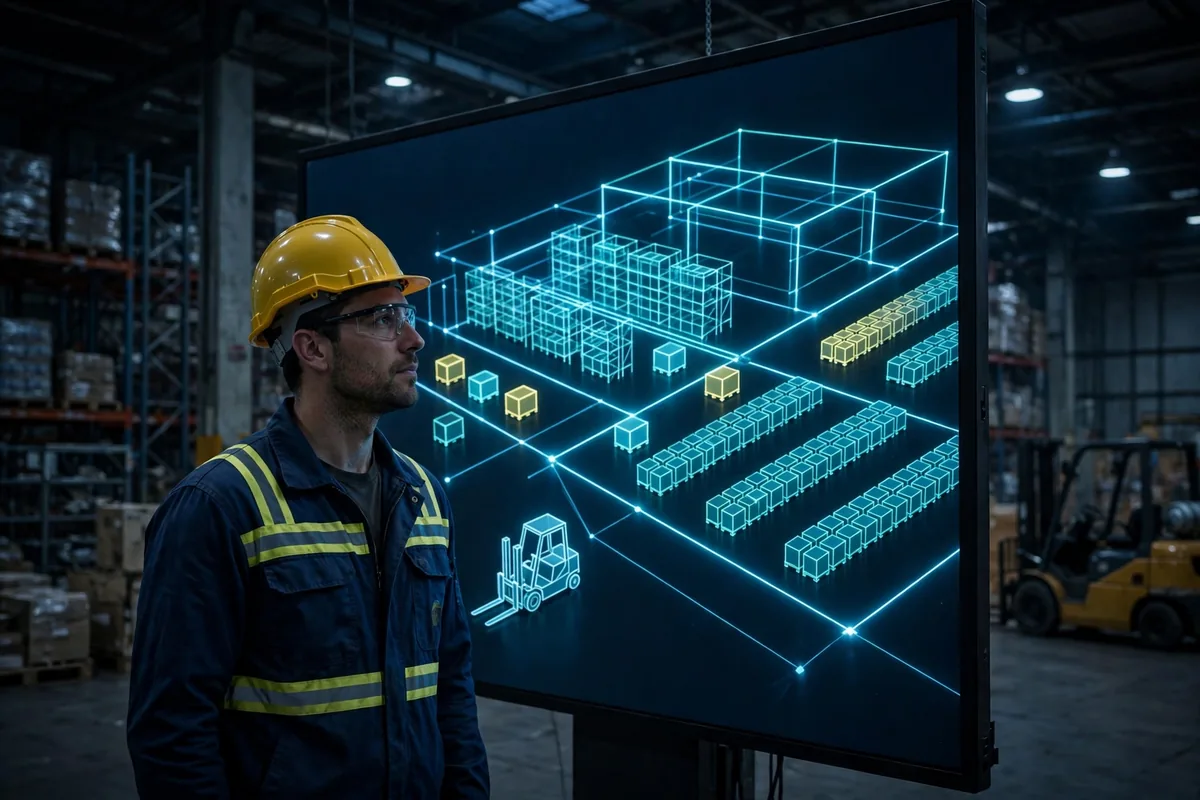
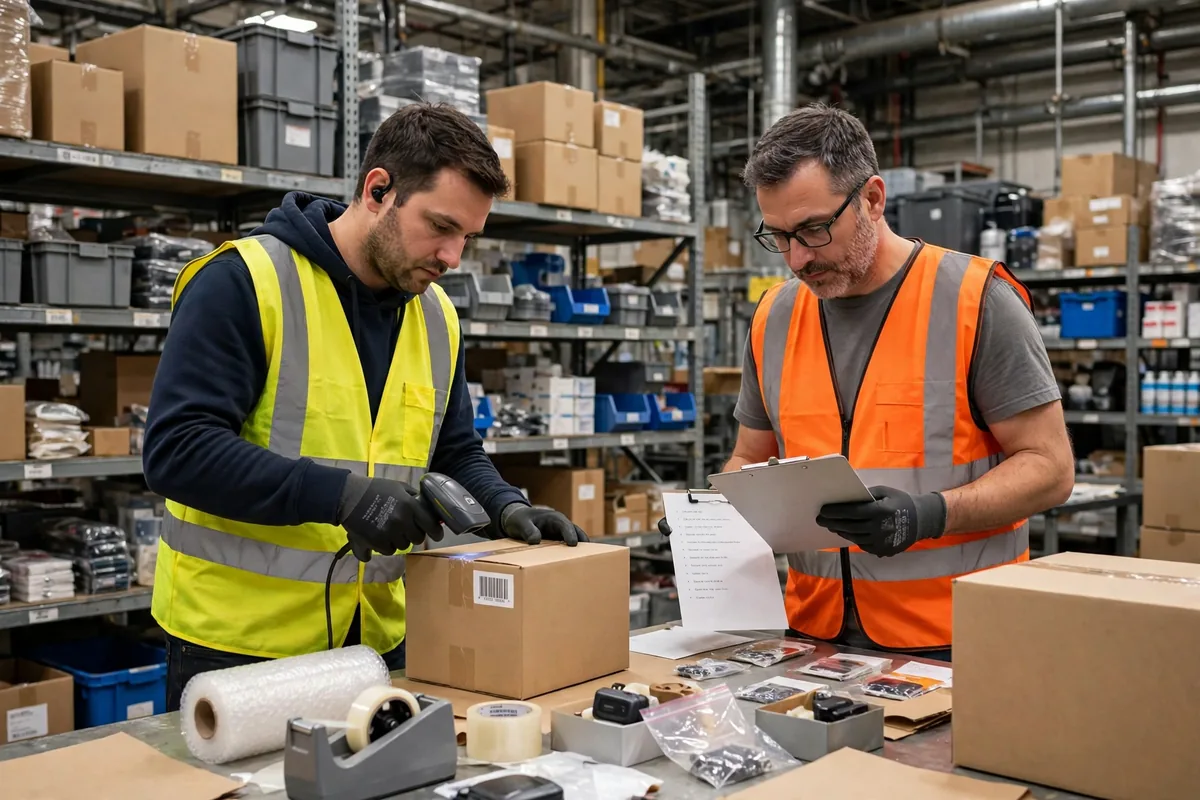
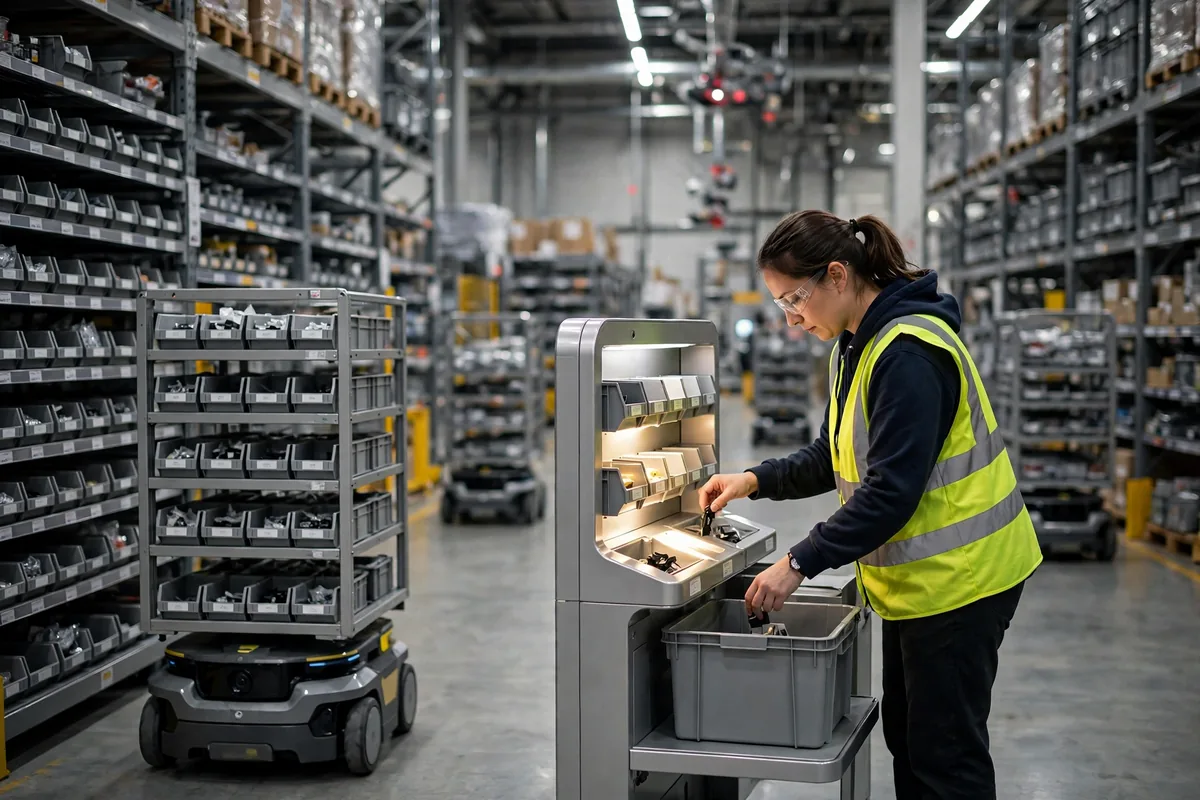
Start with the principle, then the dividing line. In traditional person-to-goods picking, the picker pushes a cart around the warehouse. Engineering studies have long put a number on it: 40 to 60 percent of a picker's time goes to walking, and only about 30 to 40 percent to actually picking. A goods-to-person picking system flips the logic. The operator stands still at a workstation while robots, shuttles, or lifts bring the tote to them. The operator only picks and places. Think of it like a restaurant: instead of walking to the kitchen to fetch your own food, the waiter brings the dish to your table. You are not eating faster — you stopped running errands.
The public numbers usually quoted are these: manual picking runs about 50 to 100 picks per hour, while GTP stations can sustain 200 to 400-plus picks per hour, with some configurations reaching 450 to 800 in ideal conditions. Accuracy typically rises from 95 to 98 percent manual to around 99.9 percent with system-directed picking. These are ranges you will find across industry publications — not any one vendor's brochure — and you should always verify against your own measured pilot. Demo-floor numbers deserve a 30 percent haircut before you believe them.
What Problem a Goods-to-Person Picking System Actually Solves
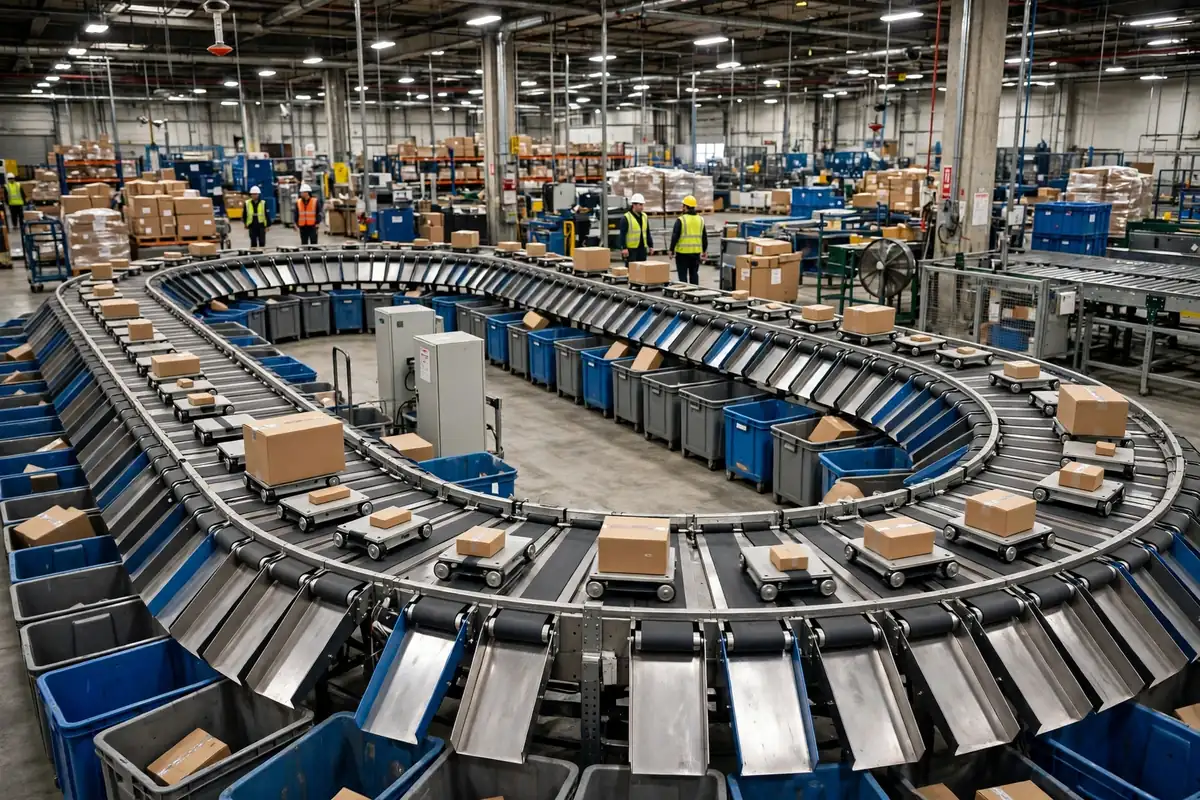
It solves exactly one problem: too much walking. Whether too much walking is your problem is a question for your data, not your ambitions. A few years ago I worked on a selection study for a consumer-electronics e-commerce warehouse: more than 8,000 SKUs, over 6,000 orders a day, about 1.6 lines per order, pickers walking a dozen kilometers per shift — and doubling headcount at peak. That is the textbook target for GTP: many SKUs, small orders, high volume, walking dominating the shift. After go-live, the pick stations stayed fixed, the robots did the running, per-person output rose several-fold, and peak season stopped being a hiring panic. It was one of the smoothest deployments I have seen, and the reason was not great equipment. It was an order profile that was born for the technology.
The counter-example matters just as much. Last year a building-materials warehouse called me about goods-to-person because "the warehouse next door has it." I walked the floor: fewer than 800 SKUs, everything was tile, pipe, and faucets — big, heavy, awkward freight — under 2,000 order lines a day, and pickers already drove forklifts between racks. Walking was never the bottleneck. In that building, a GTP system would have delivered totes that could not hold a box of tile, and people would still have to manhandle the heavy stuff. That is a textbook pseudo-requirement: the problem is not walking, but someone insists on buying a solution for walking.
Is Goods-to-Person Picking Worth It? Three Dividing Lines
Here is the framework I use. Match your warehouse's numbers against it. Note that these thresholds are dividing lines from my own project experience, not an industry standard — verify with your own measurements.
| Metric | Don't buy — stay person-to-goods | Talk about it — run a pilot | Worth it — start a real project |
|---|---|---|---|
| Daily order lines | Under 5,000 | 5,000–15,000 | Over 15,000 |
| SKU count | Under 2,000 | 2,000–8,000 | Over 8,000 |
| Average lines per order | Over 3 (mostly full-order picks) | 2–3 | Under 2 (mostly single-line orders) |
| Peak factor | Peak under 2× baseline | 2–3× | Over 3×, and hiring is impossible |
If you land in the "worth it" column on three of the four, start the project. If you only hit one, do the cheap work first — ABC classification, slotting optimization — and come back later. There is one more hard line: the shape of the goods. GTP shines with small items that fit in a standard tote. Oversized, overweight, or odd-shaped freight cannot be delivered by robot or received at a station, and forcing it in is asking for trouble.
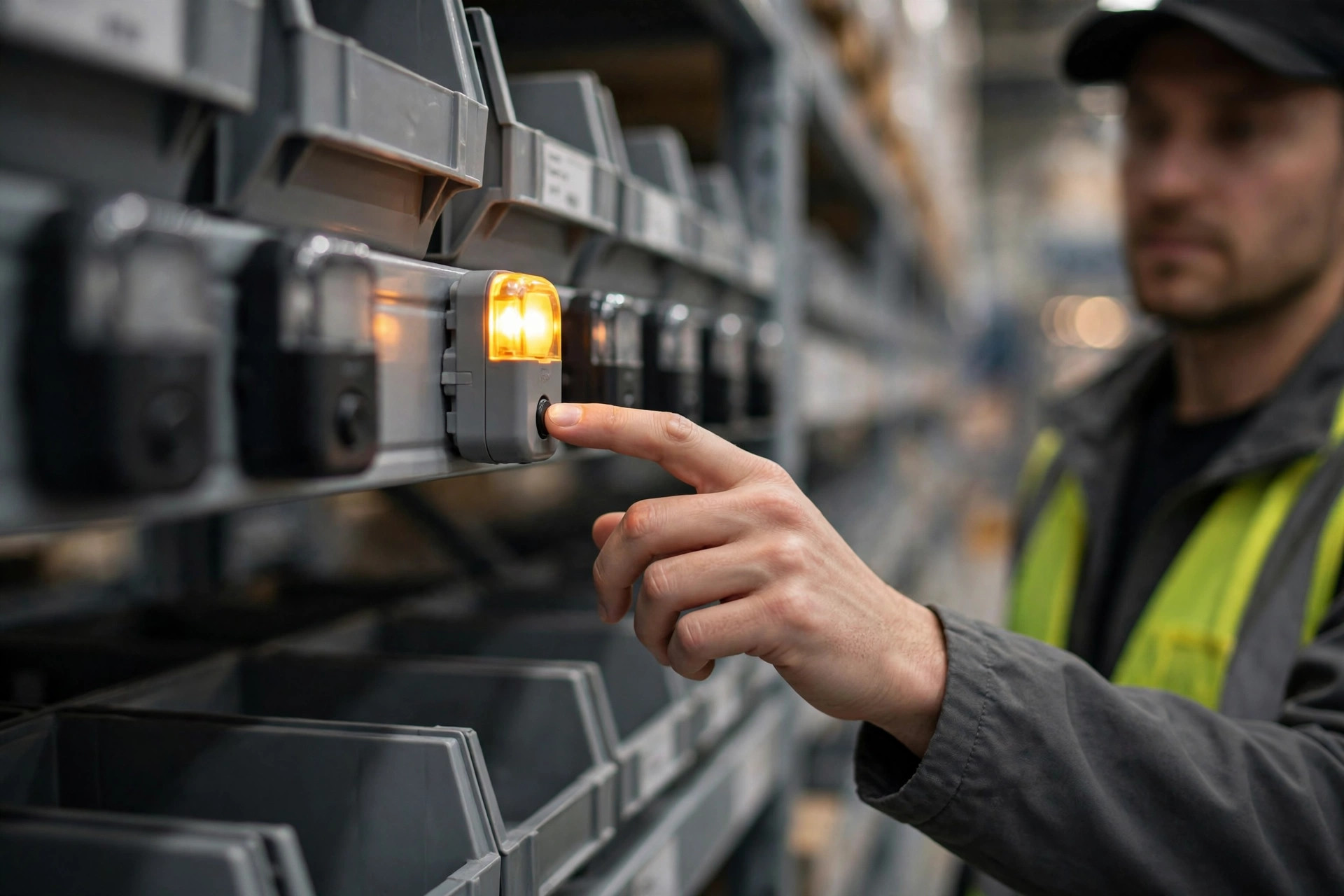
A goods-to-person picking system is not the only answer, either. A put-to-light wall fits a mid-volume warehouse with concentrated SKUs and a stable order mix, for far less money. A follow-me AMR suits heavy goods where the person still has to walk alongside. And person-to-goods with pick-to-light is still the best value until your volume crosses the line. The classic selection mistake is choosing the technology first and finding a use case second. The correct order is always: order profile first, technology second.
The Three Places It Breaks After Go-Live
The first trap is replenishment falling behind picking. A station that can output 300 lines an hour is useless if replenishment can only feed it 200 lines' worth of stock per hour. The station waits, the pretty throughput chart lies, and real shipments do not rise. The faster the picking station, the harder replenishment works — that math belongs in the business case from day one.
The second trap is the single point of failure. GTP is a system: if the software goes down or the robots stop, the whole pick zone stops. A person-to-goods warehouse that loses one picker still has ninety-nine working. A GTP warehouse that loses its system has zero. So before go-live you need a manual fallback plan: when the power or network dies, can people immediately go back to picking from racks by hand? If you have never rehearsed that, you have no insurance.
The third trap is the SKU mix changing. Bestsellers rotate, and tote configuration, robot scheduling, and replenishment strategy all have to rotate with them. Plenty of warehouses post beautiful numbers in year one, then new products arrive in year two, the old configuration falls apart, and they pay again to retune. Here is the counterintuitive judgment: the biggest cost of GTP is not the robots — it is the people doing replenishment and exception handling. The faster you pick, the harder replenishment works. Most of the pickers you "save" end up reassigned to replenishment and problem-solving. Any ROI model that counts pick-rate gains and ignores replenishment headcount is a fairy tale.
So is the money worth it? Watch one number: daily picked lines per station. Divide your daily order lines by the number of stations you plan to build. If that number stays under 2,000 lines long-term, the investment will struggle to pay back. If it holds above 3,000, then go talk to vendors, talk price, talk payback. And here is the payback sketch — all figures are a hypothetical scenario, an illustrative example: assume 8 stations, 300 lines per station-hour, 8 hours a day, 18,000 order lines a day. Manual picking needs 30 people; GTP needs 8 pickers plus 4 replenishers, saving 18 people. At an assumed 20 dollars an hour, that is 2,880 dollars a day, or 720,000 dollars over 250 working days. Against an assumed 1.5 million dollars for equipment, software, and implementation, payback is about two years. Halve the volume and payback stretches past four years — and the deal needs a second look.
One last thought: GTP is not a trophy for an automation contest. It is the answer you reach when order volume has you cornered. If the volume is not there, do not follow the crowd. If it is there, do not hesitate.
By Da Liu, Automation Engineer