We had a client in Kumasi who works in Ghana gold export warehouse storage. He called me in the autumn of 2025, and his first sentence was: Susan, my bars have been sitting in the vault for three days and the insurer says they are not covered. Tell me what is wrong with my contract.
He buys doré bars from mines in the Ashanti belt, trucks them to Tema Port, and ships them to an overseas refinery. The bars go into a vault near the mine, then travel under escort to a bonded warehouse by the port, where they wait for the vessel. It all sounds straightforward. The trouble lives in that word, straightforward — because the storage contract he signed was a standard general-cargo template with the cargo name swapped out.
Some context first, in case this sounds like a niche trade. Ghana mined about 4.8 million ounces of gold in 2024, roughly 149 tonnes, making it Africa's largest gold producer, and 2025 output set another record at about 5.94 million ounces. Gold accounted for more than 60 percent of Ghana's merchandise exports, earning roughly $20.2 billion in 2025, nearly double the $10.3 billion of 2024. Gold is the lifeblood of Ghana's export economy — and yet plenty of people get the storage math for it badly wrong.
Ghana Gold Export Warehouse Storage, Part One: A Vault Is Not a Warehouse
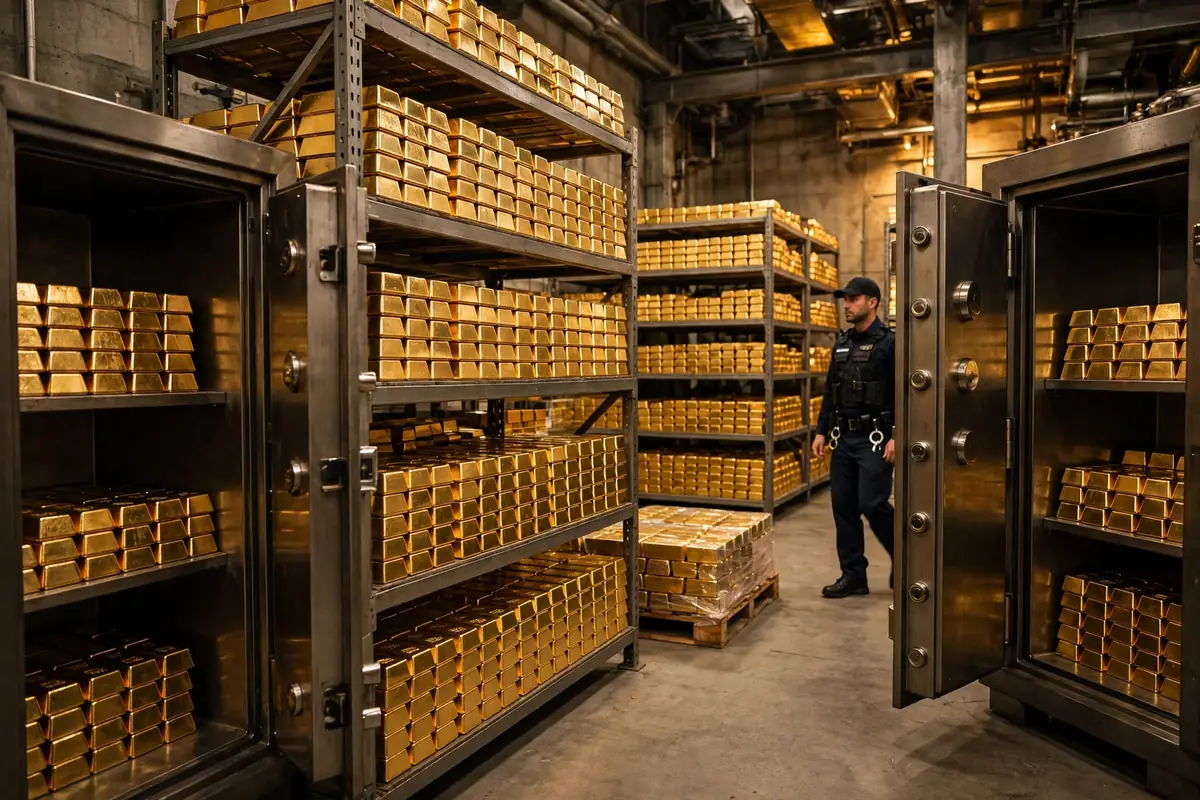
A regular warehouse competes on space and throughput. A vault competes on one question: who can touch the goods. Our client's bars sat in a vault with access control, cameras, and two-person staffing, all looking proper on paper. Then the insurer asked one question that stopped everything: who signs the weighing records and seal numbers at inbound and outbound, who countersigns them, and how long are they kept? The contract said nothing at all. He had negotiated the vault rent. He had not negotiated the insurance. For those three days, strictly speaking, his gold was travelling naked.
High-value cargo plays by a different rulebook from general cargo. Lose a pallet of general cargo and the contract pays out a multiple of the freight bill. Lose one box of gold bars and the claim has several more zeroes on it. So three things have to be written into the contract in black and white: who buys the insurance, which policies, and what the deductible is. Storage cover, transit cover, and all-risks cover are three different policies. Never accept a wave of the hand and a "it's all covered" — ask to see the originals, one by one. The same goes for assay certificates and weight tickets: if the inbound re-weighing does not match the outbound ticket, the contract has to say whose problem that is.
Then there is the trap my clients' bosses love to walk into: talking about gold concentrate and doré bars as if they were the same thing. Concentrate has to be assayed, and the price settles on the assayed grade after refining. Doré bars are already smelted, and they settle on weight and purity. Different storage requirements, different insurance rates, different document lists. If the contract does not separate them, the argument at settlement time is guaranteed.
We had another client last year, exporting concentrate, whose cargo sat in a bonded warehouse by Tema Port for two weeks waiting for the refinery's vessel. The grade on the assay certificate and the refinery's re-test differed by less than one point, and the settlement price moved by tens of thousands of dollars. Both sides dug in for a month. The fix? One new clause: the re-test result from an independent laboratory governs, and the two sides split the lab fee. Every concentrate contract I have handled since then carries that clause. The lesson is one sentence long: on grade, a verbal understanding is the same as no understanding.
One more vault detail: who holds the keys. A proper vault runs on two-person, two-lock rules — two people present before a box opens, and no one person can walk in alone. In our first client's contract, the duty roster and the authorised-persons list were blank appendices. The vault operator said they followed standard practice; the insurer said standard practice is not evidence. Guess how it ended: the contract was re-signed, the appendices filled in, and only then did the policy come through. In the gold business, whatever is not written into the contract does not exist.
Ghana Gold Export Warehouse Storage, Part Two: Escort and the Chain of Custody
Moving gold from Ashanti to Tema Port takes the better part of a day on the road. Obuasi sits about 230 kilometres northwest of Accra, and Tema Port lies about 30 kilometres east of the capital. Tema is Ghana's largest port, handling roughly 70 percent of the country's container traffic, and it opened in 1962. The most expensive thing on that road is not fuel. It is waiting. One schedule change and the cargo spends two extra days in the port warehouse; one missing document and the refinery will not accept delivery. Our client learned this the hard way: a single wrong digit in a seal number on the handover sheet, the port warehouse refused the cargo, the escort vehicle waited at the gate for most of the day, the vessel sailed without it, and the storage fees and the cost of the tied-up money all landed on him.
The rule for the chain of custody is really one sentence: every step has to leave behind evidence that matches. Outbound weighing, sealing, seal numbers, escort sign-off, inbound re-weighing — five steps, none optional, two signatures on each, seal numbers and weights reconciled by all three parties. Do not call it red tape. In the gold trade, hassle is cheap — because when something really goes wrong, one missing signature is all the insurer needs to pay a lot less. Documents work the same way: export permit, certificate of origin, assay certificate. Miss one and the cargo can sit at the port, and the exact list should be checked against the latest official Ghanaian policy, never copied from last year's file.
So how does the math actually work? Here is a hypothetical worked example: a 200-kilogram lot of doré bars, valued at the November 2025 gold price of roughly $3,200 per ounce, which puts the cargo at roughly $20 million.
| Cost item | Share of the total bill | What to pin down in negotiation |
|---|---|---|
| Vault storage rent | The smallest share | Per day or per lot |
| Insurance (storage plus transit) | One of the biggest items | Who buys it, deductible, original policy |
| Armed escort | One of the biggest items | Route, handover points, delay liability |
| Documents and inspection | Fixed cost | List per latest official policy |
| Cost of delay | The most underestimated | Who pays when a sailing is missed |
See the counterintuitive part? In Ghana gold export warehouse storage, rent is the cheapest line on the page. The real money goes to insurance, escort, and waiting. The operator with the lowest rent on the quote is usually the one who stripped insurance and escort out of the price and bills them separately — and the total comes out higher. Clients who compare rent alone always end up paying tuition for that bargain.
One more thing worth knowing: in 2025 Ghana set up the Ghana Gold Board to buy gold from small-scale miners centrally, and export rules have tightened since. The informal shortcuts that used to work now have to go through formal channels. For clients doing honest business that is good news — clear rules make for quotations you can actually negotiate. The ones who should worry are those still hoping to run the old playbook.
Ask These Three Questions Before You Sign
So the next time you sit down to negotiate a contract, ask these three questions. One: who buys the insurance, what does it cover, what is the deductible — and can I see the original policy? Two: which weight governs handover, and are the seal numbers written into an annex to the contract? Three: if a sailing is missed or a document gets stuck, who pays the storage and the cost of the money? Get those three answered and the contract is half negotiated. The other half can wait until the cargo arrives safely at the refinery.
By Susan, 3PL Sales Director