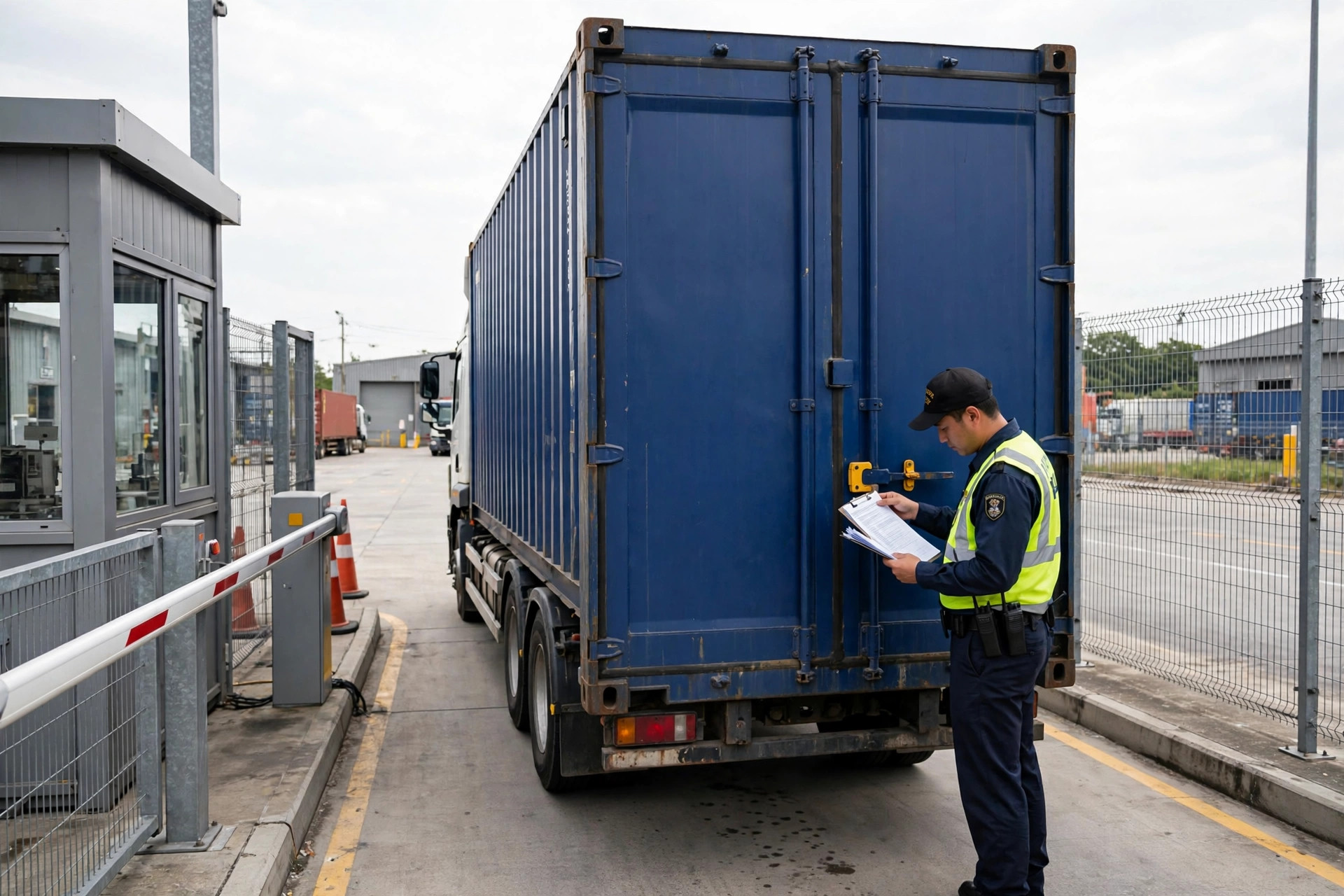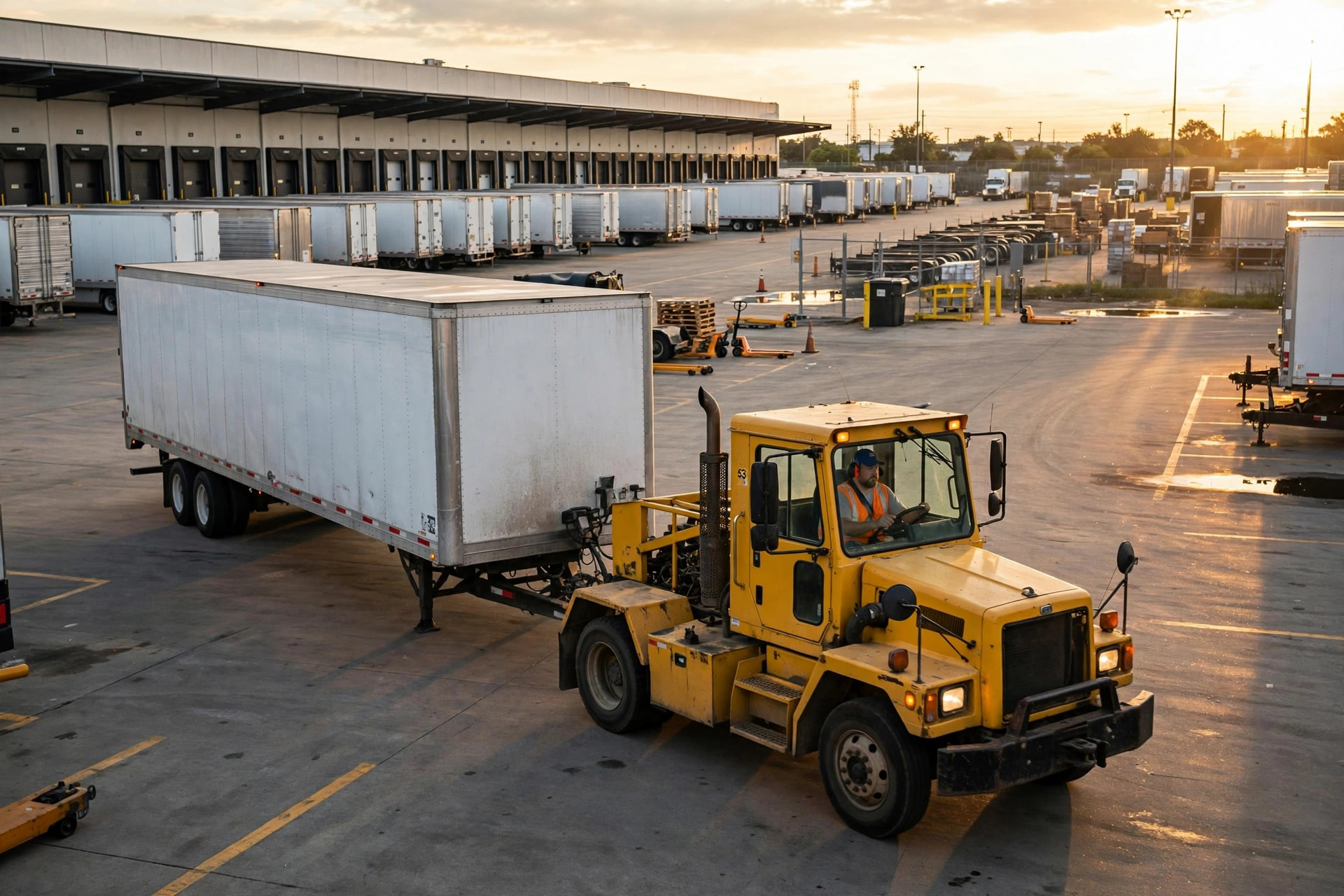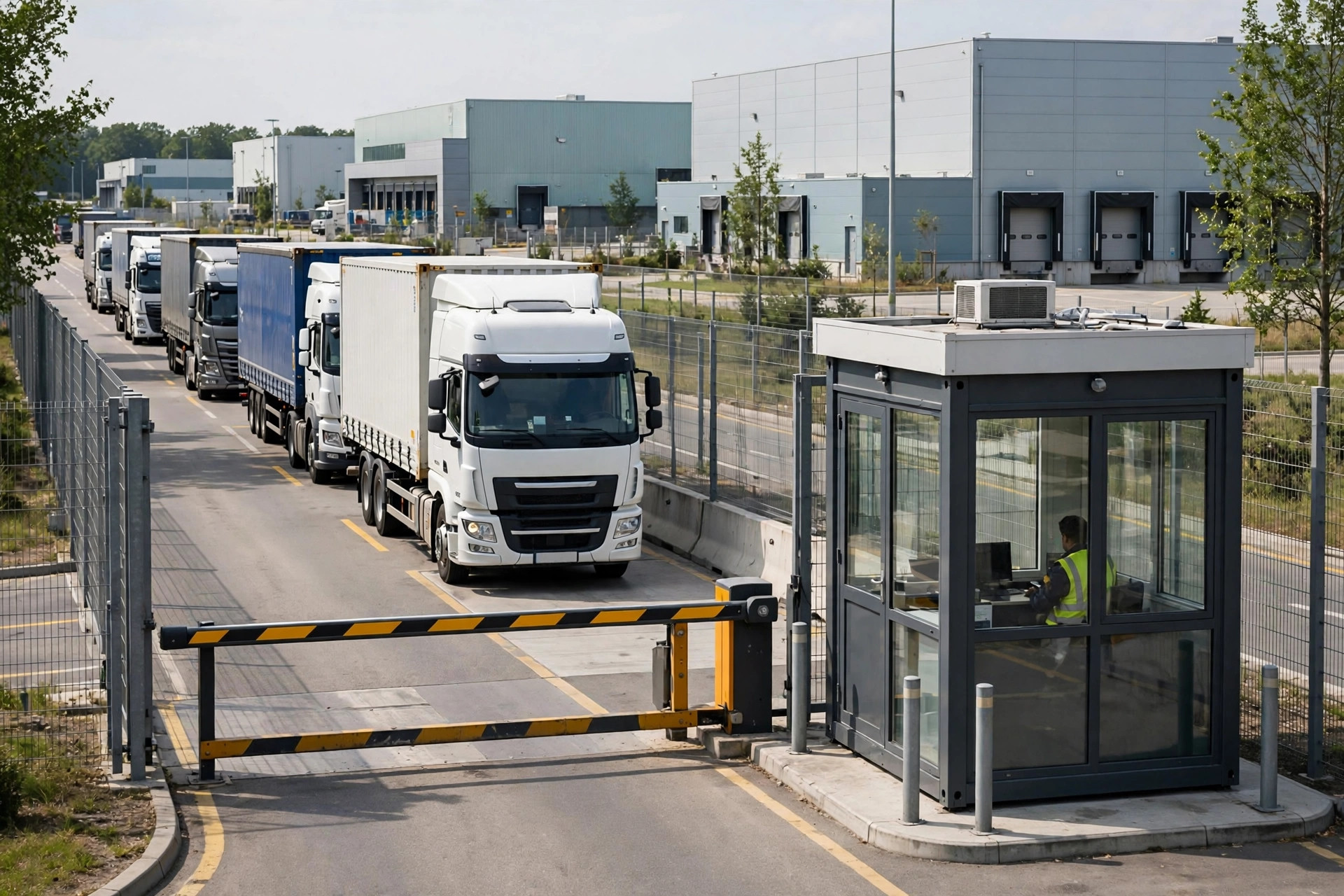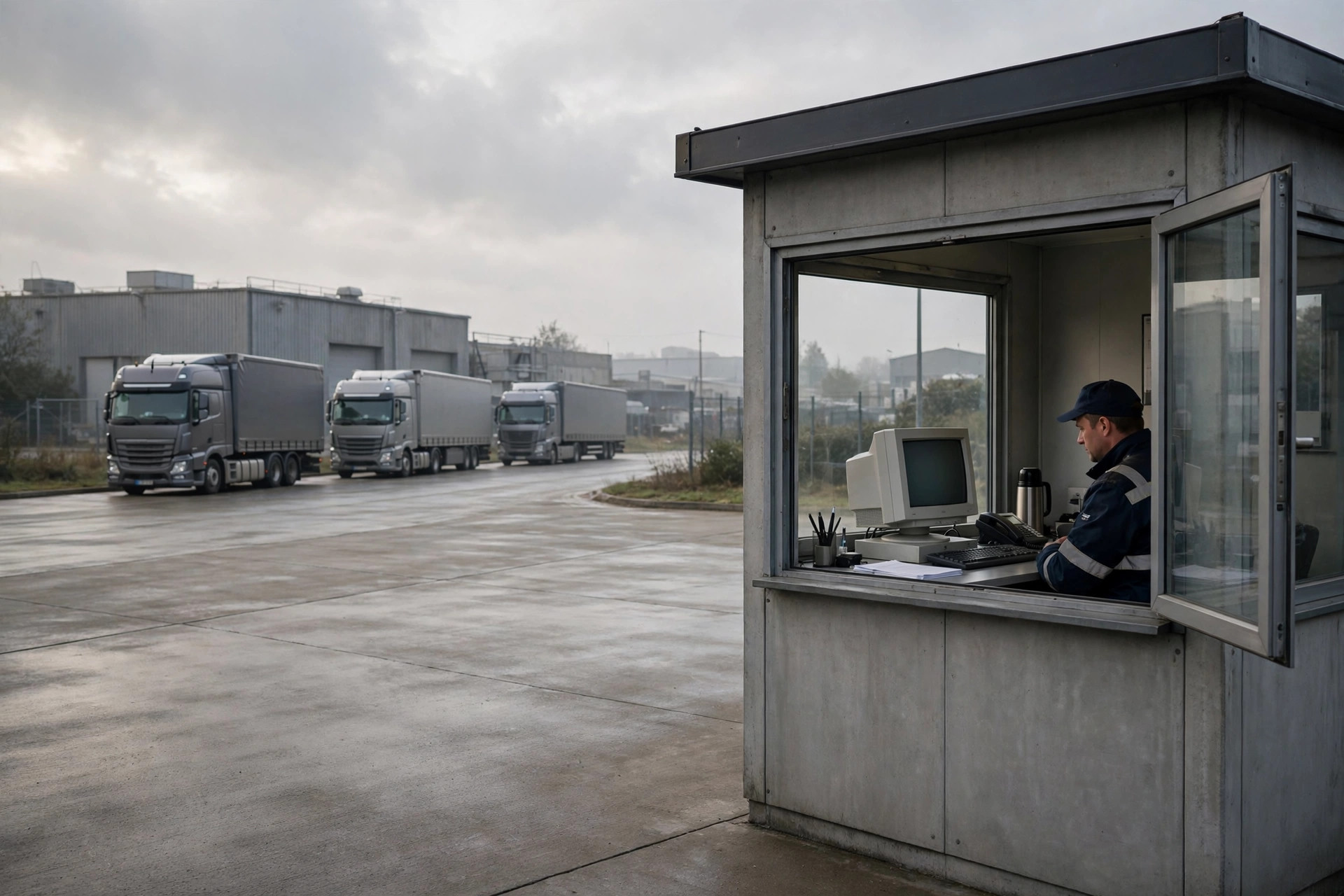
It's 7:05 on a Tuesday morning, and four trucks are already backed up at the gate. Inside the guard booth, the guard — call him Zhang — has a two-way radio in his left hand and is scrolling through an Excel sheet with his right. The sheet came from the dispatch office yesterday: today's appointment list, nine trucks.
The driver third in line sends a voice message into the group chat, his engine idling in the background: "Zhang, how many trucks ahead of me? I'm hauling reefer, the cooling unit's been running this whole time, burning diesel."
Zhang scrolls to the bottom of the sheet and sighs. "Nine scheduled, four showed up, five unaccounted for. And one of these four is actually from yesterday — the dock wasn't cleared, so they told him to come back this morning."
That's a warehouse I visited in Ontario last year — 150,000 square feet, twelve dock doors, mid-size by any measure. The owner asked me: "Lao Mi, should we get a YMS?" I told him: "You already have one. It's that old PC in the guard booth, plus Zhang, plus a group chat. The problem isn't that you lack a system — it's that your homegrown YMS has hit its ceiling, and you don't know what that ceiling looks like."
Let's get one thing straight first: a YMS doesn't manage what's inside the warehouse. It manages the land between the gate and the dock doors — who arrives when, which door they use, how long they stay, when they leave. The homegrown approach doesn't ignore any of this; it just handles it in fragments. Truck arrives, someone writes it down. Truck leaves, nobody writes it down.
The Logbook Is Full, but the Line at the Gate Isn't Getting Shorter
Homegrown yard management has three ceilings, and nearly every warehouse running on Excel and group chats hits all three.
Ceiling one: appointments are fiction. Nine scheduled, four show up; the rest are late or simply no-shows, and dispatch has no idea. So who decides the order of trucks at the gate? Zhang does. Drivers protest: why does he go first and I go second? Zhang feels wronged too: messages get buried in the chat, how am I supposed to remember who arrived first? Come peak season, arguments at the gate become a daily ritual.
Ceiling two: trucks vanish after they pass the gate. The Excel sheet logs check-in, but not which door the truck went to or how long loading took. Dispatch wants to know "is that door done unloading?" — they have to call the loading team lead, who says "almost." Almost could mean ten minutes or an hour. Dwell time — how long a vehicle sits on your property — never gets calculated. What you can't measure, you can't improve.
Ceiling three, and the deadliest one: nobody logs departure time. I've walked through more than a dozen warehouses running the homegrown playbook. Appointment time and check-in time, most of them record. Departure time, almost none. Without departures, dwell time is a black box; with a black box, your doors are never enough — not because you actually need more doors, but because nobody knows where the time goes.

Upgrading Isn't Buying Software — It's Capturing Three Timestamps First, Then Talking About Door Assignment
Most people think upgrading to a YMS means buying a software package, installing a gate kiosk, and putting up a big screen at the entrance. My verdict is the opposite: software is the last step. The first three cost nothing — you fix the process before you buy the tool.
Step one: capture three timestamps — appointment time, actual check-in time, departure time. A sheet of paper or one Excel tab is fine. What matters is doing it every single day, the guard executes, and dispatch reviews it before clocking out. Keep it up for two weeks and you'll see the truth for the first time: which carrier is always late, which door unloads slowest, what hour of the day the yard jams up. That sheet will teach you more than any software demo.
Step two: make door assignment visible. Know which truck is at which door, how long it's been loading, who's waiting. The simplest method works: a whiteboard on the dispatch office wall, door numbers down the left, time slots across the top, one magnet per truck. Dispatch and the guard look at the same board; when a driver asks "am I up?", you point at the board. Phone calls drop by half.
Step three: inbound visibility and no-show management. Ask carriers to send an estimated arrival time in advance; when one runs late, dispatch gets pinged automatically. Carriers with high no-show rates get pushed back in the appointment queue — data in hand is the best leverage in any negotiation. This is where Excel starts to strain; a lightweight online appointment tool, usually billed monthly and not expensive, starts to make sense.
Step four: automated scheduling. This is what a real YMS does — assign doors and call trucks automatically based on door availability, order priority, and inbound truck positions. But here's the iron rule: if nobody's using the data from the previous step, don't move to the next one. Data nobody looks at makes any software a paperweight.
Then there's the human part. The guard has to shift from "the person who writes things down" to "the person who enforces the gate rules." Dispatch has to shift from "the person who calls to chase trucks" to "the person who plans from the board." The hardest part is week one — the guard will see logging departure time as extra work. What worked for me: tie departure logging to the receipt the driver needs. The driver can't leave without the receipt, so the guard logs the time while handing it over. Far less resistance than any training session or memo. Get the process smooth, and the habit follows.
Finally, the verdict for smaller yards on whether you need a system at all: fewer than ten trucks a day and a gate that never backs up — don't bother, just run your Excel well. More than twenty trucks a day, or regular backups in peak season, or reefer and food operations where idling burns real money — a YMS pays for itself. In between? Don't overthink it. Walk through the four steps above; if steps one and two still aren't enough, then talk software.
One thing you can do tomorrow morning: print a sign-in sheet and hand it to the guard. Three columns — appointment time, actual arrival time, departure time. Tell him it's just for two weeks, nothing else changes. Two weeks from now, that sheet will show you, for the first time, exactly where your yard is jammed.