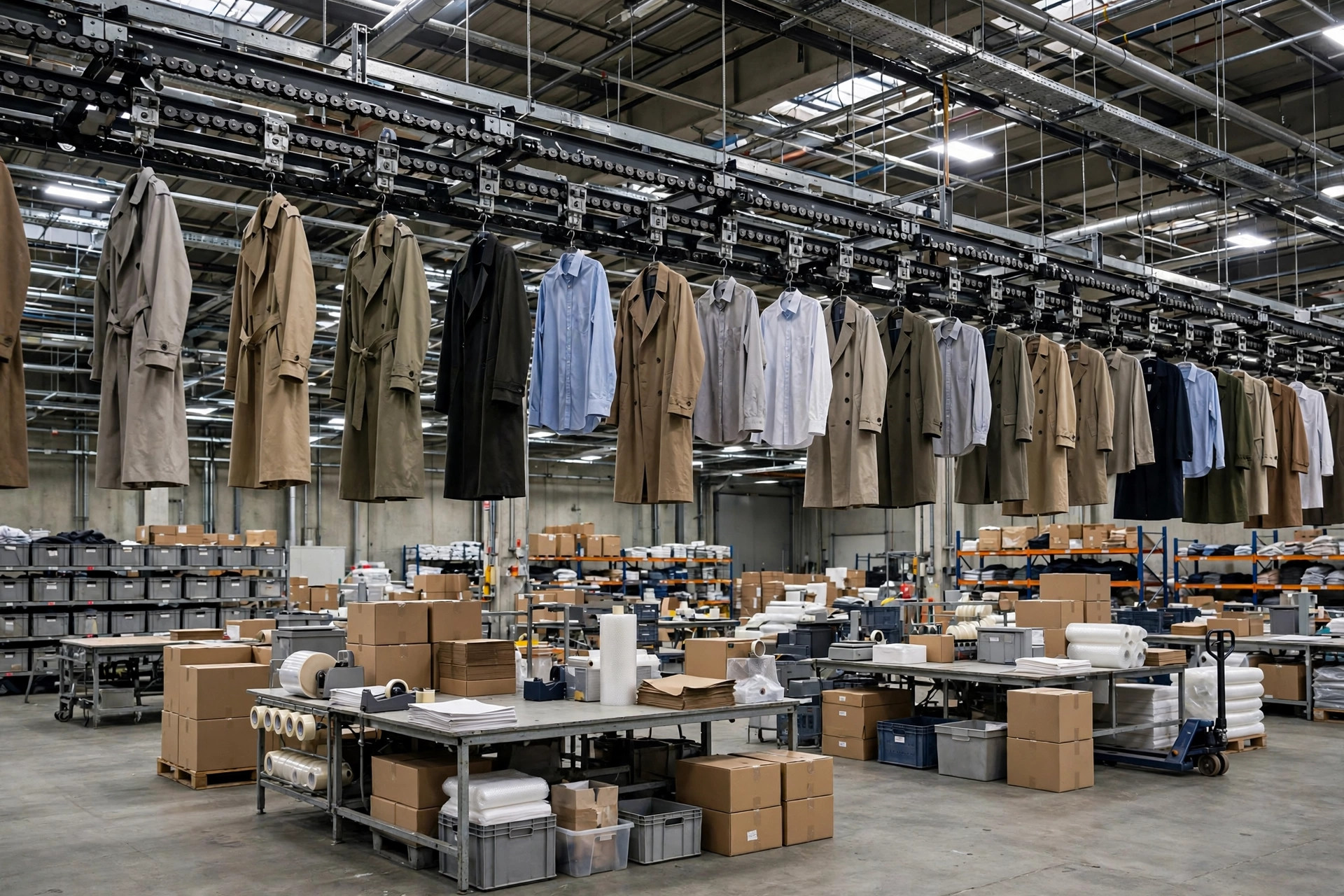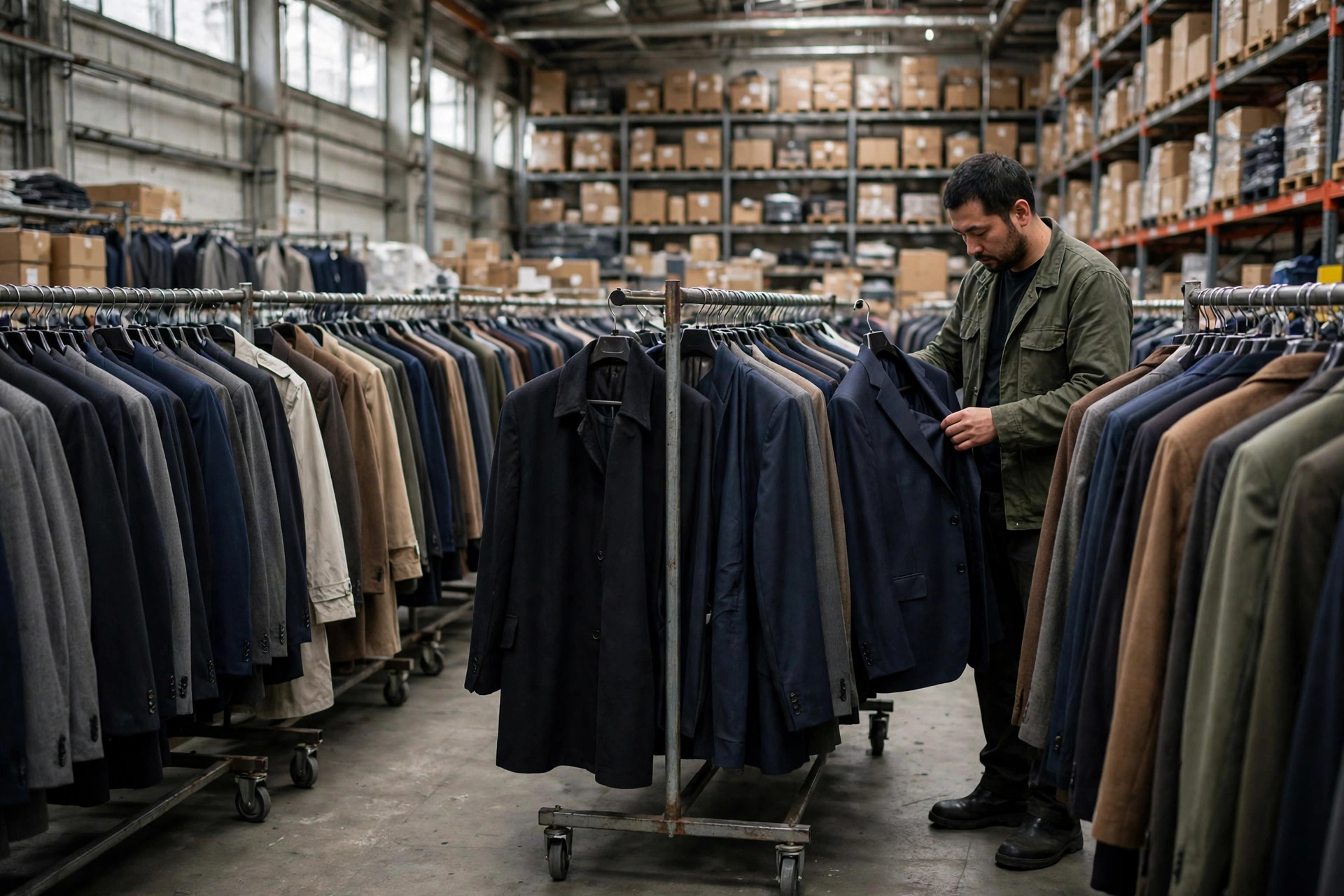
Bottom line up front: if a garment needs pressing and re-hanging at the store, ship it hanging. Garment on hanger warehouse logistics is not about saving freight. It is about deleting the pressing step at the store. A folded suit arrives as a chore: unbox, hang, press, inspect, rack. A hung suit arrives as a product: unbox, inspect, rack. The labor and time saved at the store usually dwarf the extra cost of hanger boxes, hangers, and the freight penalty of shipping air. But garment on hanger is not for everything, and I have seen that mistake three times now: someone hangs T-shirts too, doubles the cube, and gets complaints from stores about the space the hanging boxes eat.
The Mistake I Have Seen Three Times: Hanging the Wrong Category
In the fall of 2023, a menswear client came to us for a new warehouse go-live. Suits were about thirty percent of their range, shirts and T-shirts the other seventy percent, and the client made one sweeping call: hang everything, because it would make life easier for the stores. I flagged the freight risk and moved on, which I regret. The first shipment to forty stores went out in hanging boxes that took up nearly twice the cube of folded cartons. Truck fill dropped by roughly a fifth, the freight bill jumped, and the T-shirts arrived with stretched collars from swinging on hangers all the way. The stores had to rework them anyway.
The rule I use now is a single question: does this garment need pressing and re-hanging when it reaches the store? Suits, overcoats, silk dresses, trench coats: yes, hang them. T-shirts, hoodies, jeans: no, fold them. Mixed orders get split into two flows. A single flow for everything feels efficient and fails expensively. This is the part of garment on hanger warehouse logistics that nobody puts in the sales deck: it saves pressing labor, not cube and not freight.
Garment on Hanger Warehouse Logistics, Step by Step
The chain only works if the garment is never folded after it leaves the factory. Step one: the factory ships on hangers, and the hanger model must match the store fixtures, or the store ends up swapping hangers and wrinkling everything in the process. Step two: load into hanging boxes or hanging rail trucks, with the rail load and hook spacing calculated in advance. Hang too tight and garments crush each other; hang too loose and you ship empty air. Step three: store hanging goods in a dedicated hanging zone, never mixed into the same aisle as folded goods, because a loaded garment rail needs a wide turning circle and narrow aisles mean daily collisions. Step four: pick and sort by store, with one rail per store and the store label on the end of the rail, not buried at the bottom of the box, so the store never has to re-sort. Step five: the store unboxes straight onto the rack. That is where the entire investment pays off, and any shortcut in the first four steps shows up here.
My go-live night checklist for hanging goods, which I make clients tick off one by one: hanger model unified across factory, warehouse, and store; hanging box load tested at full weight; hanging-zone aisles wide enough for a loaded rail to turn; store labels on the rail end; and a dedicated rail position for returned hanging garments. Miss that last one and returned suits pile up in the folded zone, wrinkle, and end up on the markdown rack.
The Pressing Math, Worked Out Loud
Take a worked example. A store receives two hundred suits. Folded, the flow is unbox, hang, press, inspect, rack, at roughly six minutes a suit, which is twenty labor hours. Hung, the flow is unbox, inspect, rack, at roughly one minute a suit, or about three and a third hours. One delivery saves roughly sixteen to seventeen labor hours. At four deliveries a month in peak season, that is more than sixty hours. On the other side, the extra cost of garment on hanger is hanger-box depreciation, hangers, and higher freight per unit, which on a per-delivery basis usually lands well below the labor saved. The decision framework is simple: store pressing minutes times labor cost, minus the extra logistics cost of hanging. Positive means hang; negative means fold.
Here is the counterintuitive part. Hanging is not most valuable for luxury brands. Luxury stores already have pressing staff. It is most valuable for mid-market brands with many small stores and no dedicated pressing hands, because those stores cannot absorb a folded delivery at all. I learned that from a second client in the spring of 2024, a dress brand whose stores averaged two staff and no back-room pressing area. After switching dresses to hanging shipment, a delivery that used to take two days to fully rack went up the same day it arrived. The old two-day lag routinely missed the weekend peak, and the lost weekend sales cost far more than the freight ever did.
| Comparison | Folded in cartons | Garment on hanger |
|---|---|---|
| Store handling | Unbox, hang, press, rack | Unbox, inspect, rack |
| Minutes per garment at store (example) | About 6 | About 1 |
| Transport cube | Low, high truck fill | High, needs hanging boxes or rails |
| Best categories | T-shirts, hoodies, jeans | Suits, overcoats, dresses, trench coats |
| Store requirement | Pressing hands and space | Unbox straight to rack |
Garment on Hanger Failure Points, Checked Off Before Go-Live
Failure one: hangers are not unified. Factory, warehouse, and store each use a different hanger, the garment changes hangers three times, and wrinkles three times. Failure two: no dust protection. Hung garments collect far more dust than boxed ones, and an open rail zone near the dock doors will grey out a suit in a week. Use covers or partitions. Failure three: mixed hanging. Put a sequined dress on the same rail as a suit and the sequins snag the suiting fabric; the damage claim costs more than the freight. Failure four: the system has no hanging attribute. If the WMS only knows piece counts and not which items hang, pick tasks go to the folded zone and staff work from memory, and one wrong pick scrambles an order. Put a hanging flag in the item master and let picking, checking, and putaway split on it automatically.
Hanging is not a badge of quality. It is the answer to an equation. The garment wrinkles, the store is short-handed, deliveries are frequent: meet two of those three and hanging earns its keep. Miss them and a well-run folded flow beats a badly run hanging flow every time.
By Lin Xiao, WMS Implementation Consultant