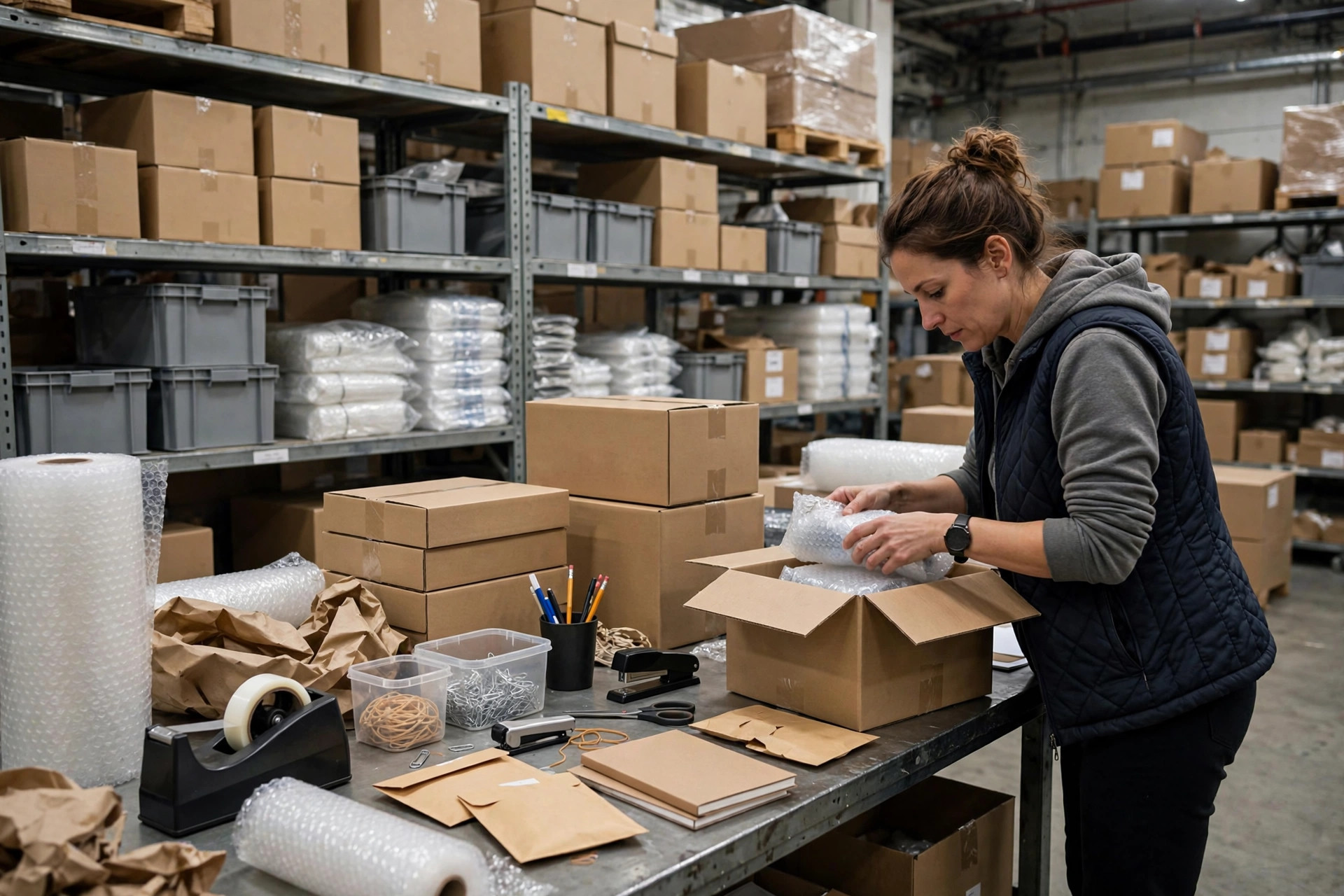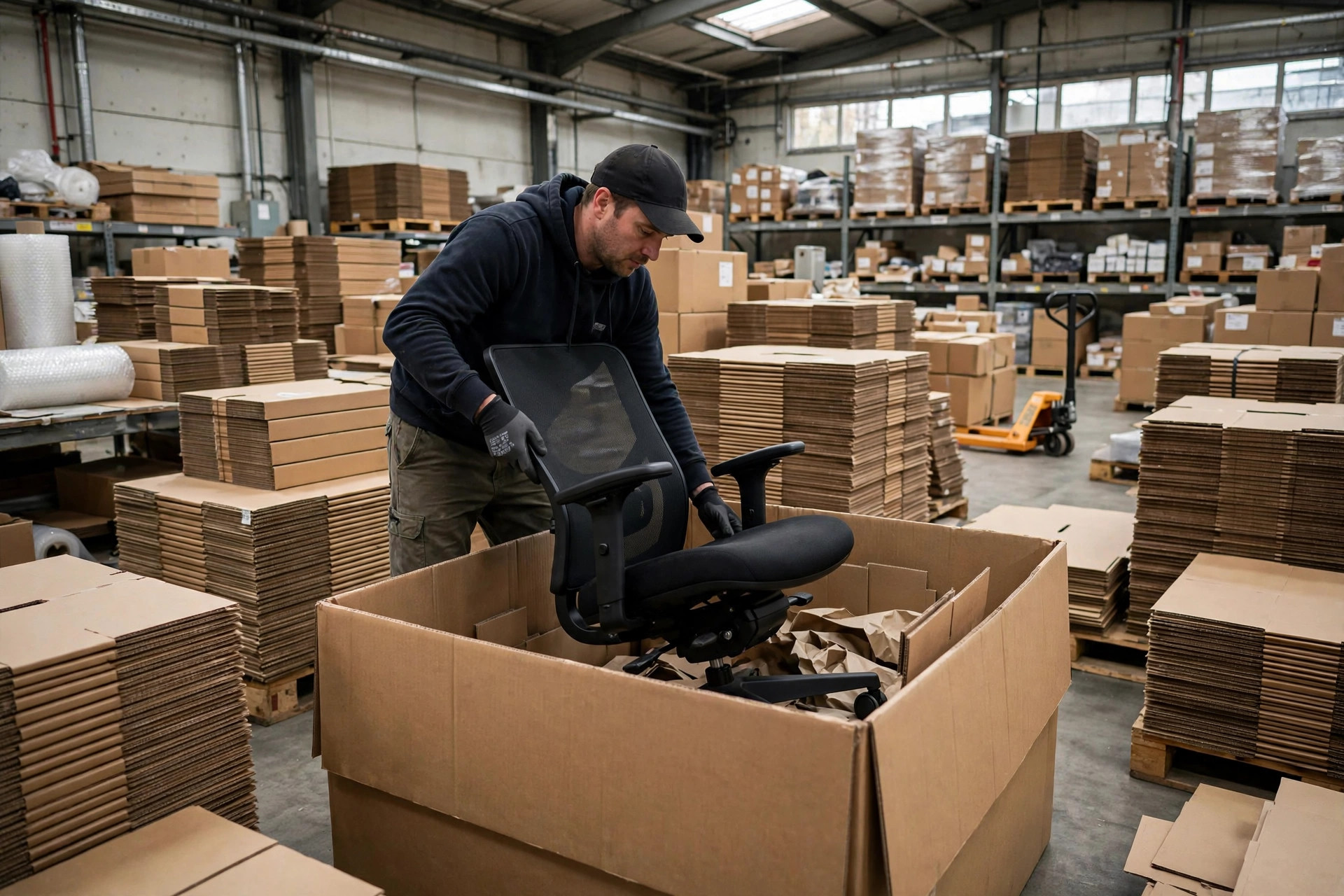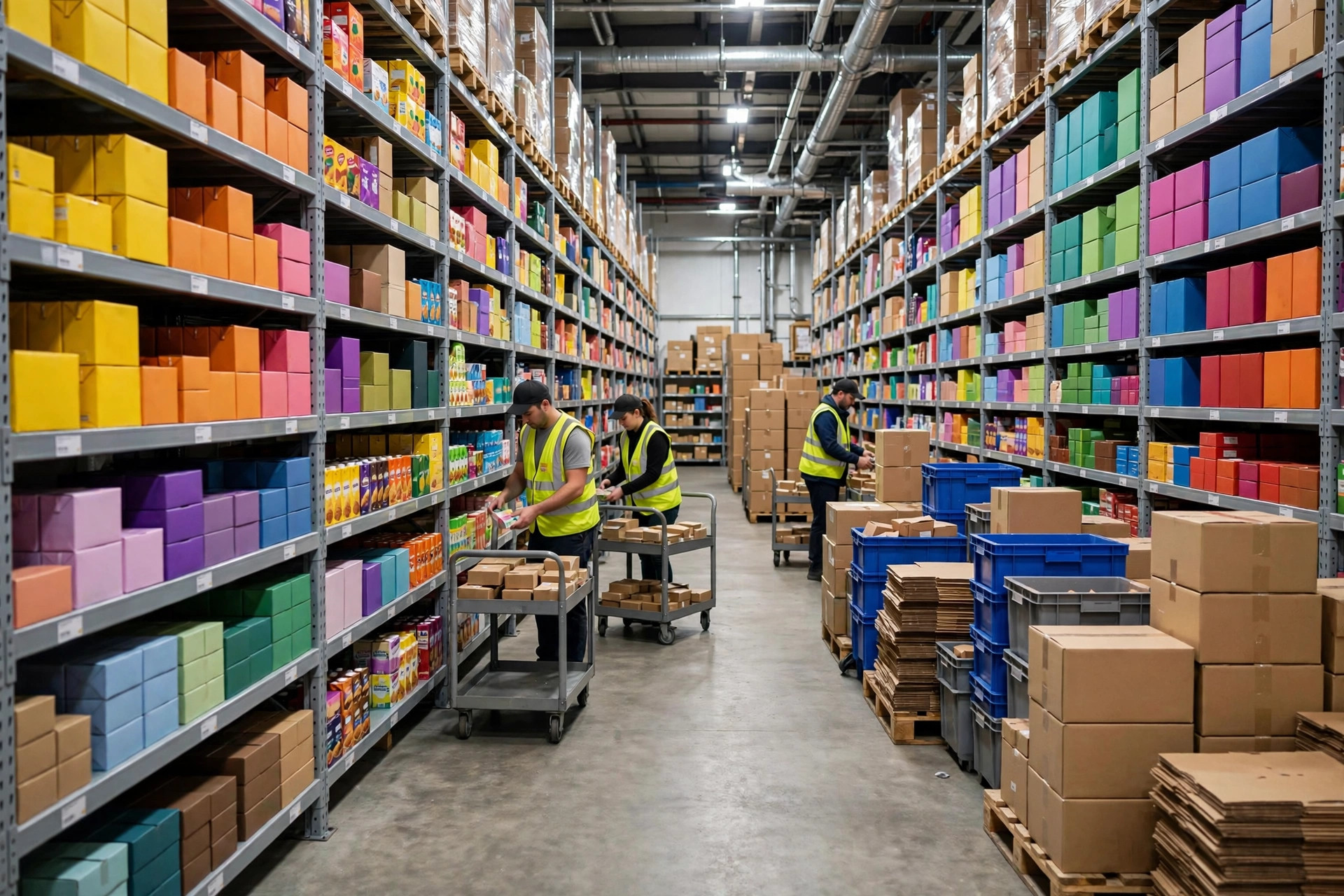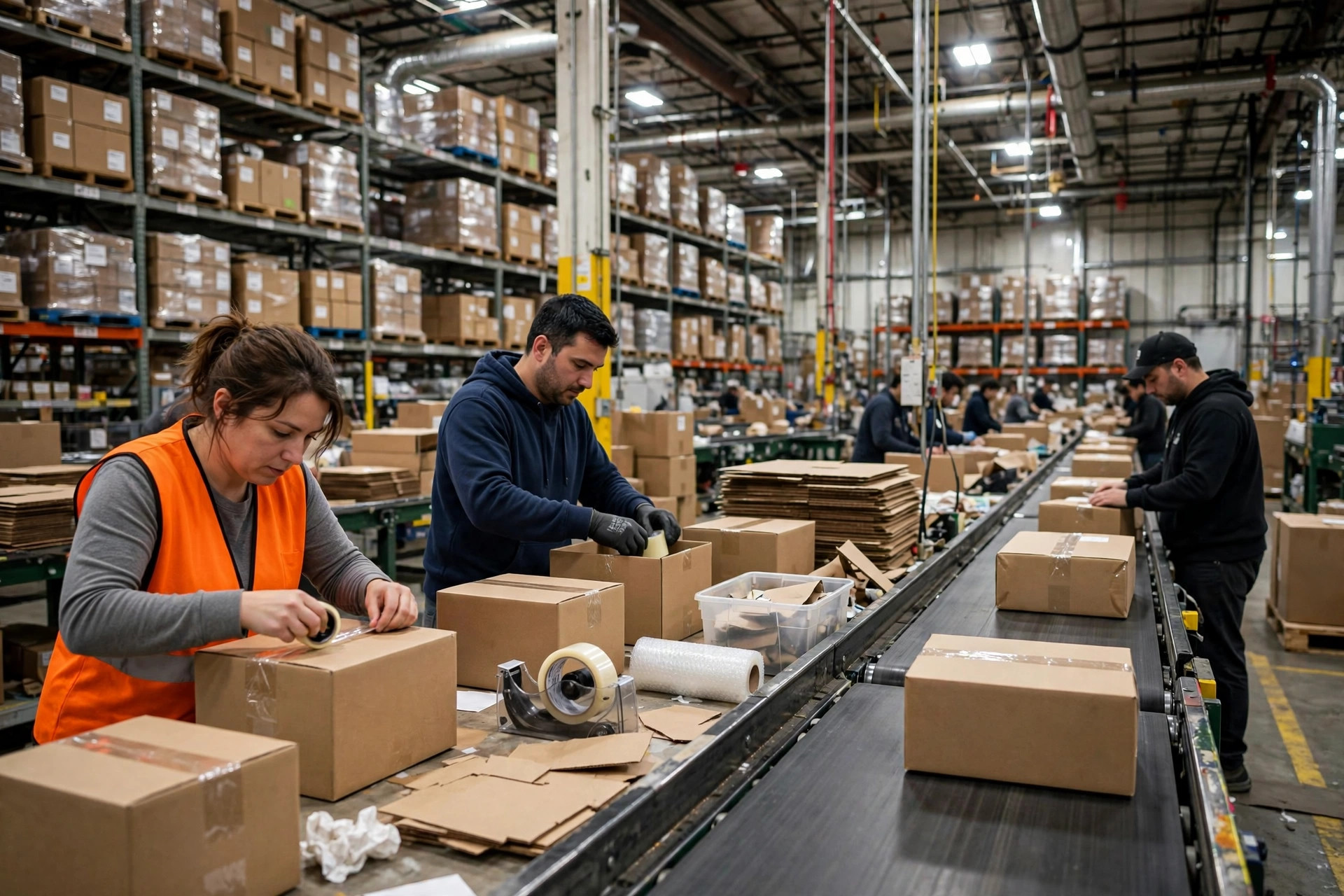
The Monday before Black Friday last year, I walked into the warehouse at 6:30 in the morning and the first thing I saw was a corner sectional sofa sitting sideways in front of dock door 7, one corner of the carton torn open with the fabric peeking out. The driver was leaning against his cab having a smoke. "Sign here, I'm out," he said. Three more trucks were queued up behind him.
Folks who run small-parcel operations will never understand this kind of despair. One sofa ate half our receiving area. Three guys couldn't lift it. And you don't just stab it with a forklift — one wrong angle, the fabric scuffs, the customer rejects it, and the whole order is dead on arrival.
We spent that morning patching the carton, re-wrapping the whole thing, photographing every angle, and holding it in QA instead of shipping it. It went out two days later, intact, but the morning's outbound plan was wrecked. Let me be straight with you: bulky home goods is a completely different animal from regular e-commerce warehousing. Small parcel is about speed and rhythm. Bulky is about not screwing up. And when you screw up, you screw up big.
The fight with the driver
A couple of autumns ago, a customer in Irvine, California ordered a solid wood bed. Our rep told her on the phone it would be "delivered to the bedroom." The order that came down to us said "threshold delivery."
The driver showed up, dropped the bed at the front door. The customer asked: didn't you promise the bedroom? The driver said: I'm only paid to the threshold. She filed a complaint before he'd even pulled away. We ended up paying over two hundred dollars for a local crew to go out and install the bed that same evening.
That afternoon the driver and I had it out in my office. He said the contract was crystal clear: threshold. Our rep said the customer understood "into my home." Both of them were right. The one who was wrong was us — nobody wrote down how far in, whether assembly was included, or whether packaging gets hauled away.
After that, we taped a bulky outbound standard on the wall by receiving. Three tiers: threshold drop, room of choice, upstairs with assembly. Any order that doesn't specify a tier gets staffed and quoted at the highest one. Our reps changed their script too — they confirm the tier with the customer before the order is placed. After that one fight, complaints like that dropped by more than half.

The night shift that broke us
The cruelest thing about bulky is the labor plan. A regular picker does dozens of small items an hour. A mattress? Two people, twenty-plus minutes: strip the corner protection, inspect, re-pack.
Thanksgiving week last year, our night shift ran 40 people, 12 of them pinned down on the bulky line. They pushed out barely 90 bulky orders all night, and the small-parcel side still ran until 2 a.m. Morale cratered. A guy who's been with me three years pulled me aside and said: "Feng, keep running it like this and people are going to quit."
It took us two rounds of trial and error to land the fix: bulky gets its own block on the schedule. First two hours every morning, dedicated bulky outbound, fixed pairs, same partner every day. The small-parcel line stays untouched, and the bulky crew gets its own rhythm. Now we bring on temp bulky handlers two weeks before peak — hauling and packing only, no system work, half a day of training and they're productive. Fixed pairs matter more than you'd think: when two people lift together every day, they stop needing to talk, and that's when the damage rate drops.
Three ways to play it, and the real math
We've run all three models over the years. Truth is, none of them is perfect. It's about which one fits your volume right now.
| Own warehouse + bulky carrier line | Bulky 3PL | Platform white-glove | |
|---|---|---|---|
| Fits daily volume | 50+ bulky orders a day | 20–200 orders | Just starting out, unstable volume |
| Per-order fulfillment cost | Lowest, but the rent is fixed | Mid-range, billed per piece | Highest — and the fullest service |
| Damage rate | Depends on your management | Depends on contract penalties | Lowest, assembly included |
| Biggest trap | Rent doesn't care about slow season | No capacity when peak hits | Too pricey for thin-margin SKUs |
February taught us the rent lesson the hard way. Bulky volume dropped by nearly half after the holidays, and the lease didn't move a dollar. That's why we run a hybrid now: own warehouse as the backbone, overflow goes to the 3PL when peak hits. Platform white-glove is reserved for high-ticket items — sofas over two grand, say. Expensive for a reason: far fewer damage claims and complaints.
Returns are the monster that eats your margin
Here's the counterintuitive one: in bulky e-commerce, you're not selling furniture. You're managing your return rate.
An $800 sofa at a 15% margin leaves you $120. The customer sends it back: pickup runs over a hundred dollars, then inspection back at the warehouse, re-wrap if the fabric has a mark, re-stock, re-list. One return burns $300. That order goes from plus $120 to minus $180.
Last November we took back thirty-some bulky pieces and spent over three thousand dollars on reverse freight alone. Our finance guy put the statement in front of me and said: you worked this month for free.
So now we're ruthless about returns prevention: six outbound photos per item — front, back, both sides, corners, label — corner protectors and labels non-negotiable, and a confirmed delivery window before the truck rolls. Nobody home? The second trip costs extra. Our reps state all of this before checkout and it's written into the confirmation email. Return rate went from nearly 10% at its worst to four or five percent now. Don't sneeze at a few points — in bulky, that's the line between profit and loss.
Bulky outbound is four steps, no skipping: inspect and photograph, reinforce the corners, labels facing out, confirmed time window. New hires memorize it on day one. Can't recite it, can't work solo.
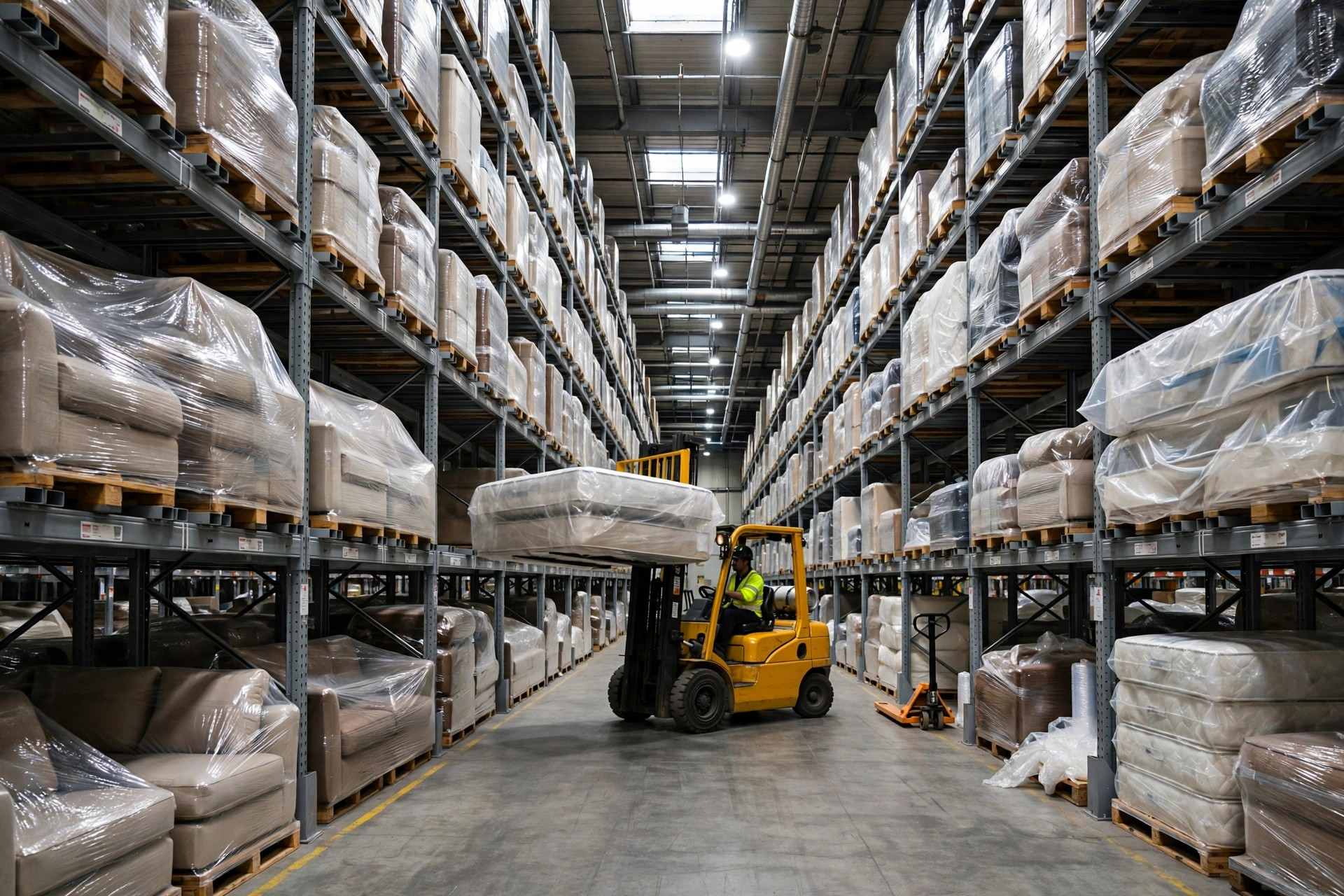
On slotting, bulky gets its own zone — all floor-stacked, nothing on high racks. Forklifts are speed-limited in that zone, and a scrape costs you. We actually fine it, and the fine money buys water for the whole crew at month's end. Don't laugh. Morale sometimes runs on stuff exactly this small.
One reminder for fellow operators: don't wait until the week before peak to hire your bulky crew. Muscle can be trained. The process has to be in their heads ahead of time. Last-minute cramming won't move that sofa — trust me, the sofa doesn't care.
By Chen Feng, Warehouse Operations Manager