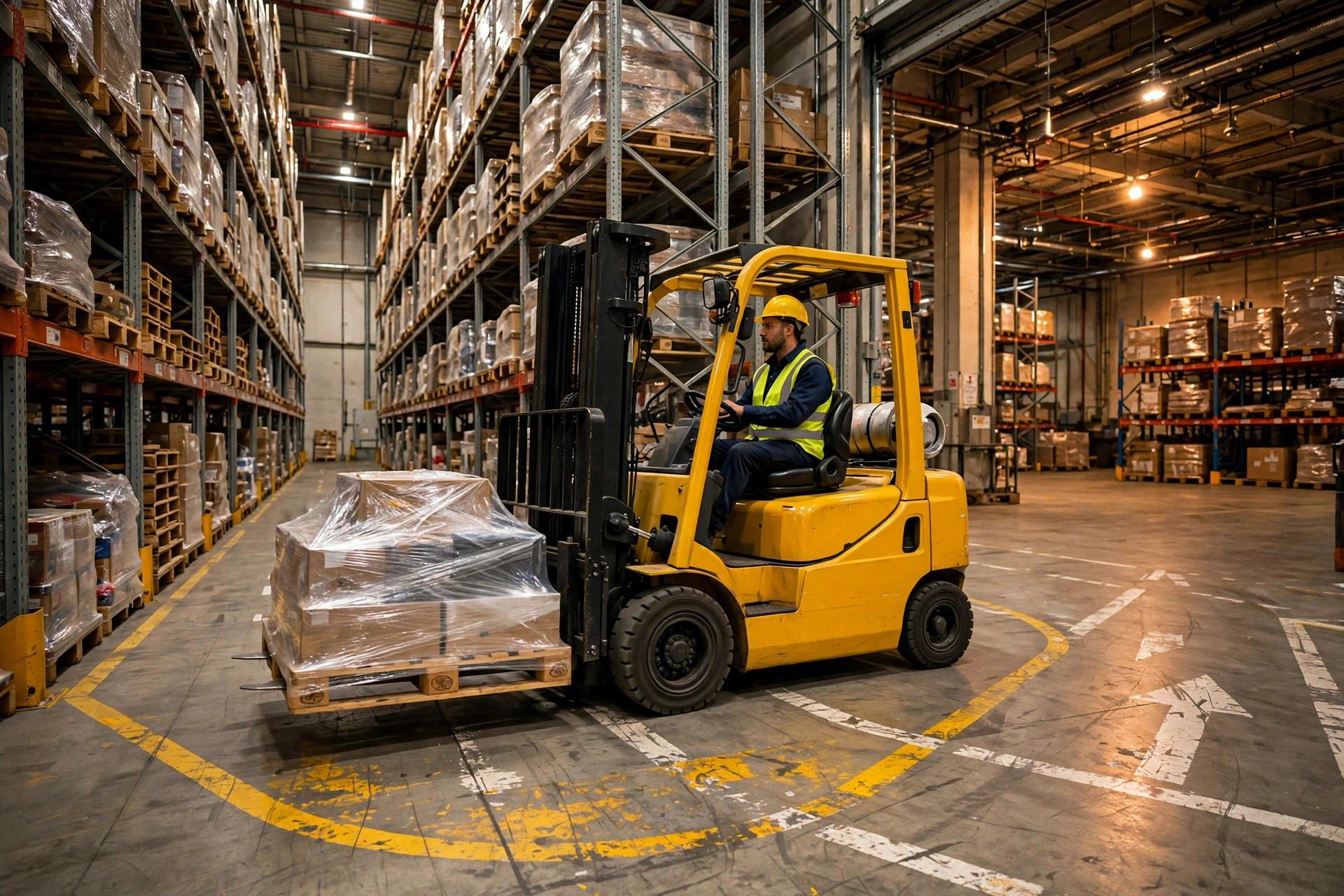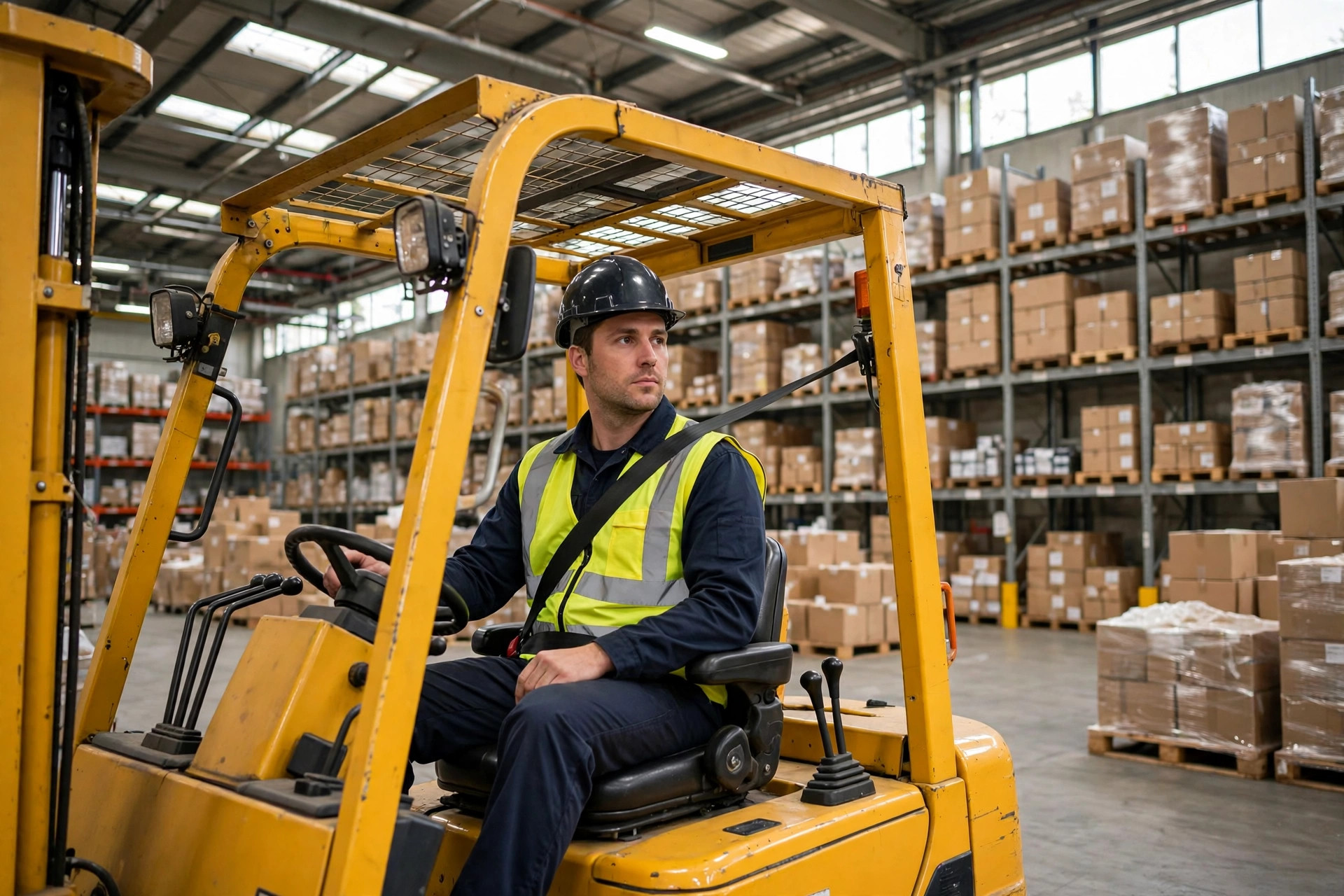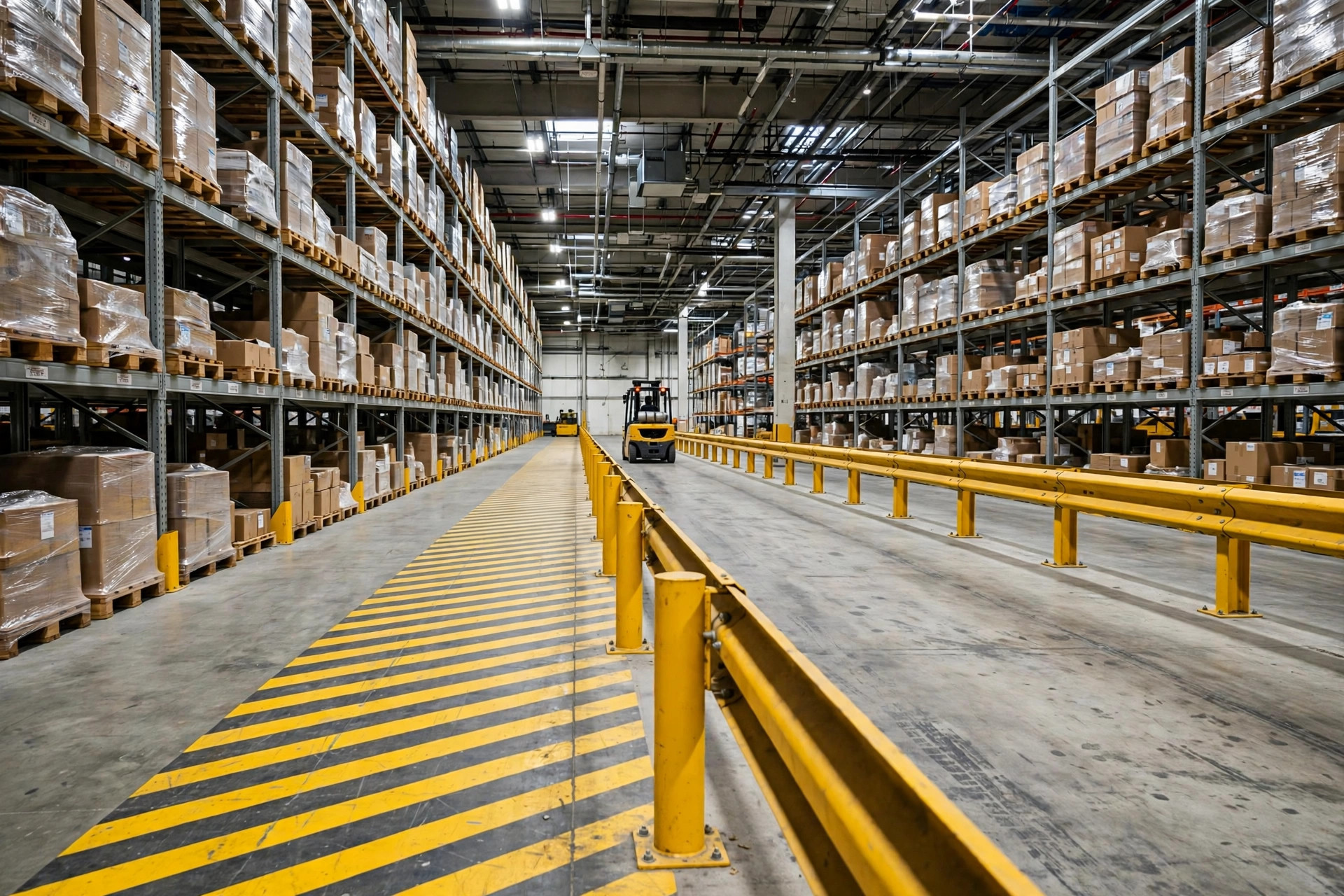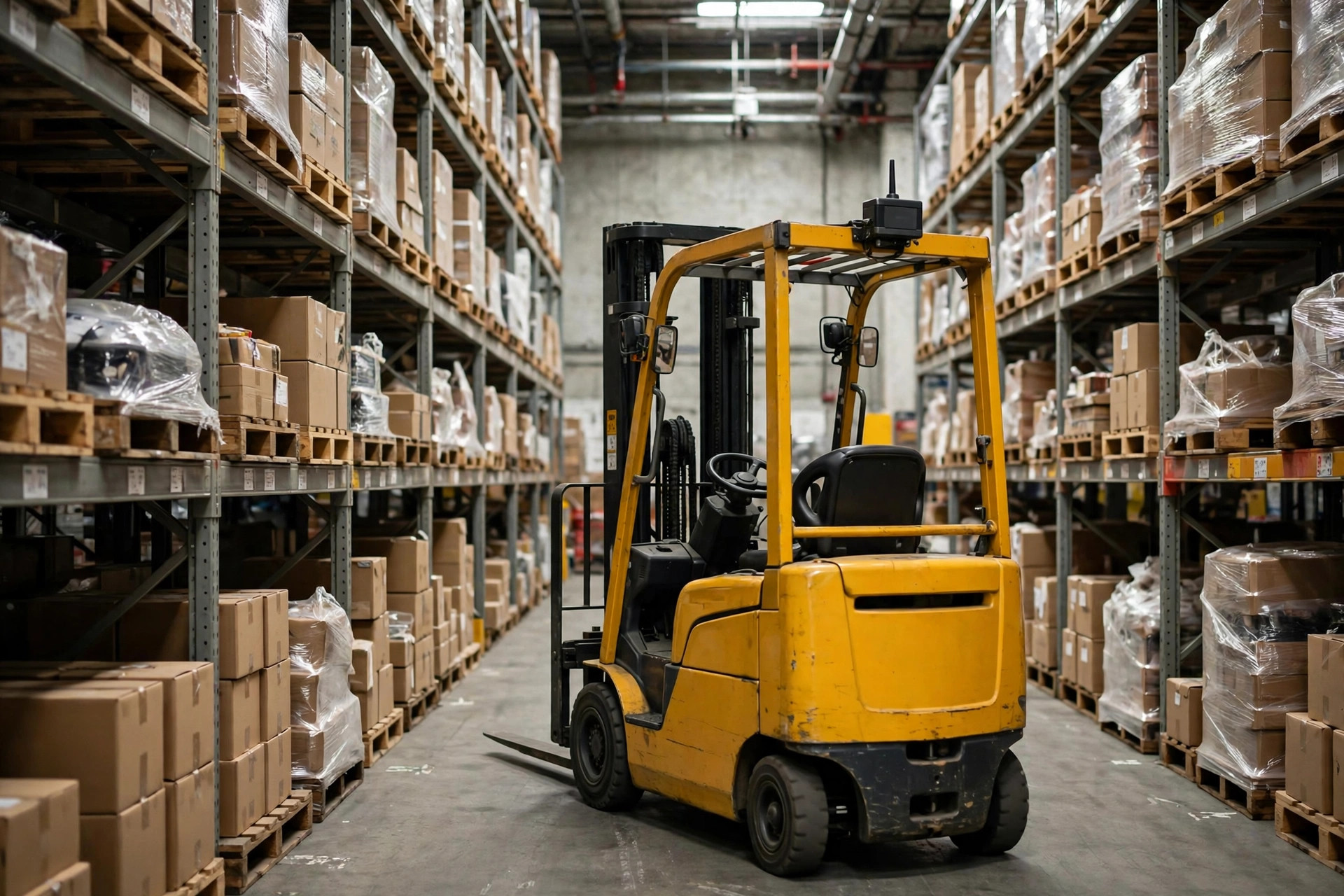
Let me tell you something. This past fall I was picking up a load at a 3PL warehouse in Fontana, and the warehouse manager pulled me aside like he had a secret. "Zhao, look at our new forklifts — see what's on top?" I looked up. There was a little black box, about the size of a fist, with a short antenna sticking up off the overhead guard.
"That's telematics," he said. "A black box for the forklift. Every bump, every minute of idling — I can see it all on my phone."
I've been driving trucks for fifteen years, so my first thought was: that's the same idea as the monitoring gear on my rig, just shrunk down for a forklift. Then I looked it up. Back in June 2025, Yale announced that telemetry would become standard equipment on its warehouse lift trucks — order pickers, reach trucks, narrow-aisle trucks — with seven years of wireless communication thrown in free. From now on, when you buy a new forklift, the black box isn't an option. It's just there. This wave is already rolling.
So the question is: is this thing a money-saving tool for the warehouse, or an expensive toy that causes more headaches than it solves? I've been in and out of warehouses for years. Let me tell you two stories that actually happened, and you decide.
Whose Fault Was the Crash? The Black Box Knows
Last winter, a 3PL in Rialto had a mess on its hands. Two forklifts clipped each other in a narrow aisle on night shift, and a rack of product came down. Not a small loss. The two operators pointed fingers at each other — "he was going too fast," "he backed up without looking." The manager was pulling his hair out. In the old days, these things ended with everyone shrugging and the warehouse eating the cost.
Not this time. The manager pulled the black box records: exact time, which truck, which operator was signed in, how hard the impact was. Case closed in ten minutes. Even the insurance claim went through smoother.
But here's the interesting part. The manager told me that over the next three months, the impact data showed something unexpected. Most of the hits weren't coming from one bad driver — they were happening at the same intersection. A blind corner where nearly every shift had a scrape. He moved a rack back half a meter, hung up a convex mirror, and impacts dropped by seventy percent.
See what happened there? The black box doesn't record driver mistakes. It records management blind spots. Used right, impact data is a health checkup for your warehouse. Used wrong, it's just a stick to hit drivers with. That one difference decides whether this thing is treasure or trash.
Your Forklifts Are "Working" Half the Time. Really?
Here's the other story, and it's an even better one. Early this year, a warehouse owner was complaining to me: "I keep adding trucks, but we still can't keep up." He had eighteen forklifts and was renting two more for peak season. Before he signed another rental, I told him to pull the idle-time data out of the black boxes first.
He couldn't believe what he saw. Average idle time was close to 45 percent. Industry numbers back that up — the average forklift idles about 45 percent of the time, 33 percent is considered good, and 25 percent is world-class. In other words, out of his eighteen trucks, nearly half the engine hours were keys-on, nobody working. Burning fuel, burning battery, burning depreciation — for nothing.
The problem? Lopsided task assignment. A few trucks were running nonstop while others sat in a corner waiting for work. He rebalanced the assignments, dropped one long-term rental, and saved a pile of money on rent and fuel in a single year. "Turns out I didn't need more trucks," he told me later. "I needed eyes."
That's the most honest value of telematics: it doesn't do the work for you, it lets you see. Fleet data shows fuel savings of 5 to 15 percent within six months of installing these systems, with idle-time reduction alone cutting fuel use by up to 20 percent. The waste you can't see is the most expensive kind.
Let Me Do the Math: What the Black Box Costs vs. What It Saves
Stories are nice, but let's talk numbers. I ran the math for a ten-truck warehouse. These figures come from published industry data — check them yourself:
| What you pay | Rough annual cost |
|---|---|
| Hardware (one-time) | $50–$200 per truck, so $500–$2,000 for ten trucks |
| Subscription (basic tier) | About $25 per truck per month, roughly $3,000 a year |
| First-year total for 10 trucks | About $3,500–$5,000 |
| What you save | Rough annual savings |
|---|---|
| Maintenance | Predictive maintenance catches problems early — $200–$400 per truck per year, so $2,000–$4,000 for ten |
| Insurance | Fleets with telematics and safety monitoring commonly get 5–10% premium discounts |
| Fuel and energy | 5–15% fuel savings within six months; idle reduction alone can cut fuel use by up to 20% |
| Accidents | Collision risk cut by up to 40% — one avoided major crash saves serious repair and damage costs |
| Downtime | An hour of distribution-center downtime costs $400–$1,000; one early warning pays for the system |
Most fleets hit payback in three to nine months. So year one roughly breaks even, and the years after that are pure savings. The catch: you actually have to look at the data and act on it. Install it and ignore it, and it's just a paperweight with an antenna.
The Uncomfortable Truth: Data Protects Drivers, Not Punishes Them
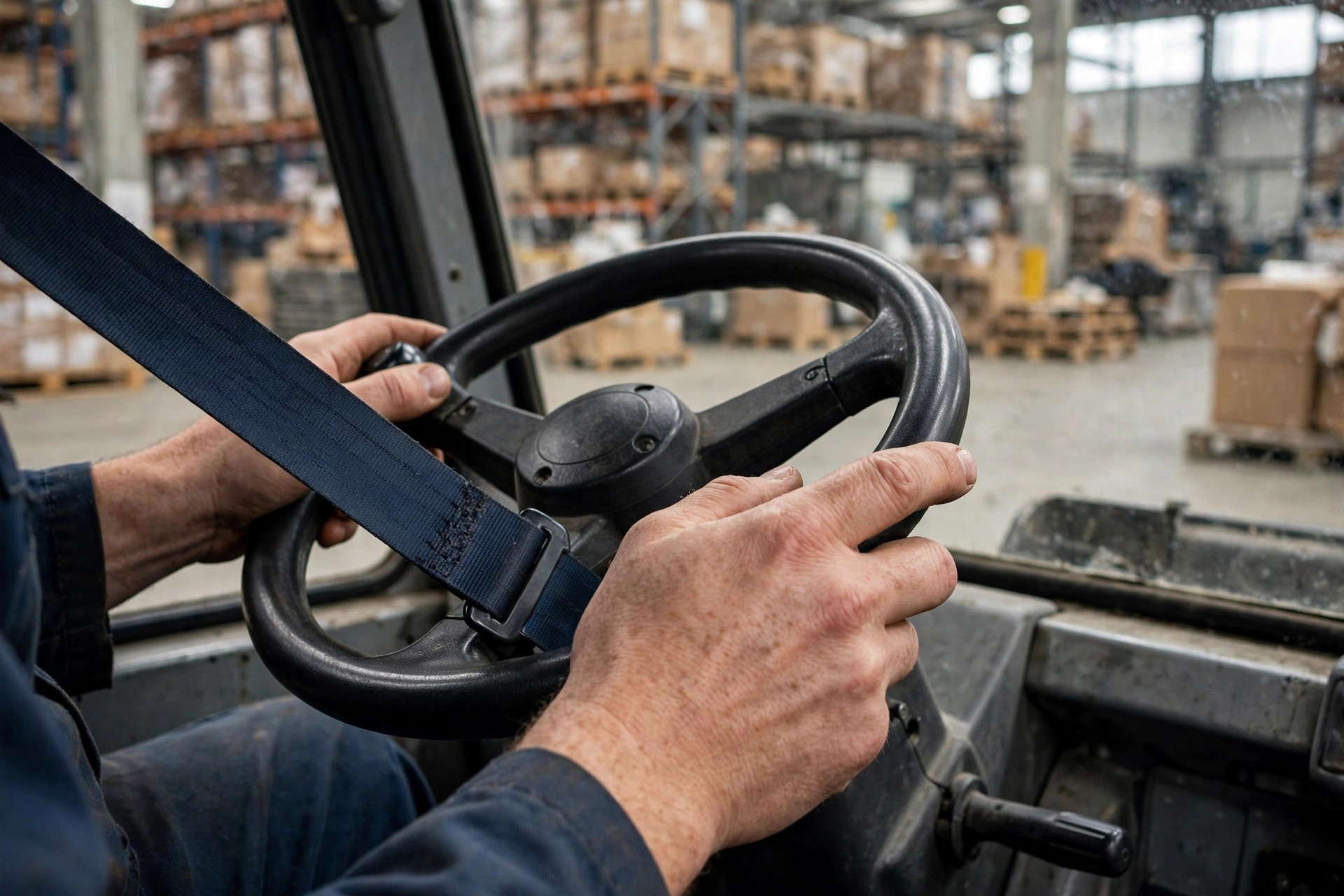
Fifteen years on the road, and I know exactly what drivers think. The moment they hear "black box on the truck," nine out of ten are against it. "They don't trust us." "How am I supposed to work with someone watching all day?"
But here's the counterintuitive part: data doesn't punish drivers — it protects them. Before, when something went wrong, the driver had no way to prove his side and just took the blame. Now the black box shows exactly what happened. A driver who follows the rules comes out clean, every time. Good drivers should be the biggest fans of this thing.
And here's an even sharper one: the fleets that fight hardest against the black box are usually the ones that need it most. Why? Because they're afraid of what the data will show. Too many impacts, too much idling, messy maintenance — it all comes out in the open. But covering it up doesn't make the problems disappear. The crashes still happen. The waste still happens. Nobody just knows about it.
Of course, management has to play fair. If you use the data to nag drivers every day and dock pay at every chance, even the best system will mysteriously "break." Look at trends, not single days. Use it for coaching, not policing. Draw that line clearly, and drivers go from opponents to supporters sooner than you'd think.
Three Pieces of Honest Advice for Warehouses and Shippers
First, don't install it on everything at once. Pick the busiest trucks, or the oldest ones that break down the most, and pilot it on a quarter of the fleet. Run it for two months. If it works, roll it out. If it doesn't, you haven't lost much.
Second, don't get greedy on features. Impact records, idle-time stats, and digital pre-shift checklists (which replace the paper ones OSHA expects before each shift) — master those three before anything else. They're more useful than any fancy AI dashboard. Most warehouses with the premium tier still only look at those three numbers every day.
Third, set the ground rules: review data once a week, look at trends; any impact gets a conversation within 24 hours — a training talk, not a scolding. Kill the "black box equals punishment" impression, or the system will never truly land.
I'll leave you with an old saying from the road: trucks fear idleness, and people fear laziness. The black box is a mirror. What it reflects isn't the driver — it's the management. Warehouses brave enough to look in the mirror run smoother every year. The ones that aren't, their problems just stay underwater. As for whether it's worth the money — I did the math for you. You make the call.
By Shifu Zhao, Trucking Veteran (15 yrs)