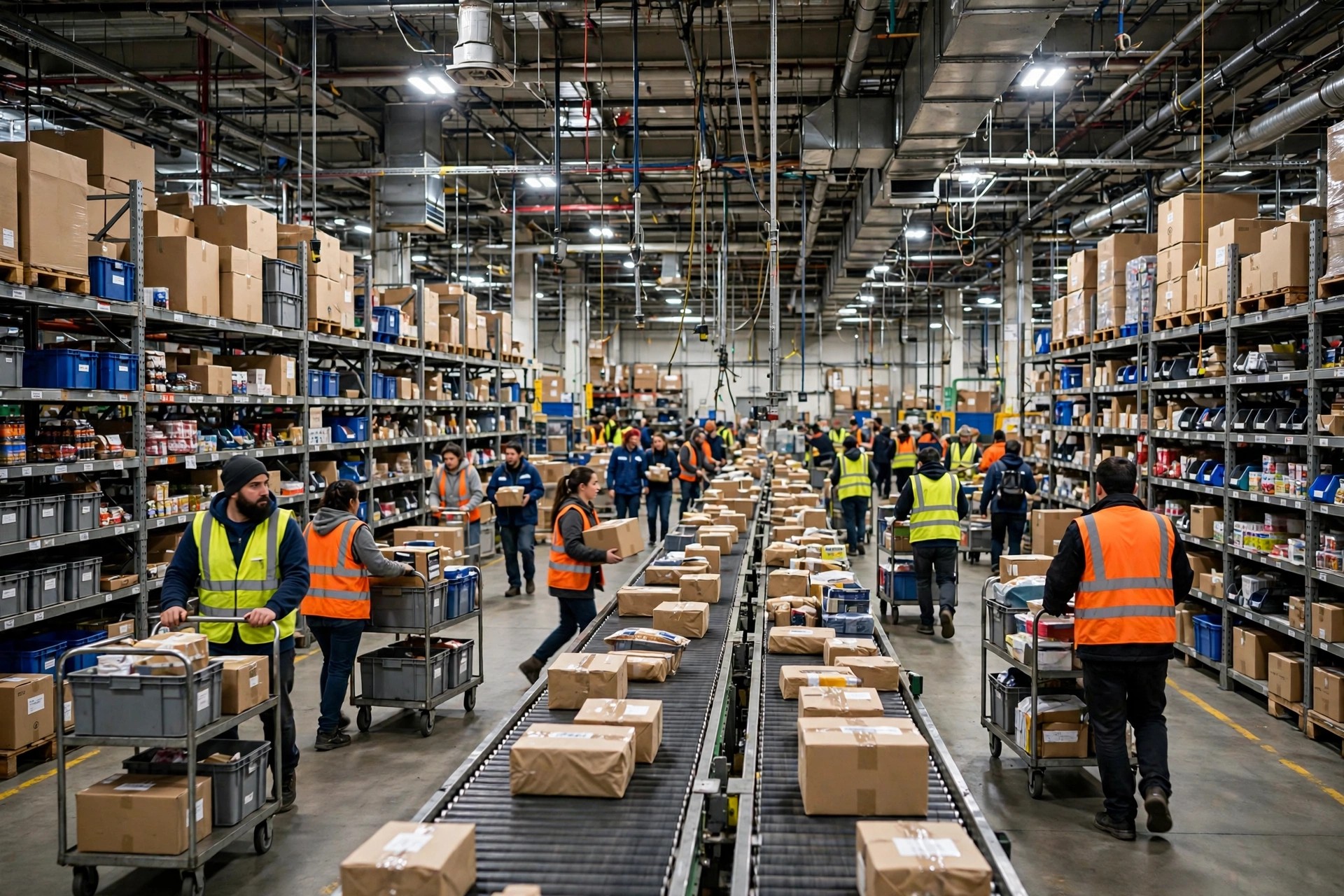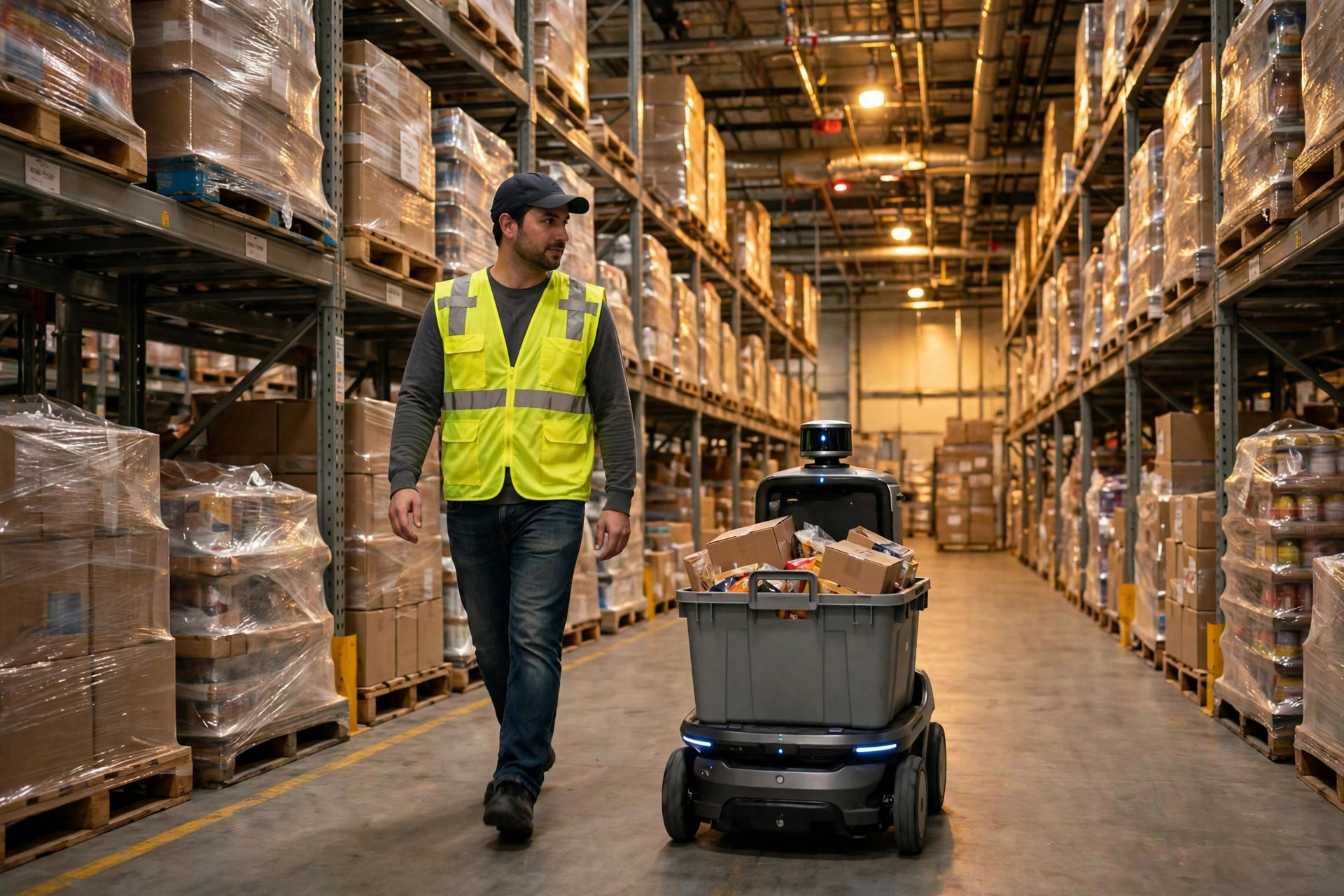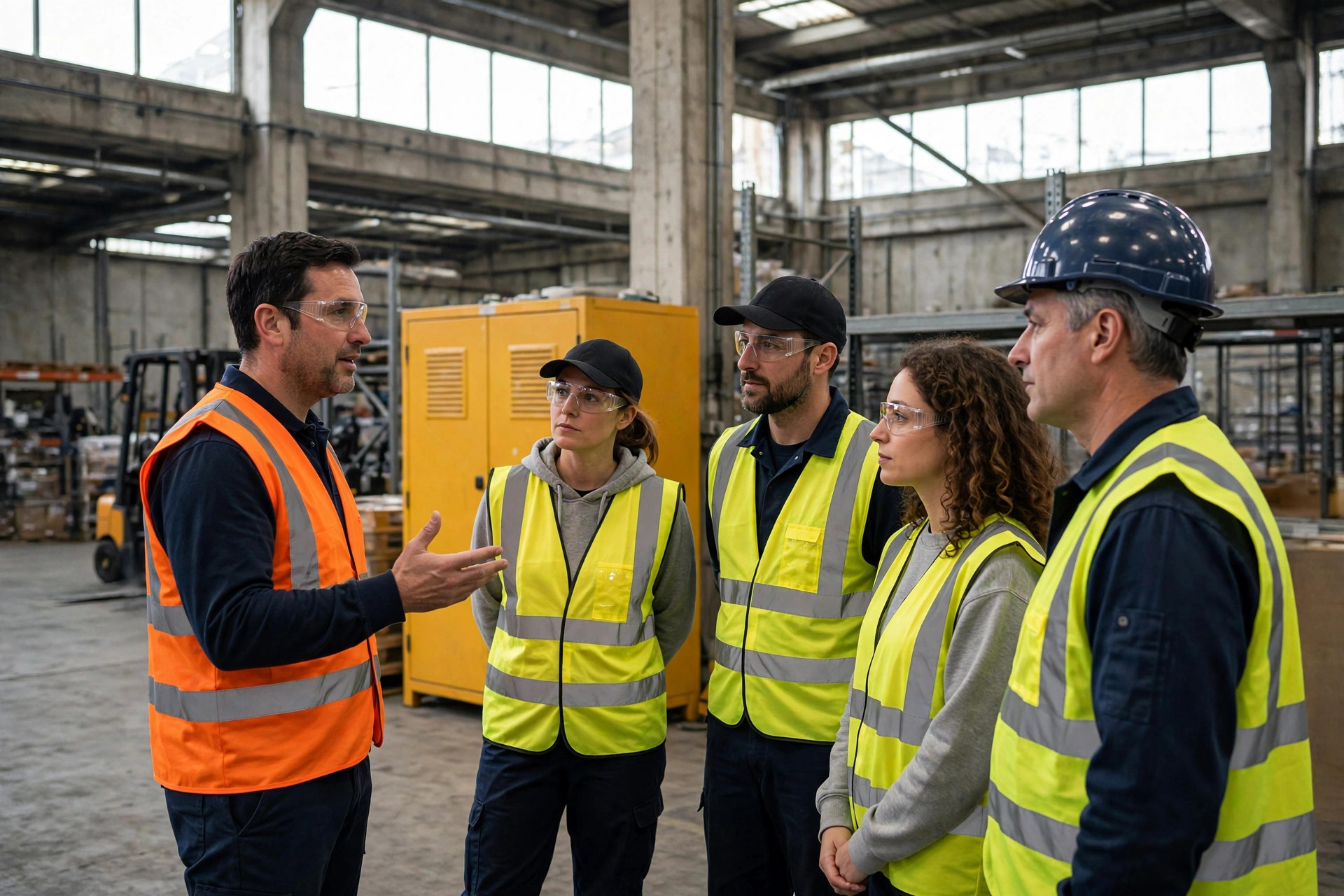
Let me tell you something. March 2025, I'm picking up a load at a distribution center in Texas, and I watched a textbook case of tacit knowledge walking out the door.
Old Zhou, nineteen years in that building, retired at the end of March. I got to the dock at 8 AM, paperwork ready, and sat there until 11:30 with nothing loaded. I asked dispatch what was going on. He just grinned, the tired kind: "Zhou left last week. Nobody in this building knows how that freight is supposed to go on the truck."
The WMS had the location. You could scan and find the pallets. But the load was mixed — light, crushable cartons sitting on top of heavy freight. Zhou always re-stacked it before loading. The young guys didn't know. They just started shoving it onto my trailer. One look at that and I knew it would fall apart on the highway. So I climbed up there myself and re-stacked it with two kids. Another forty minutes gone.
Fifteen years on the road, and I've figured this out: every warehouse has a "living map." You don't notice him on a normal day. The day he walks out, the whole building is lost.
What This Really Means: The WMS Remembers Where Freight Is, Not How It Should Be Handled
"Tacit knowledge" sounds fancy. Strip it down and it's just the stuff in a veteran's head that's never written anywhere but gets used every single day. Fifteen years of dealing with warehouses from the driver's seat, and I'd sort it into three buckets:
- The building's quirks. Which zone turns fast and belongs near the door. Which rack's third level has a tired hydraulic lift that wobbles when the forklift goes up — don't put heavy freight up there. Which corner seeps water in rainy season, so no cartons on the floor.
- The freight's temperament. Which customer's cartons are thin and can't take weight on top. Which SKU explodes every winter and needs to move up front early. Mixed pallets get re-stacked before loading, or they come apart on the road.
- The people game. Which carrier's drivers always run late, so you call ahead. Which dock doors are easy in, which one a long trailer can't make the turn into. When security changes shifts, and who opens the gate for a night pickup.
None of this lives in the WMS. The system tells you "it's in A-03-2," but it won't tell you "don't put heavy freight on level three of A-03-2, the lift's shot." The system is the skeleton. Experience is the flesh. A skeleton without flesh can't stand up.
What Tacit Knowledge Looks Like: A Three-Month Handover I Saw With My Own Eyes
Fall 2024, an e-commerce warehouse in California. I saw a handover done right, and I respected it.
Their veteran, Old Chen, was retiring. The manager started the handover three months early — and not the hand-over-the-keys kind. Here's how they did it:
Month one: shadow. The new supervisor, Xiao Li, followed Chen everywhere. Chen worked, Li carried a notebook. He wasn't writing down procedures — the SOPs already had those. He wrote down the exceptions: why didn't this batch go where the system suggested? Chen's answer: "System says Zone B, but that row gets cycle-counted tomorrow. Put it in today, move it out tomorrow — pointless." Those "why we didn't follow the system" judgments are the gold mine of tacit knowledge.
Month two: write. Li turned a month of notes into a slim "Slot Notebook" in three parts: the building (each zone's temperament), the freight (which SKUs need special handling), and coordination (carriers, dock doors, shift quirks). Chen went through it line by line — corrected what was wrong, filled in what was missing. Thirty-odd pages, kept in the shift lead's office, open to anyone.
Month three: test. Chen stepped back to the sidelines — eyes only, hands off. Li ran shifts and handled exceptions solo. When unsure, he'd decide first, then check his answer against Chen's. After a month of that, Chen walked out comfortable.

Let me tell you: those three months were probably the best-spent labor dollars that warehouse has seen in years.
Let's Do the Math: What a Departing Veteran Actually Costs
A lot of folks think: the veteran leaves, you hire another one. How much can hiring cost? Wrong question. Let me show you the three invisible bills:
| Hidden cost | What it looks like | Rough scale |
|---|---|---|
| Search-and-rework time | New hires don't know the freight's "temperament" — wrong slots, wrong stacks, rework | An extra hour or two of labor a day is normal |
| Slower exception handling | What the veteran fixed with one phone call now takes a meeting | Every incident drags at least half a day longer |
| Customer experience decay | Slower loading, more damage, carriers and customers complaining | Losing one customer — I don't need to spell out that number |
Add those three up, and three months of handover labor doesn't even register as a rounding error. Shippers and warehouse owners both need to be able to do this math.
The Contrarian Take: The Best Knowledge-Transfer Tool Isn't a Document
I've seen plenty of warehouses where the manager tells the retiring veteran to "write an SOP." Know what comes out? Something that reads like a template off the internet — because the real stuff can't be written down. That's the nature of tacit knowledge: the people who can do it can't fully explain it; the people who can explain it fully usually never did it.
The method that actually works runs in reverse: for the last three months, the veteran only talks, and the rookie only acts after speaking first. Precisely: the veteran watches, the rookie works — but before touching anything, the rookie says "here's what I'm about to do," and the veteran nods or shakes his head. Judgment happens in the moment of deciding, not in the moment of writing. Capture the deciding moments, and the knowledge stays.
And here's a homespun trick I swear by: stop leaving the WMS comment fields blank. In most warehouses, the slot notes and SKU notes sit empty. Have the veteran spend ten minutes before clocking out and type one line: "No heavy freight on level 3, Zone A." "Customer X cartons are thin — handle gently." After a year, that's a living slot notebook, with zero extra maintenance.
A Few Straight Words for Shippers and Warehouse Managers
Shipper friends: when you audit a warehouse or negotiate a 3PL contract, don't just ask what WMS they run or how automated they are. Ask one question: "When your veterans leave, how does the knowledge stay?" A warehouse that can't answer is an empty shell, no matter how expensive the system.
Warehouse managers: count your veterans — over forty, ten-plus years in. Their retirement schedule is your knowledge-loss schedule. Don't wait until they're gone to wish you'd had them train somebody.
And young folks — don't dismiss this as "old-timer stuff." In all my years on the road, the dispatchers I respected most were in their twenties and thirties, the ones who'd absorbed everything the veterans knew. Experience doesn't care about age. If you're willing to learn, it's yours.
An Old Saying to Close
We drivers have an old saying: "Trucks are iron, drivers come and go — but the knowledge of the road has to stay with the fleet."
Warehouses are the same. Iron racks, flowing people. The veteran will walk out one day, but the slot knowledge in his head has to stay — on the walls, in the system, in the young ones' heads.
It's not hard. It just has to start early. Don't wait until he's gone to remember how much he mattered.
By Shifu Zhao, Trucking Veteran (15 yrs)