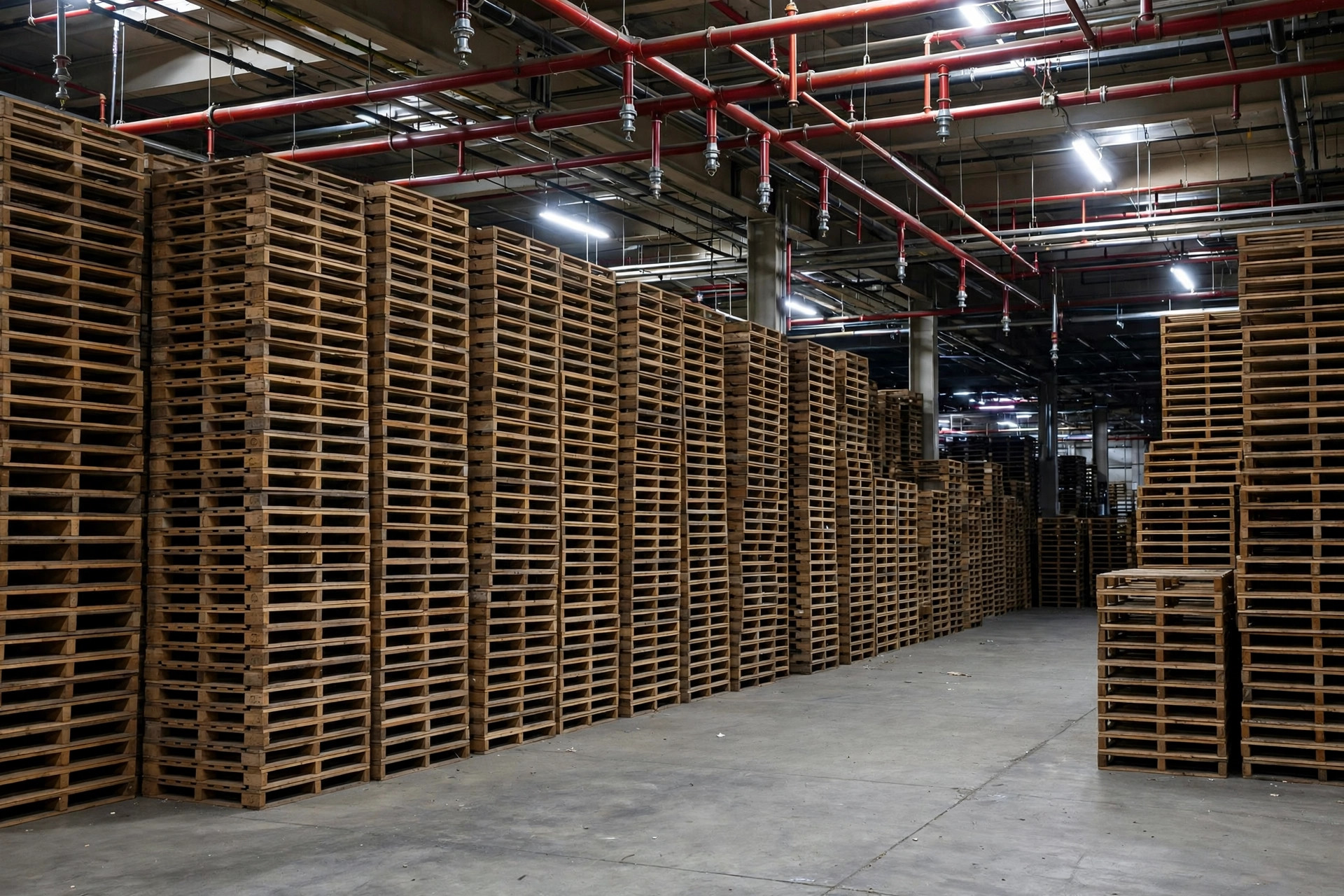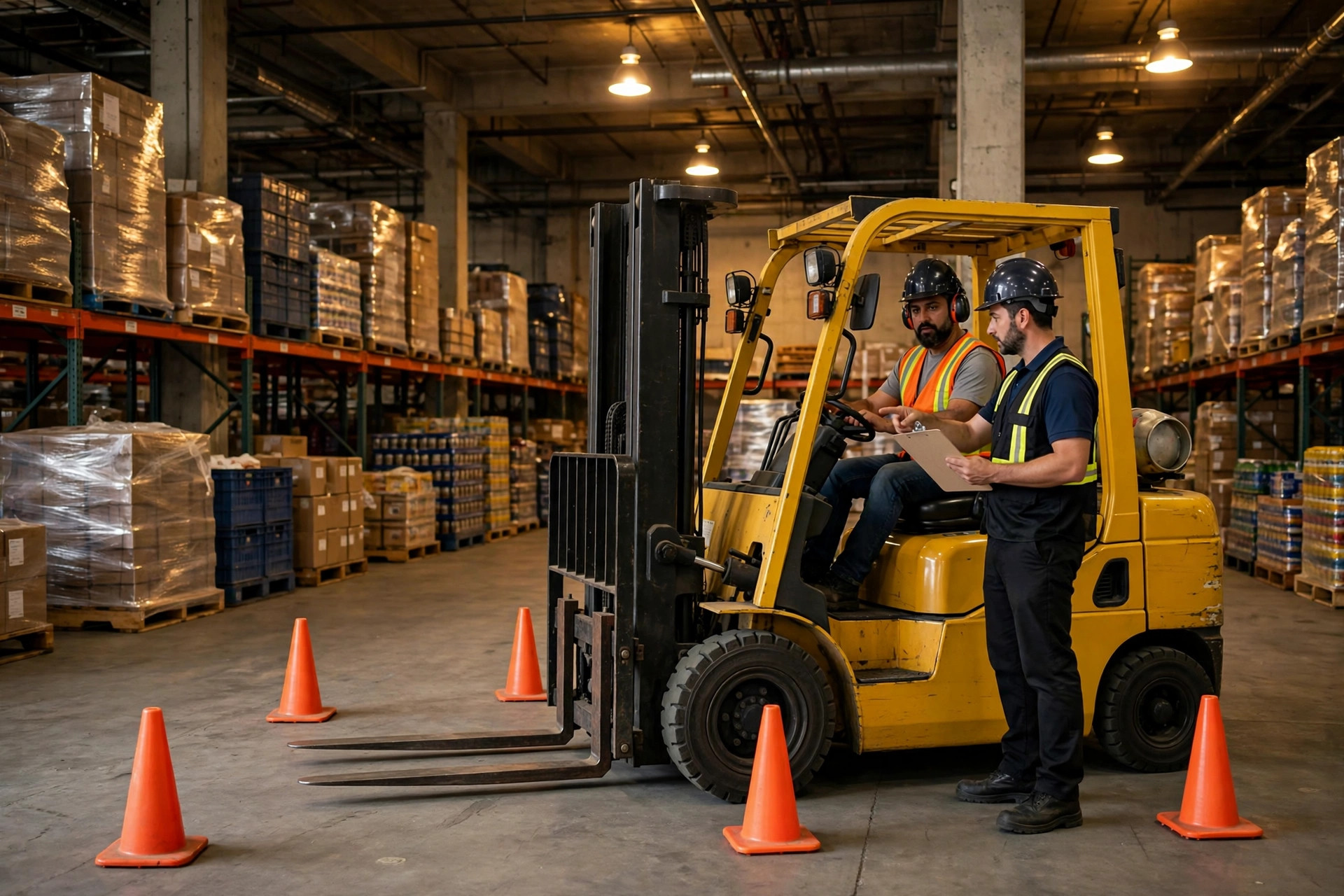
I once timed a driver doing his pre-shift inspection. Forty seconds. Kick the tires, glance at the forks, scribble a signature, done. Three weeks later that same truck dropped a pallet from 18 feet because a fork heel was cracked clean through. Nobody had actually looked at those forks in months — but every inspection sheet was signed.
That's the thing about the daily forklift check. OSHA's rule is short and blunt: under 29 CFR 1910.178(q)(7), powered industrial trucks must be examined before being placed in service, and they don't go into service if the examination turns up anything affecting safety. Trucks running around the clock get examined after every shift. One paragraph, and it puts the entire weight of the program on a five-minute walkaround and a signature.
And here's what most managers don't realize until the inspector is standing in their office: that sheet is usually the first thing OSHA asks for. Not the training certificates, not the maintenance logs. The daily inspection record. In one glance it tells the inspector whether your safety program is real or theater.
The walkaround that actually works
A real inspection takes five minutes and covers the things that kill people when they fail. I keep it to twelve checkpoints, in walkaround order so drivers can't skip around and call it done.
Start at the forks and mast, because that's where the catastrophic failures live. Look for cracks at the fork heel — the industry rule of thumb is that heel wear beyond 10% of the blade thickness means the fork is retired, no arguments, no "one more month." Check the mast chains for cracks, rust, and stretched links, and make sure both chains carry equal tension. A chain failure drops the load from height with zero warning. I've watched a crew in an Ontario distribution center find a cracked heel during a proper walkaround on a truck that had been "inspected" daily for half a year. That five minutes probably prevented a fatality.
Then the running gear. Tires for chunking, cracking, flat spots — cushion tires worn to the wear line get changed, not nursed along. Service brake and parking brake: test the parking brake on a slight grade, and if the truck creeps, the truck stays parked. Horn, backup alarm, every warning light tested individually, not as a group glance. These are life-safety devices, not decoration.
Finish with the details people skip: seatbelt condition, mirrors, the capacity data plate — is it there, can you still read it? Hydraulic lines and lift cylinders for leaks. On electrics, battery water level and cable condition. On LPG trucks, tank valves and fuel lines.
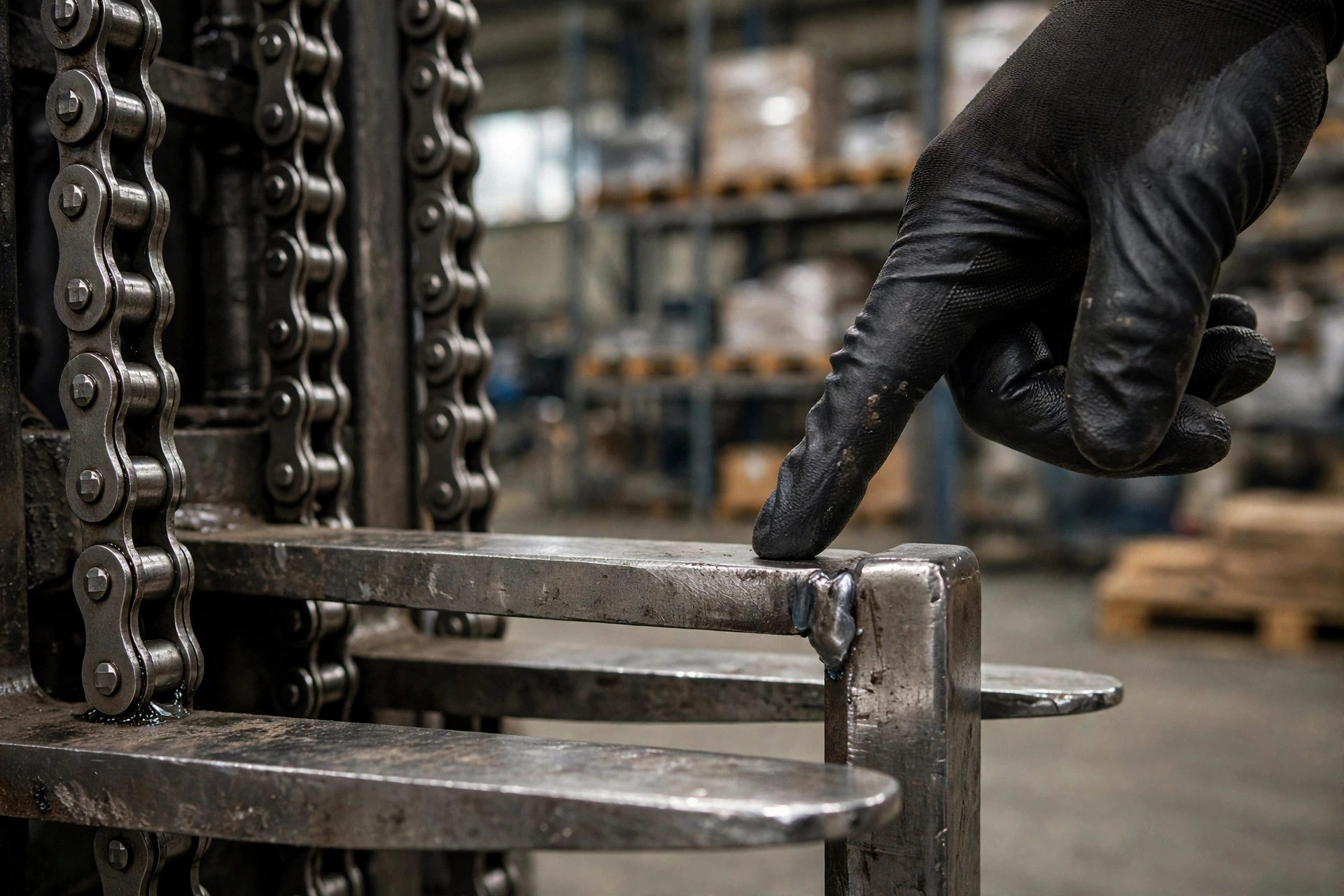
The rule I drill into every crew: if a checkpoint touches the question "could someone get hurt," one failure parks the truck. No debate, no "just one short trip." Every accident report I've read that started with those words ended badly.
The paper trail is the product
Here's the part most operations get wrong: the inspection sheet isn't the documentation of the program. It is the program. An inspector can't watch your drivers every morning. The sheet is the only evidence the checks happened.
Three rules, and they're non-negotiable. First, the driver who operates the truck signs it. No signing for your buddy. I walked into a facility once where a month of sheets was all in the same handwriting. The inspector spotted it in about ten seconds, and the outcome was worse than if the sheets had simply been missing. Pencil-whipping is its own violation in the inspector's eyes — it tells them the whole culture is fake.
Second, a supervisor spot-checks two or three trucks a day and co-signs. The spot-check record matters as much as the driver signatures, because it shows management is actually in the loop.
Third, keep the records. OSHA's text doesn't name a retention period for these sheets, which is exactly why I tell clients to keep at least a year. Inspectors read the sheets the way accountants read ledgers: they're looking for gaps. A missing week around a holiday is harder to explain than a thin file, because it smells like backfilling. And when a workers' comp or insurance dispute lands a year later, that timeline is the only thing standing between you and "no evidence of a program."
Paper on a clipboard works if the clipboard lives on the truck, not in the office — the check has to happen at the truck. Digital forms are better: timestamped, photo-capable, and nobody can backfill a month of sheets on the last day of the month. Backfilled paper is the oldest trick in the book, and every inspector knows it.
One more thing inspectors do that surprises people: they cross-check the signatures against the authorized operator list. The training standard requires documented operator instruction, and a signature from someone with no training record on file turns one problem into two. Your inspection program and your training program are the same story told two ways — make sure they agree.
When a defect turns up, the truck gets parked: key to the supervisor, a "do not operate" tag on the steering wheel. I run two tiers. Tier one — brakes, forks, chains, steering, mast hydraulics — parks the truck immediately, no discussion. Tier two — a dead beacon light, a loose mirror, a torn seat — gets fixed the same day, and until it's fixed the truck does low-speed short moves only, nowhere near the high racks. The mechanic signs the repair, the driver re-walks the truck and signs again, and only then does the tag come off. Write it into the SOP and put it on the shop wall.
Tomorrow morning, time your drivers. Anyone finishing in under three minutes doesn't have an inspection program — they have a signature program. A parked truck costs you a few hundred dollars of downtime. The alternative costs whatever the lawyers decide. Fix it before an inspector, or a falling pallet, fixes it for you.