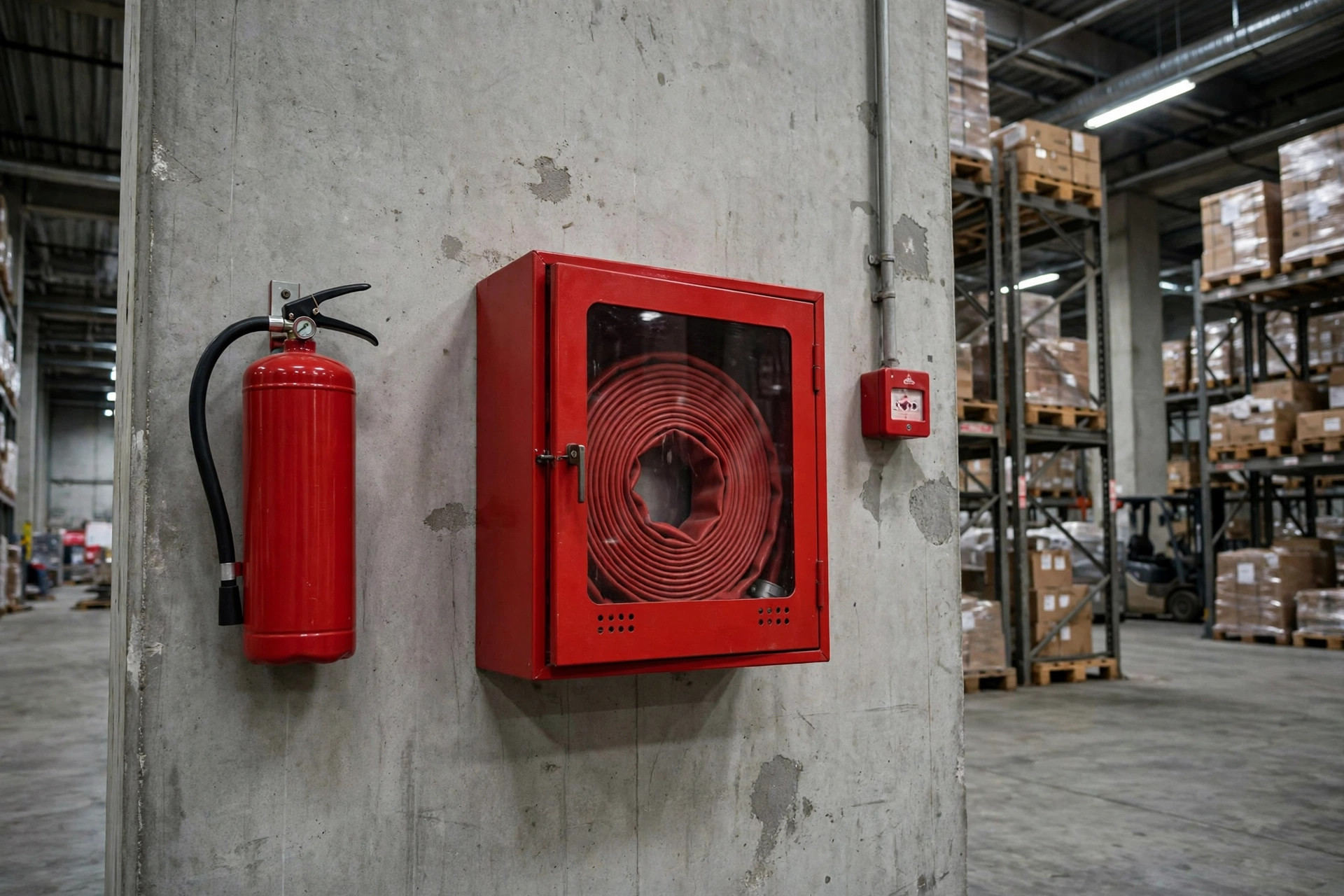
Two hours, and zero minutes.
That's the difference between an intact fire wall — rated to hold for two to four hours — and the same wall with a forklift-sized hole punched through it and cables run through unsealed. Fire and smoke don't knock. They take the shortest path.
Warehouses pour the lion's share of their fire protection budget into sprinklers. Active protection: visible, reassuring, easy to spend money on. Passive protection gets the leftovers, and almost nobody maintains it. But on the day the sprinklers can't keep up, what decides whether the building loses half its footprint or all of it is exactly the stuff nobody looks at: fire shutters, and compartmentation.
Close the door
A fire door has one job: be closed. NFPA 80 is blunt about it — fire doors must stay closed and latched unless they're fitted with automatic-closing devices that trigger in a fire. The reality? In most warehouses I've walked, the fire doors are wedged open with wood blocks, pallets, or pallet jacks, held open all year for convenience.
Understand what that means. A wedged-open fire door isn't "slightly noncompliant" — the compartment is gone. In a fire, smoke arrives before flames, and one open door means the smoke owns the whole building. The irony writes itself: plenty of facilities wedge the doors open while spending serious money maintaining their sprinklers. When fire comes, smoke floods through the open door first. Sprinklers spray water. Water doesn't stop smoke.
There is one legitimate exception: doors fitted with automatic-closing devices — electromagnetic hold-opens tied to the fire alarm — may stand open day to day and release on alarm. But the device itself needs periodic testing. Does the magnet release on power loss? Is the door closer strong enough to pull the door fully shut and latched? Each item has to be verified. I've seen warehouses with hold-open magnets that were never tested for release — on inspection day, the tester hit the button and the door didn't move. Awkward for everyone in the room.
I've seen the violation notice version of this story more than once. Fire marshal walks the building, photographs the wedged door, and the citation practically writes itself. It's one of the cheapest violations to fix and one of the most common to receive — which tells you everything about how seriously the industry takes passive protection.
Drop it twice a year
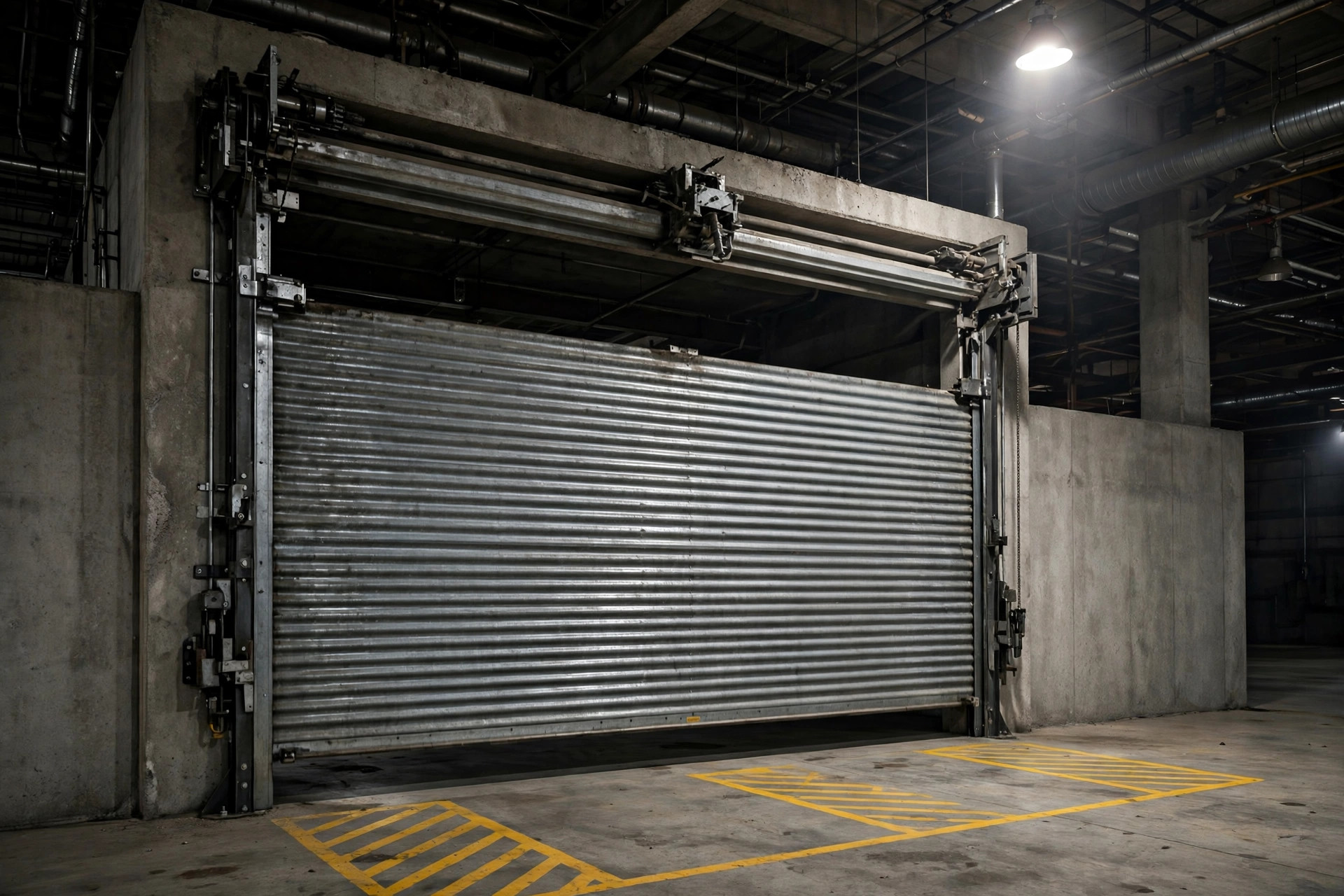
For rolling steel fire doors, NFPA 80 requires inspection and testing at least once a year — and the drop test itself must be performed twice: once to verify the door drops and closes fully, and a second time to verify the automatic-closing device was properly reset afterward. The test has to be done by trained, qualified personnel. Poking the release mechanism with a stick yourself doesn't count, and it's a good way to damage the door or hurt someone.
Two more hard rules. Fusible links and release devices must never be painted. Plenty of warehouses repaint the walls and spray the door too — paint glues the fusible link shut, it never melts at temperature, the door never drops, and you effectively have no door. And keep the test records for at least three years. The fire marshal will ask for them, and "we can't find them" is a violation on its own.
Here's the uncomfortable question: when was the last proper drop test on your rolling fire doors? Plenty of owners dig through files and come up empty. The door's been hanging there for a decade and has never dropped once. Whether it drops in a real fire is pure luck at that point — and luck is not a fire protection strategy.
Mind the holes in the wall
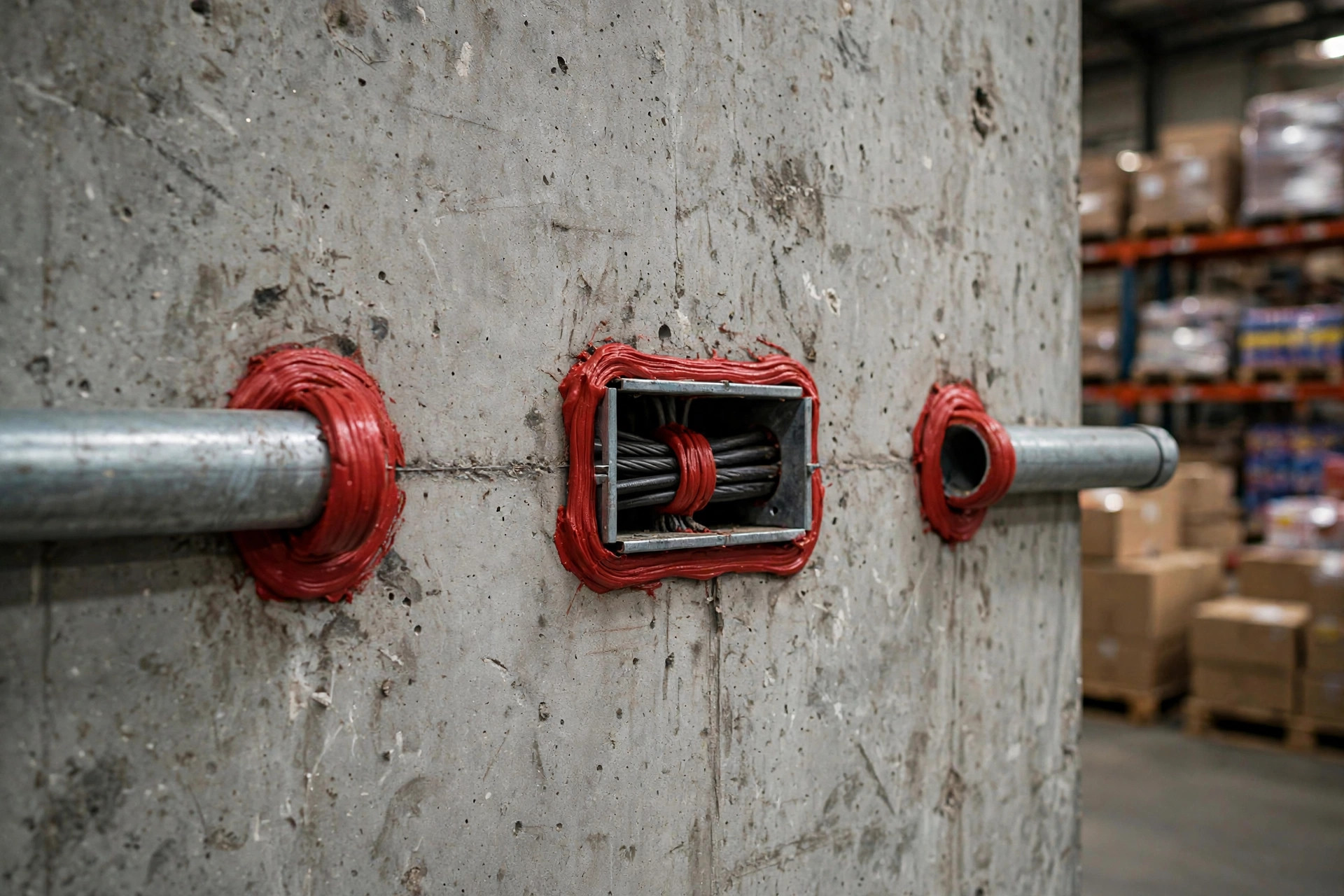
Compartmentation dies by a thousand holes. Warehouse walls get pierced all year: new network cables, added piping, forklift impacts, doors removed during remodels. Every unsealed hole is a highway for fire and smoke.
The rule is straightforward: penetrations through a fire barrier must be sealed with listed firestop materials, restoring the original fire rating — with records of what material was used, who installed it, and when. Cutting new openings or removing doors needs approval first and sign-off after. The worst offenders are forklift holes. Nobody reports them, the hole sits there for years, and the inspection checklist says "normal" every single week.
And one more: never stack product in front of a fire shutter. The door needs clear space to drop; pallets in the way mean it jams halfway, and the compartment is gone. Fire inspectors check this every visit, and it shows up on violation notices constantly — yet warehouses keep stacking there to claw back pallet positions. Ask yourself what a pallet position is worth versus a building.
Keep the paper
Passive protection is invisible day to day, so at inspection time it's all about paper: drop test reports, repair and replacement records, firestop installation logs, routine inspection checklists. Insurance adjusters want them, the fire department wants them, ownership handoffs want them. You can't reconstruct them after a fire.
The laziest reliable system I know: sign an annual service contract with a qualified door company — two tests a year, reports filed automatically. Add three lines to the weekly walkthrough sheet: fire doors closed, no storage in front of shutters, no new wall penetrations — signed by the shift lead. That's the whole program. Few warehouses actually keep it up, which is exactly why it impresses an inspector when they see it.
Here's the trade-off nobody prices honestly. Sprinklers are active protection: they fight the fire, the effect is visible, insurers and codes watch them, and the money feels well spent. Compartmentation is passive: it doesn't fight anything, it buys time — containing the fire to one zone, buying time for the sprinklers, for people to get out, for the fire department to arrive. Active protection fails in the real world: inadequate water pressure, sprinklers blocked by high-bay racking, fire growth beyond what the system was designed for. In that moment, the whole building's fate rests on the doors and walls nobody looked at all year. Spending on only one side is gambling. Spending on both is insurance.
When did the biggest rolling fire door in your warehouse last complete a full drop? If the answer is "I don't know," get a qualified company to schedule a test this week — don't do it yourself. If it doesn't drop, you'll know exactly what this article was worth.