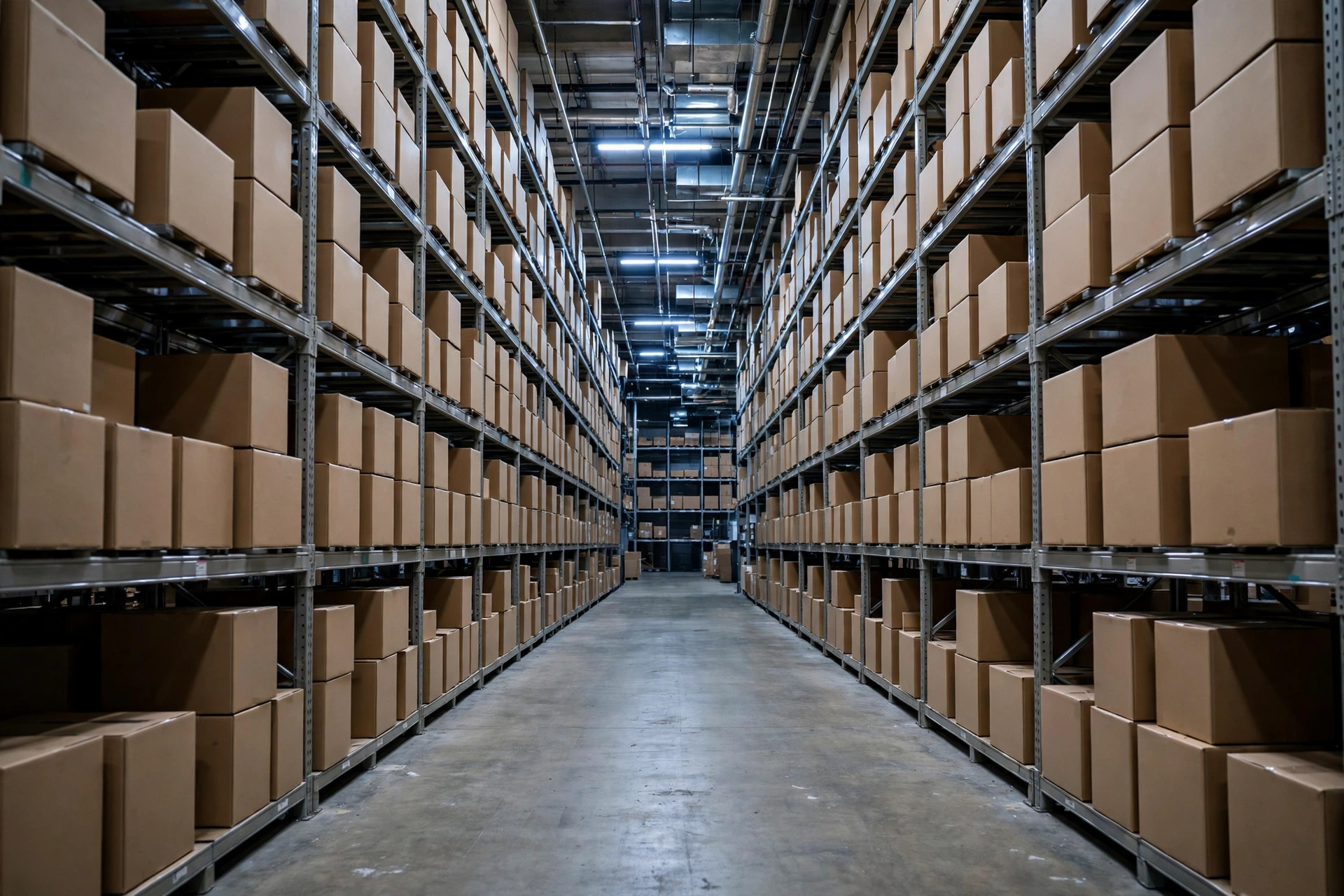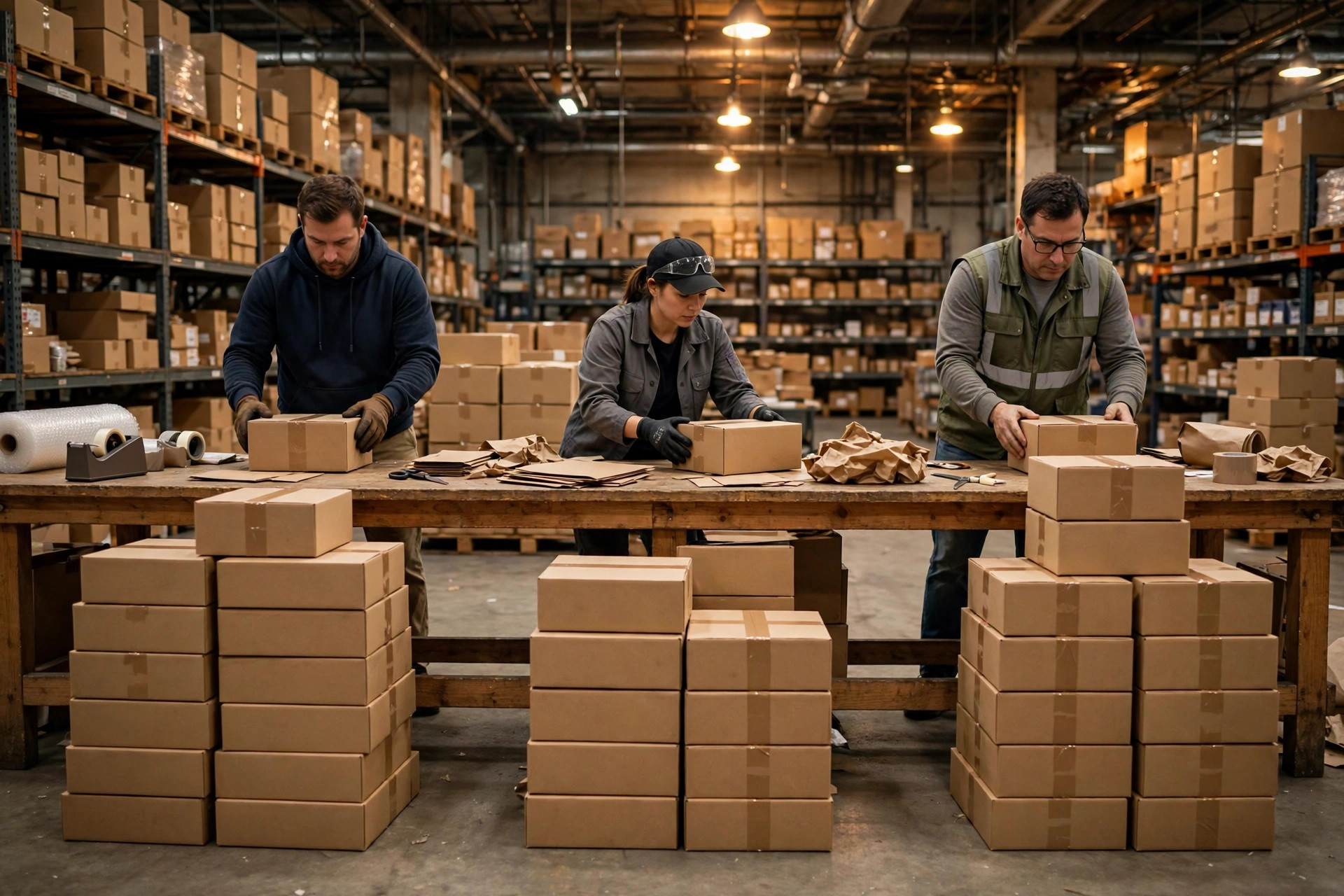
An FBA shipment split is Amazon's favorite magic trick: you build one shipping plan, and it waves its wand and sends your freight to three different warehouses. Your inbound budget? Gone. I'm Xiao Ma, owner of a 3,000-square-meter warehouse in California, and I've watched sellers go from cursing Amazon to shrugging it off to finally outsmarting it — from the loading dock.
Let me tell you what happened in March 2026. A seller from Shenzhen, Chen, shipped 500 cartons by ocean freight to the Port of Los Angeles. After customs clearance, everything landed at my little warehouse. He built his shipping plan in Seller Central, and Amazon split it three ways: one shipment to ONT8 in Southern California, one to SMF3 up north, and one all the way to IND9 in Indiana. Three warehouses, three states. Chen called me, voice shaking: "Xiao Ma, my inbound budget for this batch is officially dead."
I ran the numbers and felt my own stomach drop. One truck from my warehouse to ONT8 is a cheap local dray — a few hundred dollars, done. But three shipments changed everything: the two California legs were fine, but the IND9 leg had to go cross-country LTL, costing 3-4x the local rate. And every LTL carrier has a minimum charge — small volume still pays full minimum. Total inbound came in at roughly 2x the original budget. A fat chunk of Chen's margin on that batch got eaten by the split. He ended up shipping all three LTL loads anyway — and the IND9 load was so small the carrier pushed it back 4 days waiting to consolidate. Four more days of storage fees, plus a week of delayed check-in. Right before peak season, time is money. Chen told me later: "Xiao Ma, I finally get it — every penny I can't save on inbound comes straight out of my profit."
Why FBA Shipment Splits Love Small Sellers
Here's the thing: Amazon splits inventory based on where buyers are. Your goods get pushed to warehouses near demand. The algorithm doesn't care about your inbound freight bill. Small sellers with modest volumes and mixed SKUs get chopped into "a little here, a little there." Big sellers? They ship thousands of cartons per truckload — split or not, the cost per unit barely moves. That's the big-company playbook. We little guys can't burn money like that.
By the second quarter of 2026, one of my local clients — Li, who sells home goods out of LA — got smart. Instead of shipping three separate loads straight from the port, he routed all 800 cartons through my warehouse first. My two guys and I re-sorted everything against Amazon's split plan and built pallets by destination: one stack for ONT8, one for SMF3, one for IND9.
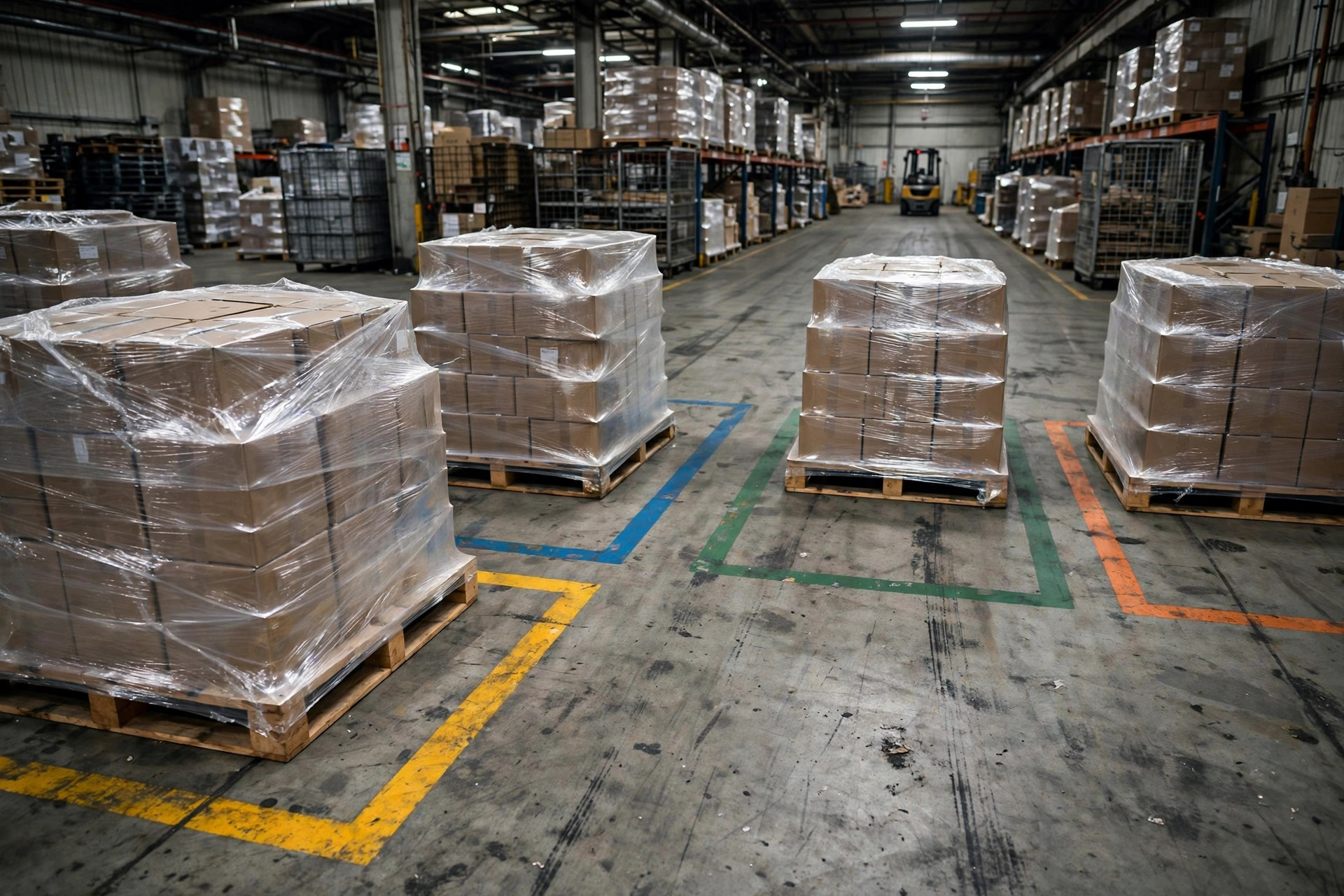
The two California shipments went out on shared local trucks, and the IND9 pallets rode an LTL we consolidated with another seller's freight heading the same direction. End result: total inbound cost came in roughly 30% lower than shipping three separate loads straight from the port. Li bought me hotpot dinner and insisted on paying. "Your warehouse may be small," he said, "but it punches above its weight."
The Math: What a Split Really Costs You
Let's stop guessing and put numbers on it (order-of-magnitude ranges — always check Seller Central for the latest policy):
| Option | How it works | Inbound cost level | Best for |
|---|---|---|---|
| Ship each split separately | Follow Amazon's plan, book each leg | Highest (baseline ×1) | Big volume, deep pockets |
| Consolidate at a small warehouse | Funnel everything through a transload warehouse, re-sort and pool freight | ~20-40% cheaper | Small and mid-size sellers |
| Pay the placement fee, ship to one warehouse | Pay Amazon's Inventory Placement Service, send one shipment | Depends on per-unit fee — often cheapest for small, light items | Lightweight SKUs |
The placement fee is charged per unit, and the exact rate changes — check Seller Central for the latest policy before you decide.
The Counterintuitive Take: Sometimes Paying Amazon Is Cheaper
Most sellers hear "placement fee" and flinch like it's a protection racket. I used to think that too — until I ran the math for a phone-case seller. His products are light and tiny, the per-unit placement fee was in the fractions-of-a-dollar range (again: check Seller Central for the current rate), and for 8,000 units the total fee landed in the low thousands. But shipping his split plan himself? The two cross-country LTL legs alone blew past that number. Verdict: for small, light products, just pay the placement fee and ship one load. For big, heavy products where per-unit fees add up fast, do your own consolidation. Don't let pride cost you money — dignity doesn't pay the freight bill.
Let me pull back the curtain on how a small warehouse like mine actually saves you this money — so you know this isn't a sales pitch. Consolidating LTL comes down to one word: pooling. One seller shipping 8 pallets cross-country to IND9 pays the carrier's minimum charge and a brutal per-pallet rate. But when I pool four sellers' freight into one 20-plus-pallet load, the rate gets cut nearly in half. Carriers respect volume: give them 2 loads a month and they shrug; give them 5 loads a week and they call you with discounts. My warehouse charges a simple per-pallet transload and sort fee — tens of dollars per pallet, order of magnitude — and after that fee, sellers typically still keep 20-30% of what pooling saved. I walk every seller through this math openly; if the numbers don't work, I don't take the job. That's how a small warehouse builds its reputation.
One more scrappy option for truly tiny volumes: ask your freight forwarder about a "split-and-ship" service. Some forwarders run their own LA cross-dock and will sort your freight against the split plan before dispatching — skipping my warehouse entirely. I'm not afraid of you cutting me out — when your volume grows, you'll come back. Call it playing the long game.
5 Scrappy Tricks From a Small Warehouse
- Test the split before the big batch. Build a small shipping plan first and see where Amazon sends you. Know the damage before you commit the full load.
- Split your shipping plans on purpose. Create two plans on different days for the same inventory — the split results can differ. It's part science, part luck, but I've seen it save real money.
- Use a transload warehouse as your sorting hub. Pooling LTL and sharing local trucks is our bread and butter — a small warehouse does it cheaper than you booking carriers yourself.
- Don't be stubborn in peak season. Splits get more aggressive in Q4. Build plans early, ship early, never cut it close to the deadline.
- Review your split history. If one SKU always gets sent to far-flung warehouses, rethink your stocking strategy or plan a transfer.
Chen learned his lesson — now every batch stops at my warehouse for a "layover" first. He jokes, "Xiao Ma, your warehouse is tiny but full of tricks." And he's right: small warehouses have their own way of surviving. We can't afford trial-and-error budgets, so we count every penny. You can't dodge the FBA shipment split, but once you've done the math, it can't ambush you anymore. Sellers, every dollar saved on inbound is a dollar of margin. Count it like it matters — because it does.
By Xiao Ma, Small Warehouse Owner