Amazon changed the rules again? No. But when they tighten enforcement, they never send a memo first.
Right before peak season this year, a buddy of mine who sells home goods sent 40 cartons to a fulfillment center in Ontario. Three cartons got rejected. The reason was one line: carton label mismatch. Not missing labels — wrong labels. Carton labels from Shipment A ended up on cartons belonging to Shipment B. The three cartons went back to the 3PL, got opened, relabeled, and rescheduled for delivery. Nine days of back-and-forth, and he missed his Prime Day restock window. Ads kept burning, stock ran out for four days, and his conversion rate dropped from 18% to 9%.
I know this pain. Because it's happened to me. And mine was worse.
The Time a Whole Pallet Got Rejected
Last October, I shipped two FBA shipments out of my 3PL in Ontario — roughly 600 units. Two products that looked nearly identical: silicone storage boxes, one large, one medium, same color. The factory mixed up the FNSKU labels and stuck them on the wrong products.
The fulfillment center rejected the entire pallet. Reason: label does not match the physical product.
I was in China when I got the call. The 3PL pulled the pallet back, broke it down, and relabeled all 600 units. I still remember that invoice:
- Return freight from the FC back to the 3PL
- Labor to break down and recheck 600 units one by one
- Daily storage fees while the pallet sat there
- And the real killer: 11 days from rejection to getting the stock checked back in
Eleven days. That product was selling 80 to 100 units a day. Eleven days of stockout tanked the ranking, and it took almost a month to climb back.
Lesson learned: never trust that "the warehouse will definitely label things right." Factory labels, 3PL labels, freight forwarder labels — every extra pair of hands doubles the chance of a mix-up.
Carton Label Mistakes Are Even More Infuriating
At least with FNSKU mix-ups, you can blame lookalike products. Carton label mistakes are pure process failure.
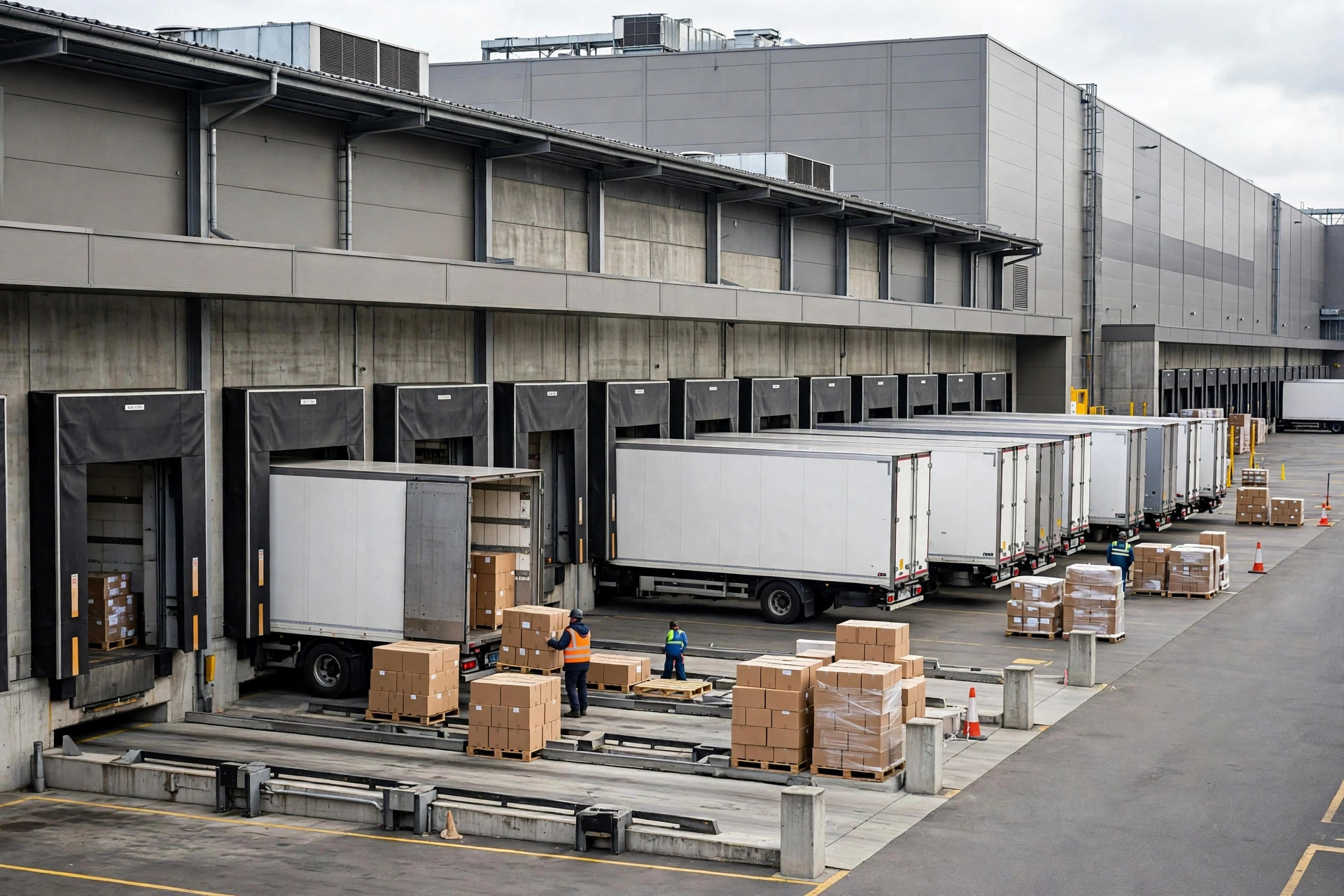
The carton label — Amazon's shipment label — goes on every single box and carries your FBA shipment ID. The FC receiving dock lives by it: a carton hits the conveyor, they scan the label, and the system knows which shipment this is and what's supposed to be inside.
I've seen the classic ways people die:
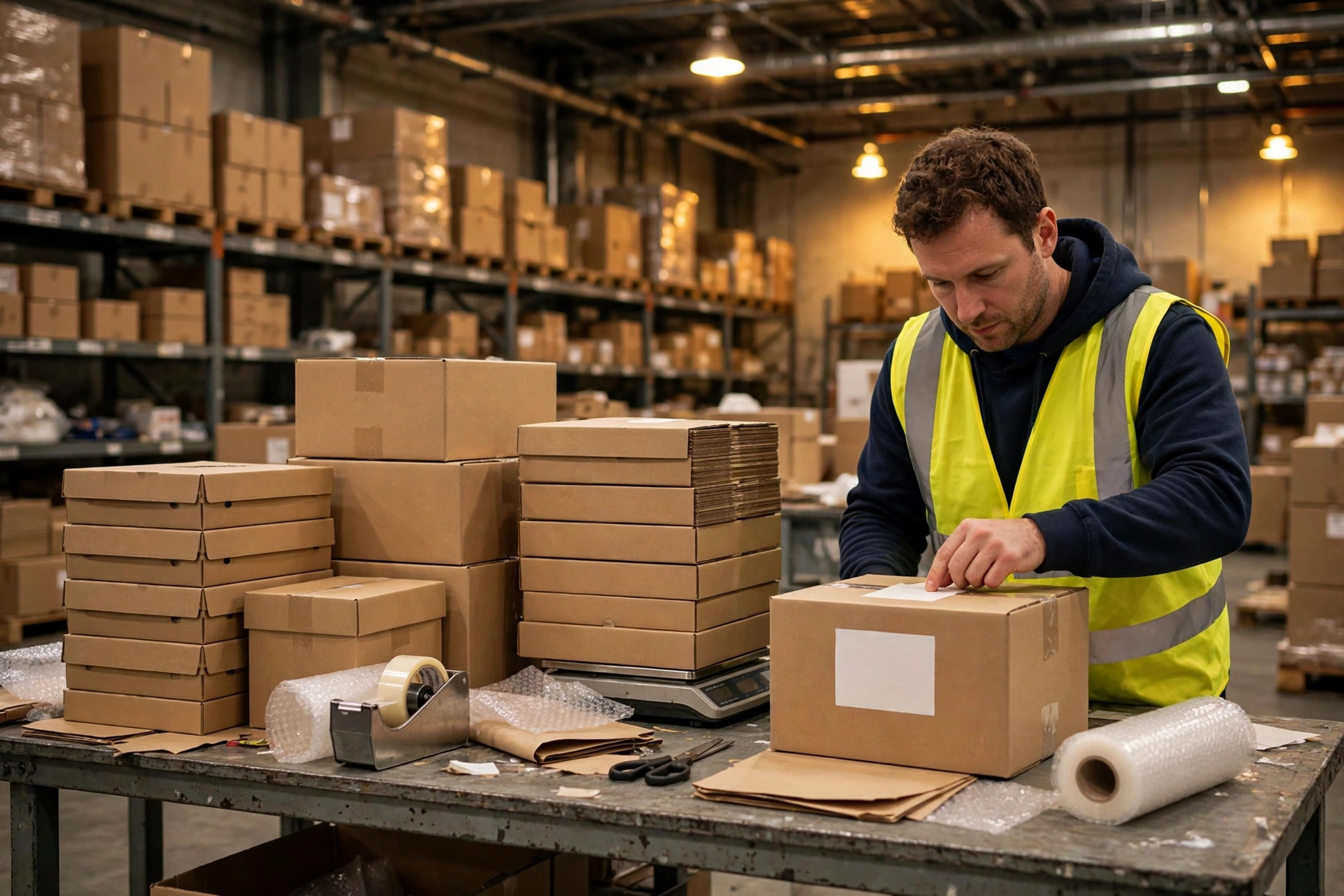
First, the warehouse runs two shipments through the packing station at the same time, a worker grabs the wrong stack of labels, and Shipment A's labels land on Shipment B's cartons. That's exactly how my buddy lost those three cartons.
Second, the label goes on the packing tape seam, or someone tapes over it with clear tape after sticking it. Can't scan it? It doesn't exist.
Third, blurry printing. The 3PL tries to save money with an inkjet printer, the ink smudges in humidity, Amazon's scanners can't read it. Rejected.
Every one of these is preventable on the seller side. And I mean the seller side — not hoping the warehouse behaves, but you writing the SOP yourself.
What Does One Labeling Screw-Up Actually Cost?
I added up the damage from both incidents. The numbers below are from my own books — your 3PL's rates will differ, but the cost structure is the same everywhere:
| Cost item | FNSKU mix-up, full pallet (600 units) | Carton labels, 3 cartons rejected |
|---|---|---|
| Return freight | Full pallet returned FC → 3PL | 3 cartons, LTL return |
| Rework labor | 600 units checked one by one + relabeled | 3 cartons opened, relabeled |
| Storage while stuck | Per pallet, per day | Per carton, per day |
| Redelivery | New appointment + linehaul freight | New appointment + freight |
| Stockout loss | 11 days out of stock, ranking drop | 4 days partial stockout |
| Hidden cost | Ad momentum lost, a month to recover | Conversion rate halved for a week |
See the pattern? Labor and freight are the small stuff. The real money burns on time — every day you're out of stock, your ranking and traffic are bleeding.
That's why error-proofing has an absurd ROI. One hour writing an SOP can save you a multi-thousand-dollar incident plus a month of ranking recovery.
My Error-Proofing Checklist, Now Taped to the Packing Bench
This is what I came up with after getting rejected twice. It's now taped to the packing station at my 3PL:
| Step | Action | Owner |
|---|---|---|
| Print labels | I print all FNSKUs and carton labels myself and ship them to the warehouse — no warehouse printing allowed | Seller |
| One shipment per wave | One wave handles one shipment only. Two shipments never get opened at the same time | Warehouse |
| FNSKU verification | Scan the barcode when labeling, match it against the packing list SKU before sticking | Packer |
| Carton label placement | Two labels per carton (side + top), never on the tape seam, no clear tape over it | Packer |
| Photo proof | Photo of every pallet/carton after labeling, posted to the group chat, I spot-check | Warehouse lead |
| Pre-shipment video | One-minute video before dispatch: carton label close-ups + full pallet view, archived | Warehouse |
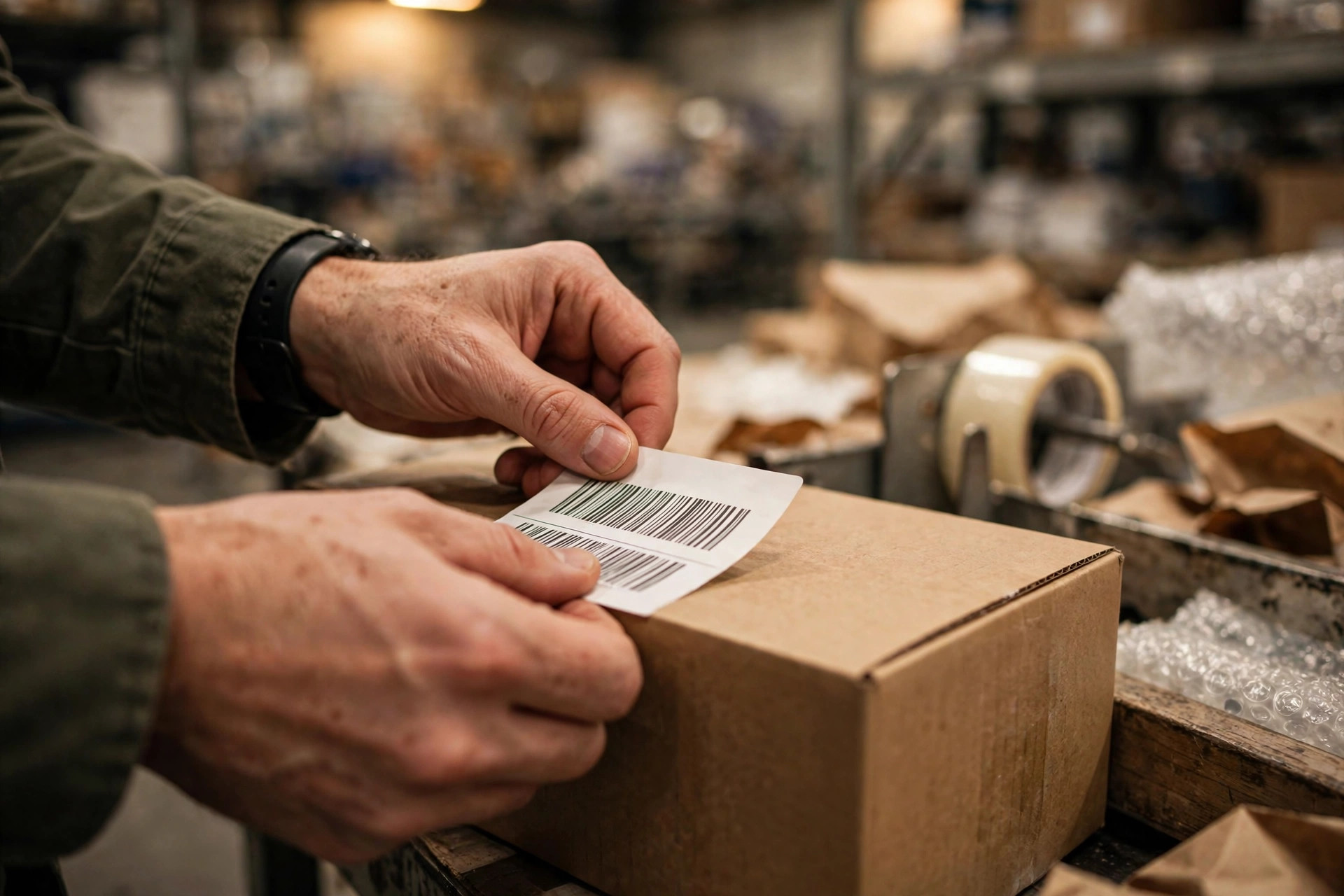
A few of these deserve more explanation.
Print the labels yourself. This is the most counterintuitive one. A lot of sellers think letting the warehouse print is convenient. But you have zero control over their printer — inkjets, low toner, wrong paper, I've seen it all. I print FNSKUs on a thermal printer and carton labels on a laser printer, thick paper, and ship them over together. Twenty bucks in courier fees, and the print-quality variable disappears.
One shipment per wave. This rule was written in blood. Warehouses love batching multiple shipments together for efficiency, but one wrong grab of the label stack and a whole carton is dead. My SOP with the 3PL now states it explicitly: one wave, one shipment, and a violation costs them the labeling fee for that batch. In the contract beats a verbal reminder, every time.
Photo proof. Cheapest trick, biggest effect. A photo after every carton, the lead spot-checks 10% daily. Workers knowing someone's watching changes behavior completely. And if a rejection does happen, you have photos to pinpoint exactly where it went wrong — and evidence when you argue with the warehouse.
The Counterintuitive Take
A lot of people think the ultimate fix is scan guns and systems — barcode-verified picking and labeling end to end. In theory, sure. For small and mid-size sellers, that's a trap.
I did the math: outfitting a 3PL with scan-verification gear starts at several thousand dollars. The checklist above costs almost nothing and prevents 90%+ of labeling mistakes. The remaining 10% are source errors — the label itself was printed wrong — and a scan gun won't catch those either.
So here's my take: labeling error-proofing isn't about equipment, it's about single-point ownership plus an evidence trail. Who printed it, who stuck it, who verified it, where are the photos — every step has a name attached. When something goes wrong, you find the person in ten minutes. That mechanism beats any device.
Equipment is for scale. Shipping 50 pallets a month? Scan verification is worth it. Shipping five? Run the checklist above and your rejection rate drops to near zero. Don't let the equipment sales pitch fool you.
Pitfalls Worth Flagging
A few more traps people miss:
First, cover the factory barcode completely when you stick the FNSKU on. Some products arrive with a UPC already on them. If it peeks out, the FC might scan the old code and your units land in a problem shipment. The FNSKU must cover the original barcode fully — not even a corner.
Second, the number of carton labels must match the number of cartons. When you build the shipment, the system asks how many boxes — print that many labels, and destroy the extras. Spare labels sitting on the packing bench are the seeds of the next mix-up.
Third, don't rush to reship after a rejection. Get the rejection reason and photos from the 3PL first, confirm it's actually a label issue, then relabel. If it's a system error on the FC's side, open a case and appeal. Follow Amazon's latest policies — don't guess.
Fourth, re-walk the SOP with the warehouse before peak season. Warehouses hire temps for peak, and the new people don't know your rules. Every September I resend the checklist and do a 15-minute video call. Fifteen minutes to keep peak season clean. Worth it.
Labeling is, at the end of the day, a "give a damn" business. But giving a damn can't rely on vibes — it needs SOPs, photos, and penalties written into the contract. I've been running this checklist for over a year. Rejections since: zero.
This one I've tested myself, and it works. If you've been rejected too, drop your story in the comments — let's compare scars.
By Ah K, E-commerce Seller (5 yrs)