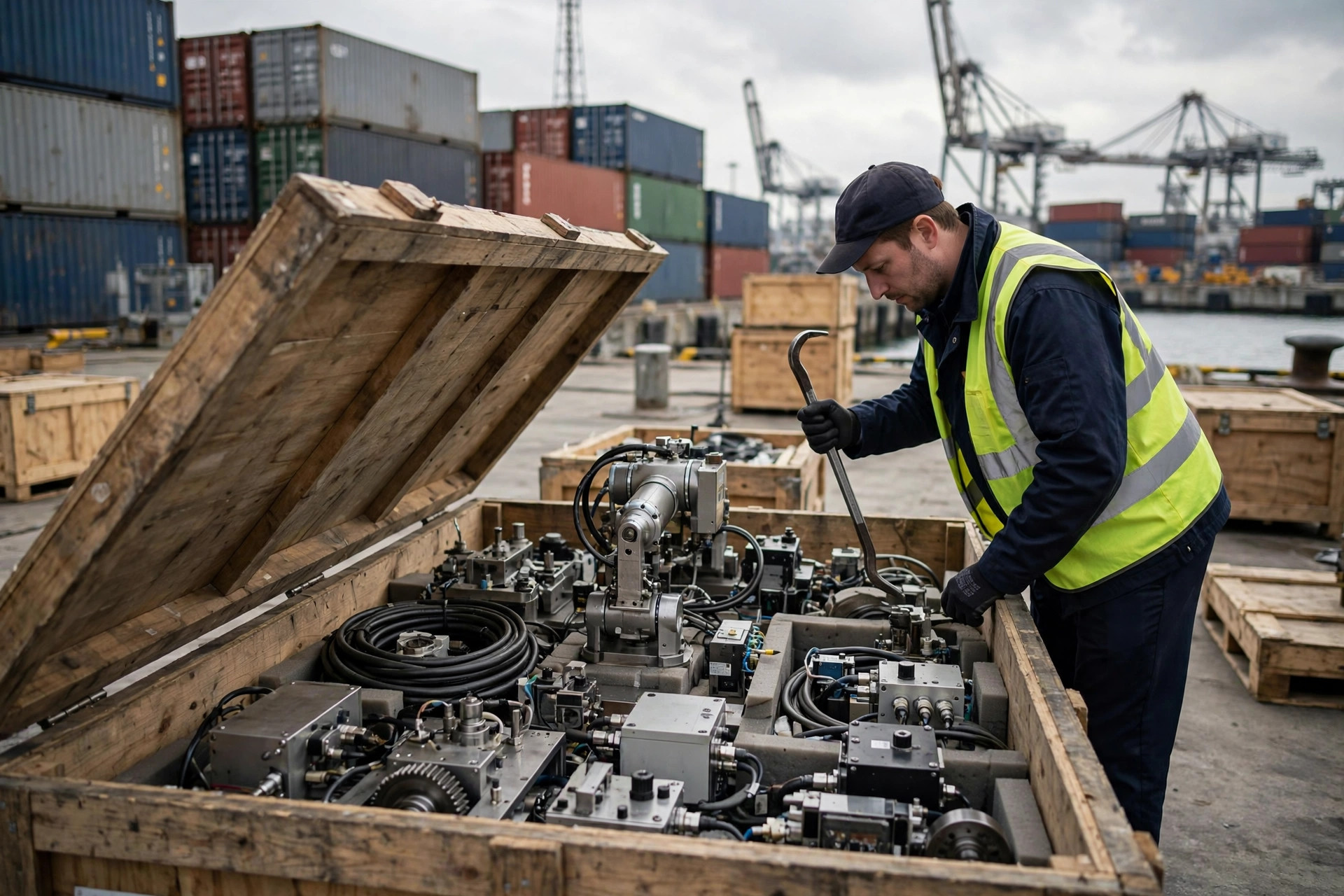
The automated forklifts arrived at Hamburg with everything in order — or so the importer thought. CE plates riveted on, EU declarations of conformity in the shipping documents. Then customs pulled the container for inspection, and three weeks later the project was still sitting in a bonded warehouse while rent and labor costs piled up. The equipment was fine. The paperwork chain was not.
Here is the mental model most exporters get wrong: CE marking is not a finish line. It is an entry ticket. Once your equipment is inside the EU, market surveillance authorities can pull it for inspection at any time. The governing law is the EU Market Surveillance Regulation 2019/1020, and its core demand is simple — every product placed on the EU market must have an "economic operator" established in the EU who is responsible for its compliance. That can be your importer, your distributor, or your own authorized representative. Somebody inside the EU has to answer for that machine.
So what do inspectors actually ask for? In my experience it comes down to three things, and most failed inspections fail on the first.
The technical file. Not a certificate — a full file: design drawings, risk assessment, the list of applied standards, test reports. Plenty of factories hold a certificate from a notified body and assume that is enough. It is not. The test reports usually sit with the certification company, and if you cannot produce them during an inspection, they do not exist as far as the inspector is concerned. Get the complete file into your own hands. A certificate without the file behind it is a very expensive piece of paper.
The EU declaration of conformity. It must be signed by the manufacturer or its EU authorized representative, and it must name the product model, the applicable directives or regulations, and the standard numbers. One heads-up on timing: the Machinery Regulation (EU) 2023/1230 is now in force and is replacing the old Machinery Directive, with full application from January 2027. If you are shipping equipment today, build your technical file against the new regulation now. Reworking it in 2027, under deadline pressure, will cost you more.
The nameplate and the manual. The CE mark has proportion requirements. The plate must show the manufacturer name and address, model, and serial number. And the manual must be in the official language of the country of sale — German for Germany. An English manual does not count. This one has tripped up more companies than I can count.
If your shipment does get flagged, do not panic. Work the sequence.
Respond inside the deadline. The authority sends a formal letter requesting documents, and the window varies by country — typically ten to thirty working days. Do not let it lapse. A missed deadline escalates a document request into a detention or recall procedure, and those are a different universe of cost.
Then triage the finding. Missing documents or wrong labeling is formal non-compliance: fixable, usually resolved by submitting files and correcting the plate. A genuine safety defect is substantive non-compliance: recalls, sales bans. The two differ in cost by an order of magnitude, which is why a solid document chain in peacetime is the cheapest insurance you will ever buy.
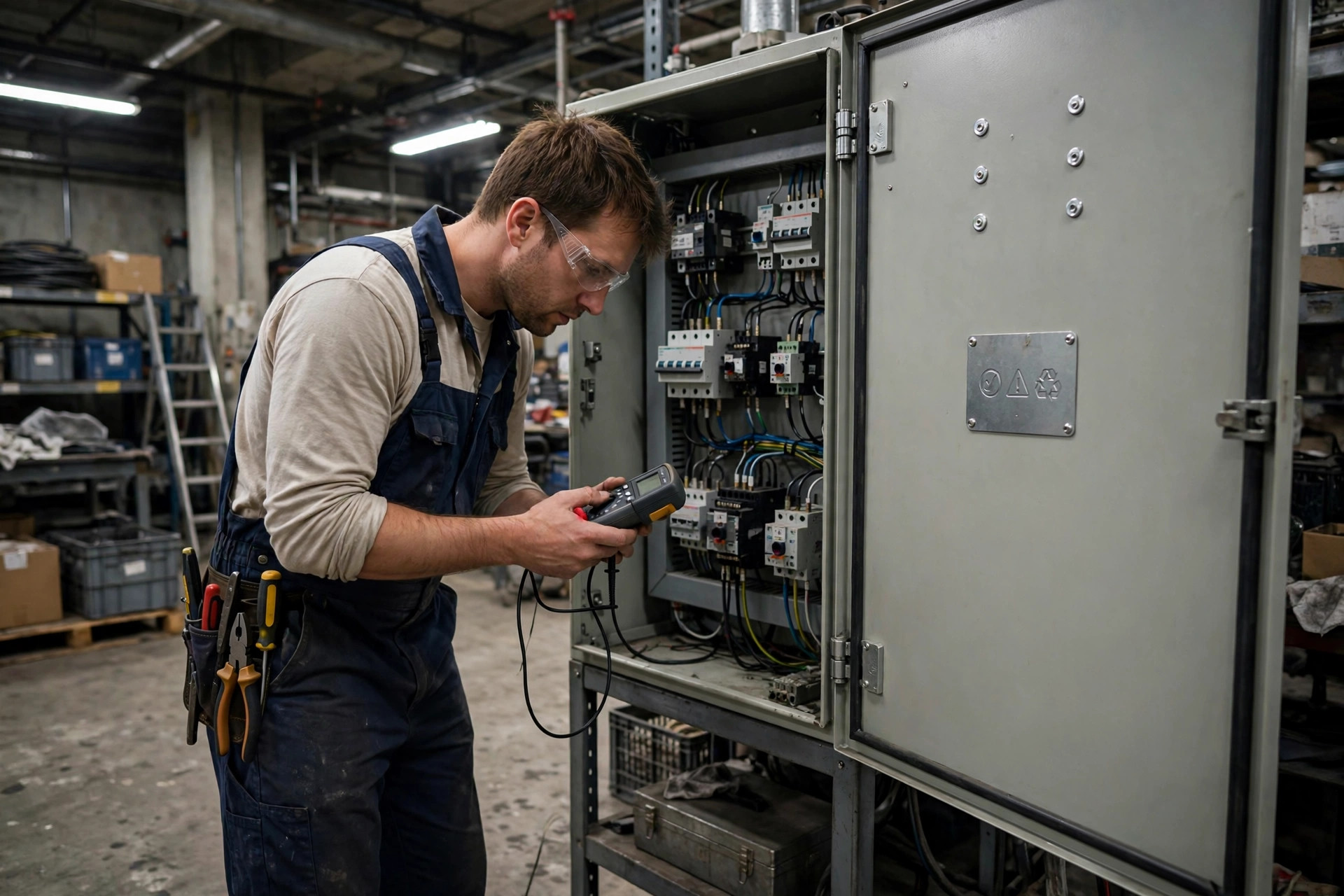
The authorized representative: cheap insurance or cheap trap
Since 2019/1020, a product with no EU-based economic operator should not clear customs at all. The standard move for smaller exporters is to hire a compliance firm as authorized representative for a few thousand euros a year. The money is well spent — but there are three traps.
First, a representative is not a name on paper. The regulation requires them to hold the technical file, cooperate with investigations, and own recall responsibility if things go wrong. A firm that takes the fee, stamps the document, and disappears when customs calls is the same as having no representative. Before you sign, ask: where is the technical file stored, is the response time in the contract, and how many inspections have they handled in the last three years.
Second, they need to understand your product category. A representative who does consumer electronics will not be much help when an inspector starts asking about the risk assessment on an automated forklift. Prefer firms that have done machinery and industrial equipment.
Third, nail down the fee structure. Some charge an annual flat fee, some charge per SKU, and some add an "emergency response fee" when an inspection actually happens. Get all of it in the contract before the letter from customs arrives, not after.
One more market to mention: the UK. Post-Brexit Britain uses the UKCA mark instead of CE, with its own UK-based authorized representative requirement. If you sell into both the UK and the EU, that is two document sets and two representatives. Do not mix them up.
And what exactly goes into the technical file? Here is my minimum list: general assembly and key component drawings, the risk assessment done against the regulation's annexes, the list of applied standards with conformity reasoning, electrical safety test reports, EMC test reports, noise and vibration data where applicable, every language version of the manual, and a sample of the nameplate. The item factories most often lack is the risk assessment — many certifications were done by testing a sample unit, and nobody ever wrote the risk assessment down. Inspectors ask for exactly that document. It is not too late to commission one from your certification body; it costs far less than a re-certification.
Now the red line, and I want to be unambiguous about it: never forge or alter test reports or declarations of conformity. The EU does not treat fake CE marking as a paperwork issue. Penalties run from fines and sales bans to criminal liability in serious cases, and once a product lands in Safety Gate — the EU's rapid alert system for dangerous products, formerly RAPEX — all 27 member states' surveillance authorities can see it. Your brand is finished in Europe. No remediation costs more than that.
Three things an importer can do this week. First, pull the declarations of conformity for everything you currently sell and confirm the signing entity is established in the EU and reachable. Second, get the complete technical file from your certification body and keep your own copy — not just the certificate. Third, add a clause to every new purchase contract: the supplier must deliver the complete technical file within ten working days of request, with contractual penalties attached.
Nobody inspects your cargo while it is on the water. The moment it lands, they inspect the files. Half of the CE battle is fought in the lab. The other half is fought in the filing cabinet.