Let me tell you something about ethiopia teff export warehouse storage: on paper it looks like nothing more than putting grain under a roof, but once you actually do it, every detail matters. I have driven trucks for fifteen years, and I have watched plenty of good grain go bad not in the field, but at the warehouse gate, on the truck bed, and inside the stack itself. Teff is a tiny grain, almost like sand, and it is valuable enough that a little carelessness takes real money off the top of every bag.
A Rainy Delivery That Taught Me the First Lesson
A couple of years ago, during the rainy season, I was hauling a load to a warehouse outside Addis Ababa when rain turned the dirt access road into mud. Four or five trucks were already lined up in the yard, all waiting to deliver teff. The crew was short-handed, so the driver ahead of me unloaded a dozen bags under the awning by the gate, to move inside once the rain eased off.
That rain lasted all night. By morning, standing water had crept under the edge of the awning and soaked the bottom bags. Teff grains are so small that a damp bag can look perfectly fine from the outside while the inside has already clumped together. When the buyer opened a bag for inspection, his face said everything. A shipment meant for export ended up downgraded for the local market, and the shipper lost roughly a third of the value on that lot. I stood there watching and thought: if you fumble the last few steps at the warehouse door, months of hard work in the field count for nothing.
Another time, at a transit warehouse near Dire Dawa, the staff had stacked teff bags six layers high to squeeze more into the building. The bottom bags deformed under the weight, and two of them split right along the stitching. Fine grain poured out onto the floor, and there was no sweeping it back into a bag. The warehouse manager said stacking high saved space. I told him the space he saved was worth less than the grain he spilled and the reputation he damaged.
Since that day, when I pull into a warehouse I look up at the stacks, then down at the bottom bags, and I ask questions before signing anything if the stacks run too high or the bottom bags feel soft.
What Teff Fears Most in Storage
After all these years on the road, I can boil it down to three enemies: moisture, pressure, and mixing.
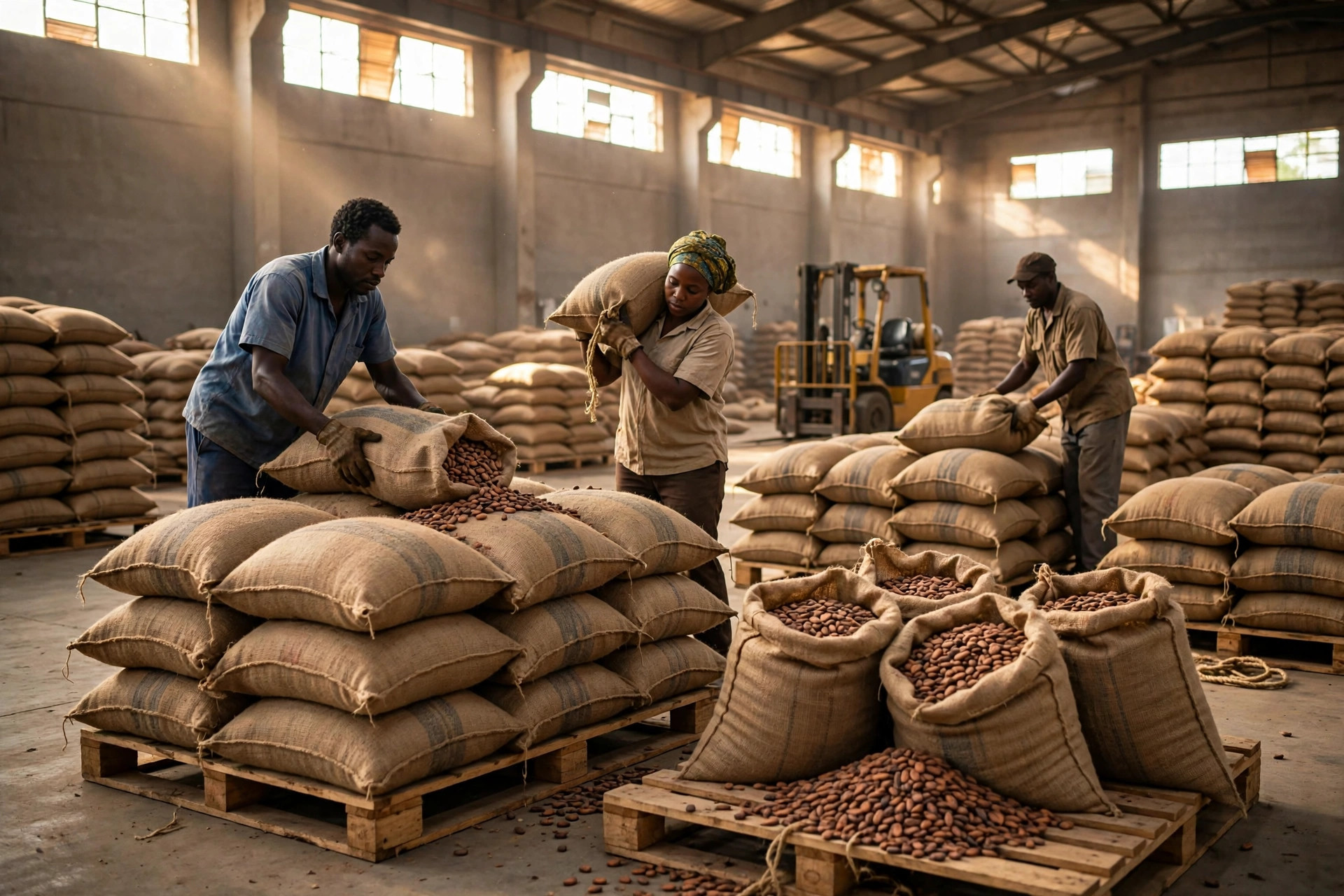
Moisture is the big one. Teff grains are tiny, which means a lot of surface area to absorb damp, and once damp sets in, the grain clumps and turns musty. An export buyer will reject it on inspection. So the first thing a bag needs when it enters a warehouse is not a high stack but a dry floor. Bags should sit on pallets, off the ground and away from the walls, with enough space for air to move around them. During the rainy season, the area by the warehouse gate matters most: the unloading shelter has to be big enough, and the drainage has to work, so no shipment spends a night sitting outside.
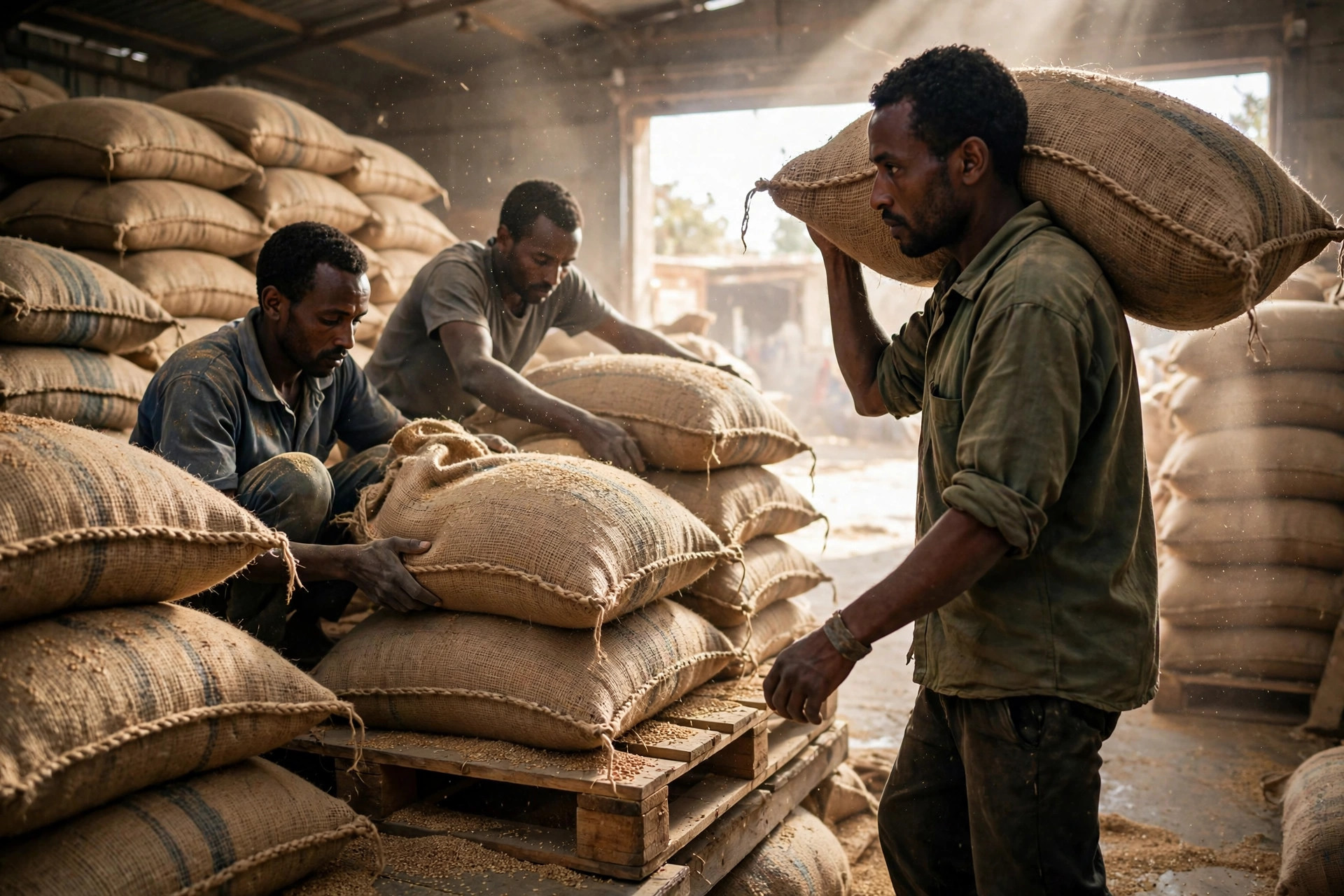
Pressure is the second enemy. Stack bags too high and the bottom layer takes all the weight. Seams split, bags lose their shape, and restacking becomes a mess. My rule of thumb is four layers for bagged teff. Go higher only if you know the bags and the pallets underneath can genuinely take it, not just because the floor looks empty. Leave aisles between stacks wide enough to walk through, because the day you need to inspect, sample, or rebuild a stack, you will be glad you can reach it without tearing the whole warehouse apart.
Mixing is the third enemy. Export buyers care about traceability. Teff from different farmers, different harvests, or different grades must never share a stack. If one sample fails inspection, a mixed lot gives you no story to tell and no clean batch to fall back on. When grain comes in, split it by batch, label each zone clearly, and write the labels big enough that a worker, a driver, and an inspector can all read the same thing at a glance. A clear label beats any fancy system.
There is one more checkpoint people underestimate: loading the container. Before teff goes into a shipping container, every bag deserves a quick once-over by hand. Loose stitching or a worn corner should mean a fresh bag, not a hope that nobody will notice at the port. If it is raining on loading day, work under shelter, because rain blowing into an open container door will sit inside for weeks at sea, and the buyer opens a very different shipment than the one you loaded. A moisture barrier on the container floor and a careful seal on the door cost almost nothing compared with an arrival claim.
Running the Numbers Without Fooling Yourself
Most people price ethiopia teff export warehouse storage by one number: the rent. That is the wrong way to look at it. Here is how the real comparison shakes out:
| Storage method | What it saves | What tends to go wrong | Best for |
|---|---|---|---|
| Bags straight on the floor | No pallet or rack cost | Floor damp creeps in, bottom bags spoil, counting is a chore | Short turnaround in dry weather |
| Pallets, raised and spaced off walls | Dry, ventilated, easy to count | Pallets cost money and take some floor space | Most export shipments, especially in the rainy season |
| Racked, batch-separated storage | Clean batches, easy inspection | Higher upfront cost, needs staff to maintain | High-value lots with many grades and batches |
Let me put a plain number on it. Say a shipment is worth two hundred thousand dollars. One damp night that downgrades part of the lot can easily wipe out twenty or thirty thousand. The pallets, the shelter, the labels, the extra labor for careful stacking — all of it together usually costs a fraction of that loss. People who save pennies on storage end up paying for it in damaged goods, and I have watched that arithmetic run the wrong way more times than I can count.
Here is the counterintuitive part: the warehouse closest to the port is not always the best warehouse. A port-side warehouse looks fast, but when the rainy season washes out the access road, trucks cannot get in or out, and the shipment sits anyway. I have seen shippers do better with an inland warehouse on a solid road, with good drainage and an experienced crew, even though it adds half a day of driving. In ethiopia teff export warehouse storage, steady beats fast. Fast is for good weather. Steady is for the weather you actually get.
Practical Advice for Shippers and Warehouses
For shippers, settle three things with the warehouse before the first truck arrives. First, check moisture before you check quantity — a damp bag goes in its own spot, never on top of good stock. Second, batches get separated and labeled, and if the label does not match, nobody signs. Third, shipments leave on a first-in, first-out basis, so the earliest arrivals do not sit in a corner until they are past their best.
For warehouses, my advice is just as plain. Make the gate shelter bigger than you think you need, because the rainy season will test it. Do not skimp on pallets, and replace a broken board before it gouges three bags. And when shifts change, have the outgoing crew tell the incoming crew out loud what came in, what went out, and what looked off. A spoken handover catches mistakes that a notebook alone misses.
Drivers have a part in this too, and I say this as one of them: delivering to the warehouse is not the end of the job. Check the bag count, the batch, and the condition of the bags against the delivery note before you sign. Most of the disputes I have seen over the years started with a signature given in a hurry at the gate. A clear note protects the shipper, and it protects you.
Teff leaves Ethiopian fields and travels a long way to reach its buyer, and ethiopia teff export warehouse storage is its last stop on land. If that stop is solid, everything before it holds its value, and the buyer keeps coming back. There is an old saying among drivers: slow work done carefully beats fast work done twice. Grain does not mind a long road. What it cannot afford is a road where nobody is paying attention.
By Shifu Zhao, Trucking Veteran (15 yrs)