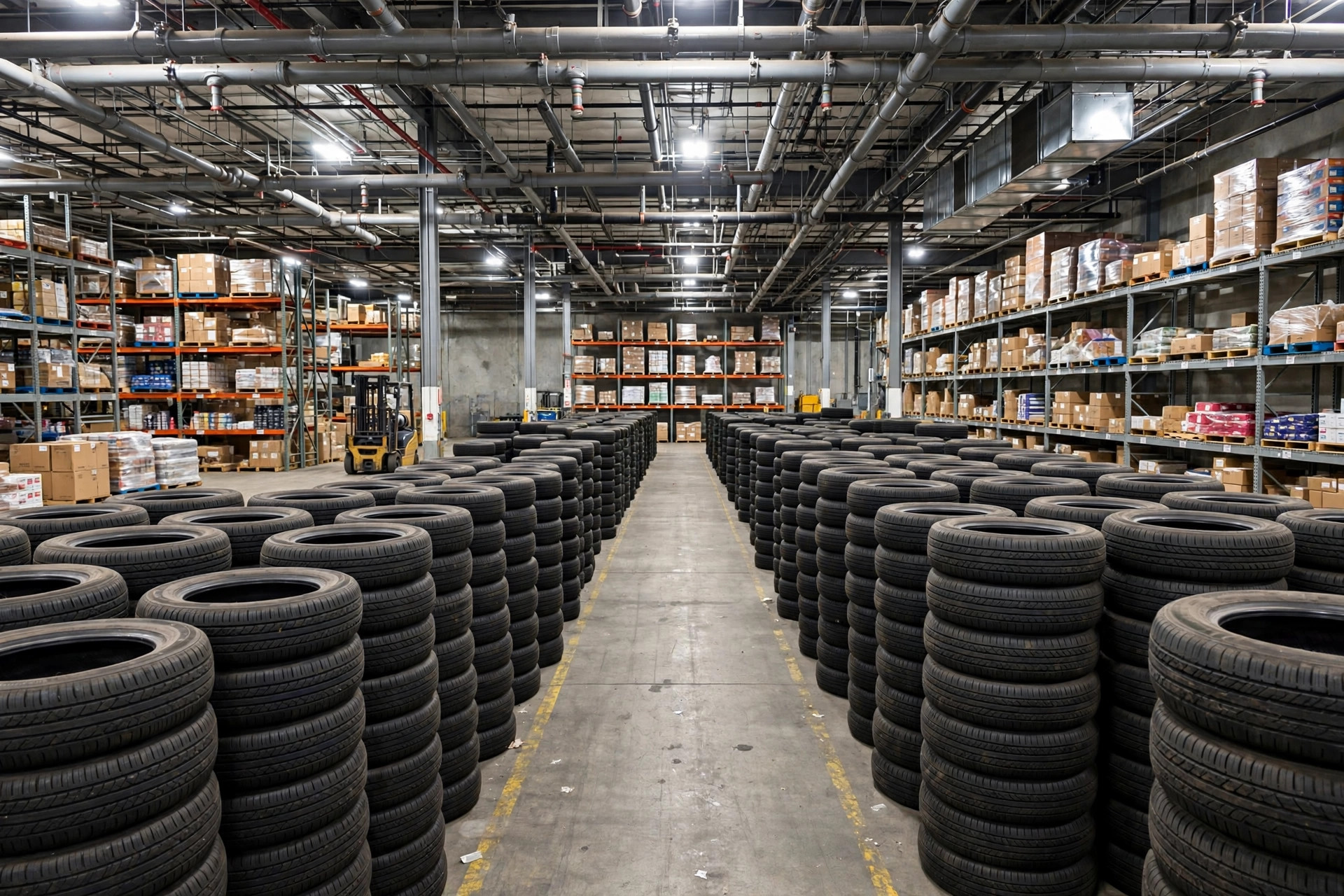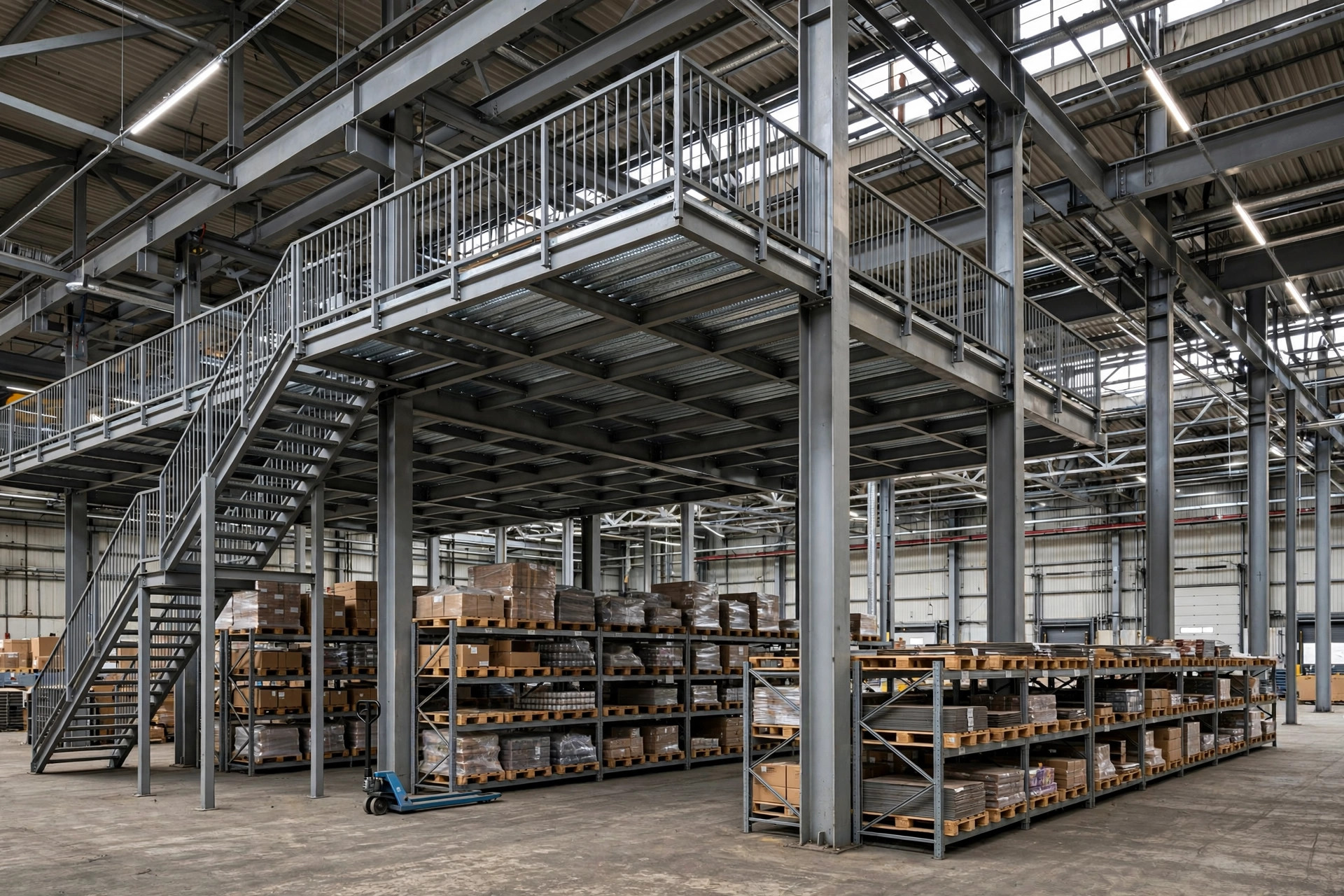
Here is the bottom line: if your top of storage is above 25 feet, ESFR is the answer and CMDA is off the table. Below 25 feet with a solid municipal water supply, CMDA often wins on cost. This is not a pricing debate. It is a physics problem about how high water can actually fight a fire.
Last year I walked a new warehouse in Rialto with a friend. Thirty-eight-foot ceilings, six-tier racking, storage stacked to 34 feet. His fire protection contractor gave him two proposals, one CMDA and one ESFR, and he asked me why the CMDA bid was so much cheaper. I asked him one question in return: had anyone priced the fire pump and the water tank yet? He went with ESFR. Not because ESFR is glamorous, but because at that height CMDA could not do ceiling-only protection at all. It would have needed in-rack sprinklers everywhere, and the pipes, the maintenance, and the forklift collisions were all waiting for him down the road.
Above 25 Feet of Storage, CMDA Only Survives With In-Rack Sprinklers
CMDA sprinklers are control-mode heads. Their job is to hold the fire in check, not put it out, until the fire department arrives. They work by delivering a designed density over a designed area from the ceiling. Under NFPA 13, that ceiling-only approach has hard limits: storage up to 20 feet under a 27-foot ceiling for wet or dry systems, or up to 25 feet of storage under a 30-foot ceiling for wet systems only. Go past those numbers and the ceiling discharge can no longer punch through the fire plume. The code then requires in-rack sprinklers in the longitudinal flue spaces, level by level through the rack.
Anyone who has run a warehouse knows the pain of in-rack sprinklers. First, the heads live inside the rack structure, right where forklifts work. A pallet slightly off-center snaps a head, and I have seen it happen four times in one year at an e-commerce warehouse in Fresno. One accidental discharge soaks an entire bay of inventory. Second, the piping fills the rack system, so any future rack reconfiguration or beam-level change means touching the fire protection system and going back through plan review. Third, water damage: in-rack heads sit close to the fire and open early, which means they open on your most valuable inventory.
My verdict is blunt: if the ceiling is above 30 feet, ignore the cheaper CMDA number. It is not saving money. It is moving the money into the racks and into future repair bills.
The ESFR Trade-Off: No Pipes in the Racks, but a Serious Appetite for Water
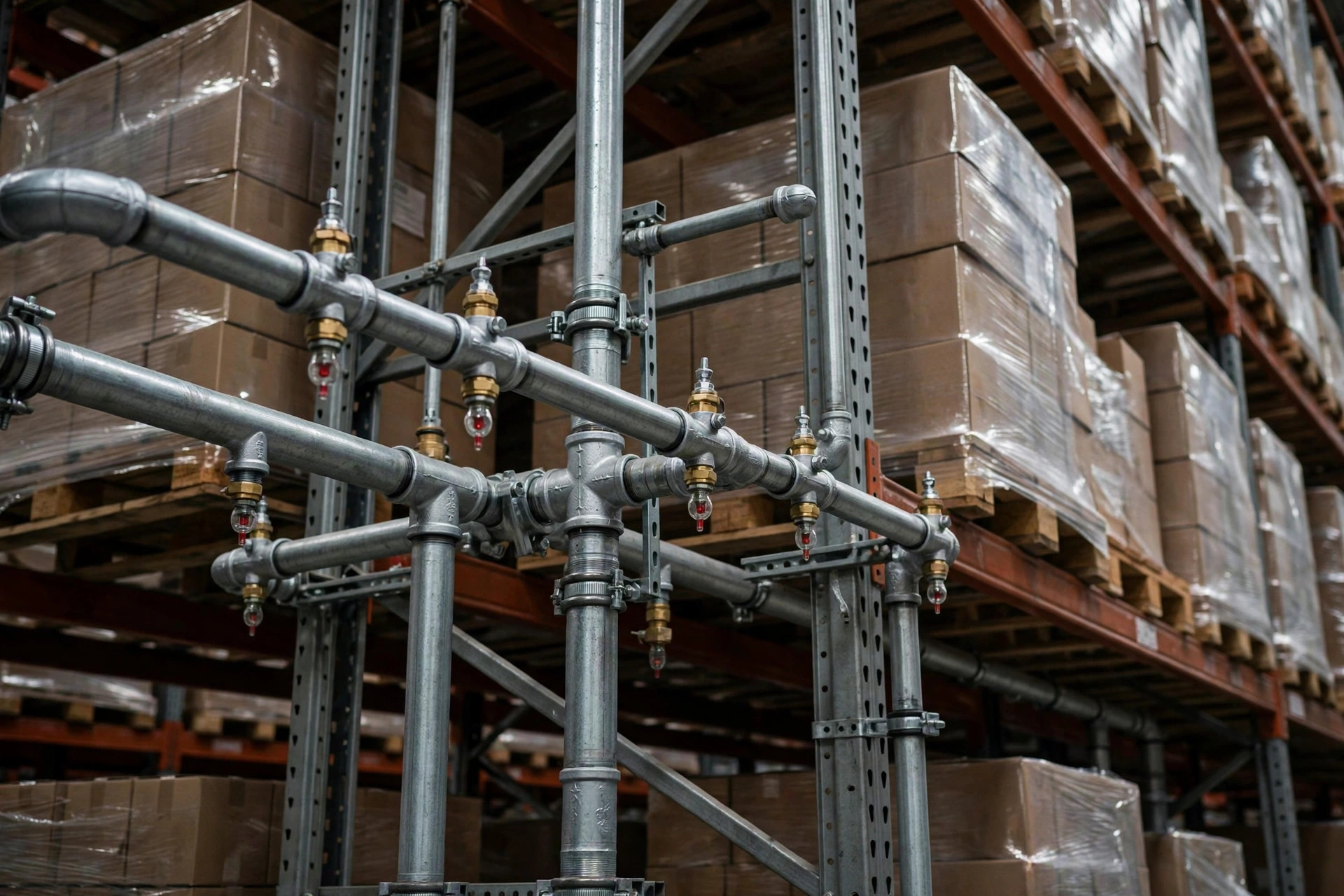
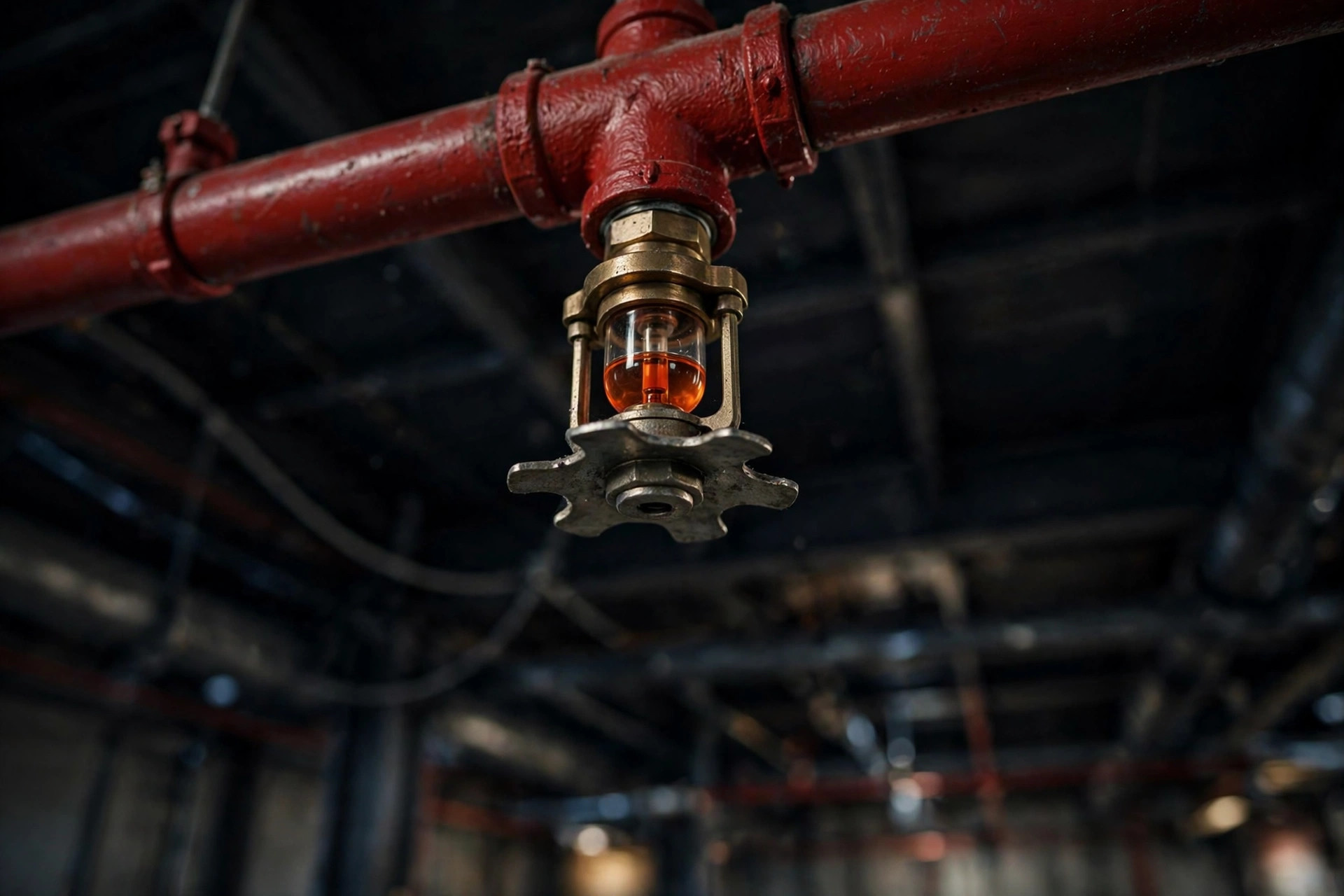
ESFR heads are suppression-mode sprinklers designed to kill the fire outright. They discharge big water, fast. A K-25.2 head at 50 psi puts out roughly 178 gpm, from the formula Q equals K times the square root of pressure. That is an order of magnitude more than a standard head, and it is why ESFR can go without in-rack sprinklers. The standard listing for K-25.2 covers 40 feet of storage under 45-foot ceilings, and specific-application listings for K-22.4, K-25.2, and K-28.0 reach 48-foot ceilings with 43 feet of storage.
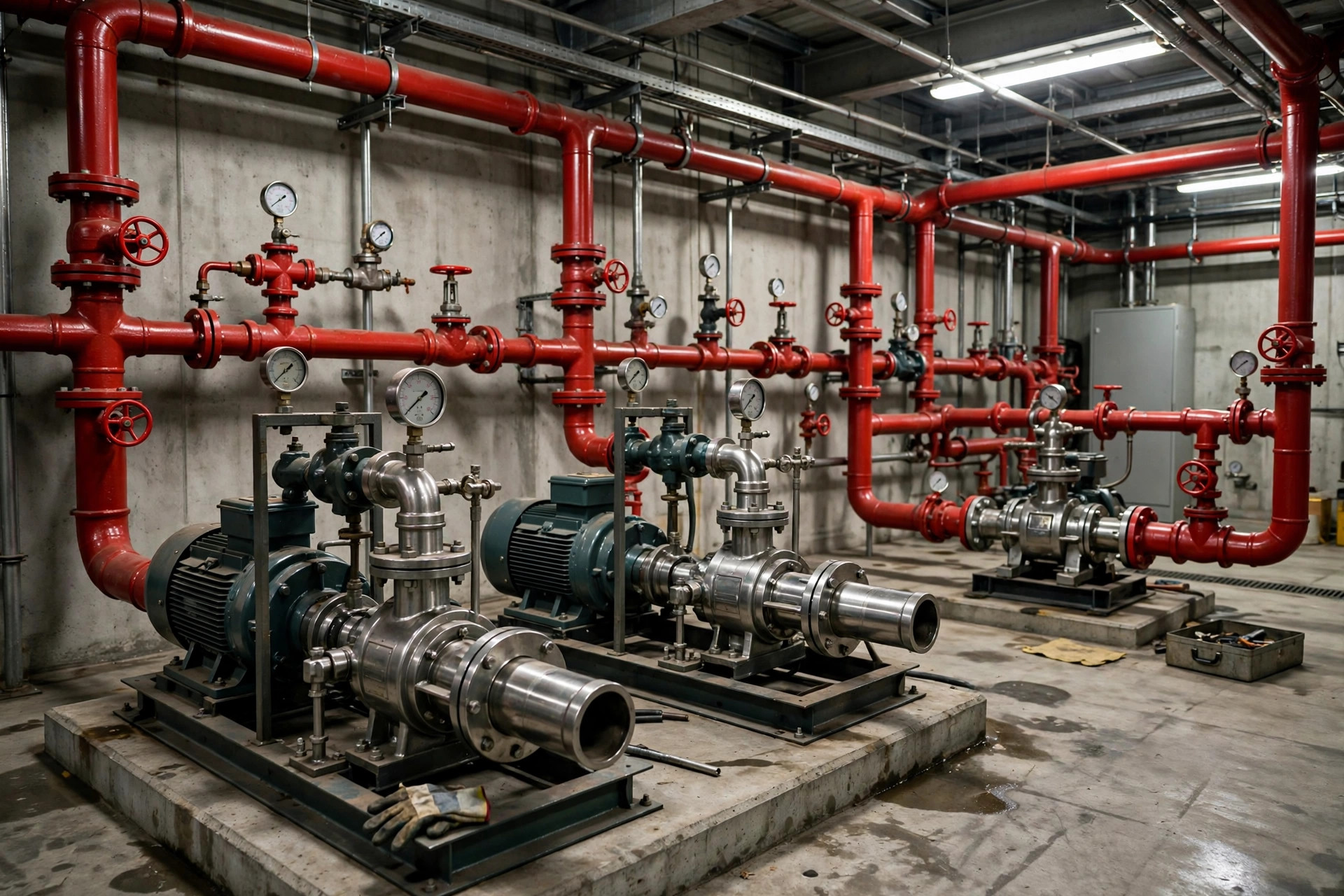
The cost lands somewhere else. The ESFR design area is 12 heads, each flowing 166 to 178 gpm, so the system demand easily passes 2,000 gpm. Municipal pressure almost never covers that. You need a fire pump and a water storage tank, which adds well over a hundred thousand dollars to a retrofit. For an older building with a weak water supply, ESFR is actually the more expensive door to walk through. That is the real trade-off: ESFR takes the fire protection out of the racks and puts the demand on the pump room instead.
One limitation hides in the ESFR listing conditions and catches people off guard: ESFR does not protect racks with solid shelves or open-top containers. The reason is physical. The discharge must penetrate straight down to the seat of the fire, and a solid shelf blocks the water. If your racks use solid steel shelving instead of beam-and-pallet positions, the whole no-in-rack-sprinkler premise falls apart. You either change the rack structure or you build in-rack sprinklers like everyone else. Most proposals will not volunteer this detail, so confirm it before you sign anything.
One more warning that bites people. FM Global no longer recommends K-14 ESFR heads as an in-rack replacement in buildings over 40 feet tall. The K-14 still has a legitimate role: retrofitting onto existing 3/4-inch piping without re-piping. For new construction, start at K-25.2 and do not let a cheap K-14 proposal win the bid. ESFR also comes with strict geometry: deflectors 6 to 14 inches below the ceiling, at least 36 inches of clearance from the deflector to the top of storage, and minimum 6-foot aisles. Your fire protection engineer knows these numbers. Your job is to make sure the "storage height" they design to is the top of the product, not the top of the rack beam.
A Selection Checklist You Can Take to Your Contractor
Bring this list to your fire protection contractor and you will be hard to fool:
- Measure two heights precisely: top of storage (the top of the product, not the rack) and ceiling height. The ESFR/CMDA boundary is drawn by these two numbers.
- Storage over 25 feet or ceilings over 30 feet: go ESFR, K-25.2 minimum. In this band CMDA needs in-rack sprinklers, and the total bill is not cheaper.
- Storage at 25 feet or below with ceilings at 30 feet or below: ceiling-only CMDA is usually cheaper and asks less of the water supply. Get the water flow test from the utility before deciding.
- Run the water math: ESFR demand routinely exceeds 2,000 gpm. If municipal pressure falls short, price the fire pump and tank into the total budget from day one.
- Talk to your forklift team: if tight aisles and bumped racks are a weekly event, avoid in-rack sprinklers. One snapped head costs more than the savings were worth.
- Plan for growth: any chance of raising rack heights in the next three years? Design for ESFR now. Re-permitting a fire protection redesign later costs more than building it right once.
- The final design must comply with the current edition of NFPA 13 and the local authority having jurisdiction, and the drawings should carry a licensed fire protection engineer's stamp.