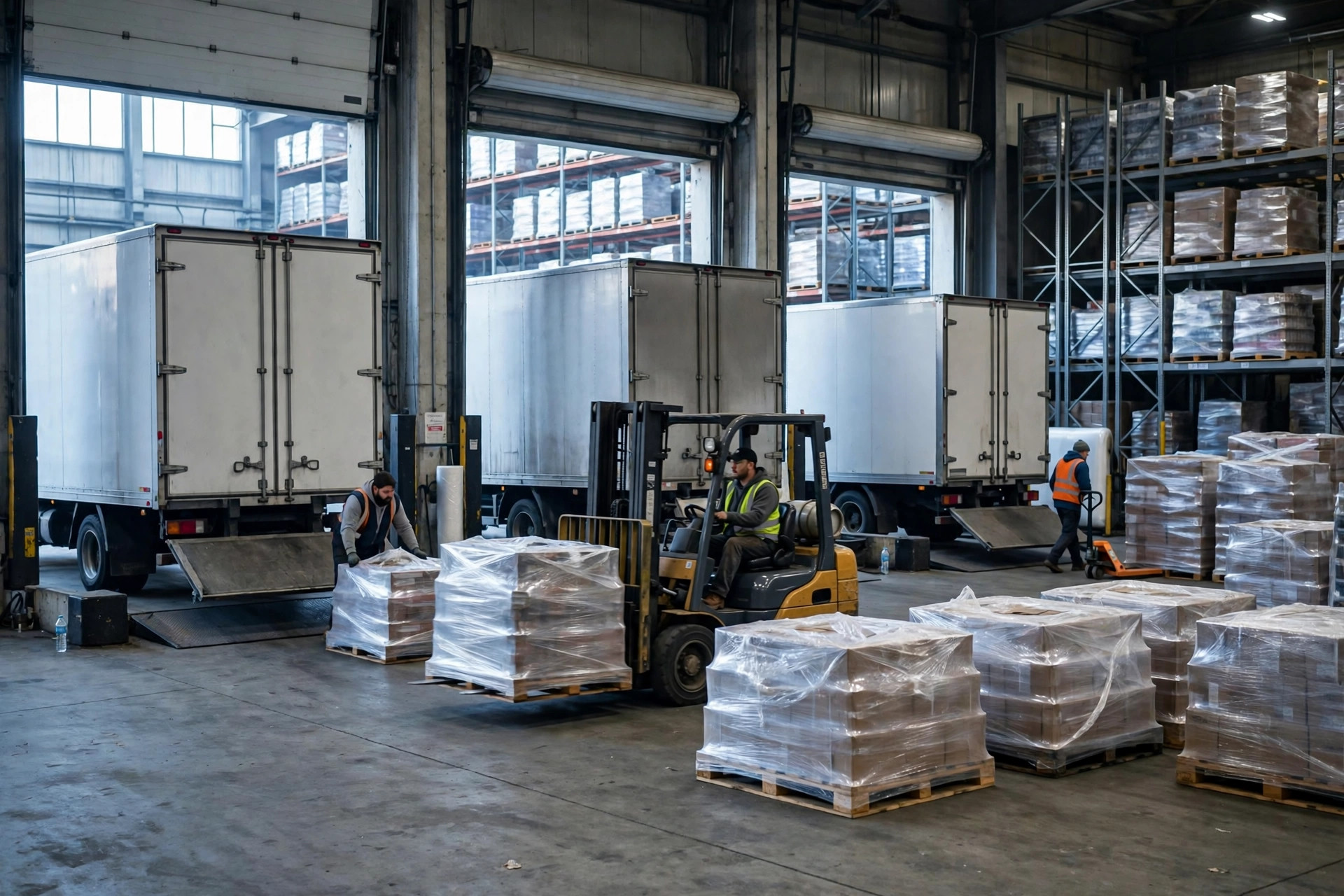
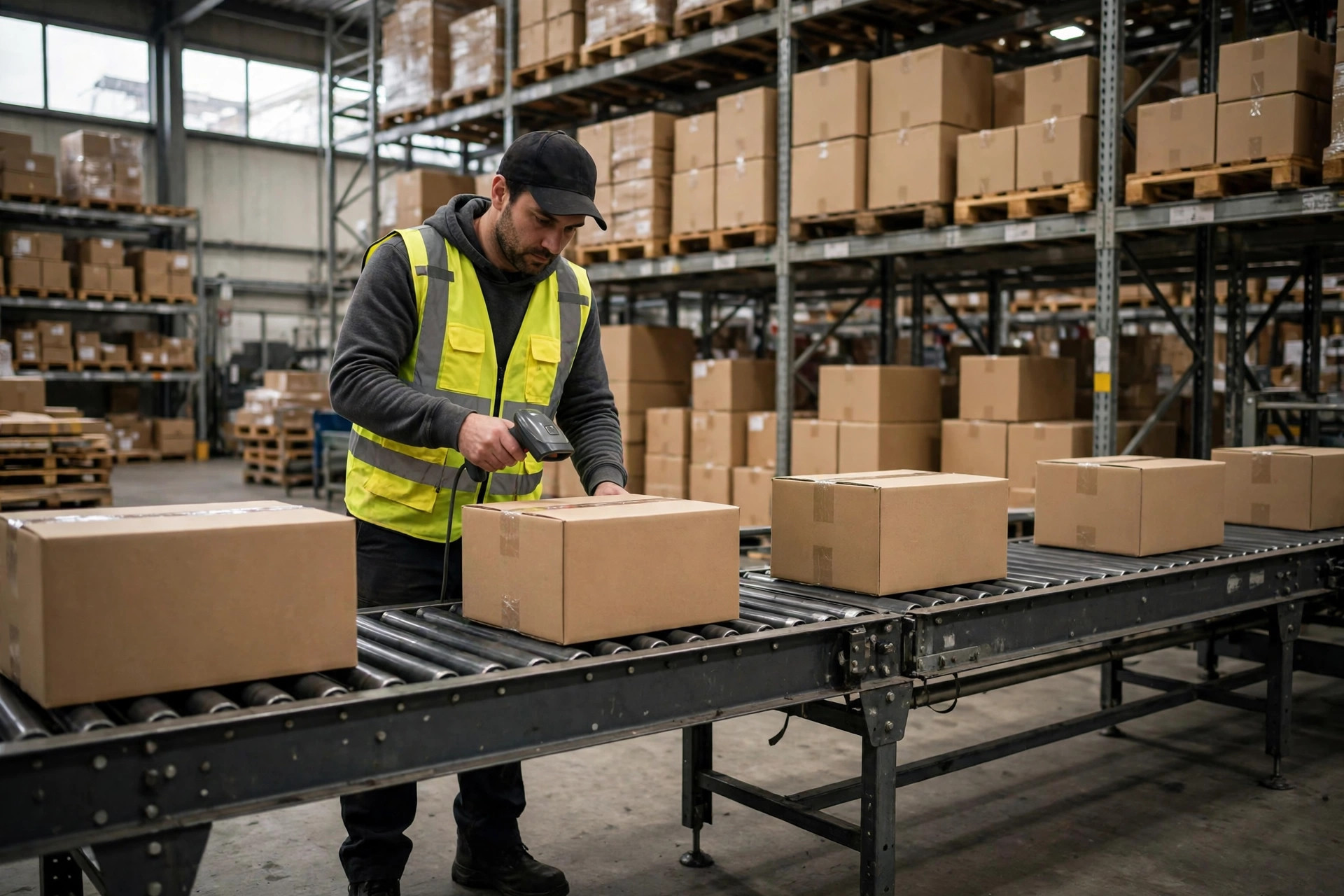
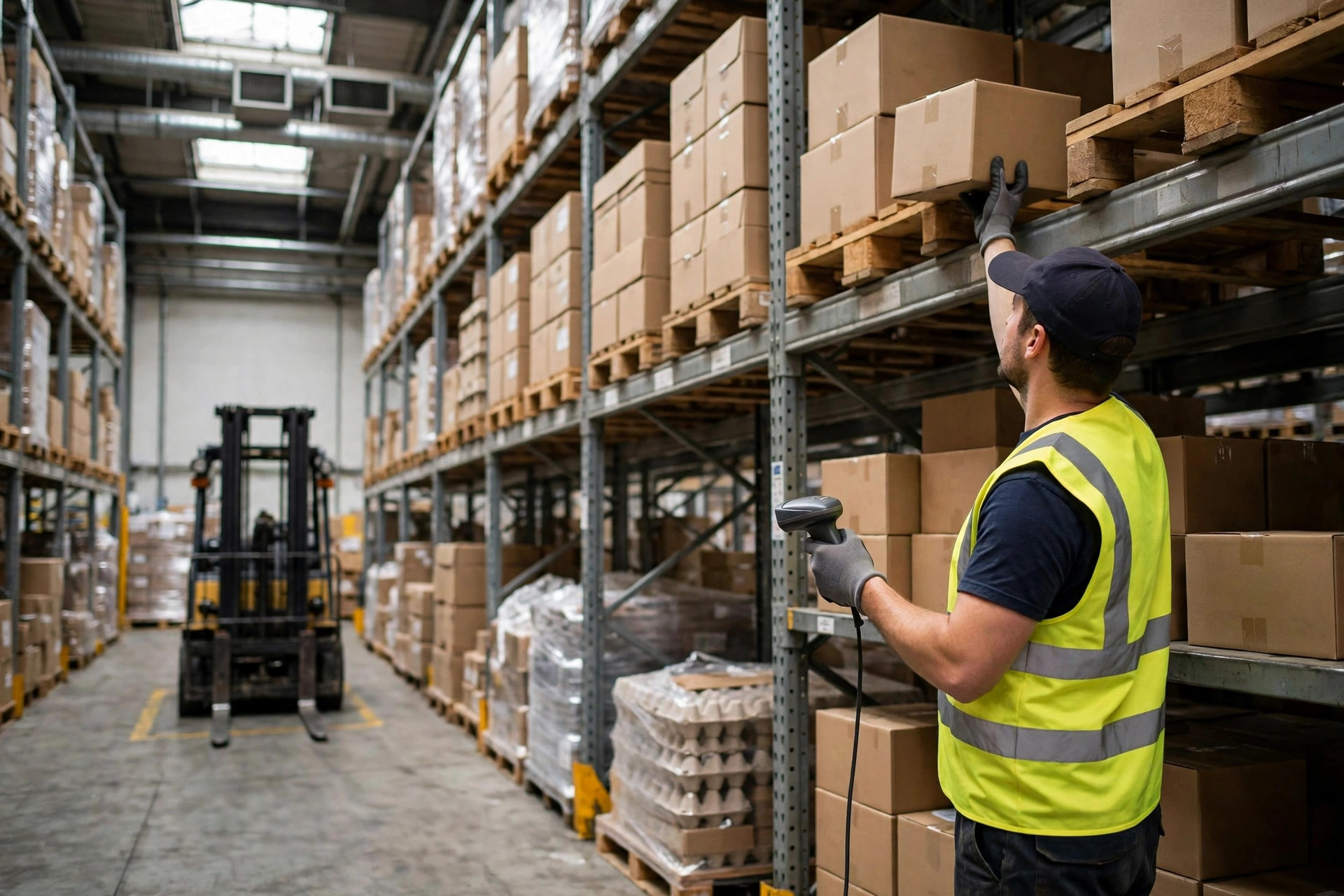
We had a client who shipped to Germany and ran into the EPAL pallet exchange system on day one. They sell home goods, and until then their freight had mostly gone to the United States in consolidated ocean containers, where a pallet was just something you bought, loaded, and forgot about. Then their first shipment arrived at a third-party warehouse near Duisburg one autumn, and the driver waited at the dock for nearly two hours while the warehouse refused to receive it. The reason was simple: their pallets could not enter the exchange pool.
The warehouse manager's answer has stuck with me ever since. Roughly translated, it was: we cannot hand your boards on to the next customer, so taking them in means getting stuck with them ourselves. The on-the-spot fix was ugly. They rented compliant boards at short notice, paid workers overtime to transfer the goods from one pallet to another, and ended up with a bill well beyond the freight cost. The worse part came after: who was supposed to pay for that? The contract said nothing about pallets at all. Sales called it an operational issue, the client called it the warehouse making trouble. I know that look on a client's face very well. It is not anger, exactly. It is the feeling of having been kept in the dark. Nobody mentions pallets when the contract is signed, and then suddenly pallets are the whole problem at the dock. I have watched that scene play out far too many times.
What the EPAL pallet exchange system actually exchanges
Put simply, what moves through this system is not wood, it is eligibility. You deliver a truckload on compliant boards, and at unloading you take back the same number of boards in acceptable condition, or you get a pallet credit on the books to settle later. The boards circulate between warehouses, fleets, and factories across Europe, like a currency everybody recognizes. The word that matters here is acceptable. A board with a broken plank, missing nails, or water damage can legitimately be refused. Many newcomers treat pallets as disposable packaging, something you buy and throw away. In Europe that understanding does not work. Here, a pallet is an asset, an account, and something that belongs in the contract.
Here is the counterintuitive part: the cheaper the board, the more expensive the bill can get. A cheap board that cannot enter the pool has to be paid for again on every shipment, plus the labor of transferring goods and the dock time wasted waiting. A compliant board looks pricier up front, but it keeps circulating from hand to hand, and the cost per trip comes down. So choosing a pallet is not about comparing unit prices. It is about whether the board can survive inside the system. People who obsess over saving a little on each board often end up spending more on the whole shipment.
Let me give you the opposite story. Another client of ours exports auto parts and runs a distribution hub in Poland. Before signing, they put the pallet terms on a separate page of the contract: both sides count and photograph boards at handover, damage is judged against the photos, differences are settled once a month, and the account is closed out when the partnership ends. Two years in, they have never once argued about pallets. And there was a knock-on effect at negotiation time that surprised even them: because their pallet records were clean, the warehouse was happy to give their trucks priority dock slots in peak season. This is the kind of thing only the vendor side will tell you. A client whose pallet account is tidy looks like a low-hassle client to a warehouse, and low-hassle clients get favors everywhere. Good pallet terms negotiate more than pallets.
What the EPAL pallet exchange system costs you, beyond the board
Three ways of playing it, three very different bills:
| Approach | Upfront spend | Do the boards come back? | Who pays for damage? | Best for |
|---|---|---|---|---|
| Buy ordinary boards yourself | Low | No | You absorb it | One or two trial shipments |
| Buy compliant boards and join the pool | Moderate | Yes, exchanged or credited | Split by the handover standard | Steady, long-term shipments to Europe |
| Rent boards or exchange with the truck | Settled per shipment | Not your problem | Rental and service fees apply separately | Irregular volumes, scattered destinations |
I have deliberately left specific prices out of that table, because quotes and seasonal charges vary widely between providers. Treat any exact figure as something to confirm against the written quote at signing and the latest official published terms. And when you run the numbers, do not look at the board price alone. There are three bills: the boards or the rental, the labor and time spent transferring goods between boards, and the replacement boards you pay for when the account is settled. Most clients budget carefully for the first one and forget the other two entirely, then pay them on the spot at the dock. There is also a hidden bill: if your truck sits at the dock for half a day over a pallet dispute, will the carrier charge extra, and will your customer mark you down for a late delivery? Ask that before it happens, not after.
Get the pallet clause into the quote before you sign
Before you sign anything, get a few things down on paper. How are boards counted at handover, in person between driver and warehouse, or from photographs, and how detailed do those photographs need to be? How is damage judged, with the standard written into an appendix rather than left to a verbal understanding? How often are differences settled, with each truck or once a month, and what does the statement look like? If boards go missing, is the compensation paid in boards or in money? And on the day the partnership ends, how many days do you have to clear whatever balance is left on the account? Putting it in the contract is not embarrassing. What is embarrassing is discovering at the dock that nobody wrote it down.
And here is an honest word from the vendor side: the more precisely the pallet terms are written, the less room the warehouse has to hide costs anywhere else. The pallet account is the easiest place to bury a fuzzy charge, and once that account is transparent, the padding in the rest of the quote has nowhere to hide. It works the other way too. A contract that is vague about pallets should make you read every other line of the quote twice.
Next time you sit down to negotiate a contract, ask these three questions:
"When this shipment is unloaded, do I get back the same number of boards in acceptable condition, or just an IOU?"
"Who decides whether a board is damaged, and on which page is that standard written?"
"On the day our partnership ends, how is the remaining balance on the pallet account settled?"
Ask those three, and then look at the quote again. You will read it with sharper eyes.
By Susan, 3PL Sales Director