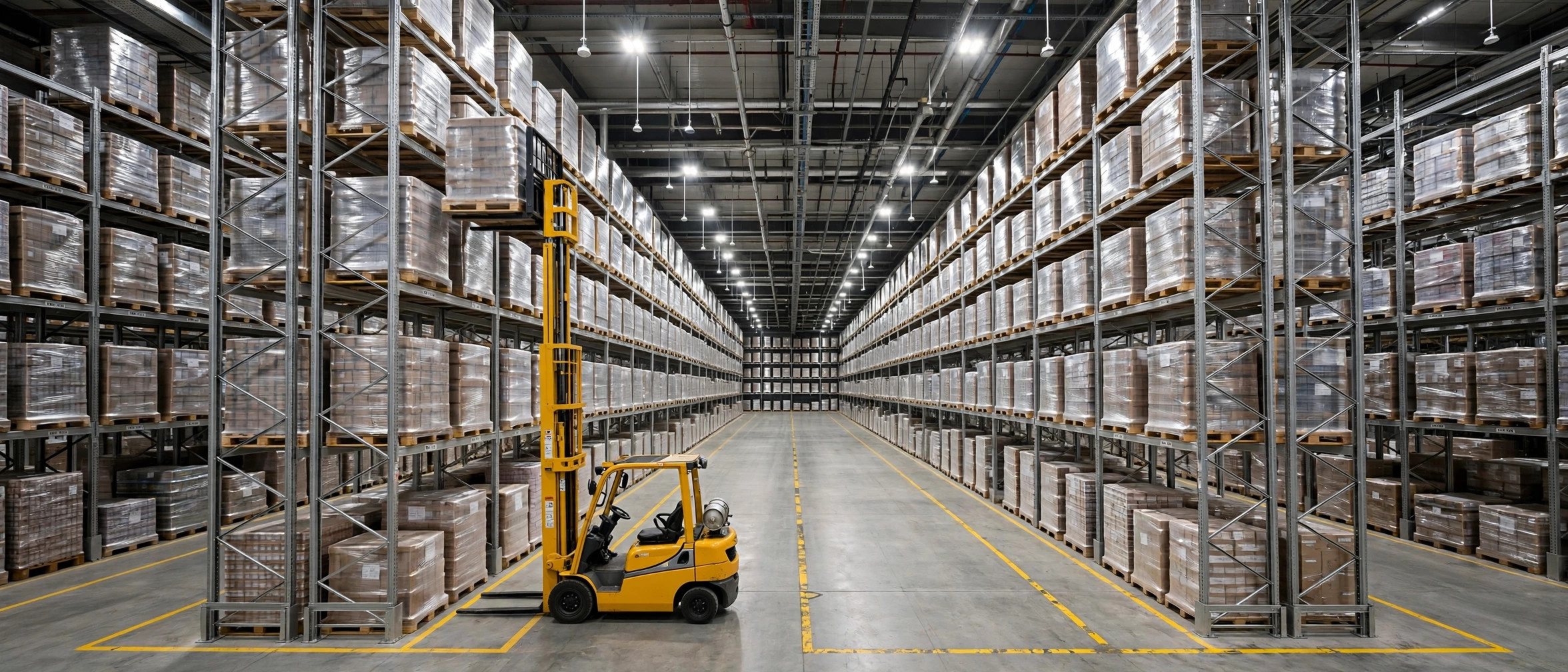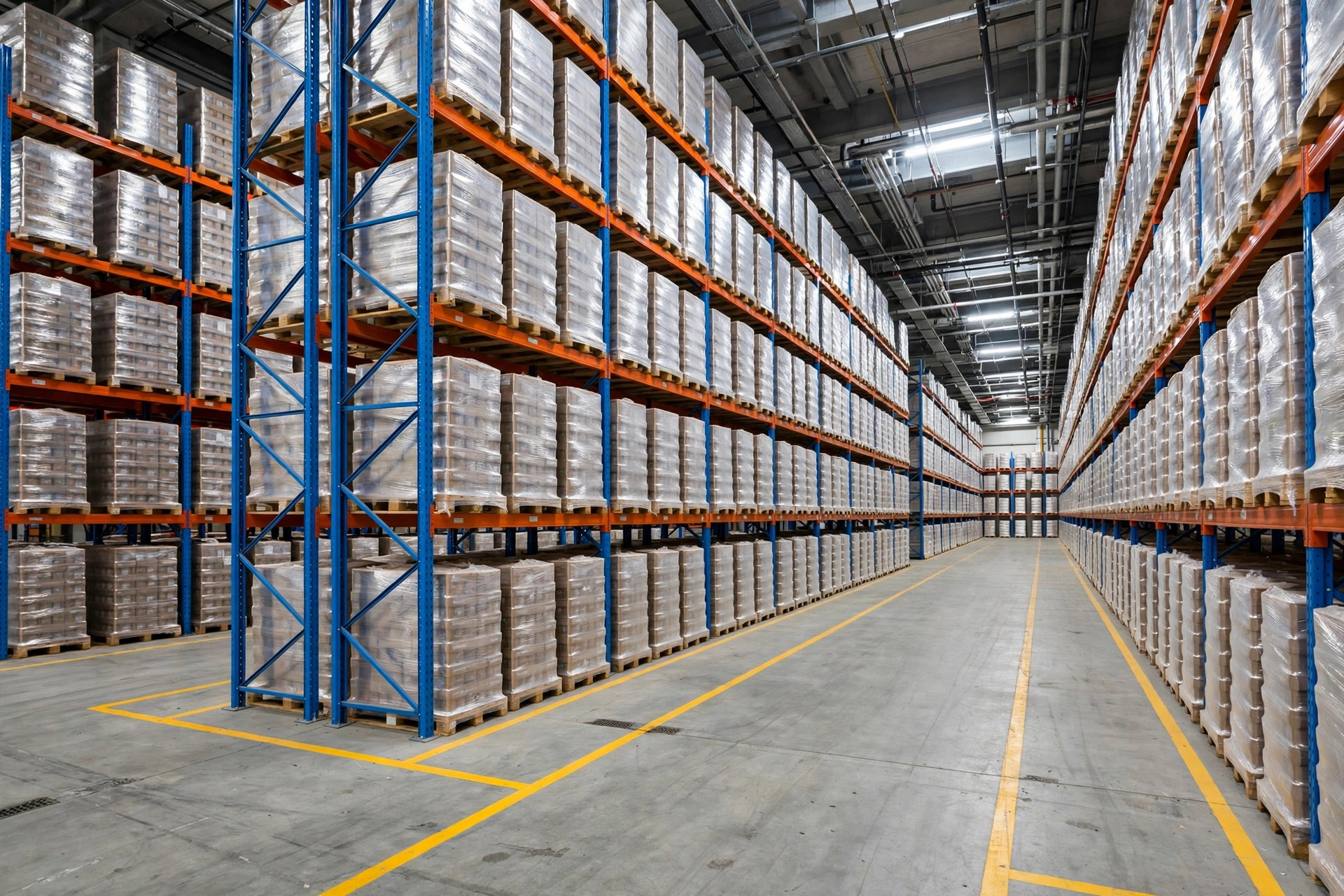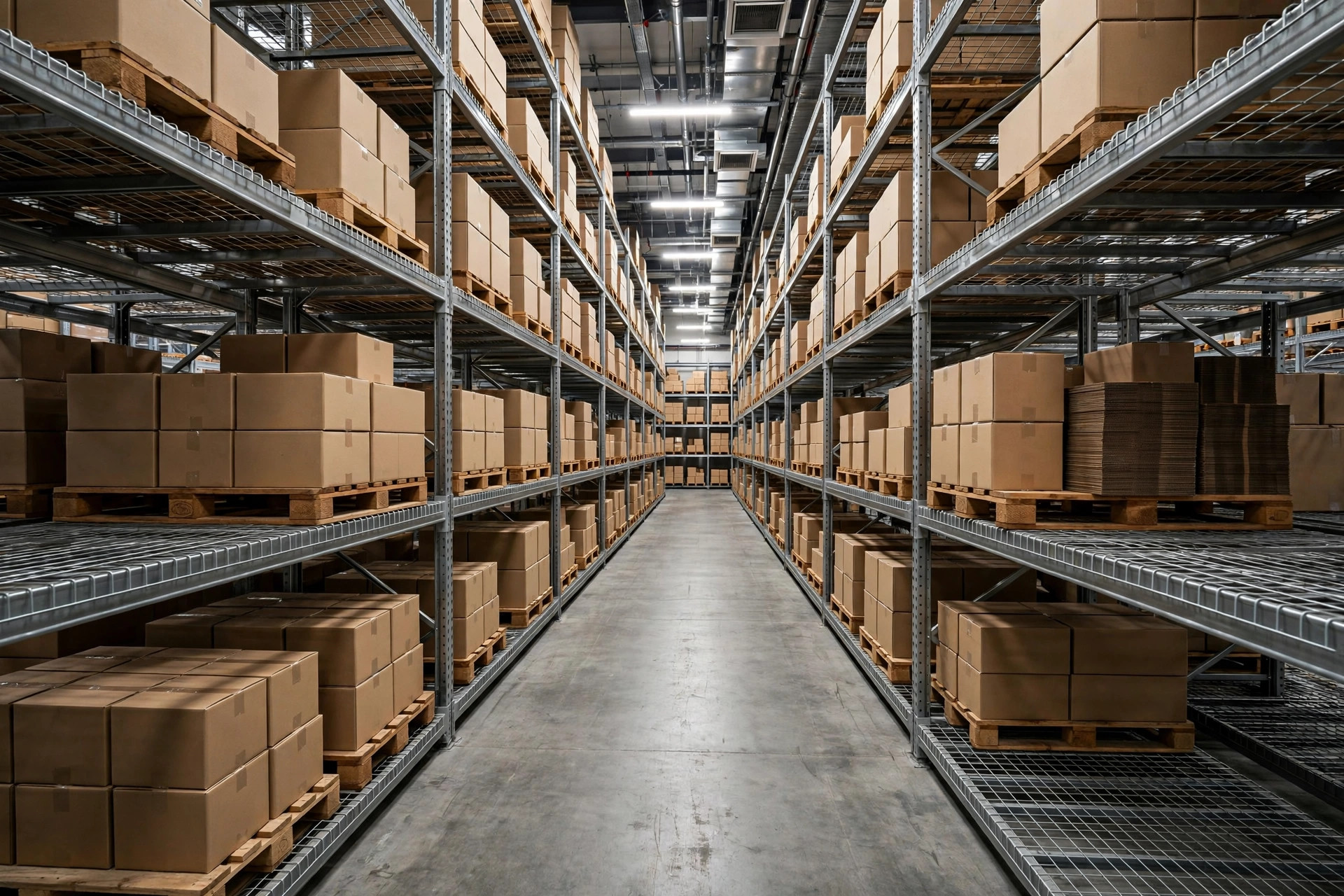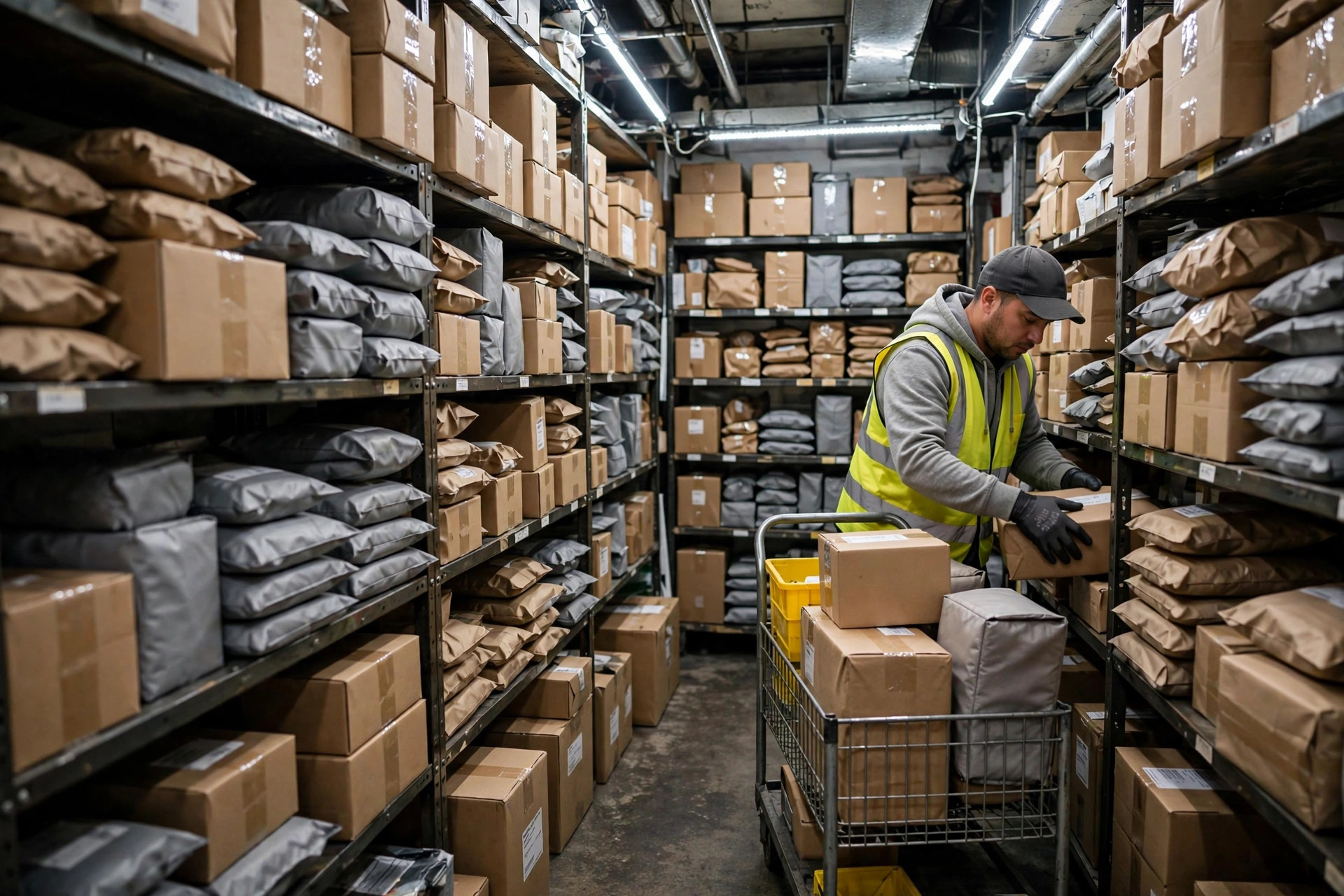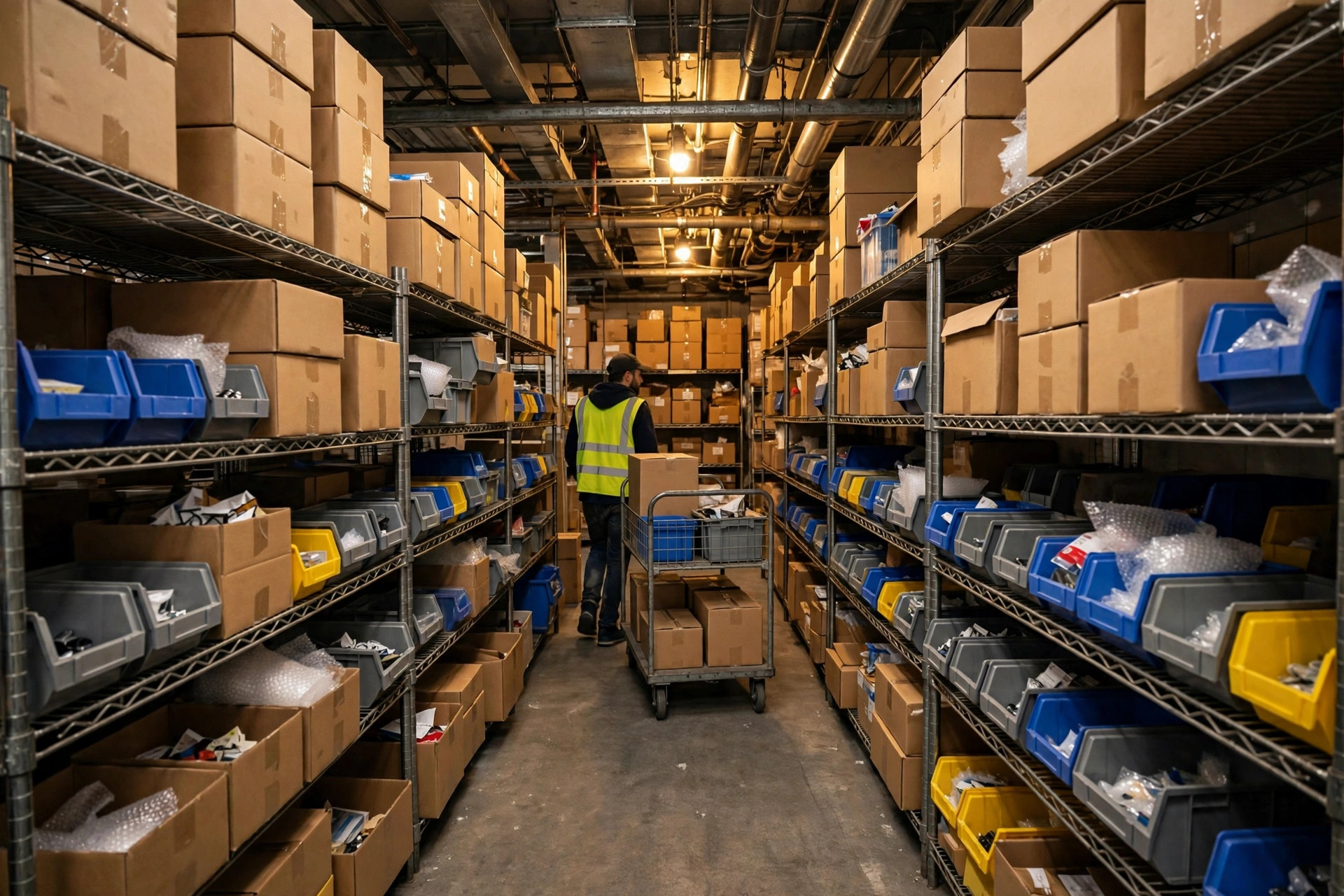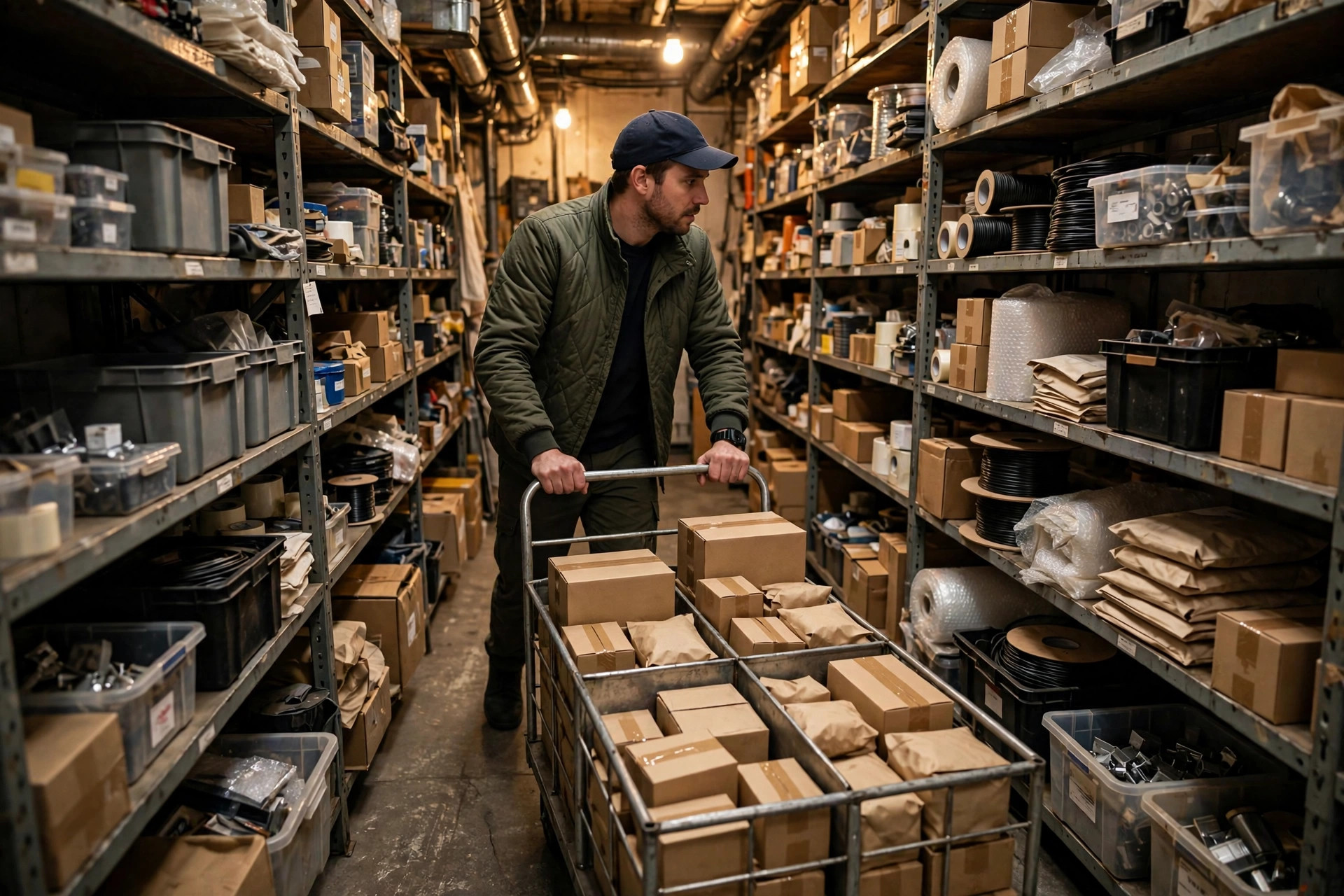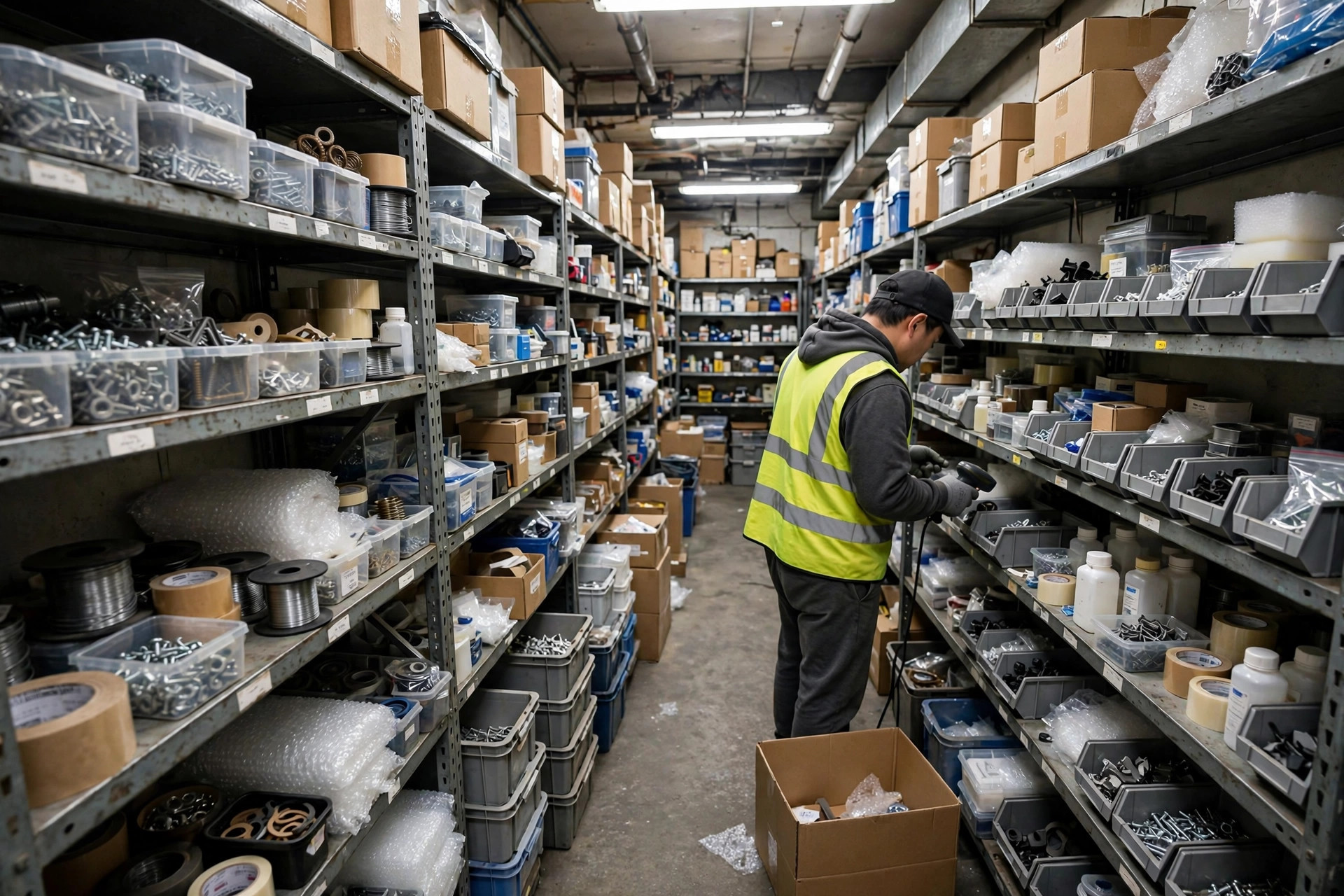
"A warehouse your size can hit 90%+ space utilization with dynamic slotting." That's what a WMS sales rep told me in the fall of 2024. At the time, our 32,000-square-foot warehouse had just blown up: bestsellers stacked so deep the aisles were down to half their width, while 40% of our rack locations sat empty — because fixed slotting means every SKU owns its bunk, and when it's out of stock, that bunk sleeps empty. Nobody else is allowed in.
I was sold. It sounds like the future: freight arrives, you drop it wherever there's a hole, the system remembers where everything is. The big guys all do it. We could never afford their WMS, but the idea? I could copy that with a spreadsheet.
Six months later, here's my honest conclusion: the space showed up, but every square foot we saved billed us back — from four different directions.
Dynamic slotting, explained like I'd explain it to my cousin
Fixed slotting: every SKU has a permanent home. My pickers can find things with their eyes closed. Dynamic slotting: no permanent homes. First come, first served — drop it in any empty slot and let the system keep the books.
The big warehouses run it because they have tens of thousands of SKUs and multimillion-dollar systems, and their pickers just follow the RF gun. We've got a little over 2,000 SKUs, five people, and a system that is essentially a spreadsheet plus our brains. Copying the big guys' playbook with that setup is like taking a tractor onto the freeway. Great road. Wrong vehicle.
Our knockoff version: random putaway on a spreadsheet
In November 2024 we ran a pilot: slow-moving C-class tail inventory lost its fixed slots. One rule — "put it wherever there's space, log it the second you get back."
The first three months looked so good I nearly opened champagne. Space utilization went from 62% to 85%. We gave up the overflow storage unit we'd been renting — $1,100 a month, gone. That's $13,200 a year, basically a used forklift.
Then the bills arrived.
Bill number one: my pickers became treasure hunters.
Under fixed slotting, our veteran picker had most of our 2,000 SKUs memorized and averaged 4 minutes per order. Under random putaway, he fell apart: the same SKU might be in A3-2 this week and C7-5 next week. No spreadsheet, no find.
We measured for a week: average pick time went from 4 minutes to 6 and a half. At 300 orders a day, that's 12.5 extra labor hours daily. At our $22-an-hour picker wage, that's over $270 a day, roughly $8,000 a month. The rent we saved didn't even cover the labor hole.
Bill number two: one system error, and the whole warehouse pays.
Spreadsheets are typed by humans, and humans get tired. In January 2025, our receiver logged a pallet of Bluetooth earbuds in the wrong slot — C4-3 instead of C3-4 — and the pallet "vanished" for two weeks. A customer escalated, we tore the warehouse apart three times, found nothing, and ate a $300 lost-shipment claim. Two weeks later a cycle count turned the pallet up in a corner, wearing half an inch of dust.
Under fixed slotting, that error barely existed: the earbuds belong in the earbuds' bunk. Not there? Then it's lost, and you know exactly where to look. Random putaway hands 100% of "where is it" to the system. The system gets it wrong once, and the freight evaporates.
Bill number three: cycle counts went from 3 days to 6.
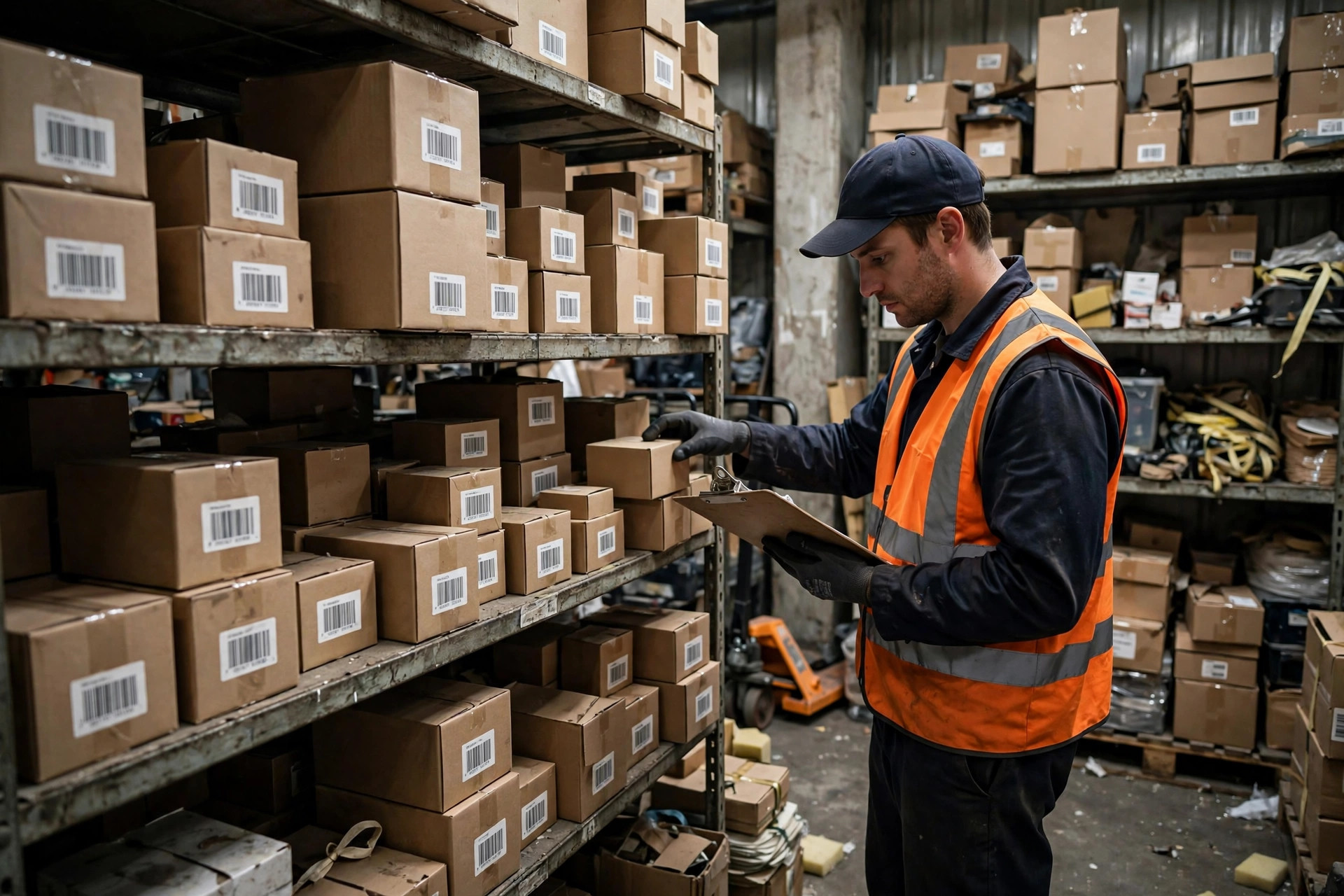
Fixed slotting counts are "check the bunk": walk to A3-2, count the earbuds, move on. Dynamic slotting counts are a warehouse-wide manhunt: you scan every location because nobody knows what's sleeping where. Our year-end count before the holidays took five people six days. It used to take three. Those three extra days meant no shipping, and late shipments drew 17 customer complaints.
Bill number four: our mis-ship rate doubled.
Random putaway packs slots tight, which means look-alike SKUs end up side by side: two white power banks, one 10,000mAh and one 20,000mAh, packaging identical except one line of small print. A rushed picker grabs the wrong one. Our mis-ship rate went from 0.3% to 0.7%. That 0.4 points sounds tiny — until you price it. One mis-ship costs at least $4 in return freight, re-picking, and customer-service time. At 9,000 orders a month, that's 36 extra mis-ships, $150+ gone, plus a pile of bad reviews.
Fixed vs. dynamic slotting: the honest scorecard
| Dimension | Fixed slotting | Dynamic / random putaway |
|---|---|---|
| Space utilization | Low (we measured 60–65%; an out-of-stock SKU means an empty bunk) | High (we measured 80–85%) |
| Picking efficiency | High: locations are fixed, and human memory compounds — the longer the tenure, the faster the pick | Low: every pick starts with a system lookup; new hires are slow |
| System requirements | Paper and a spreadsheet are enough; a typo is still recoverable | Total dependence on the system; one bad entry equals a missing product |
| People requirements | Veterans are an asset — experience pays | Anyone can do it, but everyone must follow the process perfectly |
See the pattern? Dynamic slotting isn't "more advanced." It converts space cost into labor cost, system cost, and error cost. The big guys can afford the conversion: their systems cost millions and automated checks catch the mis-ships. For a small warehouse, that trade usually loses money.
The counterintuitive part: under 2,000 SKUs, fixed slotting can be faster
This is the one thing I most want other small operators to hear: running dynamic slotting in a small warehouse is often using a big-company solution for a small-company problem.
Our post-mortem found a dividing line: under 2,000 SKUs, fewer than five pickers, under 300 orders a day — the human brain is the best WMS. Veterans memorize the bestsellers and out-pick any system lookup. Counts run "bunk by bunk" and finish in three days. Mis-ships? Nearly impossible, because each SKU's home hasn't moved in a decade.
Flip it — 10,000+ SKUs, 1,000+ orders a day, high turnover — and fixed slotting genuinely breaks. That's their home turf. It's just not ours.
Here's a three-question test for fellow small warehouses. Three yeses means don't bother:
- Fewer than 2,000 SKUs?
- Core pickers with 1+ years on the floor who mostly know locations by heart?
- Rent pressure that isn't yet at "make space or die" levels?
All three? Stay with fixed slotting and do your ABC classification properly — A-class bestsellers in the golden pick zone, C-class tail inventory in the far corners. It works as well as dynamic, without the tuition.
Our final answer: a homegrown hybrid
What we run now is "mostly fixed, partly dynamic." Free, and it works:
- A/B-class SKUs (the 20% that drive 80% of shipments): fixed slots, in the golden zone. Human memory is productivity.
- C-class tail and dead stock: random putaway — wherever there's a hole — but with mandatory two-person logging. The person who stows it can't be the person who logs it. We haven't had a spreadsheet misalignment since.
- Every Friday afternoon we clear "zombie slots": the system says there's stock, the shelf says there isn't — count it and write it off on the spot. Nothing carries over the weekend.
- Location labels follow one dead-simple rule: zone-aisle-level-position, printed on a label maker, stuck on for good. Nobody handwrites anything.
Net result: utilization holds around 75% — not the 85% peak, but pick time is back to 4 minutes, mis-ships are back to 0.3%, and counts finish in three days. All in, we're about $1,500 a month better off than during the pure-dynamic experiment.
It's a good tool. It's just built for big operations with real systems, real scale, and automated checks. We can't afford the gamble of "the system remembers everything" — our system is a spreadsheet, our verification is eyeballs, and our margin for error is zero.
Remember this: if a space-saving scheme makes your veterans slower, your counts longer, and your mis-ships worse, it isn't saving money. It's costing you your business.
Small warehouses have their own way of surviving. Fixed slots plus human memory. Ugly, but it works.
By Xiao Ma, Small Warehouse Owner