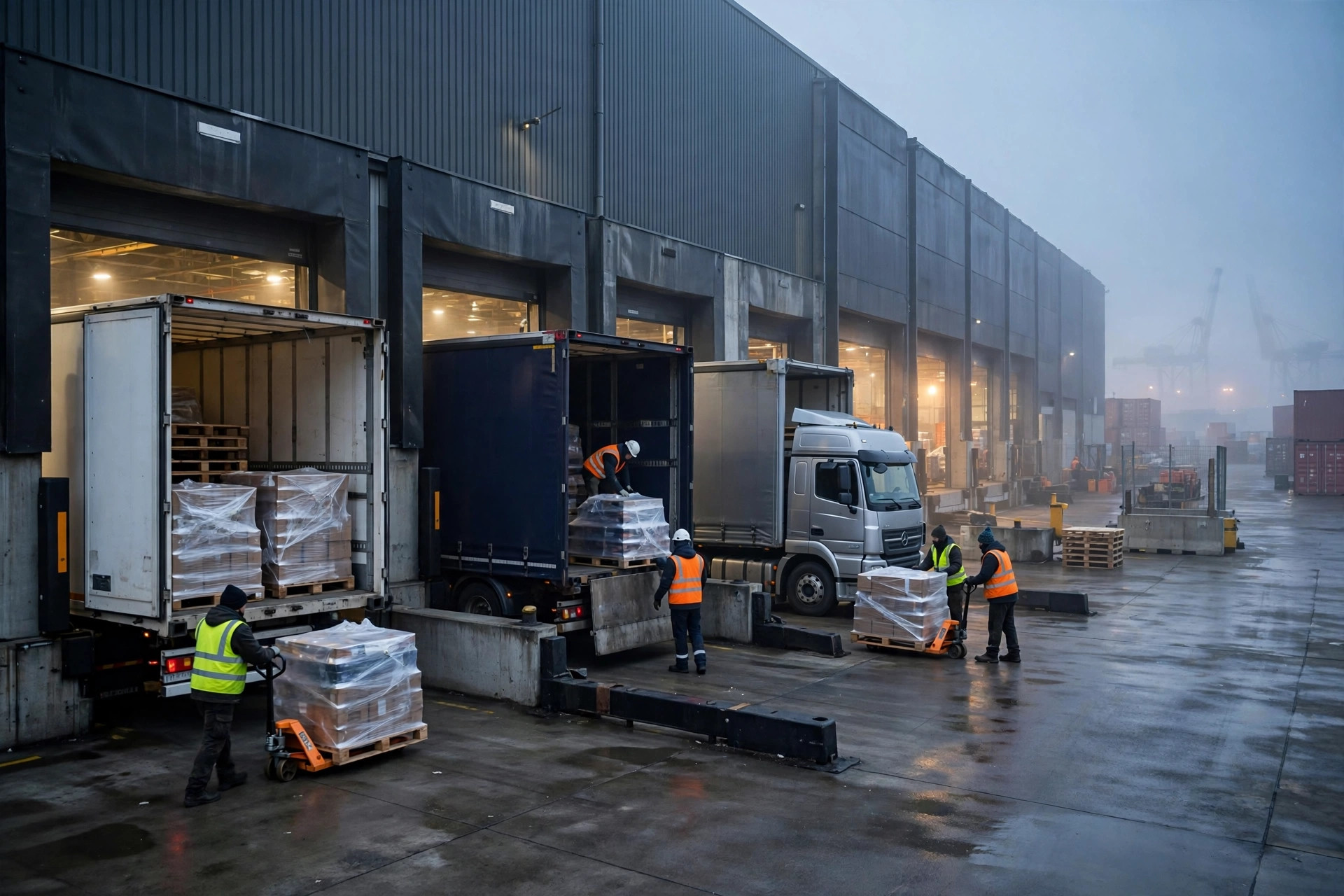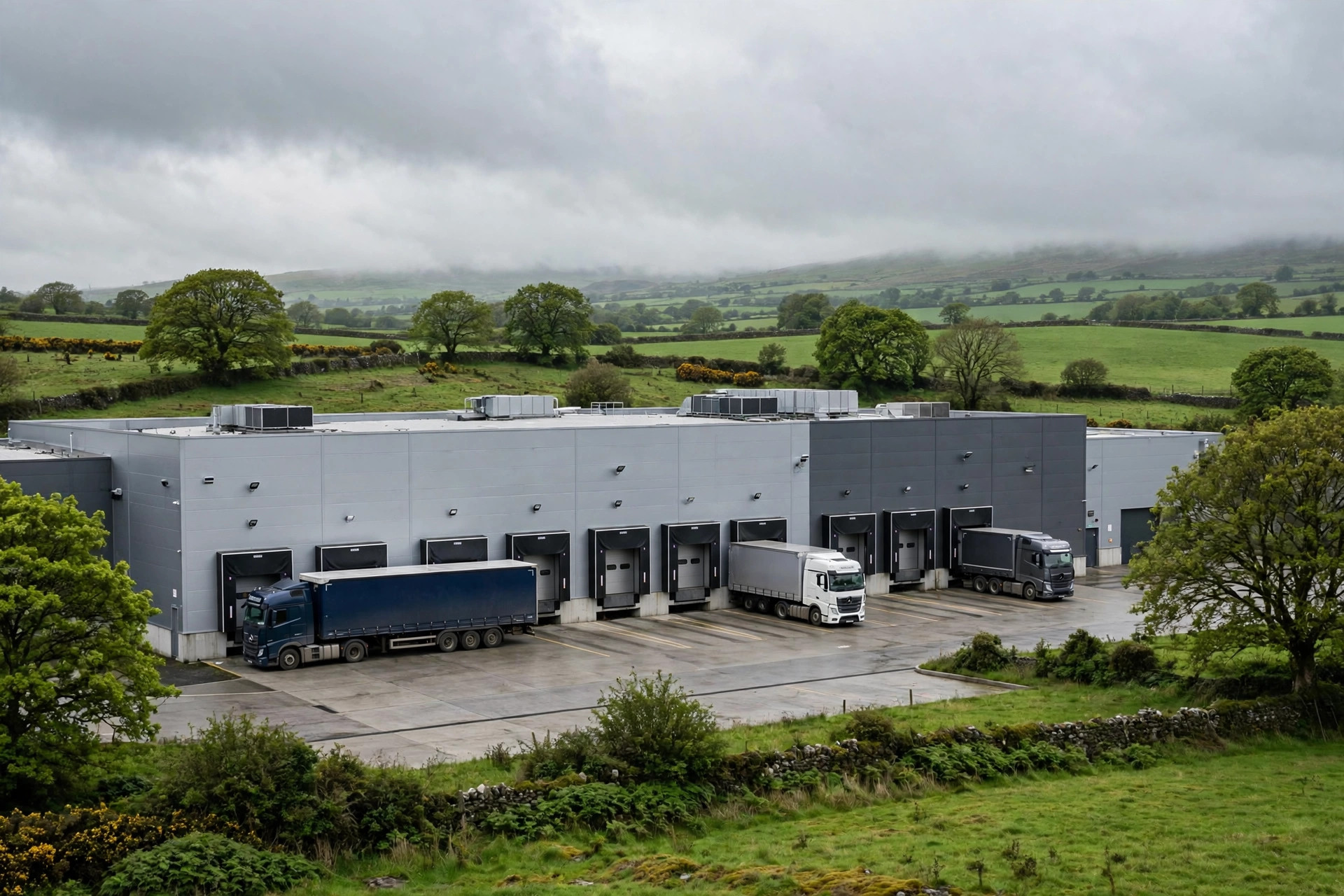
Let me give you the answer first: when you make a Dublin warehouse decision, the first question is not rent per square foot. It is where your goods come in from and where they go out to. Freight arriving by sea through Dublin Port and shipping mostly to Irish addresses belongs near the port and the northern suburbs. Freight split from a UK mainland warehouse, or covering continental Europe, fits better at a western or southern trunk-road node. Get this order backwards and every euro you save on rent will come back multiplied in linehaul freight and customs arguments.
I have seen this exact mistake three times, and all three followed the same script: the client circled the cheapest dot on the map, signed the lease, and only then discovered that every truck had to drive an extra hour each day — and that in peak season, trucks could not be booked at all.
Why a Dublin Warehouse Deserves Its Own Calculation
Ireland is an island market of only a few million people, but with solid purchasing power, English as the working language, and a corporate tax regime that makes it a popular springboard into Europe. The flip side of island geography is that everything arrives by sea or air. There is no land route to fall back on. Dublin Port is the country's main freight gateway, and air freight concentrates around Dublin too, so national import flows naturally converge on the capital.
Convergence does not mean easy. Land and labour around Dublin city are expensive, and warehousing has been pushed out to the suburbs for years. I remember a 2023 project clearly: a home-goods client shipping from a UK Midlands warehouse into Ireland wanted a small Dublin warehouse near the city. Once we ran the numbers, city rent and labour loaded onto each order came out higher than shipping direct from the UK. The fix was a suburban warehouse plus a fixed weekly full-truck schedule, and the per-order cost actually fell. The lesson is simple: in Dublin, warehouse location follows freight flow, not rent.
Then there is the post-Brexit layer. The UK and the EU are now separate customs territories. Ireland sits inside the EU, Northern Ireland has its own special arrangement, and Great Britain is fully a third country. The same shipment sent to Dublin versus Belfast follows different paperwork; moving stock from a UK warehouse to an Irish one may need a fresh import declaration, and the VAT treatment has to be settled before the warehouse opens. Many companies entering Ireland for the first time trip here — the goods reach the port, the paperwork stalls, and the customer complaints arrive before the warehouse is even running.
A second story runs in the opposite direction. In early 2024, a baby-products client insisted on a site right by the port, on the logic that "close to the port means fast replenishment." Within two months the problems piled up: the plot was too small for peak-season stock, so they rented overflow space nearby, and every day they had to shuttle goods between the two sites — each shuttle a cost and another chance for damage. They eventually moved the main warehouse to the suburbs, on a plot several times larger, with port pickups consolidated into two fixed full-truck runs per week. Per-order cost fell and stockouts dropped. Proximity to the port is an advantage, but what it is worth depends entirely on your replenishment frequency. A business that restocks weekly is wasting money paying port-side rent; a business that restocks daily is the one that should pay for it.
A Four-Step Method That Holds Up
Step one: draw the freight map before you draw the warehouse. List last year's volumes by destination, weight, and service promise, and split them into three buckets — Republic of Ireland, Northern Ireland, and continental Europe returns. Whichever bucket dominates, the warehouse leans that way. And use peak-season volumes, not averages. Averages lie.
Step two: pick your ring by freight flow. Port-adjacent sites suit high-frequency, small-batch replenishment: close to the port, fast customs handover, but expensive and small. Suburban sites suit bulk storage and national distribution: bigger plots, friendlier rent, but an extra linehaul leg into the city. Western and southern trunk-road nodes suit regional distribution and continental connections. No ring does everything. The question is only which ring matches your freight.
Step three: cost the total, not the unit price. Put rent, labour, linehaul, city delivery, customs brokerage, and inventory carrying cost onto a single per-order comparison, and run it twice — once for off-peak, once for peak. Peak-season capacity premiums and overtime are the real costs. Here is a simplified framework; weight the scores by your own freight mix rather than copying it blindly:
| Location ring | Rent and plot | Linehaul and customs link | Best freight fit |
|---|---|---|---|
| Port-adjacent | High, small | Fastest, close pickup windows | High-frequency small-batch replenishment |
| Suburban big-box | Friendlier, large plots | Needs a linehaul leg | Bulk storage, national distribution |
| West/south trunk node | Mid-range | Good national and continental links | Regional distribution, cross-border returns |
Note the trade-off in the margin: the port site buys you time, the suburban site buys you space and rent, and the trunk node buys you coverage. None is better in absolute terms. Your freight structure decides which one is worth the most money, and if you do not write the weights down before scoring, the table is just a pretty piece of paper.
Step four: the go-live night checklist, signed off item by item. Has the customs broker confirmed the document list? Is peak-season carrier capacity locked in writing? Has the WMS been tested with Irish address formats and postcode rules? Has the returns flow been run through once end to end? Has someone reviewed the Northern Ireland paperwork separately? I make clients sign this list every single go-live night, because missing any one item shows up as a customer-service meltdown in week one.
Three Ways a Dublin Warehouse Plan Goes Wrong
First, treating Dublin as an extension of the UK market. After Brexit it is not an extension; it is two customs territories. Country codes, tax rates, and document templates in your system must be built separately. Reusing the UK setup stalls you at customs on day two.
Second, judging a port site by distance alone and ignoring port working rhythms. Port pickups have windows, appointments, and inspection probabilities. Receiving labour must be rostered to the port's rhythm, not your own shift plan. Same-day pickup is the ideal; in peak season, queues are the reality, so buffer stock should cover at least an extra day or two.
Third, underestimating last-mile cost structure. Dublin city delivery carries high service expectations, difficult parking, and expensive labour, and its share of total cost routinely exceeds what clients budget. Here is the counterintuitive part: sometimes a warehouse further from the city, but with a reliable daily trunk departure, costs less overall — because what you are buying is not cheap rent but certainty. In an island market, certainty is the most expensive resource of all. One missed sailing, and no cheap warehouse can save you.
So back to the opening answer: Dublin warehouse selection goes freight flow first, ring second, rent last. Get the order right and the warehouse stands. Get it wrong, and moving warehouses costs far more than choosing the wrong one did.
By Lin Xiao, WMS Implementation Consultant