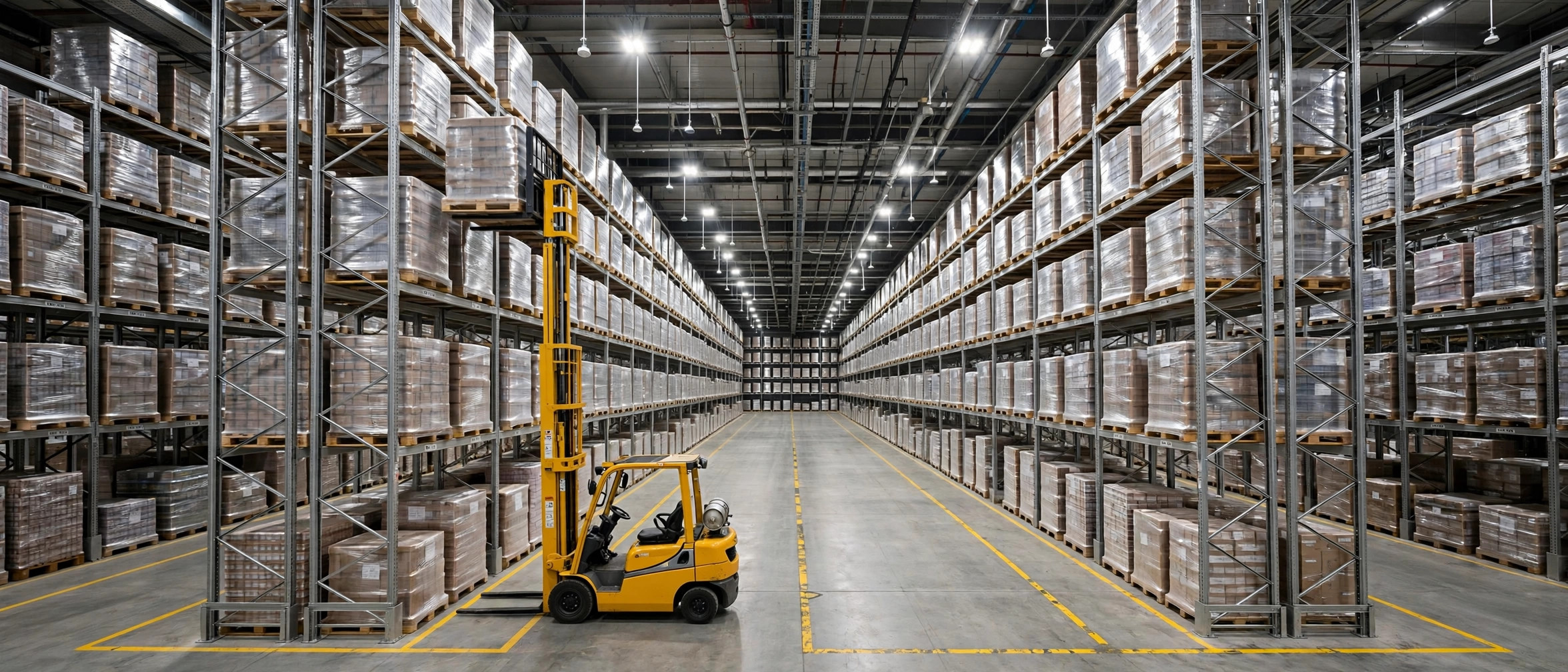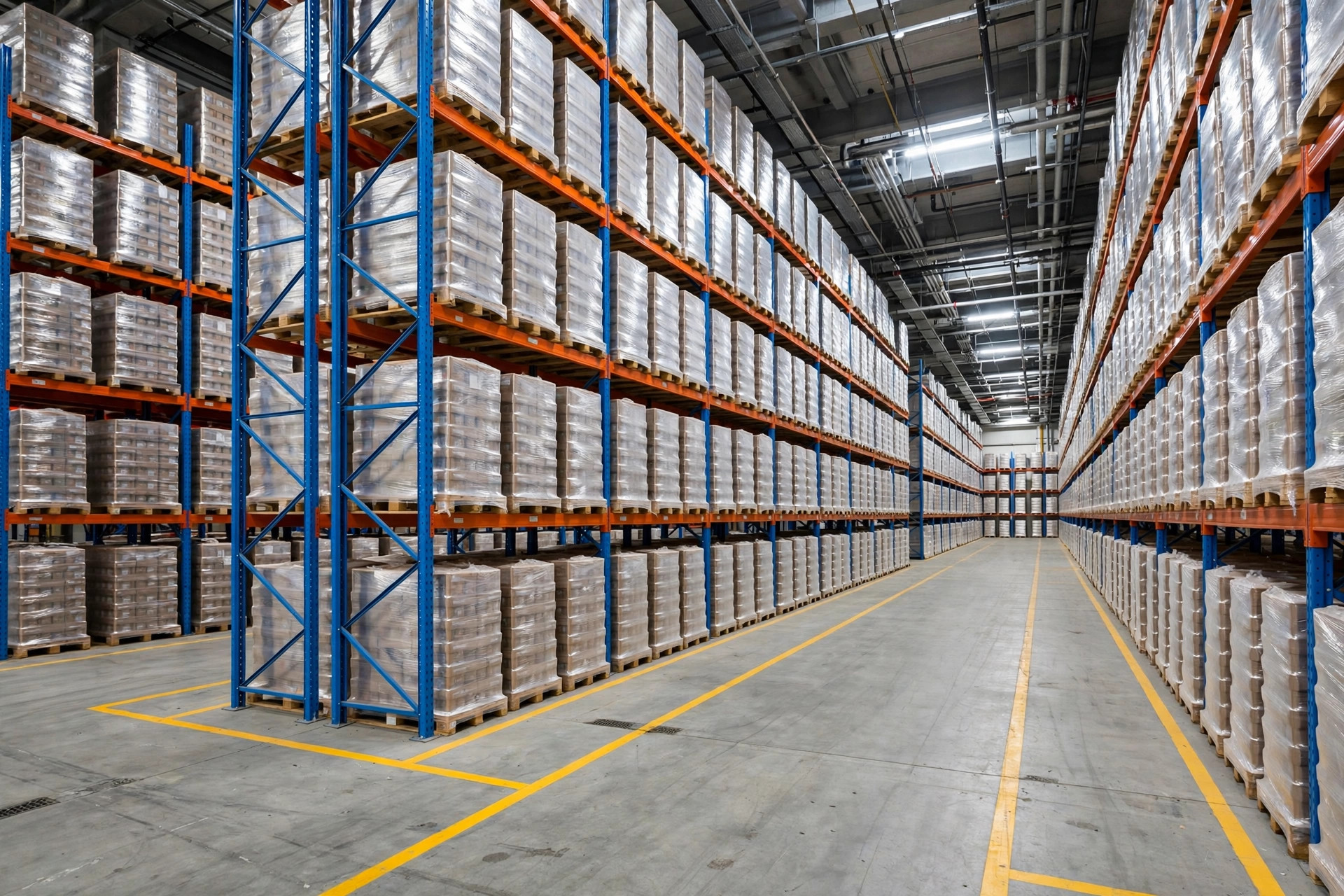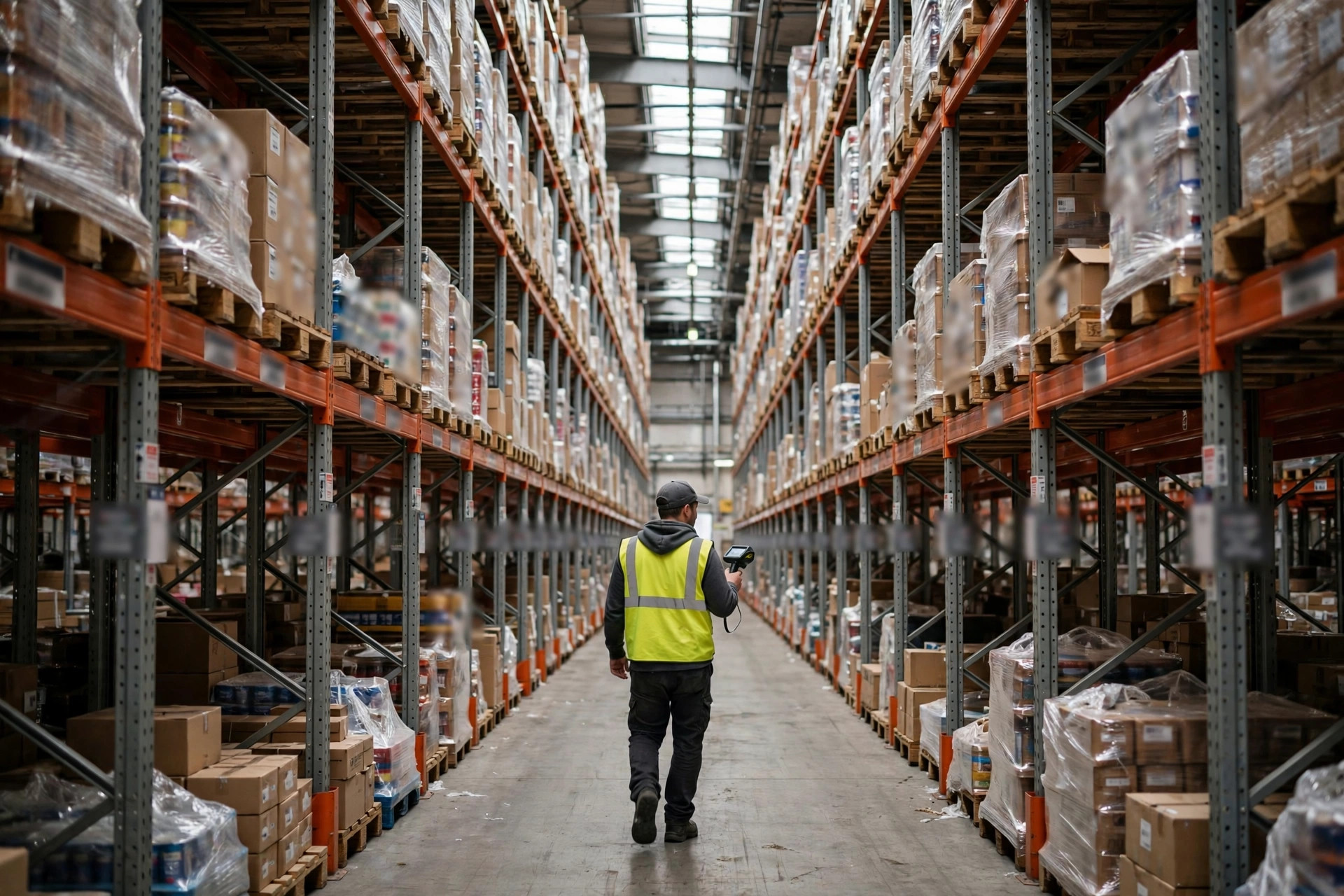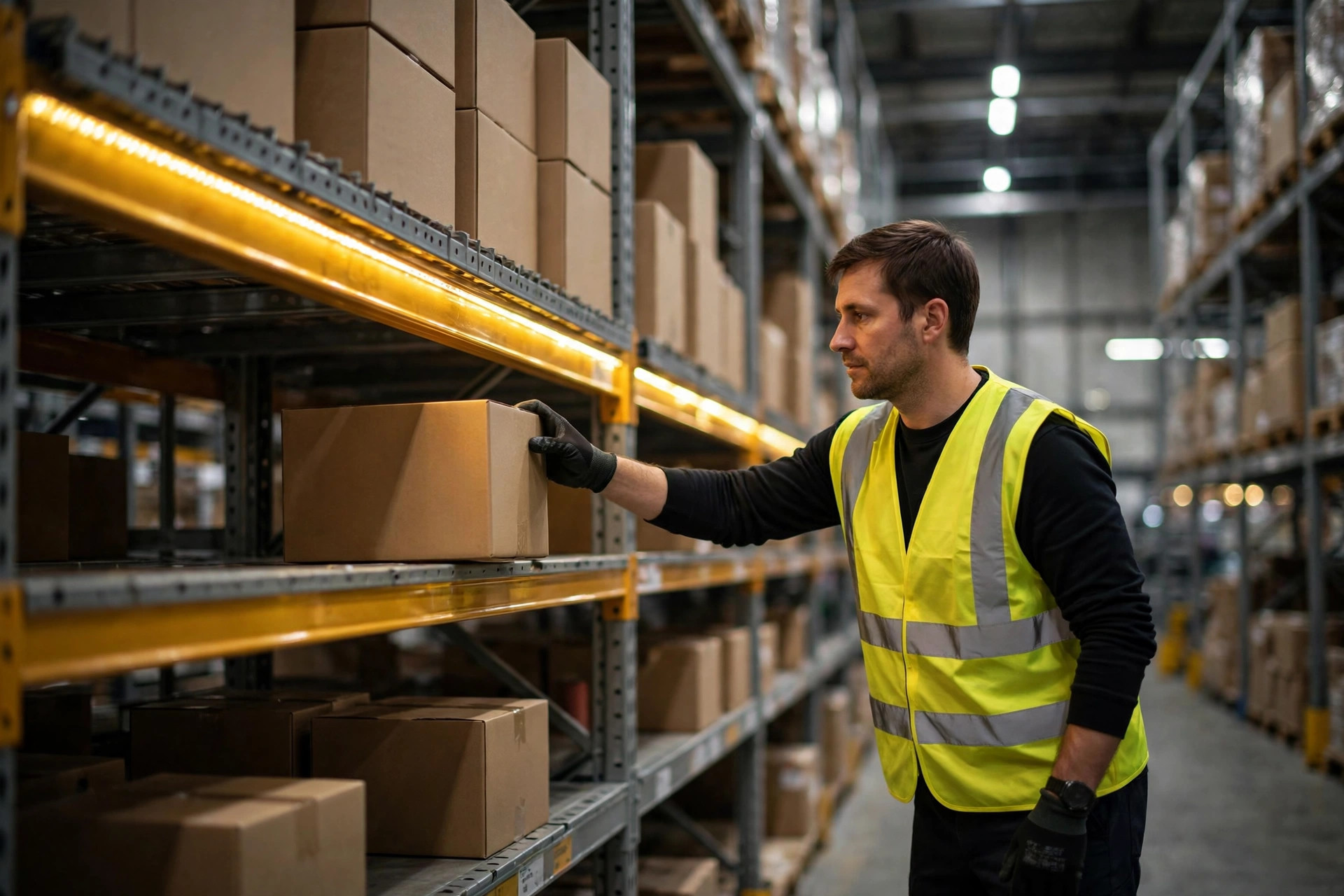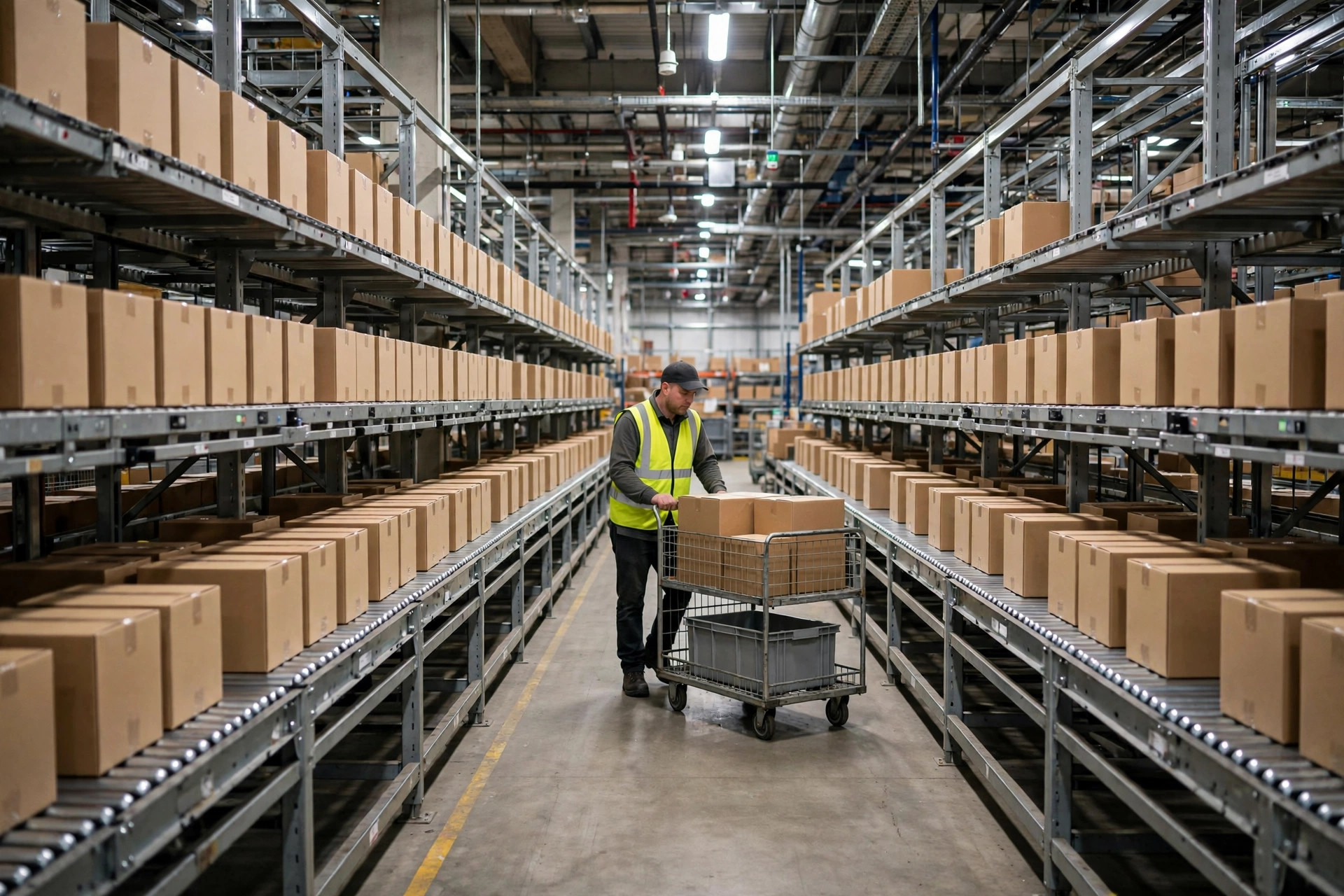
At 2 AM on the Friday after Thanksgiving last year, I stood at the mouth of Aisle A for twenty minutes and watched six pickers stand in line, waiting on a single slot.
The slot held paper towels — a holiday promo at $12.99 a pack, blowing up online and in stores at the same time. The pick slot was a standard flow-rack position holding 24 packs. On a normal day, two replenishments covered it. During Black Friday week, 24 packs lasted about ninety minutes. Every time the slot went empty, pickers' orders froze, and all they could do was wait for replenishment.
Replenishment meant a forklift run down from the reserve racks — seven or eight minutes round trip. I counted that night: the SKU stocked out four times, with 15 to 25 minutes of waiting each time. Six pickers at $22 an hour — our night-shift rate, straight from our own books — and you're burning the better part of $200 a night on people standing around. Worse than the money was the morale. The younger guys were leaning on their carts, saying the job was impossible.
Here's the honest truth: when a high-velocity SKU stocks out, you're not losing a few minutes. You're losing the rhythm of the entire aisle.
We Tried Three Fixes. The First Two Failed.
Fix one: make the slot bigger. We moved two slow SKUs out and gave the paper towels a double-deep slot that held 48 packs. Sounded great. In reality, pickers couldn't reach the back of a double-deep flow rack, and the replenishment guy had to climb in to stack it — doubling his time per refill. After a week, our veteran replenisher cornered me: "Chen, you're just moving the pickers' problem onto my forklift. Total time hasn't changed a minute."
Fix two: replenish more often. We assigned someone to watch the SKU, raised the safety stock, cranked up the replenishment trigger in the WMS. Result? The replenisher spent all night babysitting one SKU while others went unreplenished, and stockouts across Aisle A actually went up. Robbing Peter to pay Paul — and Paul's still broke.
Fix three is what this piece is about: dual-slotting. One SKU, two adjacent pick slots.
How Dual-Slotting Actually Works
The concept is simple. The details decide whether it works.
The two slots have to sit next to each other — same bay, side by side. Left one is the primary, right one the secondary. Pick tasks always hit the primary first; when it's empty, the system rolls to the secondary automatically. Replenishment fills both in one trip.
Three rules, and this is exactly how we run it today:
First, the pair is hard-linked in the system to one SKU, with pick priority primary-over-secondary. Do not set them up as two independent slots, or pickers won't know which one to hit. We learned that the hard way in week one — no priority configured, tasks alternating between the slots, pickers walking double the distance.
Second, the secondary is not a "backup." It's the ammo reserve. Its stock exists to keep the line alive during the ten or fifteen minutes the primary is empty. When the replenisher sees the primary running dry and picks starting to pull from the secondary, that's the signal: next trip fills both.
Third, it comes back off in the slow season. Dual-slotting is a peak-season and promo-season staffing decision, not a lifetime appointment. We review the list at the start of every month — SKUs that don't qualify anymore lose the second slot.
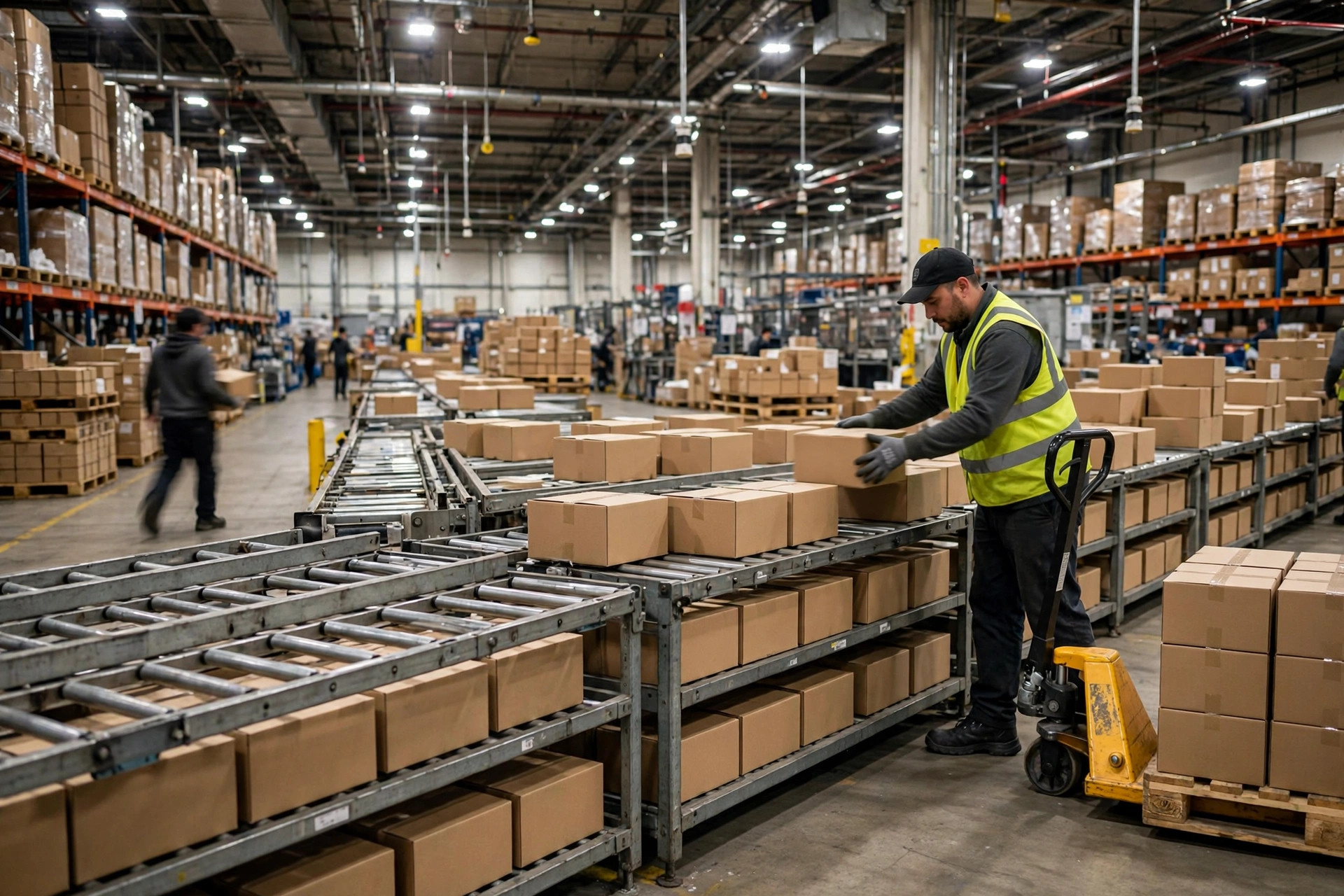
After we dual-slotted those paper towels, the SKU stocked out once all night — and only because the promo got extended mid-shift. Replenishments dropped from four or five a day to about one and a half: one full refill on day shift, primary-only top-up at night. The queue of pickers waiting in the aisle basically disappeared.
The Math: Is the Second Slot Worth It?
The second slot isn't free. Here's our building's math — every number below is from our own operation, so run it with your own numbers.
The costs come in three pieces.
One: space. A pick slot in our building carries an opportunity cost of roughly one mid-velocity SKU doing 30 to 50 lines a day. Dual-slotting means giving that up.
Two: doubled forward inventory. Two full slots hold twice the stock. If the promo ends and velocity falls off a cliff, the secondary's inventory can sit there for two weeks — tying up cash and blocking another SKU's home.
Three: management overhead. Every extra slot needs its replenishment trigger, safety stock, and cycle-count coverage maintained as a pair. Forget to pull it back in the slow season and you've donated a slot to nobody.
The payoff is a single line item, but it's a big one: picker waiting time.
Our numbers from that Black Friday week: four stockouts a night, 20 minutes each, six pickers idle — about $176 a night at $22 an hour. After dual-slotting, nightly waiting dropped under 10 minutes, saving over $150 a night. Over a 10-day promo stretch, that's $1,500. The opportunity cost of the second slot for those 10 days — measured against the mid-velocity SKU doing 40 lines a day that would otherwise live there — doesn't come close.
| Single slot (Black Friday week, measured) | Dual slot (following week, measured) | |
|---|---|---|
| Stockouts per night | 4 | 0–1 |
| Total picker waiting per night | approx. 80 minutes | Under 10 minutes |
| Replenishments per day | 4–5 | 1–1.5 |
| Pick slots occupied | 1 | 2 |
| Forward inventory | 24 packs | 48 packs |
The verdict is blunt: if the cost of people waiting exceeds the cost of the space, dual-slot it. Every building has to run its own version of this math — don't copy mine.
Which SKUs Earn a Second Slot
This is the most important section, because the biggest risk isn't the cost — it's giving the second slot to the wrong SKU. Give it to one that doesn't need it and you've thrown away space. Miss one that does and the aisle still jams.
We run a four-point checklist, reviewed monthly. All four have to be true before a SKU makes the dual-slot list:
- Daily pick lines are high enough. Our line is 200 lines a day and up (our own threshold). Note: lines, not units — one line is one stop, one reach.
- One full slot can't survive a shift. Divide units per full slot by units consumed per hour. Under 8 hours — one shift — and your replenisher is making at least two trips a shift. A stockout is when, not if.
- A stockout jams the aisle. Are multiple pickers hitting this SKU at the same time? If yes, one stockout idles a crowd, and the cost multiplies.
- The velocity lasts. Promo and peak-season spikes qualify, but only if the volume holds for at least two weeks. A three-day spike isn't worth the setup — just bump replenishment frequency temporarily.
Now the contrarian take, and I mean it: the second slot doesn't go to your best sellers. It goes to the SKUs most likely to jam your aisle.
Our counterexample: a phone case doing 500 lines a day, our number-one SKU by volume. Small item, 300 units fit in one slot, lasts two days, never stocks out. It doesn't need dual-slotting. The paper towels did 150 lines a day — bulky, 24 packs per slot, replenishment never kept up. That's your dual-slot candidate. Handing out second slots by sales ranking is the most common way managers get this wrong.
And here's the hidden cost most people miss: dual-slotting spoils your replenishment discipline. We once let the list balloon past 40 SKUs, and the crew developed a habit — why hurry on the primary, the secondary's got it covered. The day both slots ran dry, the stockout was worse than anything we'd seen under single-slotting, because under single-slotting everybody stayed alert. Now we hold a hard line: dual-slotted SKUs stay under 8% of total pick slots (our own cap). Past that, your slotting itself is broken — fix the layout, don't add slots.
First, dual-slotting is pain relief, not a cure. Fast movers ultimately belong in automation or dedicated flow-rack zones — that homework doesn't go away. Dual-slotting buys you time. Second, don't skip the system setup. Linking the pair, setting the priority, merging the replenishment tasks — thirty minutes in the WMS. Skip it and the floor stays messy for a month. Third, the slow-season pullback needs an owner. We review the list in our monthly slotting meeting, one person responsible. Anything nobody owns rots within three months — extra slots nobody reclaims, new SKUs with nowhere to live, and guess who takes the blame: slotting.
My biggest lesson from years running a 200-person building: every "good enough" slotting decision eventually becomes a line of pickers cursing in the aisle at 2 AM. There's no standard answer to how many slots a SKU deserves. We run 12 SKUs on the dual-slot list right now; at peak we've hit 35. The numbers don't matter. What matters is that you did the math, set the line, and someone owns it.
By Chen Feng, Warehouse Operations Manager