When the Port Decides Your Paycheck
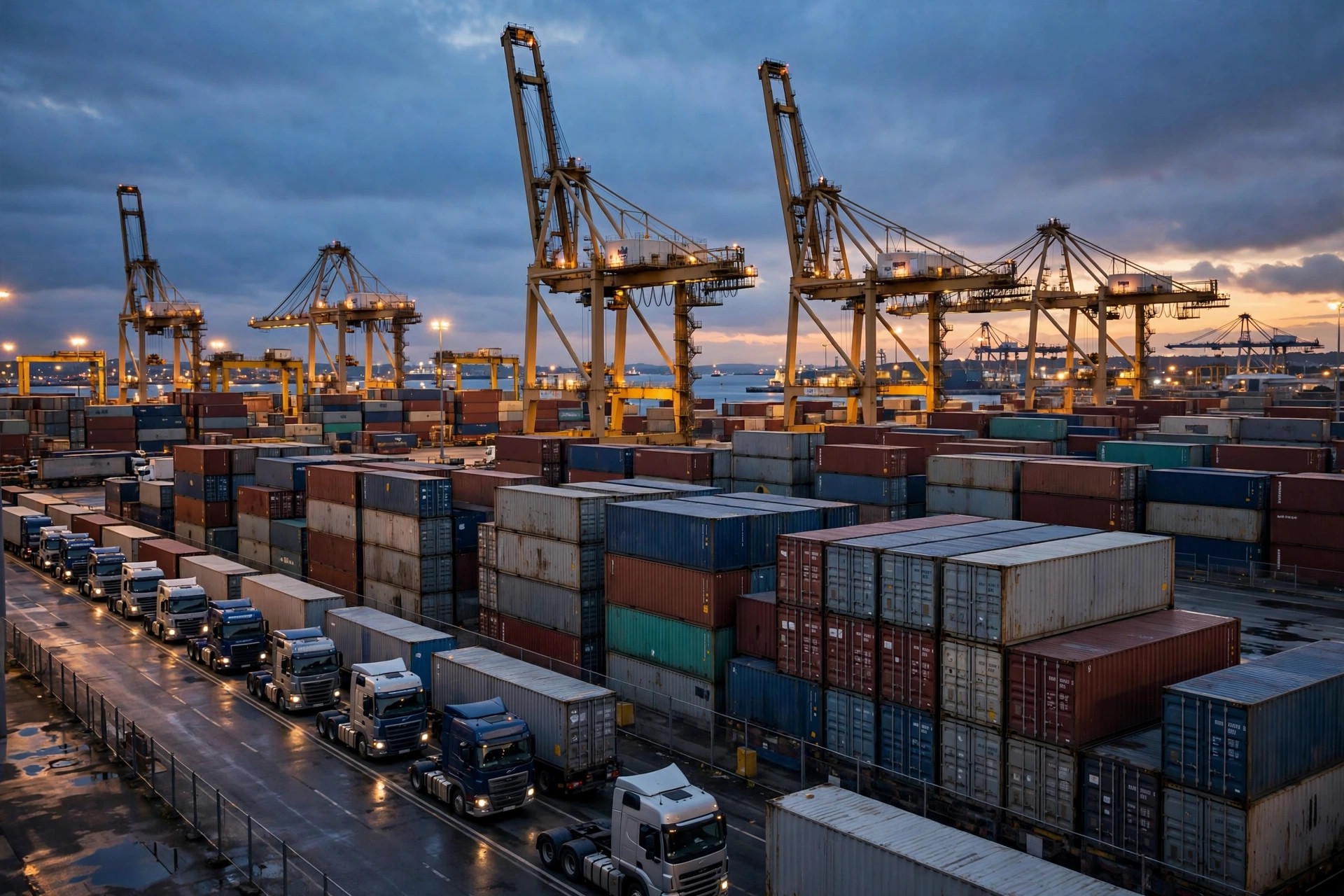
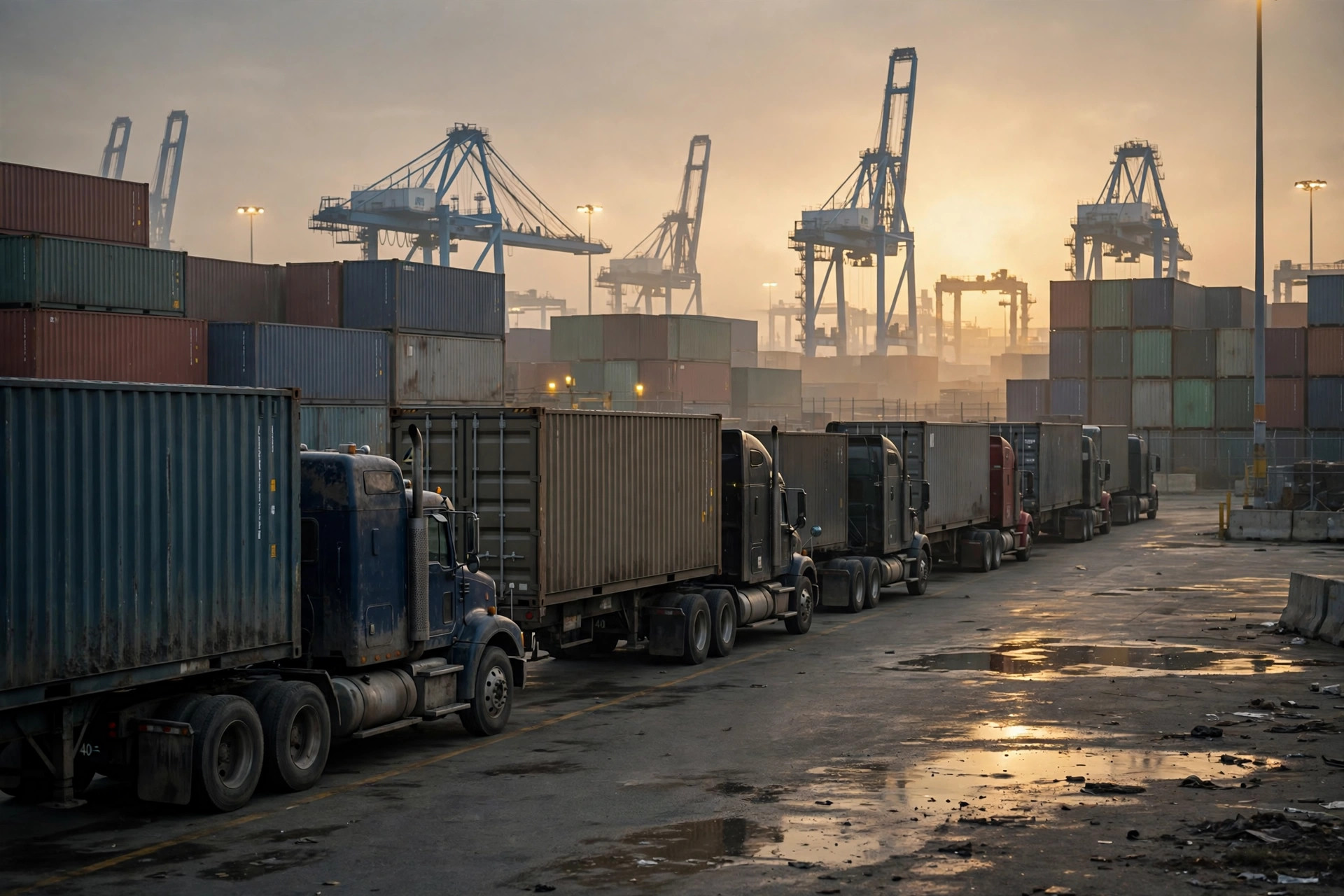
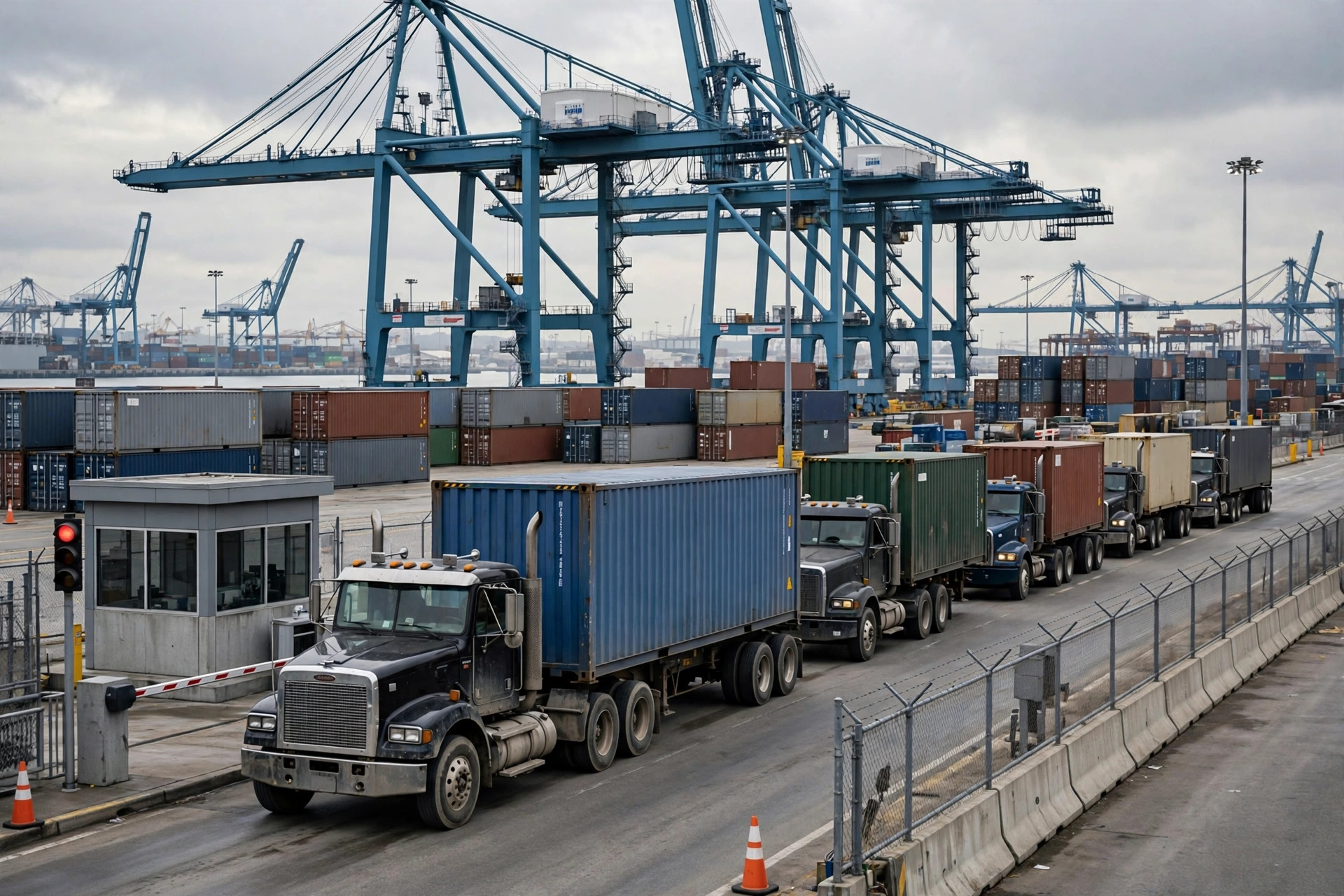
A Tuesday morning in November 2025, outside a terminal gate at the Port of Long Beach. A Kenworth tractor with an empty chassis sat 47th in line. Its owner, Raymond (name changed), had been running the Los Angeles to Inland Empire corridor for eleven years, paid per trip at roughly $280 a trip. He arrived at 5 a.m., didn't get his box until 9:30, and finished the day at one and a half trips. "The port paid me about eleven dollars an hour today," he told a dispatcher friend, "and I was the one driving."
The anecdote is ordinary; the structure behind it is not. In American drayage, how a driver gets paid — per trip, per hour, or per day — is less a compensation preference than a risk-allocation mechanism. And risk, in this industry, has a very specific name: terminal dwell.
The Data: Three Models, Three Different Exposures
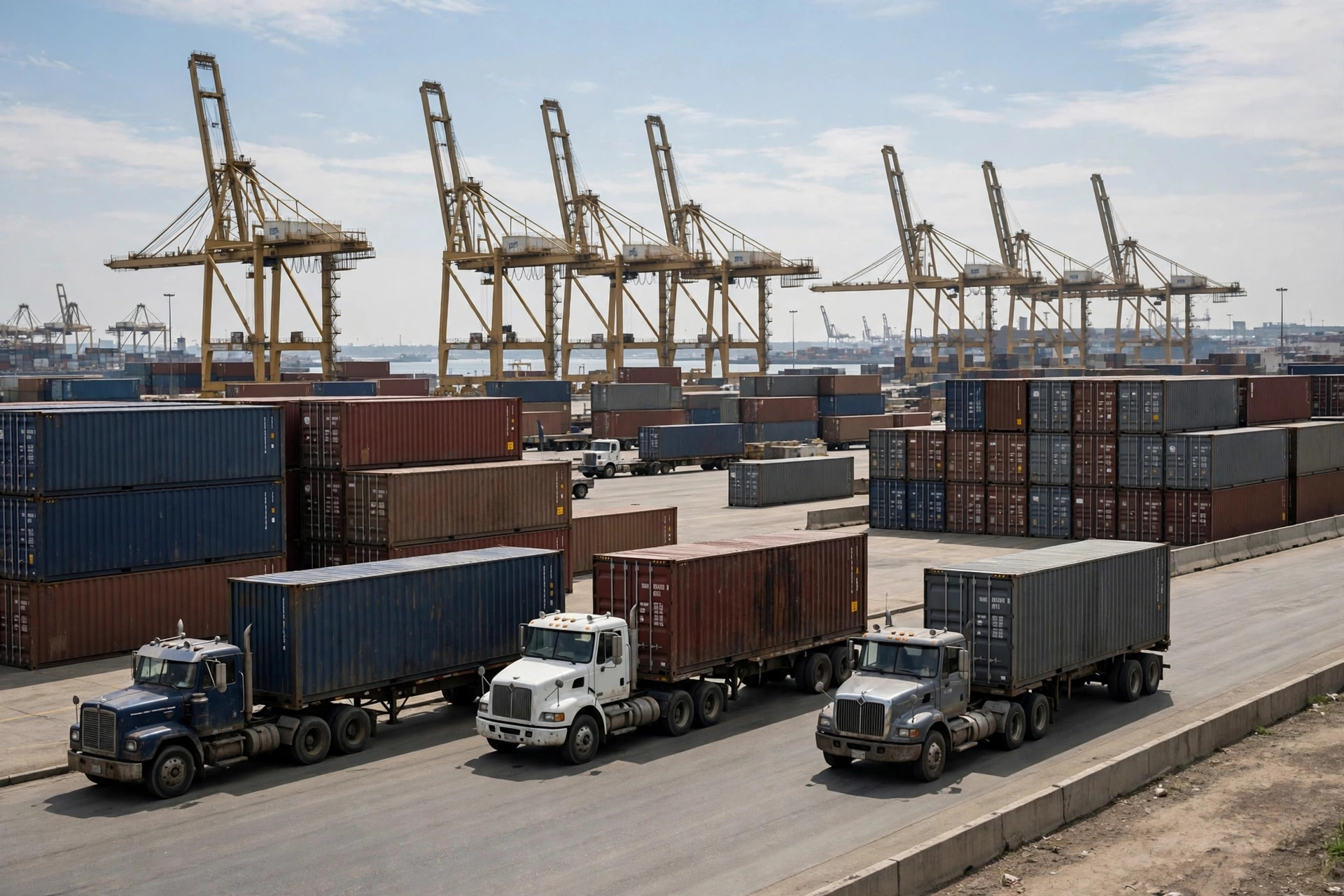
Industry surveys and trade publications have long documented the same rough order of magnitude. A per-trip drayage run out of the Southern California ports typically pays in the low hundreds of dollars per round trip, depending on distance, with longer pulls to the Inland Empire commanding more than short shuttles between neighboring terminals. Company drivers on hourly pay in major gateway markets commonly earn in the low-to-mid twenty dollars per hour range. Per-day arrangements, often used by smaller carriers and owner-operators leased to a single fleet, cluster around a flat daily figure that implicitly assumes a certain number of turns. Exact figures move with fuel surcharges, the market cycle, and local labor law — treat any specific number as a snapshot, and check current market rates before acting on it.
What matters more than the level is the variance. According to port authority turn-time data published through the pandemic cycle, average truck turn times at the San Pedro Bay complex swung from under an hour in quiet periods to well over three hours during the 2021 congestion peak. A per-trip driver who completed three turns a day in normal conditions could fall to one and a half turns when the gates jammed. His nominal rate per trip never changed. His effective hourly wage fell by half, and the four lost hours were absorbed entirely by him.
The hourly driver in the same queue had the opposite experience. His paycheck barely moved. The pain moved upstream: the carrier paid a full day's wages for a day and a half of productive output, and the customer, somewhere in the chain, absorbed detention and demurrage charges that the Federal Maritime Commission has spent years trying to discipline. Per-trip pay makes congestion the driver's problem. Hourly pay makes it the carrier's problem. Nothing about the queue itself changes.
The Second Case: What the Quiet Season Does to "Stability"
The mirror image played out in 2023. Import volumes through the major West Coast gateways fell sharply from their pandemic highs, and drayage demand softened with them. A mid-sized carrier in the Southeast — the kind of fifty-truck operation that lives on import distribution center shuttles — responded by cutting its hourly drivers from five days to three or four, then to on-call status. The drivers who had chosen hourly pay for its stability discovered that stability was conditional on volume existing in the first place.
Meanwhile the per-trip drivers at the same company, now competing for a thinner pool of trips, watched their weekly trip counts slide from twelve to eight. Both models failed in the downturn, just through different doors: hourly workers lost hours, per-trip workers lost turns. This is the symmetry that the industry's pay debates usually miss. Per-trip concentrates risk in congestion; hourly concentrates risk in idleness. Neither model insures the driver against the cycle. They only choose which part of the cycle hurts.
The per-day model sits in between and inherits both weaknesses in diluted form. A flat daily rate smooths the driver's income across congested and quiet days, which feels humane, but the boundary questions are never fully resolved: does the day end after eight hours or after the last dispatch, who pays for the sixth hour in the terminal, and what happens to the "day" when there are only three trips to run? In practice, per-day arrangements survive on trust and long relationships, which is why they cluster among small carriers and leased owner-operators rather than scaling into large fleets.
A Framework, Not an Answer
If pay models are risk-allocation devices, the right question is never "which pays most" but "who should hold which risk." A simple two-axis framework gets most of the way there:
| High terminal congestion | Low terminal congestion | |
|---|---|---|
| Short, high-frequency shuttles | Hourly protects the driver; per-trip punishes queue time the driver cannot control | Per-trip rewards fast turns; hourly overpays idle time |
| Long, low-frequency pulls | Per-trip still viable — drive time dominates, queue time is a smaller share | Per-trip strongly favors the driver; congestion is rare enough to absorb |
The table's logic is straightforward: the larger the share of a driver's day consumed by variables he cannot influence — terminal queues, appointment windows, chassis availability — the more per-trip pay functions as a lottery ticket rather than a wage. When the driver controls most of his own productivity, per-trip is the fairest of the three. When the port controls it, per-trip is a transfer of the port's inefficiency onto the person with the least bargaining power in the chain.
This is also the counterintuitive finding that surprises most newcomers. Drayage looks like trucking, and trucking looks like piecework: more trips, more money, simple. But a drayage driver's output is not primarily a function of his effort. It is a function of terminal throughput. Paying him per trip during a congestion season is equivalent to paying a factory worker per unit while the assembly line keeps stopping — the incentive points at the wrong variable. The drivers who understood this earliest were the ones who, during the 2021 peak, quietly preferred hourly fleets and let the per-trip owner-operators absorb the queue.
Attribution: Why the Models Persist Side by Side
If one model were clearly superior, the market would have converged on it. The persistence of all three reflects three durable facts about the industry. First, drayage is hyper-local: the economics of a twelve-mile shuttle in Savannah have almost nothing in common with a sixty-mile pull from Oakland to Tracy, so no single pay structure fits. Second, the driver population is genuinely heterogeneous — owner-operators with their own authority, leased owner-operators, and company drivers face different tax, insurance, and equipment realities, and each group optimizes differently. Third, regulation keeps moving the furniture: California's AB5 and its equivalents push the industry toward employee models, which structurally favors hourly and per-day arrangements, while independent-contractor markets keep per-trip alive.
Technology is now adding a fourth force. Terminal appointment systems, extended gate hours, and automated gate processing have been steadily compressing average turn times at the major gateways — which, all else equal, rehabilitates per-trip pay by shrinking the uncontrollable share of the driver's day. At the same time, chassis provisioning remains a chronic friction point, and the FMC's detention-and-demurrage enforcement, however imperfect, is slowly clarifying who should pay for whose delay. The direction of travel is toward a world where the queue is shorter and its costs are more fairly assigned. In that world, per-trip pay becomes less punitive.
An Open Question
Which model will dominate five years from now? The honest answer is that it depends on a single variable that neither drivers nor carriers control: whether terminal congestion remains a recurring, structural feature of American ports or becomes an episodic exception. If the big gateways keep jamming every peak season, the political and economic pressure will keep pushing drivers toward hourly and per-day arrangements, and carriers toward pricing detention explicitly into their rates. If the investments in gate automation and appointment discipline actually hold, per-trip pay — the model that best rewards the efficient driver — may have its strongest decade ahead.
Either way, the deeper question deserves more attention than the pay debate usually gives it: in a supply chain where the most expensive waiting happens at the gate, who should own the cost of waiting? The answer to that question will decide not just how drayage drivers are paid, but whether the next generation sees the job as worth doing at all.
By Dr. Chen, Supply Chain Researcher