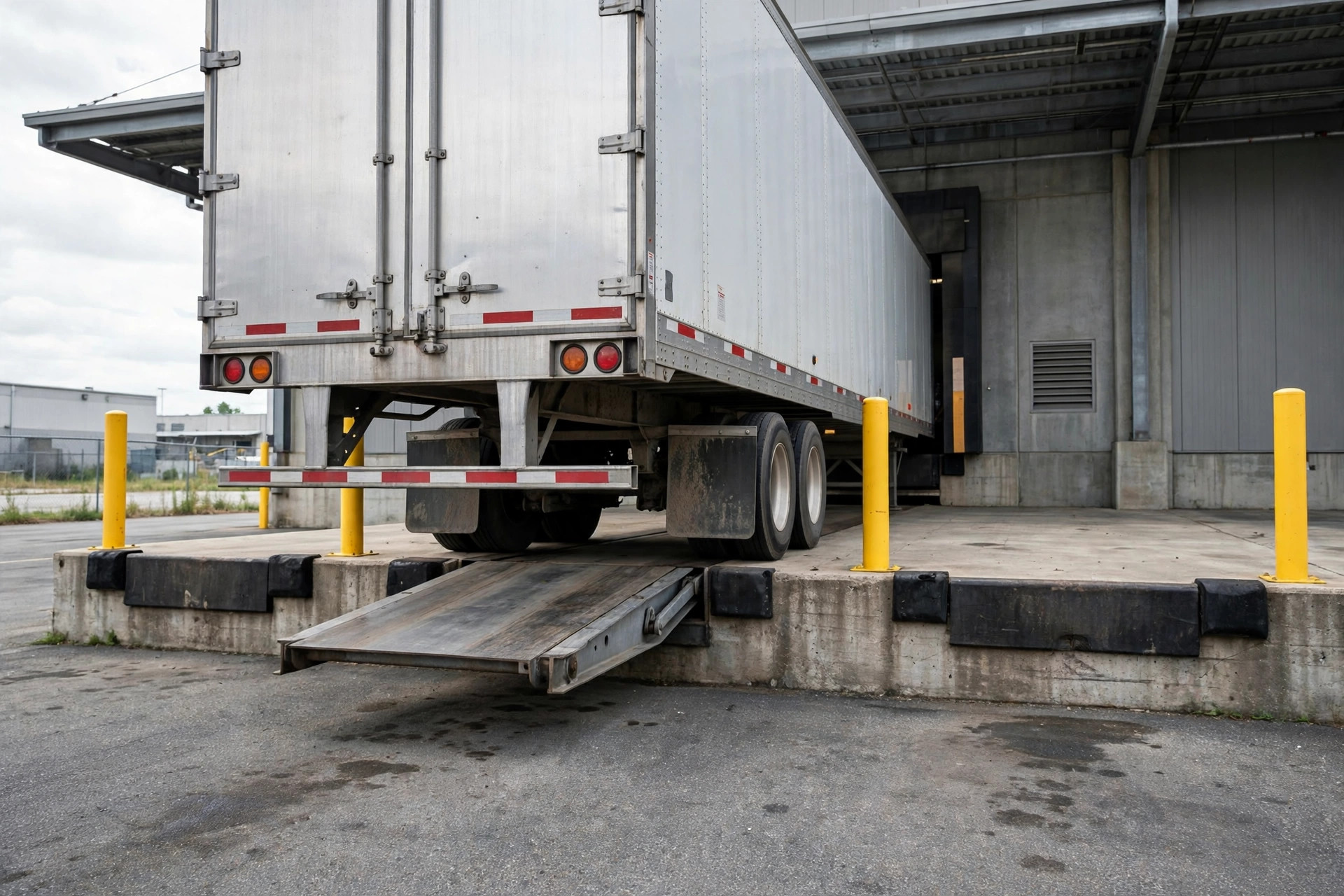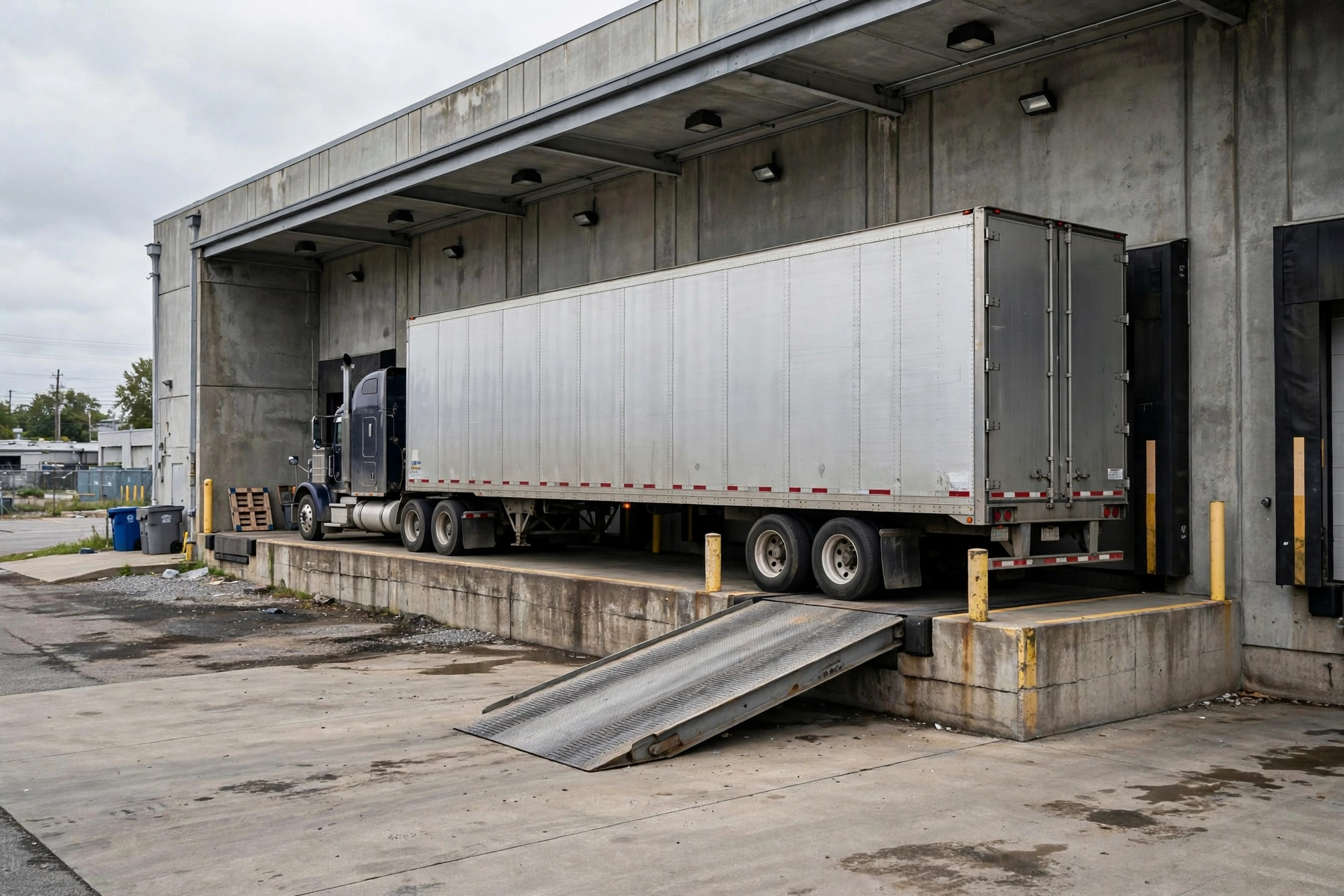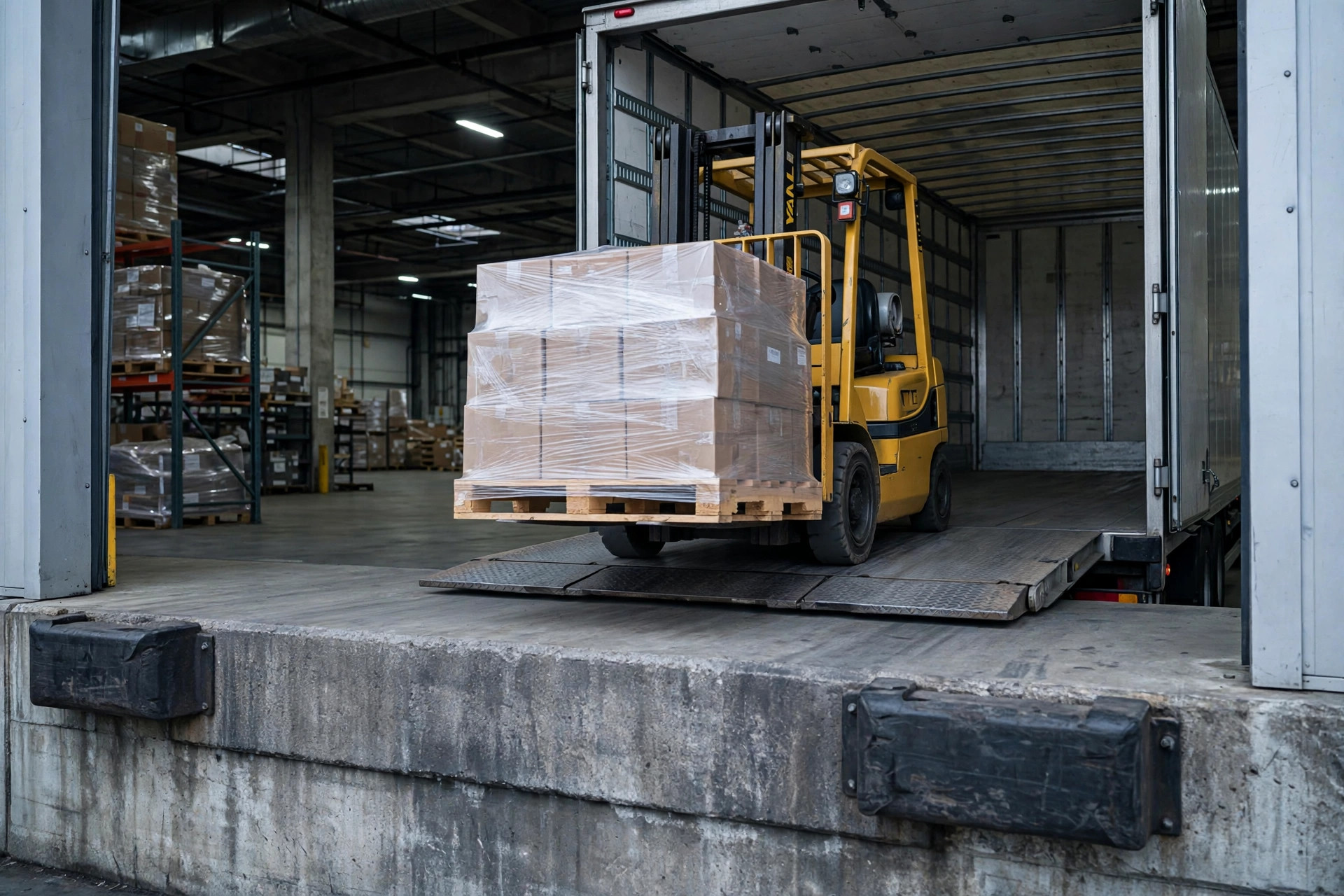
Search "how much does a dock leveler cost installed" and you'll get answers anywhere from $4,000 to $25,000 — a 6x spread. Nobody is lying. The spread is real, because "installing a dock leveler" actually means four completely different machines, two kinds of concrete work, and ten years of maintenance hiding behind one invoice. I'm going to break the whole thing down the way an engineer would.
What the Four Types Actually Are (and What You're Really Paying For)
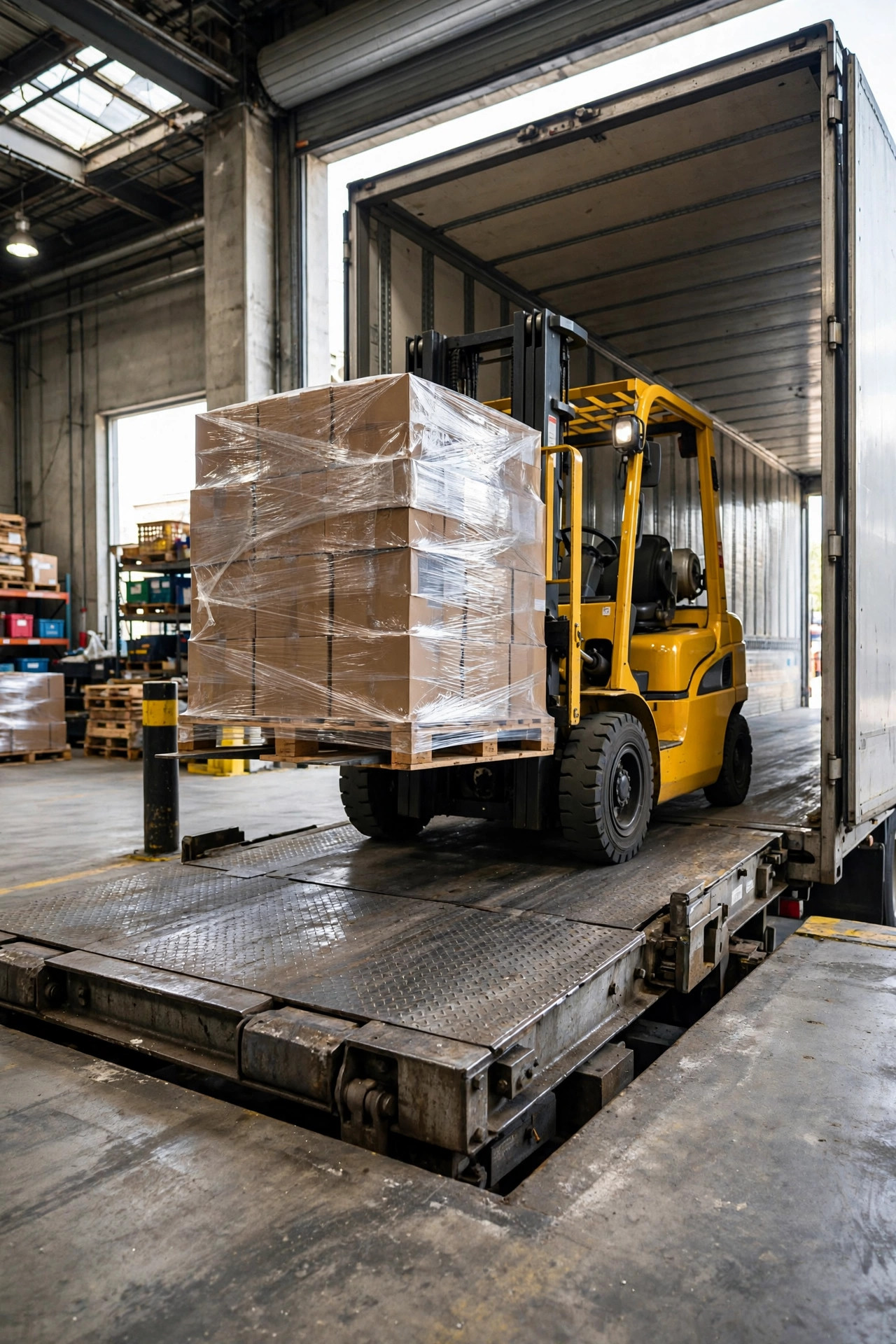
A dock leveler does one thing: it bridges the height gap between your warehouse floor and the trailer bed with a steel deck and a lip plate. The four types differ in one question only — who lifts the deck.
Mechanical runs on big springs and a pull chain. The operator bends over, yanks the chain, the springs pop the deck up, and the lip drops onto the trailer bed by gravity. Think of it as a giant mousetrap — dead simple, but every cycle costs human effort. No power, no oil, no air. It works during a blackout.
Hydraulic uses a motor pump and cylinders. Push a button, the deck rises, the lip extends automatically. It's the power-tailgate vs. manual-tailgate difference — you pay for "not having to do it yourself." High-traffic docks (40+ trailers a day) run almost exclusively on hydraulic, not because people are rich, but because they've done the math.
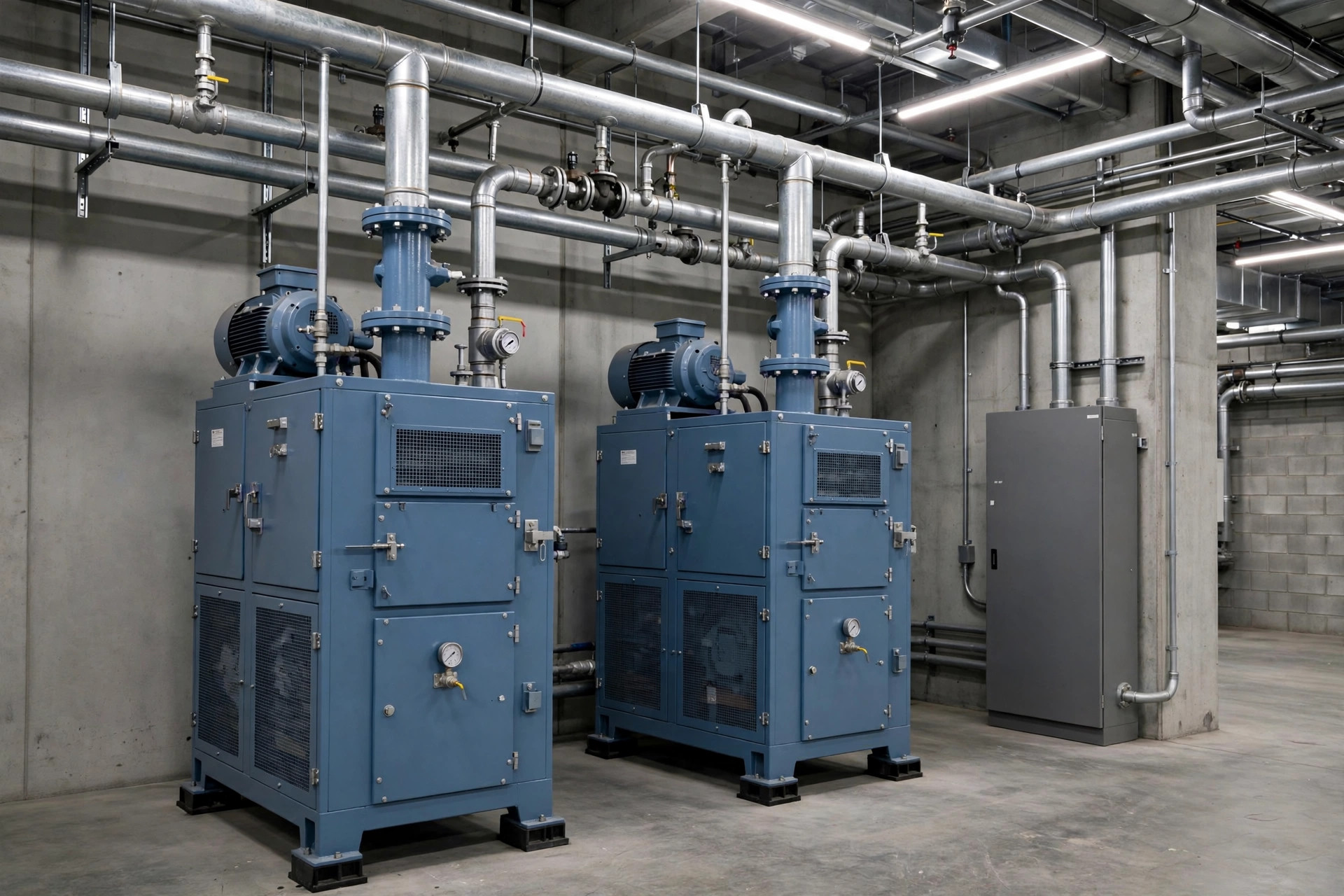
Air-powered uses the plant's compressed air to inflate a bag that lifts the deck. You can think of it as "hydraulics made of air" — no pump, no cylinders, no oil leaks, very few things to maintain. The catch: you need reliable shop air. No compressor, no air leveler — and if you have to buy a compressor just for this, add that to the bill.
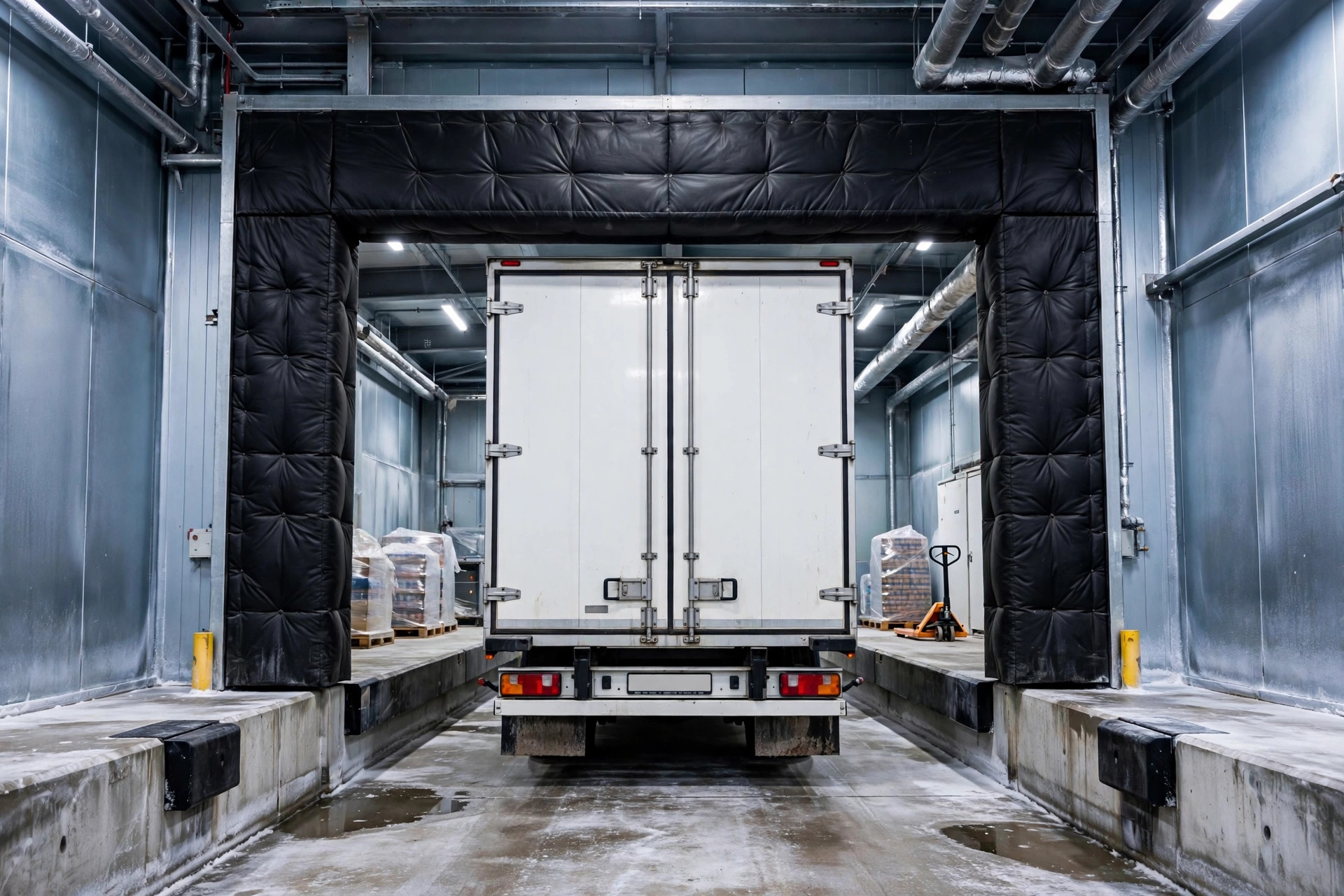
Vertical-storing parks the whole deck upright inside the door opening when idle, then lowers it onto the trailer. Think roll-up door vs. swinging door — the vertical leveler's real talent isn't load capacity, it's that when the door closes, the opening seals completely. Cold storage, food plants, anyone fighting insects and dust: you don't buy it for speed, you buy it for that seal.
On capacity, all four cover roughly 25,000–45,000 lbs of dynamic load (forklift plus cargo rolling across), with static ratings typically 2.5x the dynamic number. Standard deck is 6 ft wide by 8 ft long, lip 16–20 inches. My rule: size up one capacity tier above your heaviest forklift-plus-load combo. Never buy right at the limit.
How Much Does a Dock Leveler Cost Installed? The Full Breakdown
The honest answer to "how much does a dock leveler cost installed" has four parts: the machine, the pit/concrete work, the install labor, and everything after year one. The table below compiles ranges from published US installer quotes (they move with region and pit condition — get a site-measured quote before signing):
| Cost item | Mechanical | Hydraulic | Air-powered | Vertical |
|---|---|---|---|---|
| Equipment | $2,500–$4,000 | $5,000–$9,000 | $5,500–$8,000 | $10,000–$16,000 |
| Pit / concrete work (new) | $2,000–$4,000 | $2,000–$4,000 | $2,000–$4,000 | $3,000–$5,000 (different pit) |
| Install labor + electrical | $800–$1,500 (no wiring) | $1,500–$3,000 (3-phase + panel) | $1,200–$2,500 (air line) | $2,500–$4,500 (more steps) |
| Installed total | $4,000–$8,000 | $8,000–$15,000 | $7,000–$12,000 | $12,000–$20,000 |
| Annual maintenance | $350–$700 | $250–$500 | $60–$300 | $300–$600 |
See it? The equipment is only about half the total. People compare equipment quotes, then the concrete and labor land and the whole comparison falls apart. Retrofit pits are the worst — wrong pit opening size, cracked concrete, no drainage, and suddenly you're spending $2,000–$4,000 on rework nobody mentioned during the bid.
One more cost that never appears on a quote: the mechanical leveler has no electrical cost because it bills the cost to the human body — 30 chain pulls a day, every day. Backs and throughput are money too; they just don't show up on the invoice.
The Real Selection Line: Don't Buy on Budget, Buy on Trailer Count
After years of integration work, my dividing line is simple — trailers per door per day:
- Under 15: mechanical is fine. Small warehouse, occasional shipping door, springs and chains are tough and blackout-proof. The savings are real savings.
- 15–40: the fork in the road. Got shop air? Go air-powered — one major manufacturer's published comparison puts 5-year maintenance at about $1,853 for mechanical vs. about $290 for air-powered, labor included. No air? Hydraulic, no debate.
- 40+: hydraulic, eyes closed. Push-button, ~10 seconds a cycle. Mechanical takes 30+ seconds with the chain pull and positioning — at 40 trailers a day, that's hundreds of labor hours a year.
- Cold storage / food / pharma: look at vertical. Don't argue equipment price with me, argue energy — one poorly sealed dock opening bleeds $1,600–$3,500 a year in energy loss (published industry measurement). Ten doors is $30,000 a year. The vertical premium pays for itself in about two years.
The Maintenance Trap: Where the Mechanical "Savings" Actually Go
This is the part salespeople skip, and the part I care about most.
Here's the counterintuitive call: the $4,000 you save buying mechanical comes back as repair bills in years 3–5 — plus downtime.
In 2023 I did a post-mortem for an auto-parts 3PL in Indiana. Built in 2019, all 12 doors mechanical, saved roughly $50,000 vs. the hydraulic bid. By late 2022, spring fatigue and lip-hinge wear hit all at once: 9 service calls in one year, $800–$1,500 each, and twice a door died during peak shipping — two days down, overtime and customer penalties on top. The facilities manager's exact words: "The savings went straight to the repair techs by year three, and we paid two years of headaches as interest."
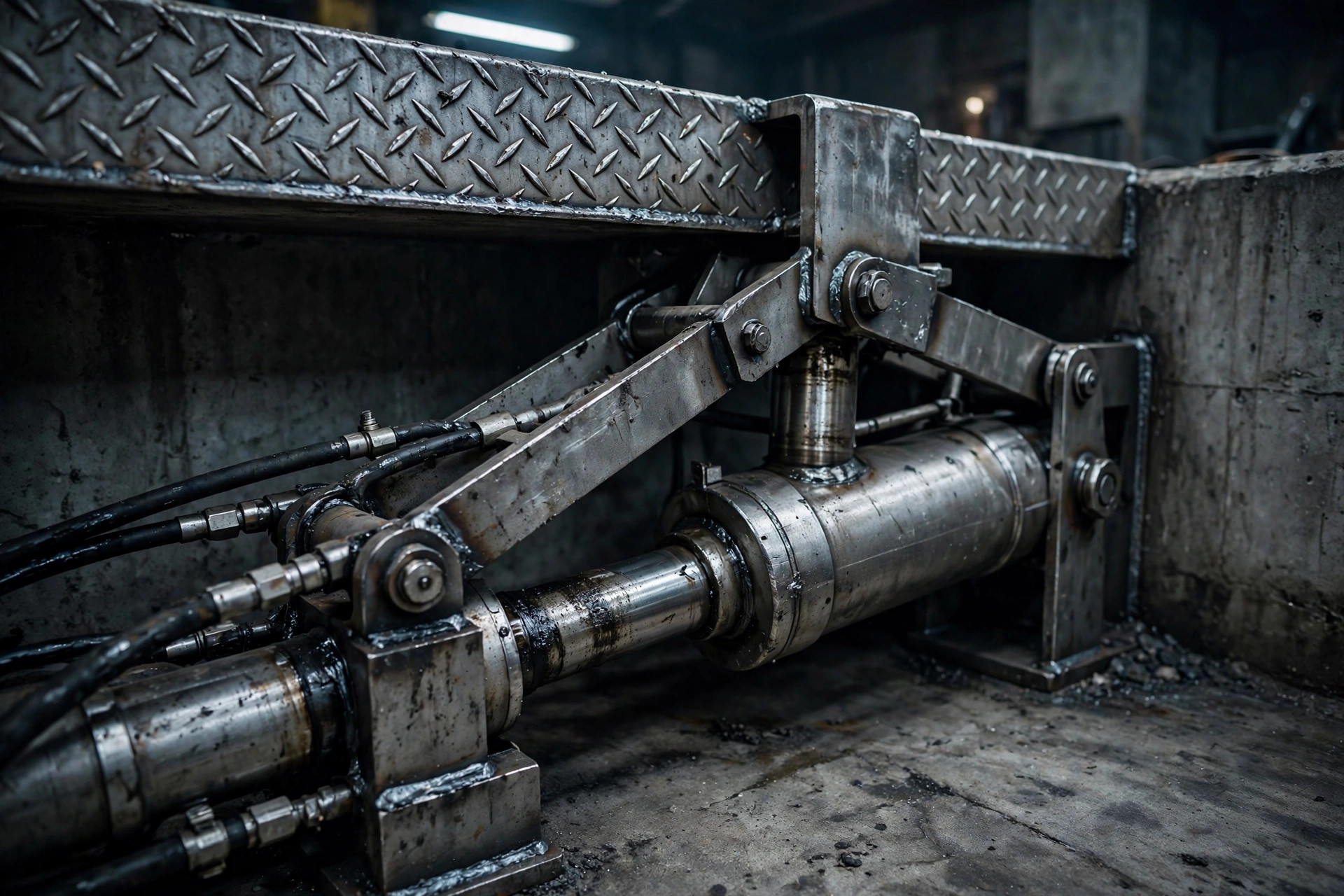
The mechanical maintenance list is fixed: lubricate 20+ points every 90 days, adjust springs, adjust the lip — about 3 labor hours a year minimum. Springs, chains, bearings are consumables on a 5–7 year major-service cycle. Hydraulic's trap is somewhere else: the oil. Aging seals weep, and in winter the oil thickens and the deck gets sluggish — docks next to cold storage in northern states see this every January. Oil change every 3–5 years, seals are consumables, but at far lower frequency than mechanical springs.
Why is air-powered so cheap to maintain? There's almost nothing to break — no pump, no spring pack, ten minutes with an oil can every 90 days. Its one trap: the air supply. Compressor goes down, every air leveler in the plant goes down with it. Before buying air-powered, ask yourself one question: does my compressor have a backup?
And one thing I'll say bluntly: using edge-of-dock units (the little plates bolted to the dock face) as your primary levelers. An EOD installs for $2,000–$4,000, handles 20,000–30,000 lbs, and compensates maybe ±5 inches of height. Put it against a real trailer height spread and the slope gets steep enough to make a forklift spin. I've seen a warehouse spec EODs on all 10 doors to dodge pit concrete costs. An EOD is a bandage, not a prosthetic — fine for a low-volume retrofit, but speccing it as the workhorse for a new build is gambling with safety.
Is It Worth It? One Number Decides
Stop asking "which is cheapest." Ask this: 10-year total cost of ownership per door ÷ total trailer cycles over 10 years = equipment cost per loading cycle.
Rough math for a 30-trailer-a-day door (~78,000 cycles over 10 years): hydraulic at ~$12,000 installed + ~$3,750 maintenance = $15,750, or about $0.20 per cycle. Mechanical at ~$6,000 + ~$5,250 maintenance + one $3,000 major overhaul = $14,250, or $0.18 per cycle — two cents cheaper, bought with 30 chain pulls a day per operator and measurably more downtime risk. You tell me if those two cents are worth it.
My bottom line: under 15 trailers a day, buy mechanical; over 15, buy hydraulic or air-powered; cold storage, buy vertical. The equipment price is half the story — judge on total cost of ownership, and don't save money on the first line of the quote.
By Da Liu, Automation Engineer