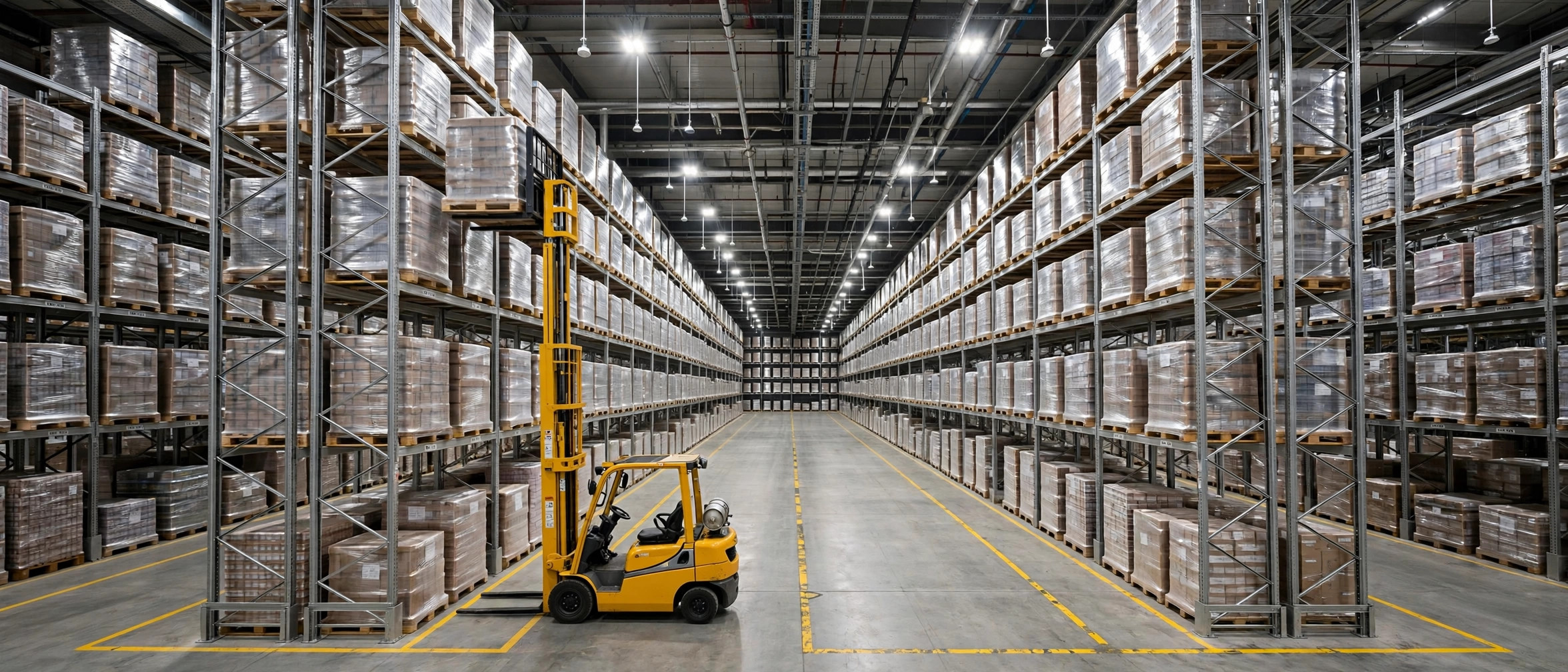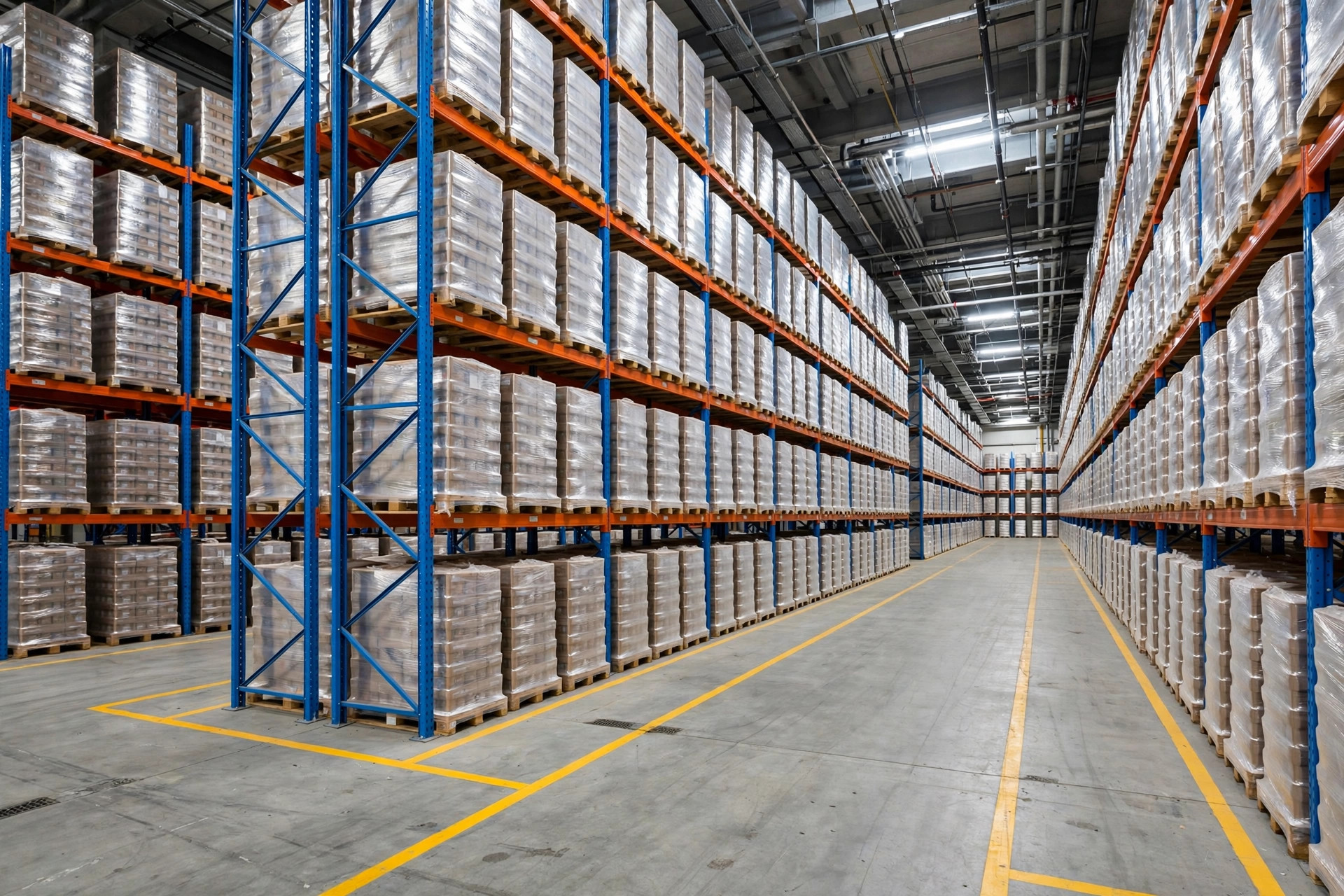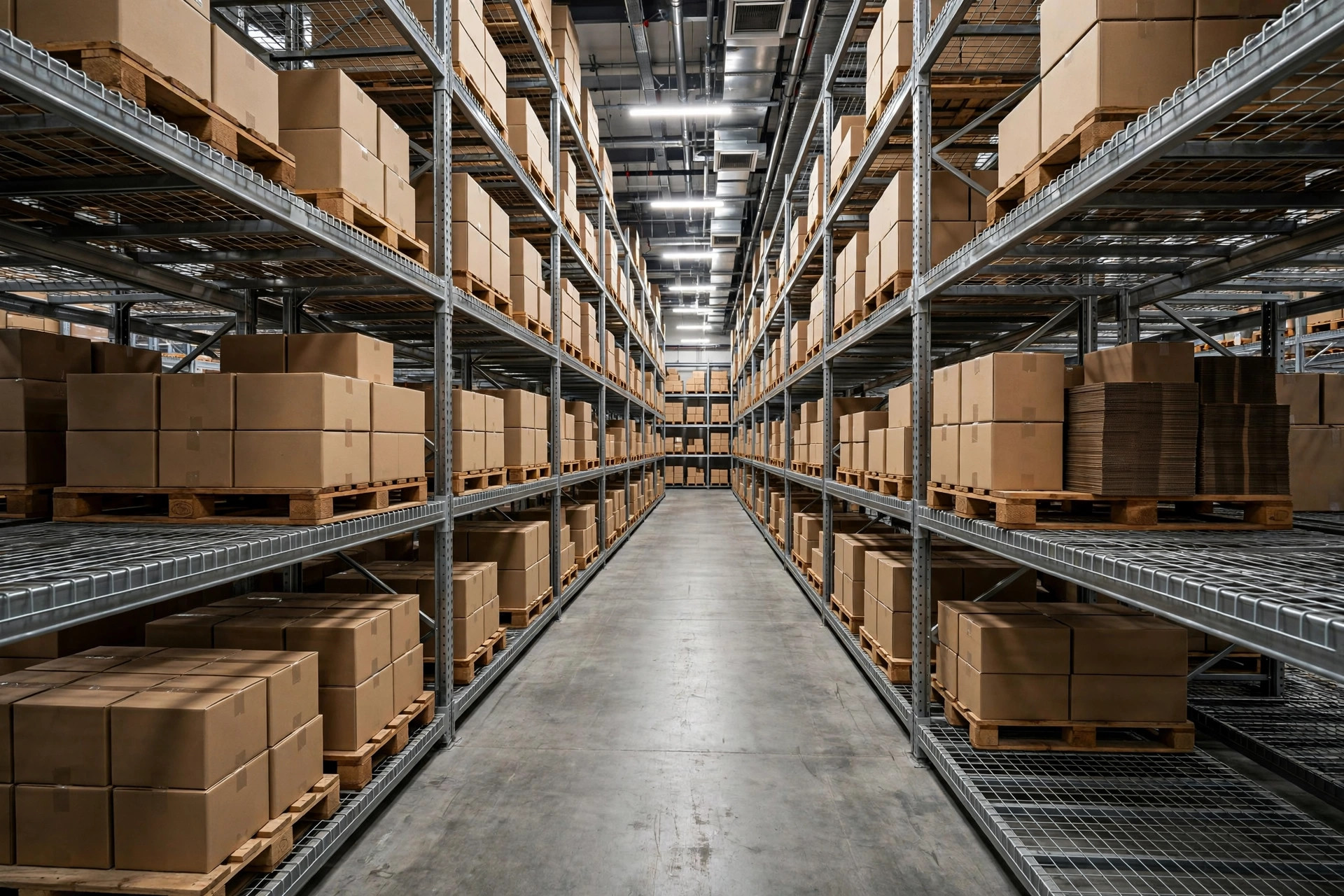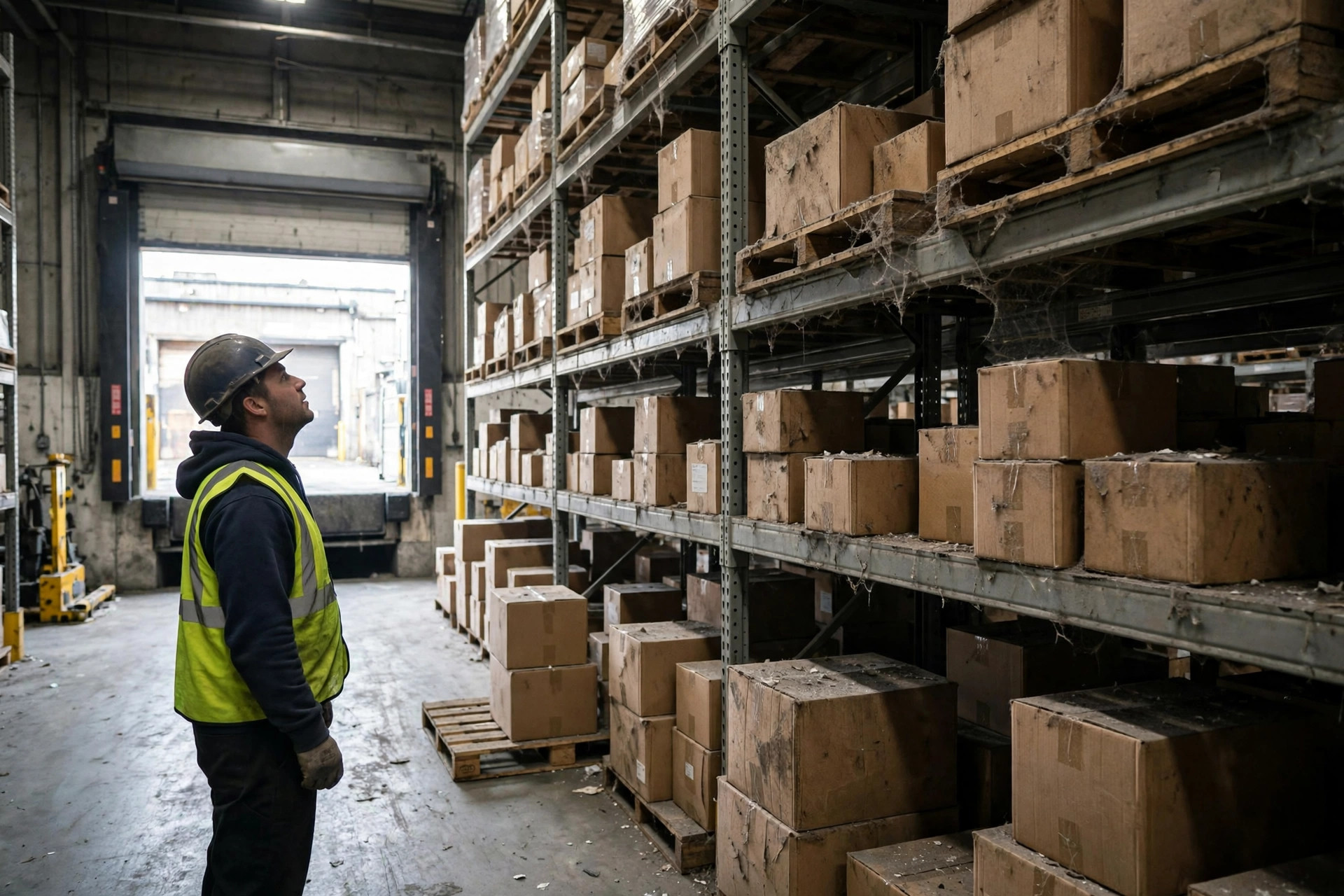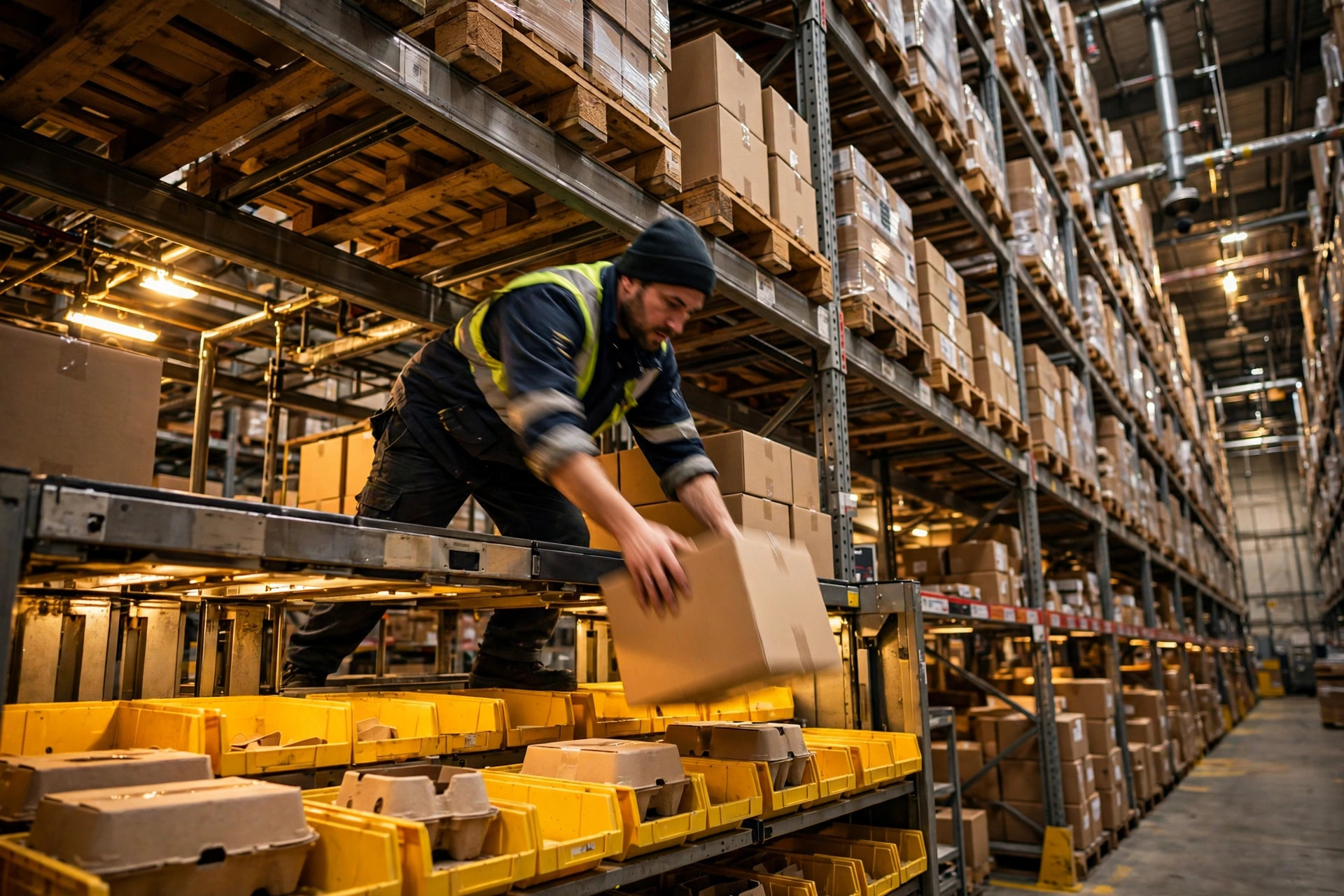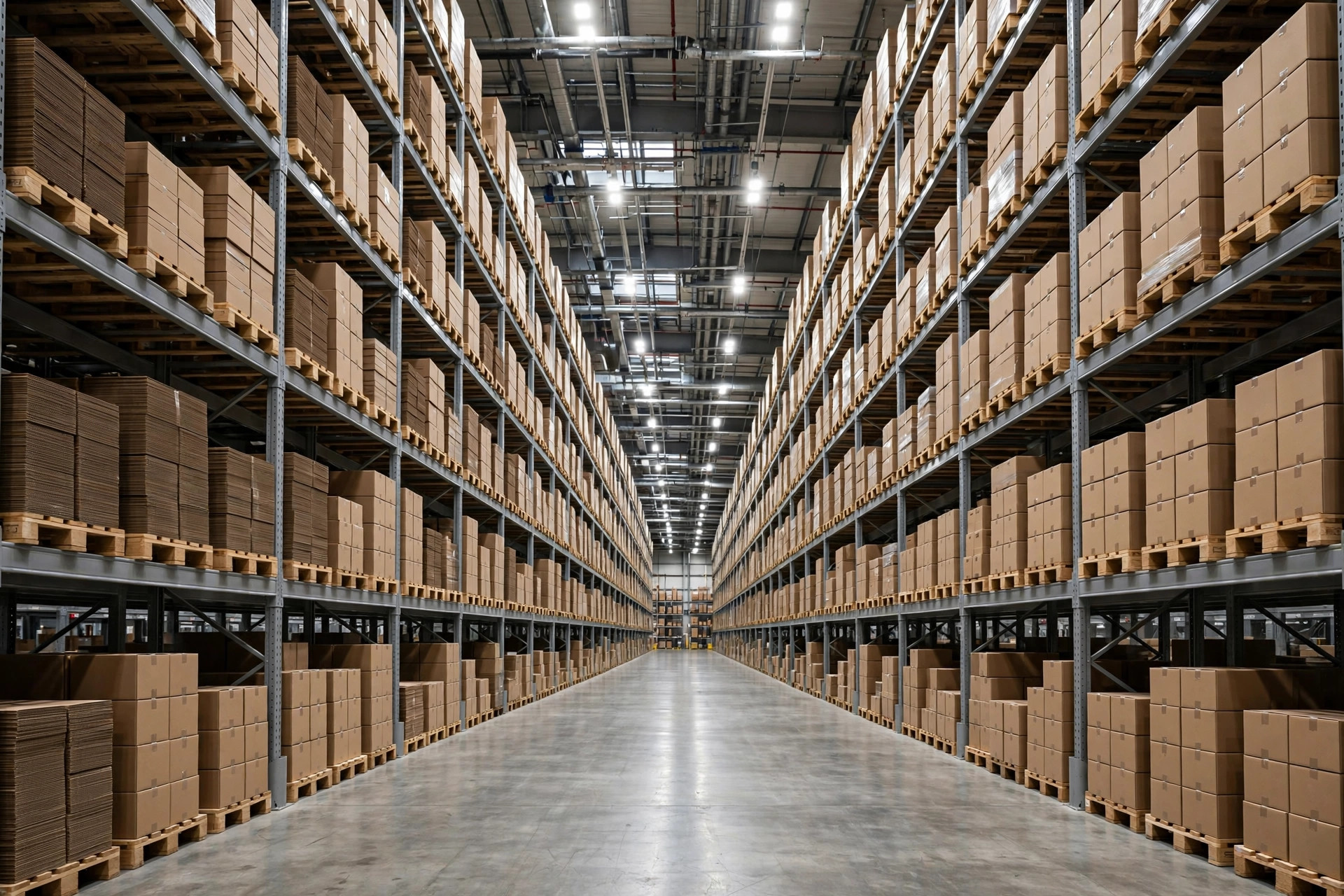
A 90,000-square-foot warehouse switched back from random to dedicated slotting in two weeks, gave up 30% of its storage capacity, and picked 40% faster — here's how that math works.
Last month I walked a 90,000-square-foot e-commerce warehouse in Ontario pushing 18,000 orders a day in peak season. The operations manager was frustrated: the system kept screaming about being out of space while half the racks stood visibly empty. One walk-through told me the story. Their dedicated-location policy was enforced a little too religiously — A-class SKUs held most of the golden-zone slots, peak-season safety stock ran triple the normal volume, and the overflow ended up stacked in the aisles. Blocked aisles meant pickers detoured around them, adding nearly 2 kilometers of walking per person per day. Dedicated slotting is a great tool. Used wrong, it's a trap you set for yourself.
Let's get the two concepts straight first. Dedicated slotting means every SKU has a permanent home: product A always lives at A-12-03, and a picker can find it with their eyes closed. Random — or chaotic — storage means inbound product goes wherever there's an open slot, and the system remembers the location. People stop memorizing; the system does the remembering. One runs on human memory, the other on software. That is the whole difference.
If dedicated slotting is so clumsy, why do big warehouses still use it?
Because it eliminates the "where is it" problem. After three months, a picker knows the fast movers by heart. New hires are productive in half a day, and peak-season temps don't slow you down. For warehouses with a small SKU count and high pick frequency, that's worth real money. Dedicated locations also make cycle counting painless — fixed addresses, walk up, count, done. Discrepancies show up immediately.
The price of dedicated is space. A SKU holds its slot even when it's out of stock, and nobody else can use it. Dedicated warehouses typically top out around 60 to 70 percent slot utilization. I measured this myself in 2023 at a 3PL in the Inland Empire: 45,000 slots, and under a dedicated policy a third sat empty or half-empty for months. That's 30,000 square feet of rented air. At local rates, the extra rent alone would have bought two forklifts a year.
The deeper problem is rigidity. Dedicated is static; business is not. A home-goods client of mine ships 60,000 orders a month normally, then quadruples inbound before peak. The dedicated slots couldn't hold it, so they rented a neighboring building for overflow. That one peak season cost them nearly $50,000 in temporary storage and double handling. Dedicated slotting hates exactly the rhythm most e-commerce businesses live on: fine in the slow months, broken in the rush.
Random storage sounds great. Where's the catch?
It shines on utilization. Product goes wherever there's room, and hitting 80 percent slot utilization is easy. The same building holds 20 to 30 percent more inventory. For e-commerce and 3PL operations with tens of thousands of SKUs and swinging inventory levels, that's serious money — skipping one extra lease saves six figures a year.
But random storage has a prerequisite that most warehouses underestimate: the system must be solid, and scan discipline must be ironclad. In a random warehouse, nobody's brain knows where anything is. The system is the only map. Skip scanning at putaway, skip it at replenishment, pick by gut feeling, and within three months the system and reality have nothing to do with each other. The worst case I saw: a warehouse ran random storage for half a year, hit an 8 percent inventory variance, and had to shut down for two full days to recount. They lost two days of output plus a customer's trust.
Random storage also hides a travel cost. To fill space, the system may split one order's lines across opposite ends of the building. Without good wave planning and path optimization, pickers walk more than they did under dedicated slotting. Random doesn't mean "put it anywhere." It means "put it where the system says" — putaway rules, replenishment rules, dynamic ABC zoning. None of it is optional.
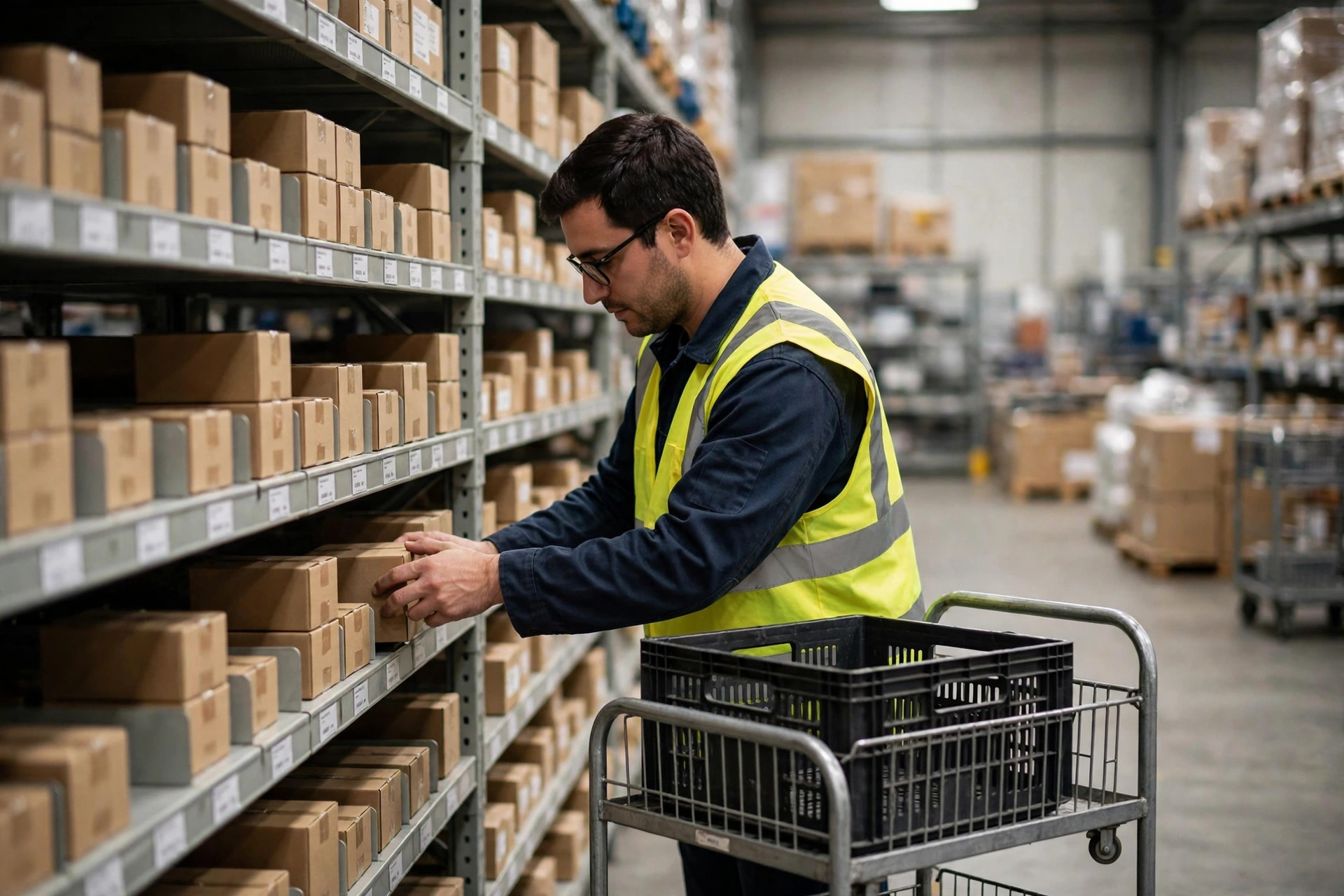
So which SKUs actually deserve a dedicated slot?
My answer: don't pick one or the other. Layer them. A SKU earns a dedicated slot when it meets at least two of three conditions: high pick frequency, bulky or odd-shaped, or expiration-sensitive.
High frequency needs no explanation — put the movers in the golden zone: waist height, closest aisle to packing. Bulky and oversized items need dedicated slots because their locations are custom-built; random storage physically can't absorb them. Expiration-sensitive goods — food, cosmetics, pharma — belong in dedicated slots so FIFO is easy to enforce. Managing lot rotation under random storage makes the system logic an order of magnitude more complex, and 99 percent of warehouses can't pull it off.
Everything else, the long tail, goes random. Long-tail SKUs move occasionally, and a dedicated slot for them is a waste. A practical starting line: SKUs in the top 15 percent of pick frequency over the last 90 days get considered for dedicated; the rest go random. That 15 percent isn't gospel — it's your tuning knob.
How often should you recalculate ABC? Run the numbers monthly, formally rezone quarterly, and always run an extra pass before peak season. E-commerce product life cycles keep shrinking. I know an apparel warehouse that hadn't recalculated ABC in two years — 40 percent of its golden-zone slots held discontinued styles, the best real estate in the building sitting idle.
If you're switching strategies, here's a sequence that works. Full physical count first, so you're working from clean data. Export 90 days of pick frequency and run ABC. Redraw your zone map with A-class product in the golden zone. Set a max and safety stock per dedicated SKU, with overflow routing to the random zone. Lock dedicated slots in the system, open the random zone to auto-assignment. Pilot for two weeks, watching pick times and variance daily. And do it in the slow season — moving slotting a month before peak is self-destruction.
One more trap, the one that kills dedicated-to-random conversions: your veterans' muscle memory. A picker with five years on the floor gets a system directive to Zone B and walks to Zone A on instinct — because that product has "always" been in Zone A. Pick errors will spike in the first month. Plan for it and staff extra verification. Going the other direction, random to dedicated, the classic mistake is treating the first dedicated assignment as permanent. Business changes; the slots must move with it. Dedicated locations aren't carved in stone.
So back to the question in the headline: when does dedicated slotting pay off? If your SKU count is under 3,000, picker turnover is high, and your system is basically an inventory spreadsheet, run dedicated and don't touch random — your operation can't support it. If you're past 20,000 SKUs, scan discipline is already a habit, and the system tracks every putaway and move, go random and spend the rent savings on something better. For most warehouses in between, the honest answer is a hybrid: 20 to 30 percent of slots dedicated to your fast movers, 70 to 80 percent random for flexibility. There is no universal right answer, only the answer that matches your SKU profile, your system maturity, and your people. Run ABC first, then choose. Get the order backwards and every dollar is wasted.