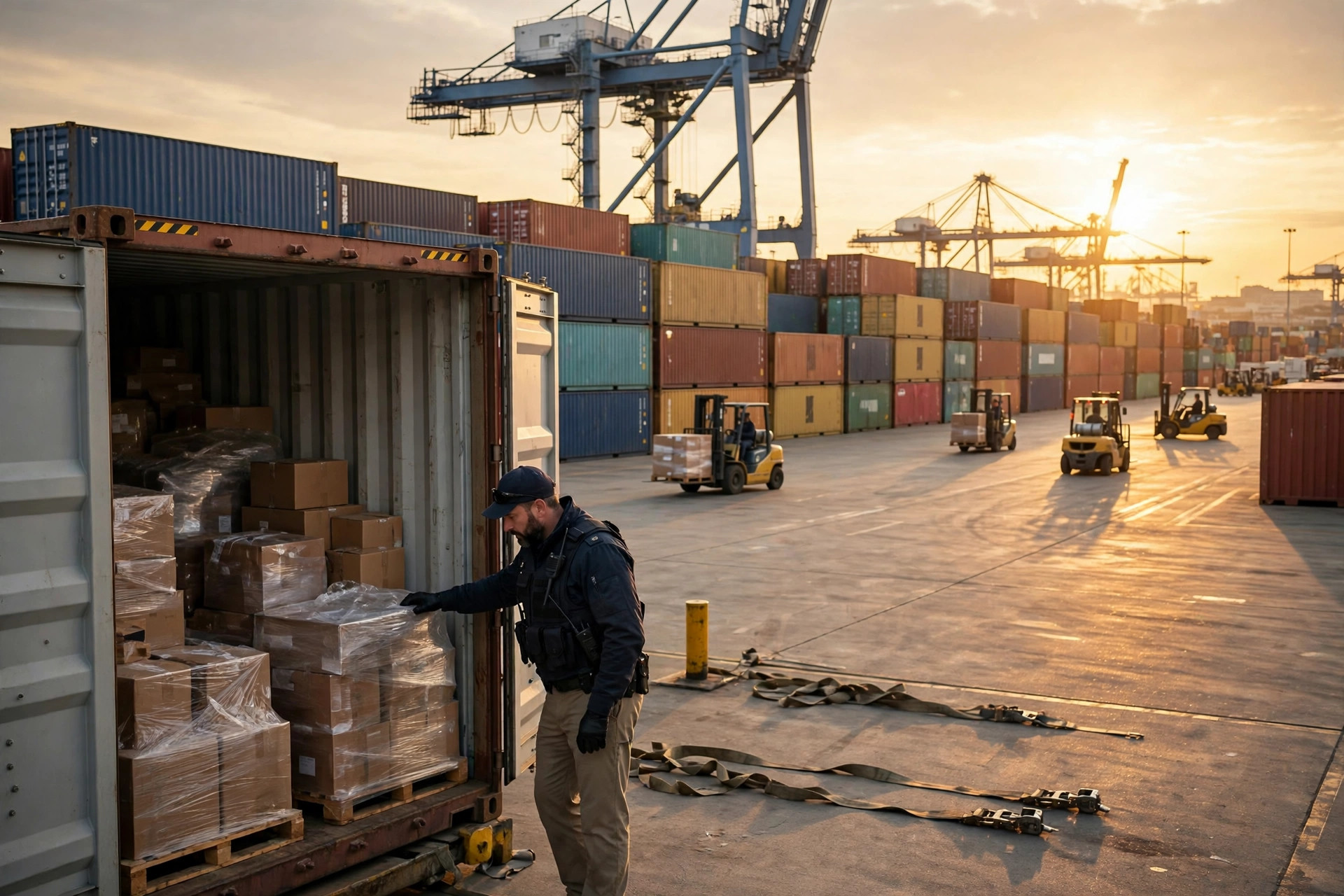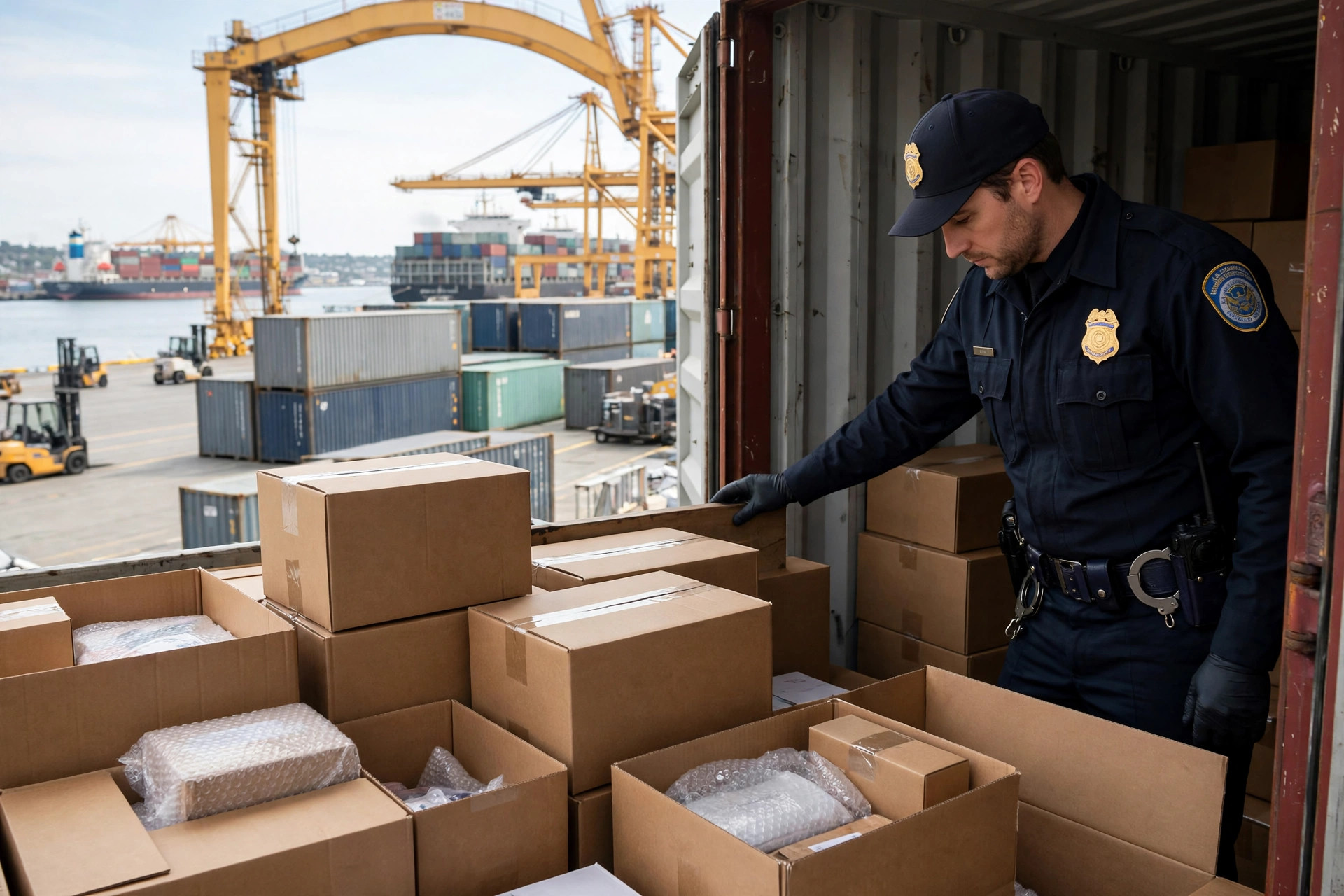
We had a client, a home-storage importer out of Rancho Cucamonga, California, bringing in around $4 million a year from the same factory in Guangdong for nearly six years. In the fall of 2023, he got a letter from Customs: they were questioning the declared value on one of his shipments, calling it too low, and asking for supporting documents by a deadline.
His first reaction: "But that IS what I paid. Can't a factory give me a good price?"
Not in Customs' eyes. Not without proof.
When we dug in with him, the problem was something he'd never thought twice about: the Guangdong factory was owned by his cousin. Related-party transaction. The moment Customs' system links buyer and seller as related parties, the price gets flagged automatically — family doing business together, in their experience, is where undervaluation likes to hide.
All he had was a pro forma invoice and the entry paperwork. Payments had gone out in several batches, and the bank remittance slips didn't line up with the invoice amounts. The factory's cost breakdown? His cousin called it "a trade secret" and wouldn't share it. In the end, Customs revalued the shipment at its own number. He paid back duties plus interest — north of $60,000 — and landed on a watch list that got every one of his shipments examined for the next six months.
Afterward I told him: that $60,000 bought you a lesson. When Customs questions your declared value, they're not judging the number. They're judging whether you can prove the number is real.
How Customs Decides Your Declared Value Looks Too Low
Here's some inside baseball from the 3PL side: Customs doesn't read entries one by one anymore. The system screens first, humans review second. The signals that get you flagged are pretty consistent:
First, an outlier unit price. If your unit price under the same tariff classification sits well below the industry median for months, or if this shipment from the same factory is suddenly 20% cheaper than the last one, the system lights up. Customs holds import data for the entire country — your "great negotiated price" may look like a statistical outlier in their database.
Second, a related-party relationship. Parent-subsidiary, sister companies, a cousin's factory — Customs treats related-party pricing with built-in skepticism. It's not prejudice, it's pattern recognition: too many importers have used transfer pricing to park profits in low-tax jurisdictions while conveniently declaring low values.
Third, unexplained price movement. Volume discounts, year-end rebates, free samples thrown into the container — all perfectly legitimate commercially. But on the entry, your unit price changed. And a changed price needs a paper trail.
Get the logic? Customs accepts transaction value by default. But once any of those signals trips, the burden of proof flips to you. You're not proving "I didn't lie." You're proving "this price would hold up between unrelated parties."
An Evidence Checklist That Actually Clears Customs Valuation Reviews
Our second client is the perfect illustration. An LED lighting importer shipping through the Port of New York and New Jersey — Elizabeth, to be precise — brought in three shipments from the same Shenzhen factory in early 2024, each one priced lower than the last. The factory had given him tiered volume discounts, negotiated verbally, nothing in writing. Customs pulled comparable transaction values for identical goods, decided his third shipment was undervalued, and issued a formal notice of valuation adjustment.
He came to us with two weeks left on the response deadline. We tore through his files and assembled the package below. Two months later, Customs accepted the discounted price. He only had to true up a small difference on the freight-and-insurance allocation.
Save this checklist. Every importer should have one:
| Document | What it proves | Watch out for |
|---|---|---|
| Sales contract (bilingual) | The deal terms are real | Verbal agreements don't count — it must be in writing |
| Pro forma + commercial invoice | Price terms are consistent | Unit price, currency, and Incoterms must match across documents |
| Bank remittance slips | The money actually moved at this price | Amount, currency, and payee must match the invoice; batched payments must add up to the full total |
| Written discount/rebate terms | The price change has a business reason | Tiered discounts and rebates need signed clauses |
| Factory cost breakdown | The low price makes sense | Economies of scale, cheaper raw materials — you need the factory's cooperation |
| Comparable transaction values | Your price isn't an outlier | Published market quotes are best; your other suppliers' prices work too |
| Freight and insurance allocation | The dutiable value math is right | Spell out the FOB vs. CIF allocation — this is where Customs loves to poke holes |
| Related-party statement + transfer pricing documentation | Related-party pricing is arm's length | Mandatory if you're related; smart to have even if you're not |
See the pattern? Customs never wants one document. They want an unbroken chain: the contract says this much → the invoice bills this much → the bank paid this much → and here's why the price is what it is. Break one link and you're negotiating uphill.

The Customs Valuation Appeal Timeline, and How to Play It
The process itself isn't complicated. The pacing is. Customs typically starts with a Request for Information (the trade calls it a CF28) and a response deadline. You submit your package; Customs either accepts it or issues a formal Notice of Action (a CF29) assessing duty at its own valuation. Disagree, and you climb the administrative appeal ladder.
Timing-wise: a couple of months if you're lucky, six-plus if you're not. For exact deadlines, appeal levels, and penalty exposure, check CBP's website for the latest policy — I don't recite regulation numbers from memory, because they get tweaked and a wrong citation hurts you more than no citation.
Three rules that matter in practice:
First, the deadline is a red line. Miss Customs' response date by a day and they can liquidate at their number. Start a countdown the day the letter arrives. Don't wait.
Second, go in complete on the first submission. Too many importers toss in two invoices as a placeholder, get rejected, and only get serious on round two — by which point their credibility is spent. The LED importer won because we delivered the full package within two weeks, once.
Third, get the right help. Your customs broker files entries; they don't litigate valuation cases. For real money at stake, bring in a trade compliance attorney or a broker with a real compliance practice. Don't flinch at the fee — a few thousand dollars of prep would have saved our first client most of that $60,000.
The Counterintuitive One: Transfer Pricing Docs Are a Customs Money-Saver
Here's the contrarian take that nine out of ten importers get backwards.
Everyone assumes transfer pricing is the tax department's problem, nothing to do with Customs. Wrong. The first thing Customs checks is the relationship: are your U.S. company and the overseas factory family? Is this an "insider price"?
A transfer pricing study prepared in advance costs whatever an accounting firm charges for one analysis. A valuation challenge after the fact eats years of margin in back duties and interest on a single shipment. Preparing ahead is an order of magnitude cheaper than explaining after.
And the deeper trade-off: declare low and you save duty while betting you won't get caught; declare honestly and you pay a bit more but sleep at night. Don't run that math on the duty delta alone — add examination delays, demurrage, legal fees, and the cost of every shipment getting pulled for inspection once you're on the watch list. Plenty of our clients have run the full math and discovered that honest declarations are the cheapest option overall.
Importers love to say Customs is out to get them. In fairness, Customs only believes in evidence. Hand them a complete chain and they want to close the file as badly as you do — they've got clearance stats to hit too.
Next time before you ship, ask these three questions:
One — is there any related-party link between buyer and seller on this shipment? If yes, where's the transfer pricing documentation? Two — if the price moved since the last shipment, where's the written basis for the discount? Three — do the amounts, currencies, and payees on the bank slips line up with the invoice?
Answer all three cleanly, and a letter from Customs won't ruin your week.
By Susan, 3PL Sales Director