Let me tell you, after all these years on the road, the day I understood the Cote d'Ivoire cashew export warehouse storage business was the day I sat in a queue outside the Port of Abidjan. March, peak season 2024, trucks backed up two kilometres, 20-foot boxes short, the cargo owner on the phone stamping his feet. My load had sat in the warehouse two extra weeks. He asked, is two weeks a problem? I said, if the nuts are dried right, two months is fine. If they're not dry, two days ruins them.
Cashews and bananas are opposite animals. Bananas fear a broken cold chain. Cashews fear damp. A raw cashew nut drops off the tree at 17 to 20% moisture — put it in storage without drying and you've invited mould in for dinner. The whole warehouse game comes down to one sentence: control the water, or nothing else matters.
The scale of Cote d'Ivoire cashew export warehouse storage
Côte d'Ivoire is the world's biggest producer of raw cashew nuts: about 944,673 tonnes in 2024, around 1.2 million tonnes in 2023, expected at roughly 1.5 million tonnes in 2025. Harvest runs late February to May, the export rush March to May. For two or three months a year, every cashew buyer in the world watches the Port of Abidjan, and containers, trucks, and warehouse space all get fought over.
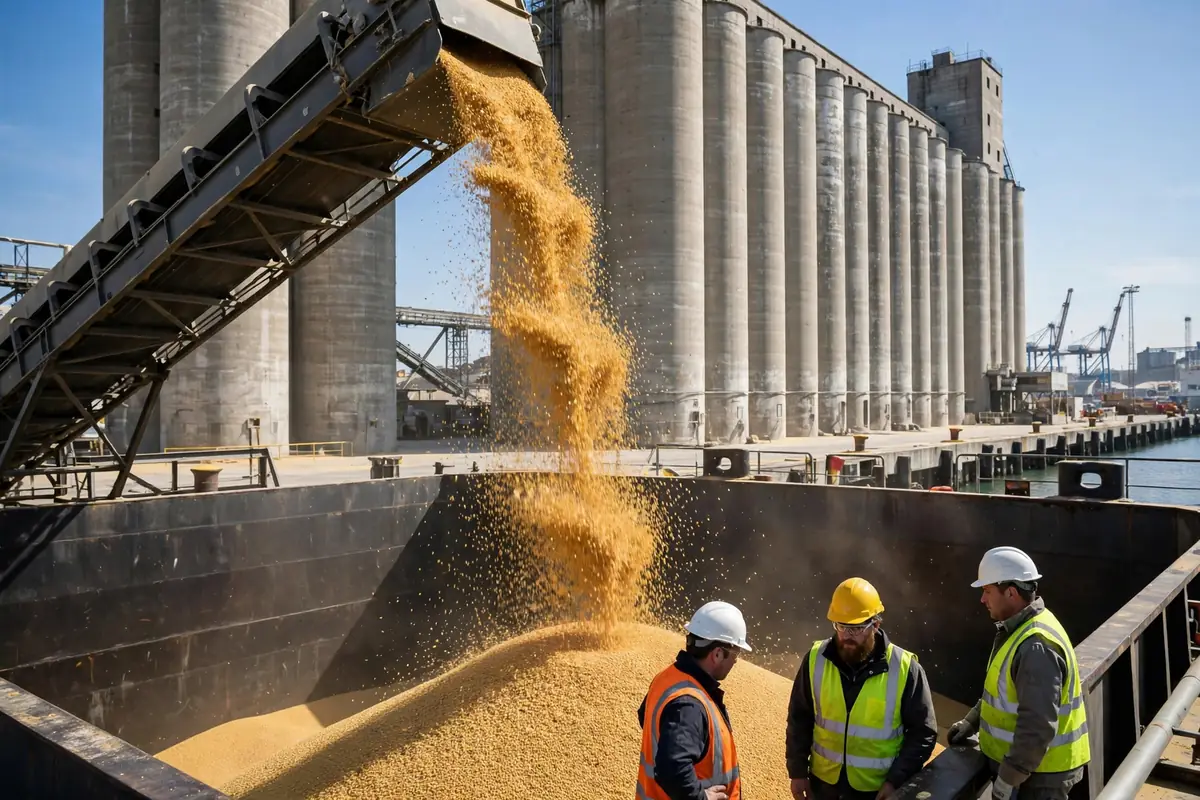
Most of the crop still leaves as raw nuts, shelled in Vietnam and India. That's changing: local processing ran about 344,028 tonnes in 2024, expected to nearly double to around 659,579 tonnes in 2025. Abidjan to Ho Chi Minh City takes 35 to 45 days at sea; to India, 28 to 35 days. Over that long a voyage, the condition of the nuts in the warehouse decides the price at arrival.
The regulator is the Cotton and Cashew Council, the CCA — farmgate price floor, export licences, all of it. A cargo owner should ask first whether the paperwork is in order. That matters more than saving a few francs on rent.
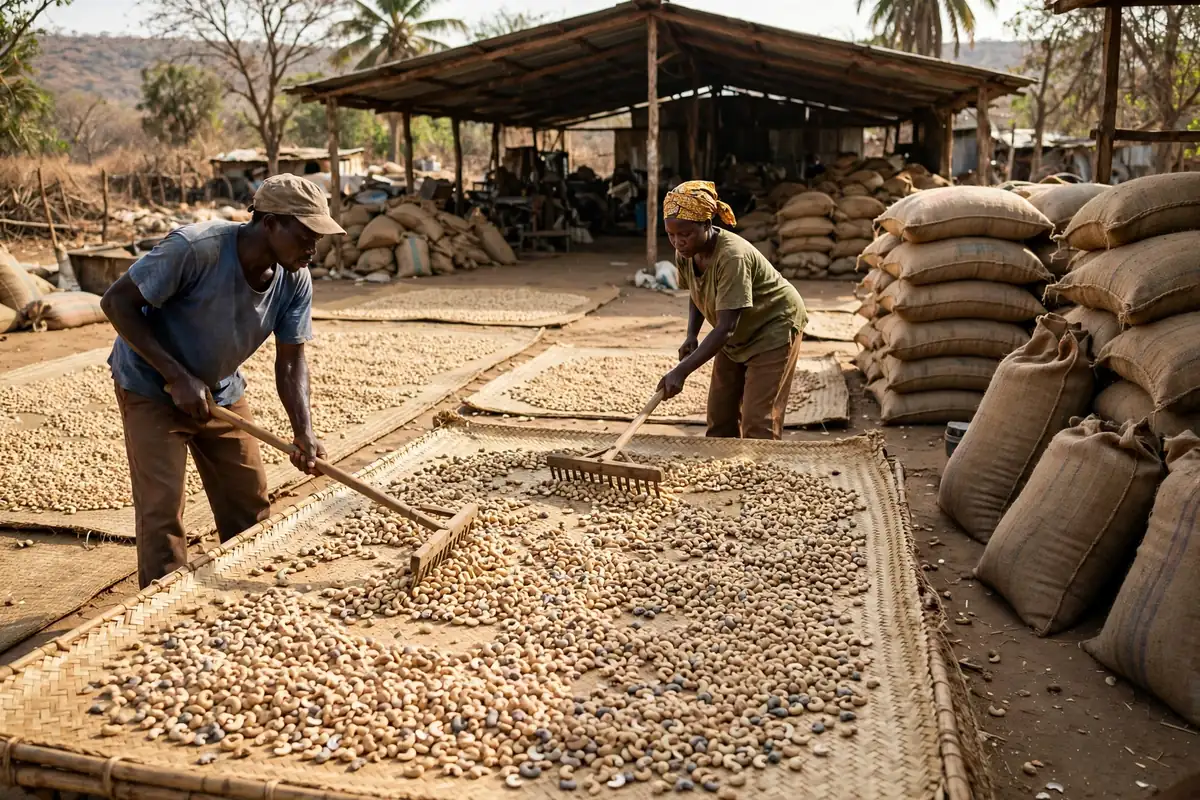
The drying yard is the first warehouse After all these years on the road, I've noticed something strange: cargo owners will pay warehouse rent but won't spare two extra days on the drying yard. The nuts come off the tree, and the first job isn't storage — it's sun. Spread them thin on a concrete yard, two to three days of sun, moisture down from 17 to 20% to 8 to 10%. Only then are they fit to go in.
Sun drying looks simple, but there's a knack. Spread too thick and the bottom layer never dries. Don't turn them and the top dries while the bottom stays damp. One rainstorm without cover and it's back to square one. The reliable way is a moisture meter: 8 to 10%, then bag it. I've watched people grab a handful, feel it, and declare it dry — every one of them paid for it.
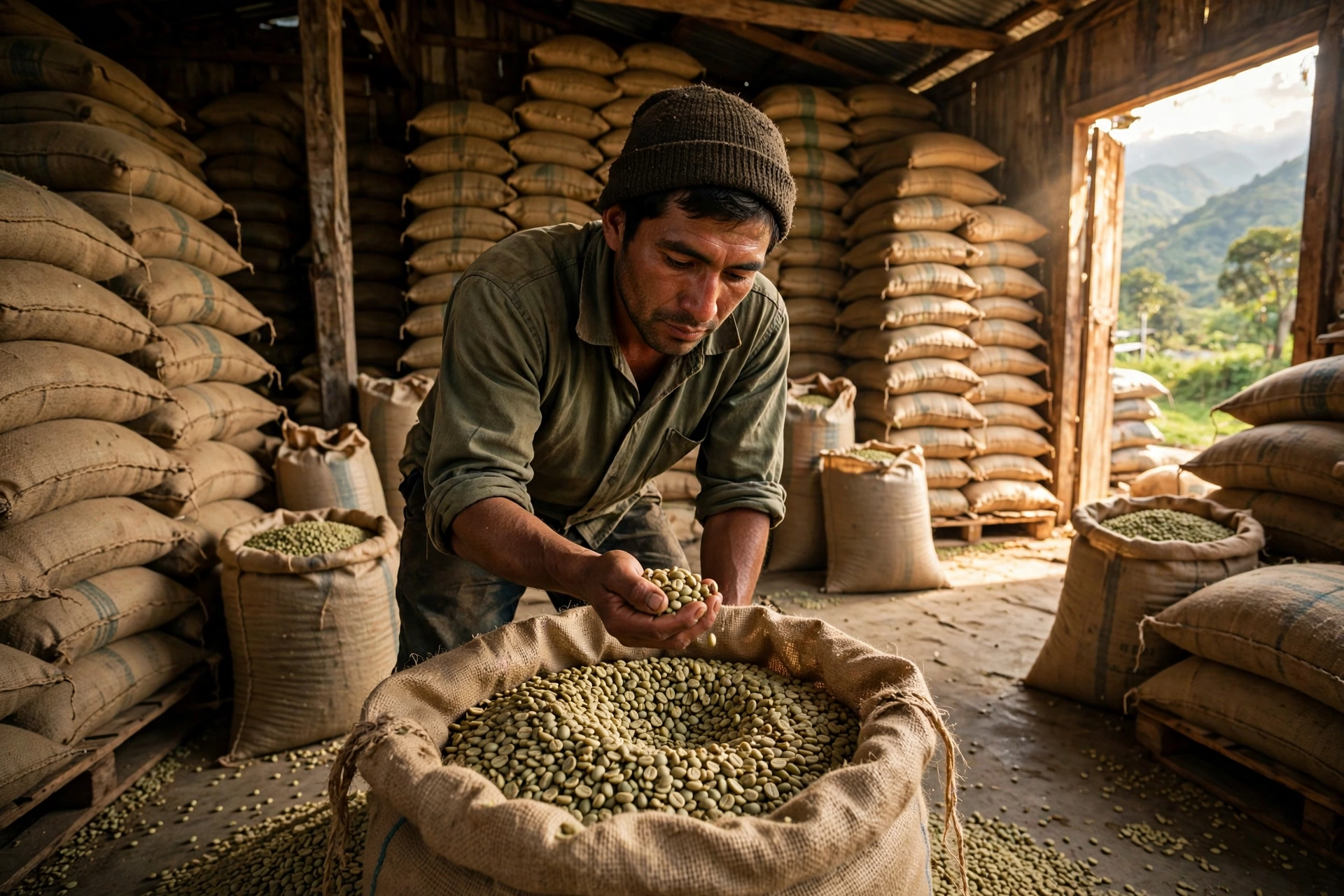
Bagging has its own rules. The standard is a jute sack, 80 kilos, filled to about 80 to 90% so air can move. Woven plastic bags are cheaper, and some people use them — let me tell you, that's tucking the mould into bed. Plastic doesn't breathe. Moisture gets trapped, and days later you open the bag and the smell hits you. Jute costs a bit more, and it's worth it.
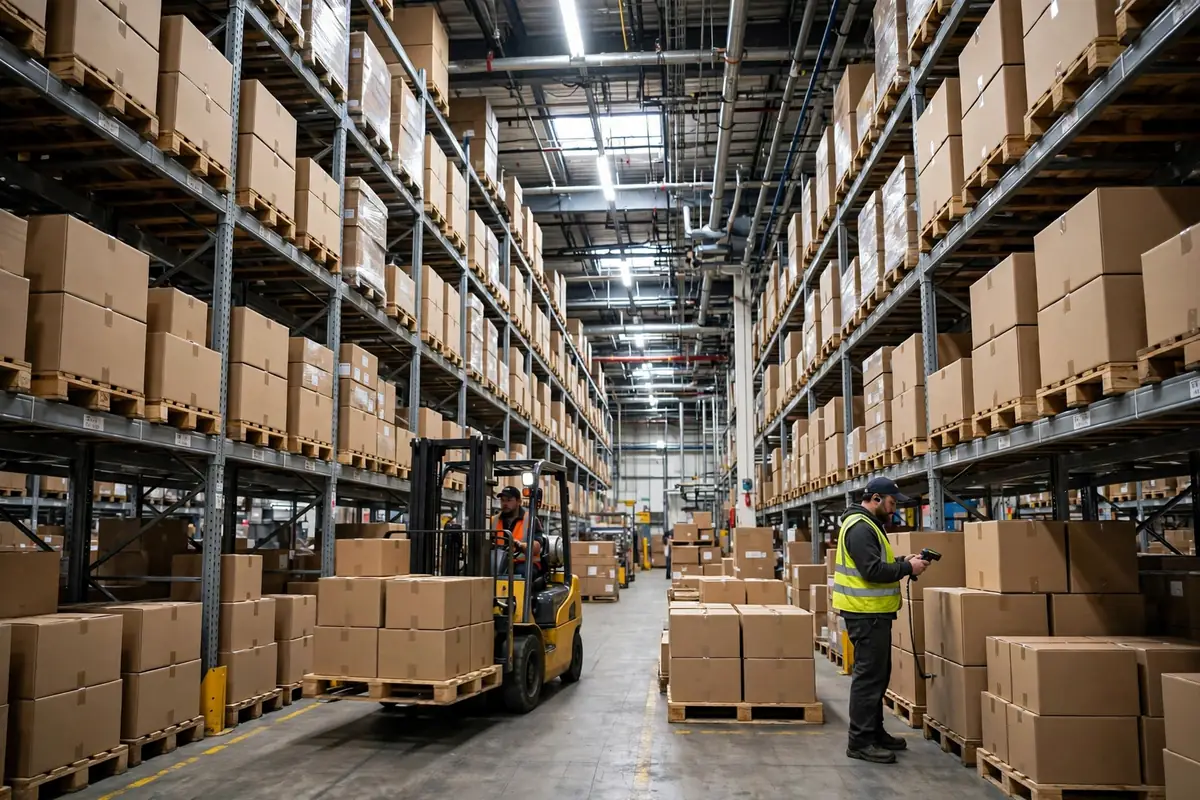
In the warehouse, sacks go on wooden pallets, off the floor, never onto concrete. Ground damp is the sneakiest thing there is: nothing shows on the surface, and the bottom layer rots first. The store needs ventilation, dry air, pest control, humidity ideally below 65%. Don't stack greedy — leave air channels. Dried right and stored right, raw nuts keep for up to six months. But if moisture is over 10%, mould can show up in 24 to 48 hours, and once aflatoxin is in the picture it's not a discount problem anymore — it's whether the cargo can be sold at all.
The load that taught me: 13% moisture, the whole margin gone
One season a couple of years back, I hauled a load where the owner was rushing to catch a vessel. The nuts had one and a half days on the drying yard. The meter said 13%. The warehouse man said, "close enough, load it, it'll dry on the ship." I told the owner straight: that's a gamble — there's no drying on a ship. A sealed container for 35 days, and when the buyer opened it in Vietnam the inspection came back over the moisture limit with mould. The price cut wiped out the man's margin.
What does that tell you? The real dividing line in cashew export storage isn't at the port. It's at the drying yard and the warehouse gate. Moisture at 8 to 10% is the life-or-death line for raw nuts, and a kernel outturn ratio (KOR) of 47 to 50 pounds is the hard number buyers recognise. Hold those two and the cargo sells anywhere. Miss them and you've paid the freight, chased the sailing, and taken the knife at arrival.
My advice: three things. First, don't short the drying yard — two to three days is the floor, in rainy weather add a day. Second, test moisture on intake and write the sampling rate into the contract; anything over the limit goes back to the yard, not into the store. Third, jute sacks, on pallets, off the wall and off the floor, with air channels. Do those three and the warehouse part is handled.
Stuff it together or go solo? The sailing schedule decides
At the port end, owners often ask me: consolidate or go full container? After all these years, my answer is: it depends on volume, but more on the sailing schedule. In the March-to-May peak, 20-foot food-grade boxes run short — a fact of life. No full box means waiting. Waiting isn't bad; nuts in a dry store can sit a few extra days. What's bad is stuffing damp nuts into a shared box in a hurry and sealing them up for 35 days. They arrive as mould.
Then there's Abidjan versus San Pedro. Abidjan is the main port — more services, denser sailings, most cargo goes through there. San Pedro is the second port, closer to the southern growing areas, and some owners like the shorter road leg. My view: sailing density beats road distance. Abidjan has another sailing if you miss one; a smaller port has fewer, and missing one means the cargo sits another week — rent ticking, money tied up, mould risk rising. Add it up and the small port's freight saving doesn't always survive the arithmetic.
The Cote d'Ivoire cashew export warehouse storage bill
Take one 20-foot container of raw nuts — hypothetical example, for illustration only: about 19 tonnes in jute sacks. One extra drying day and one moisture test at intake cost almost nothing per tonne. A container that arrives over the moisture limit and gets discounted loses a big slice of its value. The drying yard is the cheapest insurance in the business.
| Step | Cost of doing it right | Cost of skipping it |
|---|---|---|
| 2–3 days sun drying, moisture to 8–10% | Two days of labour and yard space | 13% moisture into storage, mould discount at arrival |
| Jute sacks + wooden pallets off the floor | Sacks and pallets cost a bit more | Plastic bags trap damp, ground moisture rots the bottom layer |
| Intake testing for moisture and KOR | The price of one test | Over-limit nuts mixed in, whole batch under suspicion |
| Book containers early in peak season | A few days ahead | No boxes available, cargo sits, money parked |
The counterintuitive part is this: a fuller cashew warehouse doesn't mean a more profitable one. Storage is charged by the tonne, so people think cramming it full is money made. Wrong. Cram it full with no airflow and the damp has nowhere to go — you're raising mould in your own store. A cashew store's skill isn't how much it holds, it's how well it breathes. Leave an air channel between the rows, hold a few tonnes less, keep the whole store safe.
An old saying for anyone running this lane: dry goods don't fear the sun, they fear being shut in. Three days in the sun is nothing; three days sealed in plastic is the end of it.
Cote d'Ivoire cashew export warehouse storage comes down to three things: dry it, bag it right, test the moisture before it goes in. None of it is high-tech. Skip any one of them and arrival day collects the debt with interest. Before your next load goes into storage, ask one question — what's the moisture reading? Try it once and you'll know what it's worth.
By Shifu Zhao, Trucking Veteran (15 yrs)