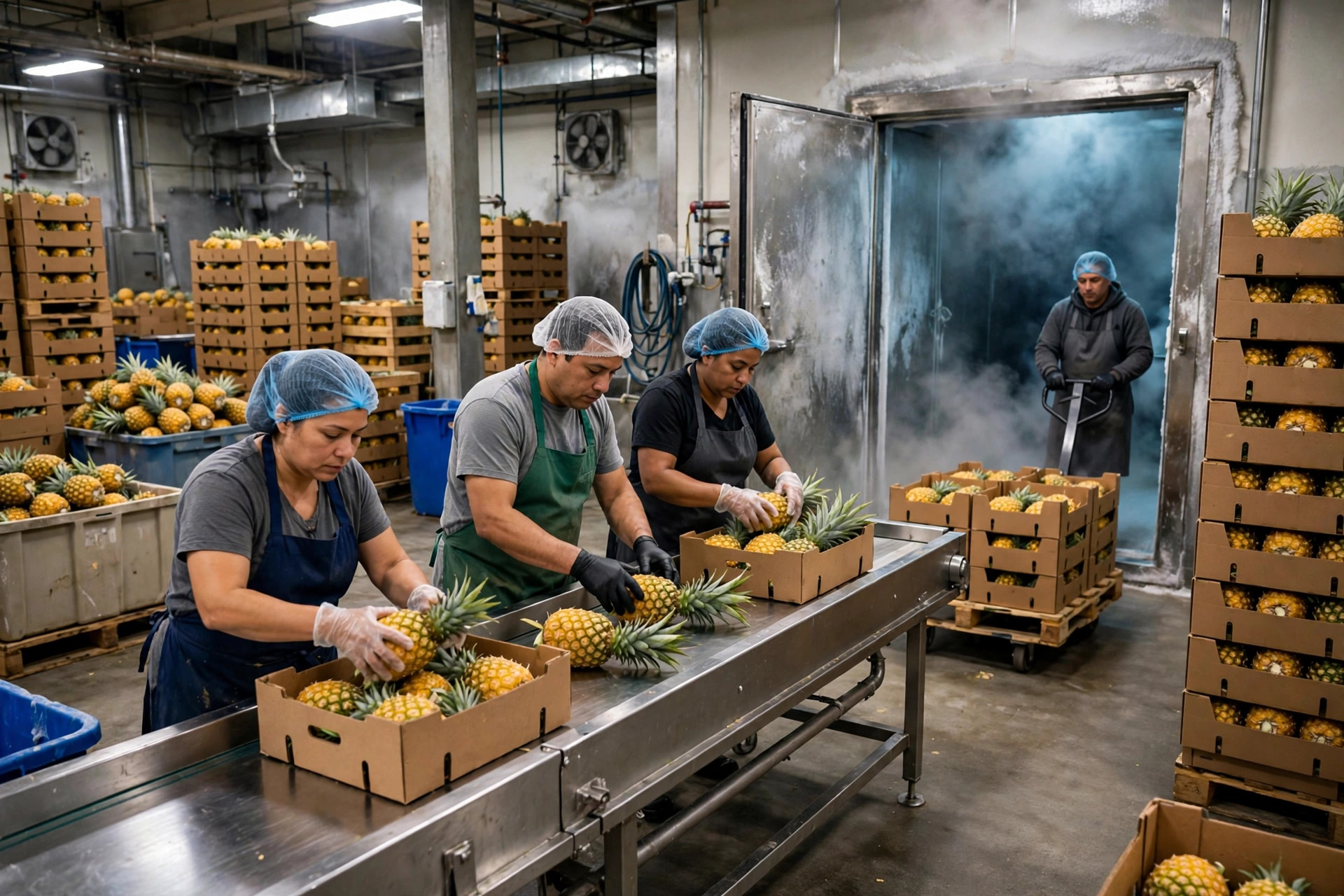
Let me tell you something. After all these years on the road, pineapples are the load I respect the most, and the one I worry about the most. They look tough, all armor and crown, but they bruise easy in ways you cannot see until the box is opened at destination. One morning before dawn, I sat in my reefer truck in a queue outside a pineapple packinghouse in Costa Rica. A man came out and said the fruit was not pre-cooled through yet. We waited most of the morning, and I learned the truth the slow way: in the Costa Rica pineapple export cold chain, a break happens exactly at that kind of "close enough" moment, and once it breaks, the whole container loses its face.
Road story: a reefer cannot rescue fruit that was never cooled through
The load we waited for that morning had come in the night before, still carrying field heat in its core. A young driver in the queue got impatient and said, load it now, the reefer will cool it down on the way. An older driver stopped him cold. He said, son, a reefer holds temperature, it is not a refrigerator. You load hot fruit and the machine will blow itself out cooling the outside layer while the middle pallets stay warm. The shipper came out eventually and insisted on waiting until pre-cooling was finished, even if it meant missing half a day.
I have never forgotten that. The first job of a packinghouse is to take the field heat out of the fruit. Grading and packing to the buyer's spec is one job, pre-cooling is another, and beautiful grading means nothing if the core is still warm. Since then, before I sign for a load, I ask how long pre-cooling ran and what the pulp temperatures came back at. With a per-pallet record, I relax halfway. Without one, feeling the outside of a carton is not enough to sign on.
There was another load that taught me the second half of the lesson. The fruit left the packinghouse looking perfect, cartons neat, pallets strapped tight. At the port, the container was opened for inspection, and the doors stood open while people went through it, sun coming in, cold air walking out. By the time it was resealed, the temperature logger's curve had already bent upward. At destination, the buyer downgraded far more fruit than usual, and the shipper told me the real loss was not the freight. It was the bargaining power of the whole container, gone in one afternoon.
The first gate of the Costa Rica pineapple export cold chain: three jobs done right inside the packinghouse
The first gate of the Costa Rica pineapple export cold chain is not on the road at all. It is inside the packinghouse. Some background first: Costa Rica's pineapple export trade is backed by an industry association with roughly sixty supplier members. That scale means supply is not the problem, but packinghouses do not all work the same way. A shipper cannot assume every plant runs the same process. You have to check.
First, grading and packing to the buyer's spec. Different buyers want different sizes, ripeness, and crown conditions, and the plant grades and packs to the buyer's requirements, not to a worker's gut feeling.
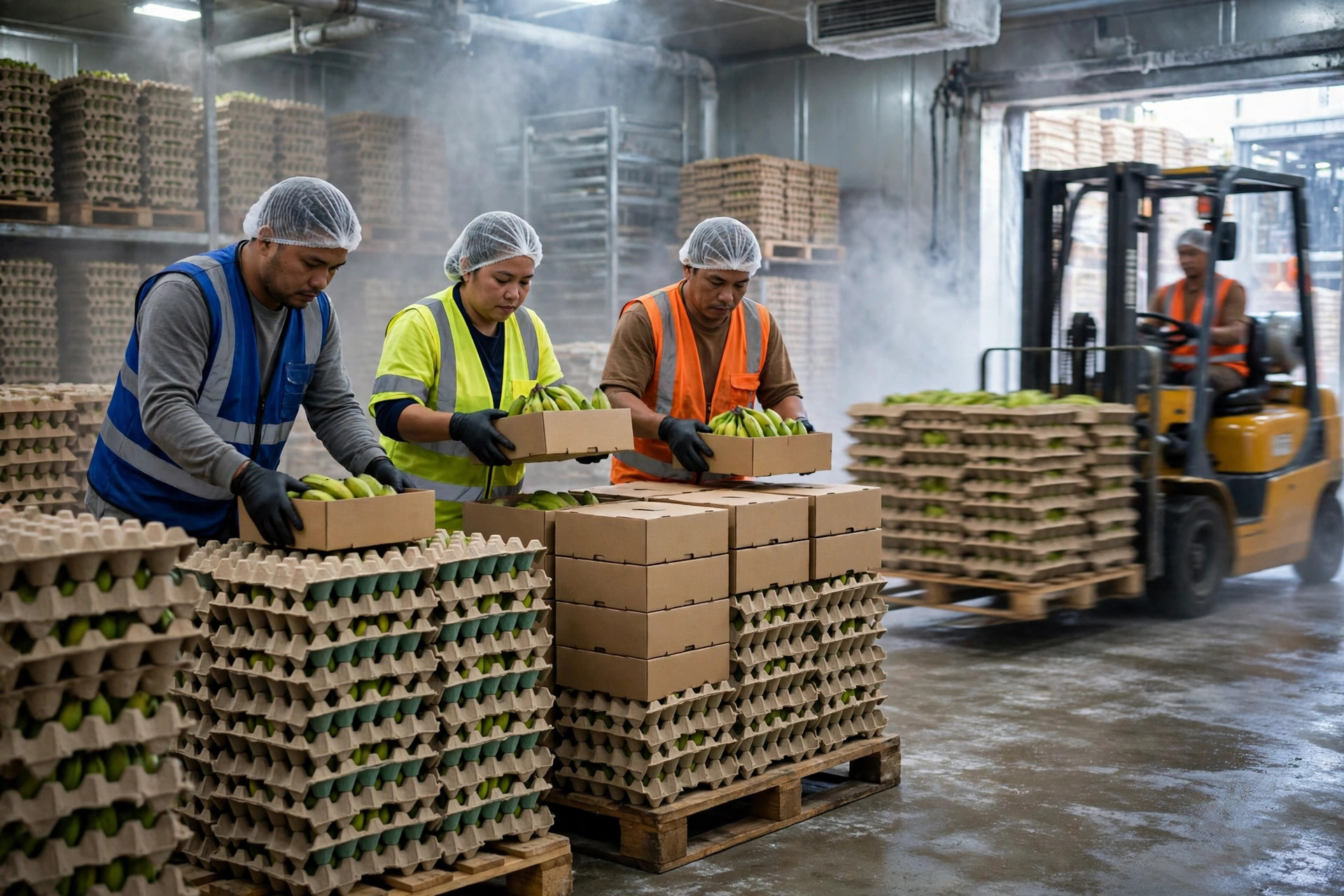
Second, pre-cooling finished before the fruit leaves. The verified practice is that fruit leaves the plant at around eight degrees after pre-cooling. Colder is not automatically better here. Freeze damage and heat damage are both damage. What matters is evenness, the whole pallet cooled through, not a cold outside and a warm inside. A pulp-temperature record for every pallet is the evidence for this step, the shipper's leverage with the buyer and the trail when something goes wrong.
Third, check the container before loading. When an empty container arrives, look at cleanliness first: leftover smell, residue, or standing water from the previous load. Then confirm fumigation and other pest-prevention steps have been done as required. The nightmare for pineapple export is a hitchhiking pest riding along in the box and getting the whole container held at the destination port. Half an hour checking a container beats days of arguing at destination. I have seen too many new shippers wave this off, thinking the box is the shipping line's problem. Let me tell you, the fruit is yours, and if the box is dirty, the bill lands on you.
The two breaks everyone fears in the Costa Rica pineapple export cold chain: port inspection and waiting for a box Inspection itself is not the enemy. The enemy is an inspection with no discipline, doors standing open, nobody minding the clock, resealing hours later. My advice is old-fashioned but it works: the shipper or agent should agree the routine with the port and the inspectors in advance, keep door-open time as short as possible, reseal and restore temperature immediately, and keep the logger data for the whole stretch.
Waiting is the quieter killer. The fruit is pre-cooled, the truck is there, but the container is late or the sailing slips by days, and the load sits in a cold store or on a truck with nobody clearly in charge of temperature. Waiting itself is not the problem. Unattended waiting is. The shipper must ask, where does the fruit wait, who watches the temperature, and does the record continue through the wait? Many breaks do not happen on the highway at all. They happen in a gap where nobody owned the temperature.
Here is the self-check table I give shippers and warehouse friends:
| Stage | Where it usually breaks | First question to ask on site |
|---|---|---|
| Packinghouse pre-cooling | Cold outside, warm core, shipped too soon | Show me the per-pallet pulp temperature record |
| Grading and packing | Mixed cartons, buyer unhappy at opening | Which buyer's spec was this graded to |
| Before loading | Dirty container, hitchhiking pest risk | Have cleaning and fumigation been checked |
| Port inspection | Doors open too long, cold air lost | How soon after inspection is the box resealed |
| Waiting for box or sailing | Nobody minding temperature during the wait | Where does the fruit wait, and who logs temperature |
Nothing fancy in that table. Every row was paid for with real money.
Advice for shippers and warehouses: fight the process, not the cold
Here is the counterintuitive judgment I want to leave you with. Most people think colder is safer and a reefer running harder is better. After all these years, I say the opposite. Pineapples fear temperature swings more than they fear a steady, moderate cold. Fruit leaving at around eight degrees after pre-cooling and staying steady beats a load that freezes, warms in the sun, and freezes again. A flat temperature curve is a good chain. A curve jumping up and down, no reefer, however expensive, will save it.
There is also a trade-off shippers face constantly: chase the sailing or wait for pre-cooling to finish. Chasing the sailing looks like saving a few days, but if the chain breaks, a downgraded or detained container costs far more than one missed sailing. My position has never changed: rather miss a sailing than load fruit that is not cooled through. Sailings come again. The fruit's condition does not come back, and neither does the buyer's trust.
For warehouse friends, the advice is the same in different words. Do not chase loading speed alone. Checking container cleanliness, confirming fumigation, and verifying temperature records before loading are steps you cannot skip. The half hour you save by skipping them can turn into days of dispute at destination. A warehouse that works carefully earns the next container from the same shipper.
For shippers, be direct and write three things into the contract: the pre-cooling standard and the per-pallet temperature record as an acceptance condition; who checks container cleaning and fumigation before loading, and who signs for it; and who owns temperature during port inspection and waiting time, so a break has an owner. Many shippers tell me a detailed contract looks distrustful. Let me tell you, it is the opposite. Clear terms protect both sides.
I will close with an old saying from the road. After all these years, I believe one thing: a cold chain is watched into existence by people, not blown into existence by machines. Machines can hold a temperature. Only people can spot where the chain is about to break. The packinghouse worker, the grader, the driver, the port inspector, each one taking one extra look, asking one extra question, writing down one extra number, that is what gets pineapples to destination with a good face.
By Shifu Zhao, Trucking Veteran (15 yrs)