My verdict up front: a conveyor sortation line sized for 3,000 cartons a day pays back in about five to six years at U.S. warehouse labor rates. I have run this conveyor payback math more than twenty times, and the question is never "is it worth it" — it is "did you do the math honestly."
Here is the thing in two parts: the visible ledger is labor savings, the hidden ledger is throughput. Most people only count the visible half, see a five-year payback, and go buy AMRs instead. I will get to that.
My honest take: five years is the line in the sand
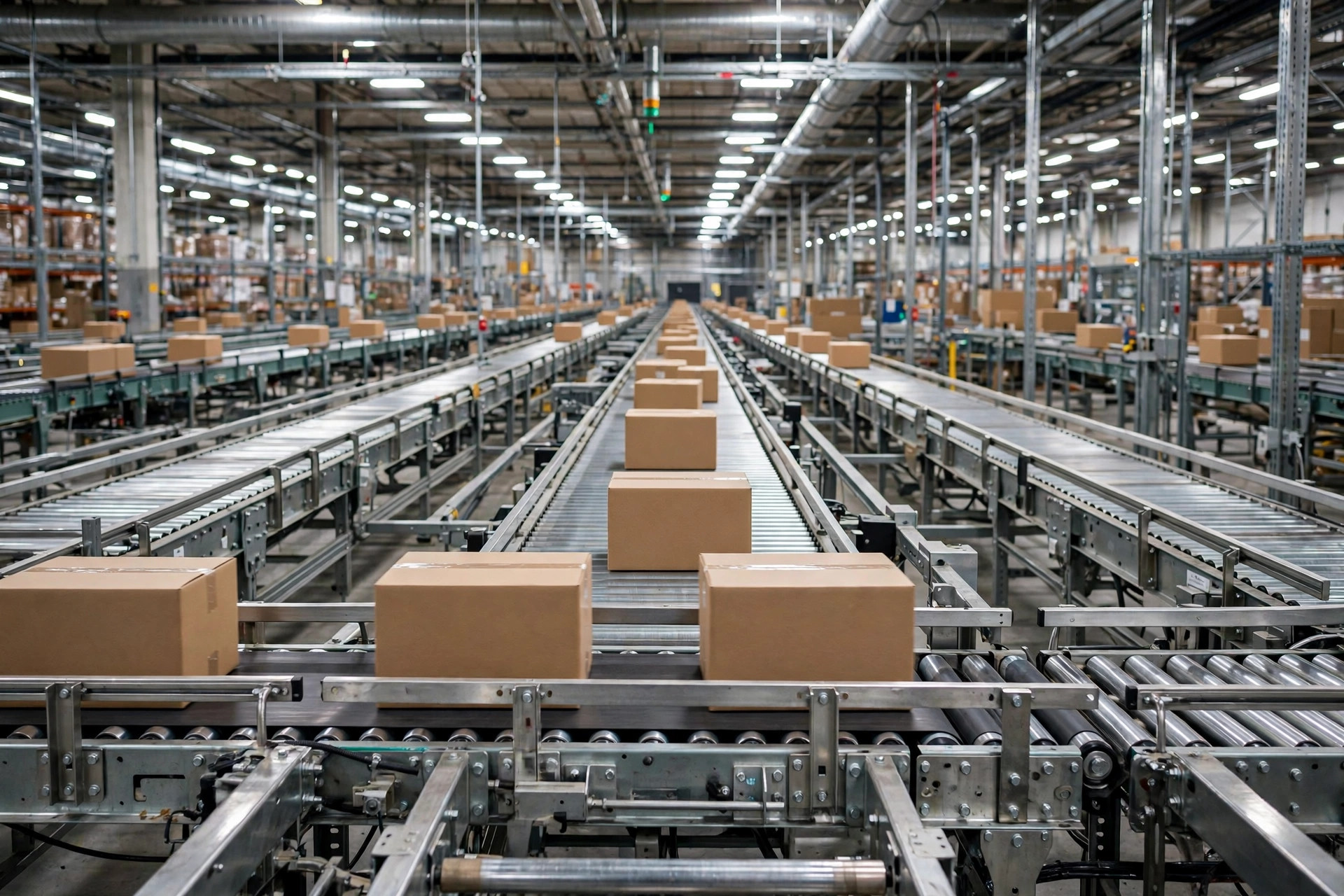
Let me set the frame. A conveyor line suits warehouses with big volume, a relatively concentrated SKU mix, and no sign of volume dropping for years. It starts at seven figures, takes four to six weeks of construction, and it does not move once it is bolted down. So I am always blunt about this: it is not a question of "should we automate," it is a question of "does your volume deserve a conveyor line."
And one standing rule: every vendor payback figure you will ever see assumes full design volume. Re-run it at 60% of design before you believe it. If the answer is still acceptable, that is a real payback.
A scar I watched happen: the Ontario line that took six years
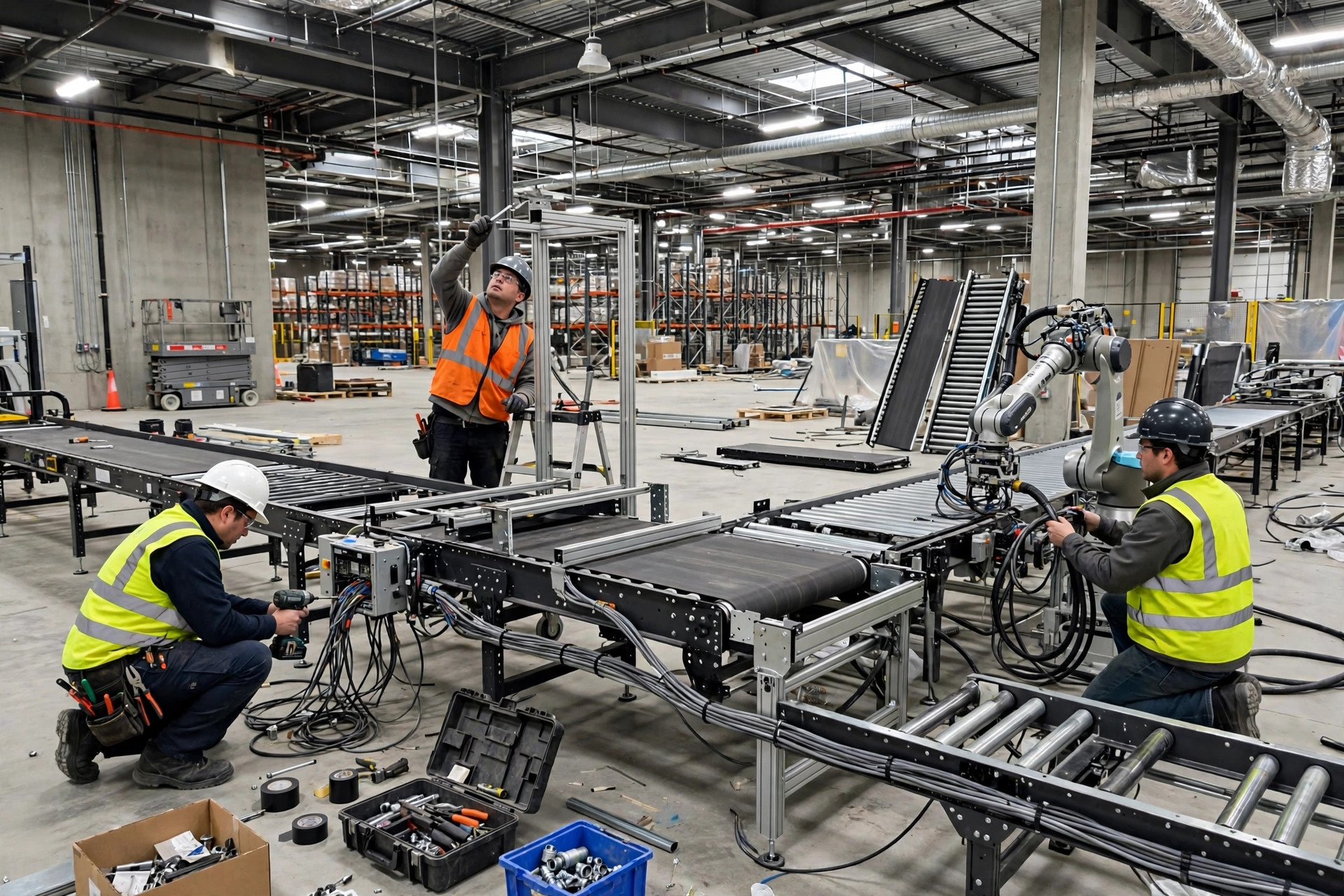
Fall 2021. I was reviewing a proposal for a 3PL in Ontario, California. They had just signed for a cross-belt sorter line with 18 divert chutes, sized for 3,000 cartons a day and a 4,500 peak. The vendor quote: $1.45 million for the conveyor and sorter, $280,000 for controls and software, $360,000 for installation, $210,000 for electrical and building work. Total: $2.3 million. The salesman promised a two-and-a-half-year payback on ten heads of labor saved per day.
I have seen this spreadsheet too many times. The labor rate in it was California's $14 minimum wage — no overtime, no workers' comp, no recruiting cost from turnover. The real fully loaded cost of a California warehouse worker was already north of $25 an hour. And the facility's actual volume sat at 60% of design for years.
I visited again in 2024. Three years in, cumulative labor savings were under 55% of plan, and the maintenance contract jumped 18% after year one — "adjusted for inflation," the vendor said. Payback drifted from 2.5 years on paper to over 6 in reality. The owner greeted me with one line: "Lao Mi, if I could unbolt this line and sell it, I would."
The conveyor payback worksheet, line by line
Let us do it the way the real world does it. Assumptions: 3,000 cartons a day, 260 working days a year, two shifts (16 hours), fully loaded warehouse labor cost of $25 an hour including taxes, insurance, and overtime share. These are order-of-magnitude estimates — get a current quote from your vendor for the equipment line items.
| Item | USD | Notes | | Equipment (conveyor + sorter) | 1,500,000 | About 200 m of conveyor, cross-belt sorter, 20 chutes | | Controls and software | 250,000 | Electrical cabinets, scan-and-read, WMS integration | | Installation and commissioning | 350,000 | 4–6 weeks on site | | Electrical and building work | 200,000 | Power distribution, floor leveling, fire protection | | Total investment | 2,300,000 | |
Annual savings:
- Labor replaced: 8 sort-and-carry positions (12 manual sorters before, 4 for induction plus line watching now). 8 × 2,080 hours × $25 = $416,000 a year.
- Extra electricity: drives total about 18 kW, 16 hours a day, 260 days — roughly 74,880 kWh at $0.12 per kWh, ≈ $9,000 a year.
- Maintenance: 2.5% of equipment cost a year, ≈ $57,500 (parts plus service contract).
- Net annual savings = 416,000 − 9,000 − 57,500 ≈ $350,000.
- Payback = 2,300,000 / 350,000 ≈ 6.6 years.
Not exactly a sexy number, right? But notice: at $28 an hour — close to California's real 2026 level — annual savings hit $446,000 and payback drops to 5.2 years. Bluntly, conveyor payback math is 70% about how honest you are about your labor rate and 30% about whether you run the line full.
One number people forget: error rate. Manual sort mis-ships run 0.5% to 1%; a scan-based sorter line holds under 0.1%. At 3,000 cartons a day, 780,000 a year, cutting mis-ships from 0.8% to 0.1% saves 5,460 bad cartons. At $25 all-in per mis-ship (return freight, customer service, reship), that is $136,000 a year. Plenty of owners never put that line in the payback sheet. Their loss.
Three things that slow the payback
Trap one: volume never reaches design. The classic killer. That Ontario line was built for 3,000 cartons and lives at 1,800. Re-run the math: only 5 heads saved, $260,000 a year, payback stretches to 8.8 years. Two sides to this one: the vendor sizing for full volume is his job; yours is to re-run payback at 60% of design volume before you sign, and ask yourself if you can live with the answer.
Trap two: a messy SKU mix kills sorter throughput. The brochure says 120 cartons a minute — measured on standard cartons of one SKU. Once you pass 1,000 SKUs with mixed carton sizes, read rates drop, jams climb, and real throughput runs at about 0.7 of nameplate. In 2019 I visited an apparel e-tailer near Atlanta: 4,000-plus SKUs, jam alarms twice a week, and two extra "line rescue" hires stationed at the pinch points. For conveyor payback, always derate throughput to 0.7 before you believe the sheet.
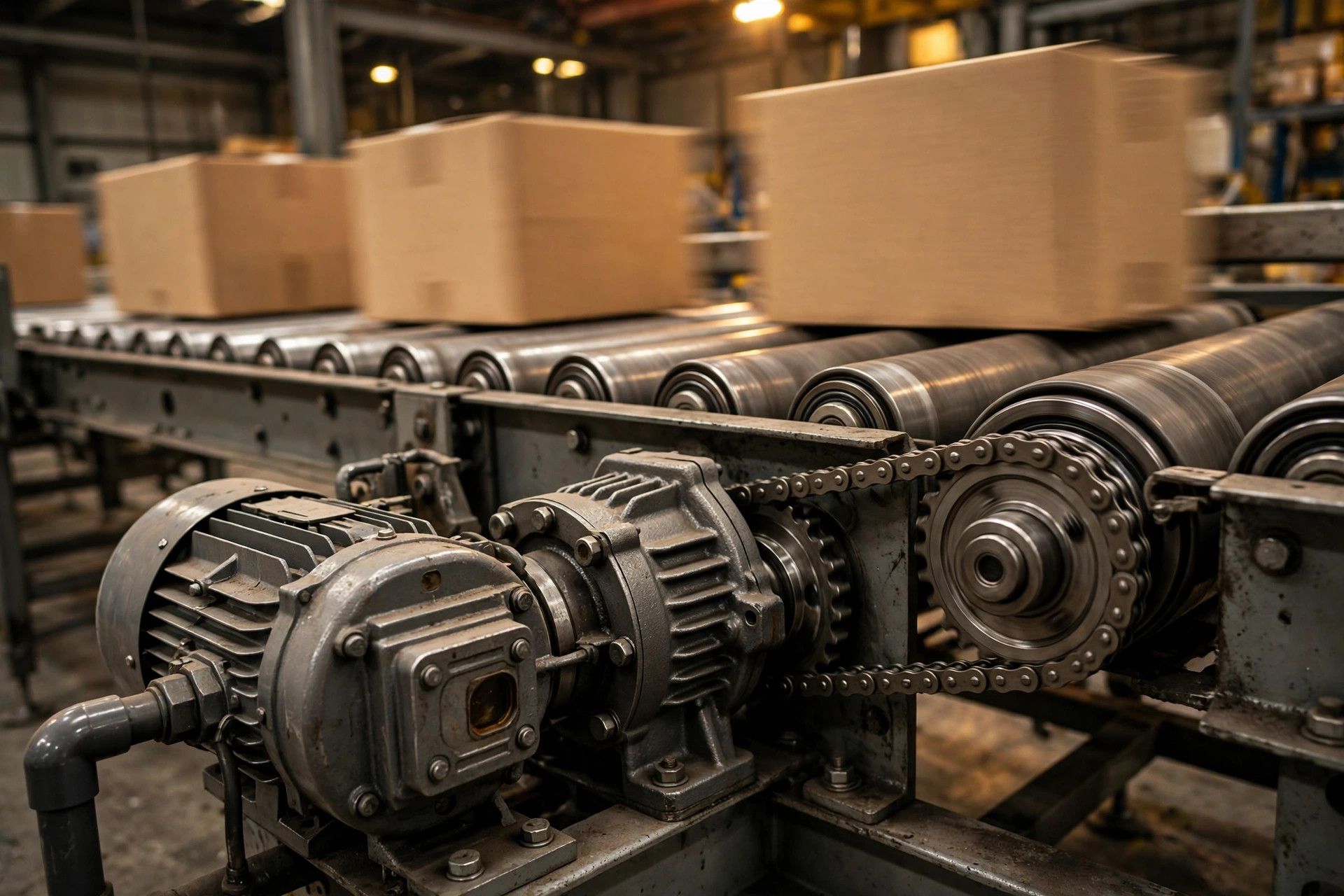
Trap three: the maintenance contract bites back. Many service contracts open with a "promotional" first year and escalate 8% to 15% a year after that. Worse are proprietary parts: vendor-specific motors and sensors you cannot buy anywhere else, marked up two to three times. I have seen too many warehouses budget $50,000 for maintenance at signing and pay $90,000 by year three, with the payback math drifting further every year. Two fixes: cap the five-year escalation in the contract, and get third-party equivalent part numbers for every wear item — rollers, belts, sensors — at acceptance.
The trade-off nobody tells you: the line locks your layout
Here is the counterintuitive part: a conveyor line is a fixed asset. Once bolted down, your layout is frozen. SKU mix changes, volume falls, the business moves from cartons to pallets — the line is still there, and you organize around it. That is the trade: you buy throughput certainty and sell layout flexibility.
So here is my harsh verdict: do not install a conveyor line unless you have run 2,000-plus cartons a day for three straight years. Do not listen to the vendor's peak-capacity story; ask yourself what happens in the slow season. At 1,000 cartons a day the line idles, the power bill keeps coming, maintenance keeps billing, and the labor you saved does not cover the service contract.
When does it make sense? Two signals. First, peak days are breaking 4,000 cartons, manual sort is held together by overtime and temp labor, and next year looks busier. Second, mis-ship rates are hurting repeat business and customer complaints are landing on the owner's desk. Either signal alone justifies running the numbers, even conservatively.
One last piece of advice: vendors always run the payback at full volume — you should always run it at 60%. If the answer is still acceptable, that is a real payback.
By Lao Mi, Supply Chain Veteran (20 yrs)