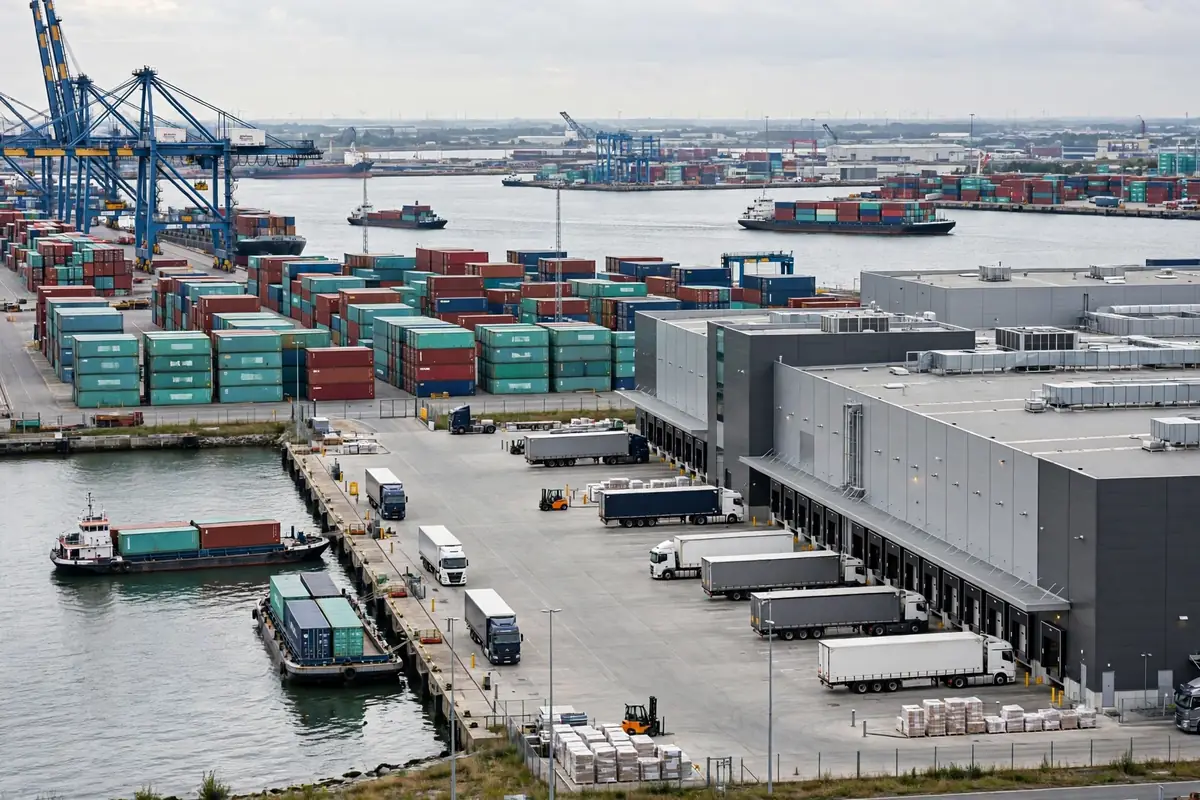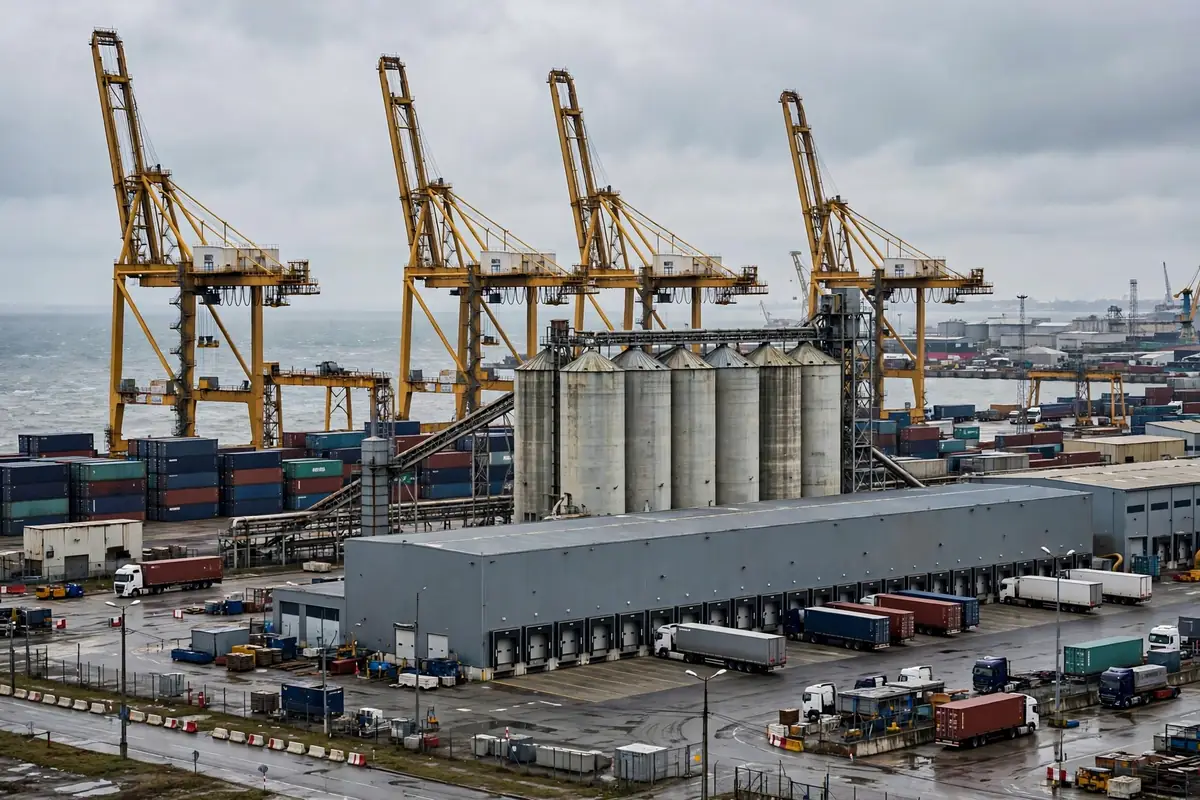
Here is my opening judgment on constanta romania warehouse logistics: count the costs before you count the opportunities. Constanta is a major Black Sea port, and on a map it looks like a gift — sea lanes on one side, the Central and Eastern European hinterland on the other, with Bucharest, Hungary, and Moldova all seemingly within easy reach. Places that look that good on a map deserve extra suspicion on a spreadsheet. The port gives you an additional routing option. What it charges you is an extra transfer, an extra land leg, and a permanent layer of uncertainty to manage. I have seen too many operators sign a year of rent on the first half of that sentence and meet the second half within a quarter.
Let me start with a failure I watched up close. A distribution company fell for the port-side logic: freight off the vessel and straight into a nearby warehouse, minimal drayage, done. The thinking was not stupid; it was incomplete. Most of its orders actually sat in the capital region and inland cities. The port warehouse saved only the short first hop, after which every single order still traveled the full inland leg — with worse consolidation options than a hinterland hub would have offered. Three months in, the drayage savings were pocket change and the linehaul penalty was real money. They eventually moved distribution next to their main market and kept only a small port-side point for receiving and buffer stock. The lesson fits in one line: put the warehouse where the freight is going, not where it came from.
The Port-Side Ledger: romania warehouse rent is only the first line
Port-side warehousing genuinely pays for three kinds of freight. First, freight with an unstable arrival rhythm, where vessels and clearance do not keep office hours and the cargo needs a buffer to land, be stripped, and be reorganized before moving inland. Second, freight that must sit under bonded or controlled status while its paperwork is settled — check current EU and local rules for what applies to your case. Third, freight whose final market is not yet decided, where staying near the port preserves the option to route in several directions. Outside those three, if your freight's destination is known and concentrated in one hinterland market, the port's closeness is mostly emotional comfort.
Now the other side of the ledger. Port-area capacity follows the port's rhythm, so space and dock time tighten exactly when everyone else needs them too. A port warehouse sits far from your customers and from your main carrier network, which raises the everyday cost of supervision and exception handling. And the cost most often left out of the pitch: the land leg between the port and the hinterland is a fixed action repeated on every order. Multiply it across a year of volume and compare it honestly against the drayage you saved. In most cases I have reviewed, that single comparison settles the argument.
A capital-city or hinterland hub runs on the opposite logic. It sits close to demand, shortens the distribution radius, makes cross-border dispatch toward neighboring markets easier to orchestrate, and handles returns and urgent top-up orders gracefully. Its price is the mirror image: freight must first travel the full leg in from the port, and when vessel schedules or clearance wobble, there is no buffer at the water's edge, so the wobble lands directly on your distribution plan. Neither model wins in general. Your freight either fears arrival volatility or distribution volatility more. Pick the fear correctly and the location picks itself.
Drawing the Radius: warehouse logistics is a four-box decision
When I cost these decisions, I use a four-box frame. Box one: destination spread. Is volume concentrated in one metro area, or scattered across several countries and cities? Concentrated volume belongs near the market; scattered volume forces a hub calculation. Box two: shipment profile. Full loads in and out behave nothing like high-frequency small-order distribution, which gains more from market proximity with every order. Box three: arrival stability. If vessel and clearance rhythms are unreliable, a buffer near the port is not optional. Box four: your own management reach. Can your team actually run a remote port-side site well — supervision, exceptions, carrier discipline? If not, the prettiest layout fails quietly. Fill in the four boxes and the answer — port, capital, or a two-level setup with a small port point feeding a main market warehouse — usually surfaces on its own.
An illustrative example shows why volume decides between those options; the numbers are invented round figures, used only to expose the structure. Suppose dispatching each order directly from a port warehouse to the main market costs one unit of land transport per order. Routing a full truck to a capital warehouse first spreads that same leg across the whole load, and the final distribution hops are short, so the two legs together can undercut direct dispatch. But if order volume is thin and trucks leave half empty, the linehaul never gets spread thin enough, and the two-level setup just adds a handling touch and a second rent line. Two-level networks are not sophisticated; they are volume-dependent. This is the real dividing line inside constanta romania warehouse logistics, and most failures I have seen were not wrong-city failures. They were small-volume operations wearing a large-volume design.
Cross-border distribution toward Hungary or Moldova adds one more layer: documentation handoffs and carrier network coverage on the cross-border legs. Movement inside the EU is genuinely smoother, but smoother is not free of handoffs — paperwork, tax registrations, and carrier scheduling all need to be settled in the contract before the first load, not discovered with freight standing at a border. Treat specific rules as subject to the latest EU and national publications, and pilot any cross-border lane at small volume until the full chain has run cleanly once.
Managing the Unmanageable: keep exits open
Working the Black Sea means living with uncertainty you cannot control: route adjustments, shifts in port operations, and geopolitical shocks traveling straight into trade flows. You cannot control the exposure's causes, but you control its size. Three habits do the work. Keep flexibility in the lease — expansion, contraction, and exit terms negotiated before you sign, not after you need them. Keep a backup routing option warm — an alternative inbound and distribution path whose contacts, pricing, and process you have checked in advance, even if you never use it in a normal month. And keep inventory split with intent — the bulk near the primary market, a smaller portion positioned for fast redeployment, so a change in trade direction finds you holding options instead of apologies.
None of that photographs well in a sales deck. It decides something more important: how much a bad quarter hurts. In fair weather, the difference between a port warehouse and a capital warehouse is a few points of cost. In foul weather, the difference between an operator who kept exits open and one who bet the full position is whether the business continues at all. After twenty years, my order of operations is fixed: decide how you would unwind the worst case first, then calculate the best case. Reverse that order and your spreadsheet is working for someone else. If you take one sentence from this piece, take that one — it is the whole of constanta romania warehouse logistics as I have lived it.
By Lao Mi, Supply Chain Veteran (20 yrs)