concepcion chile warehouse logistics is a road question before it is a rent question. I have spent fifteen years in trucking, and I have watched plenty of owners sign a warehouse lease because the rent looked cheap, then spend the next year discovering their freight could not move the way they drew it on the map. Concepcion is exactly that kind of place. It sits in south-central Chile, close to the port at Talcahuano, with real cargo of its own and a long road north. Understand the cargo and the road first. The warehouse decision gets easy after that.
My verdict on concepcion chile warehouse logistics: hold the south-central region, do not chase the whole country
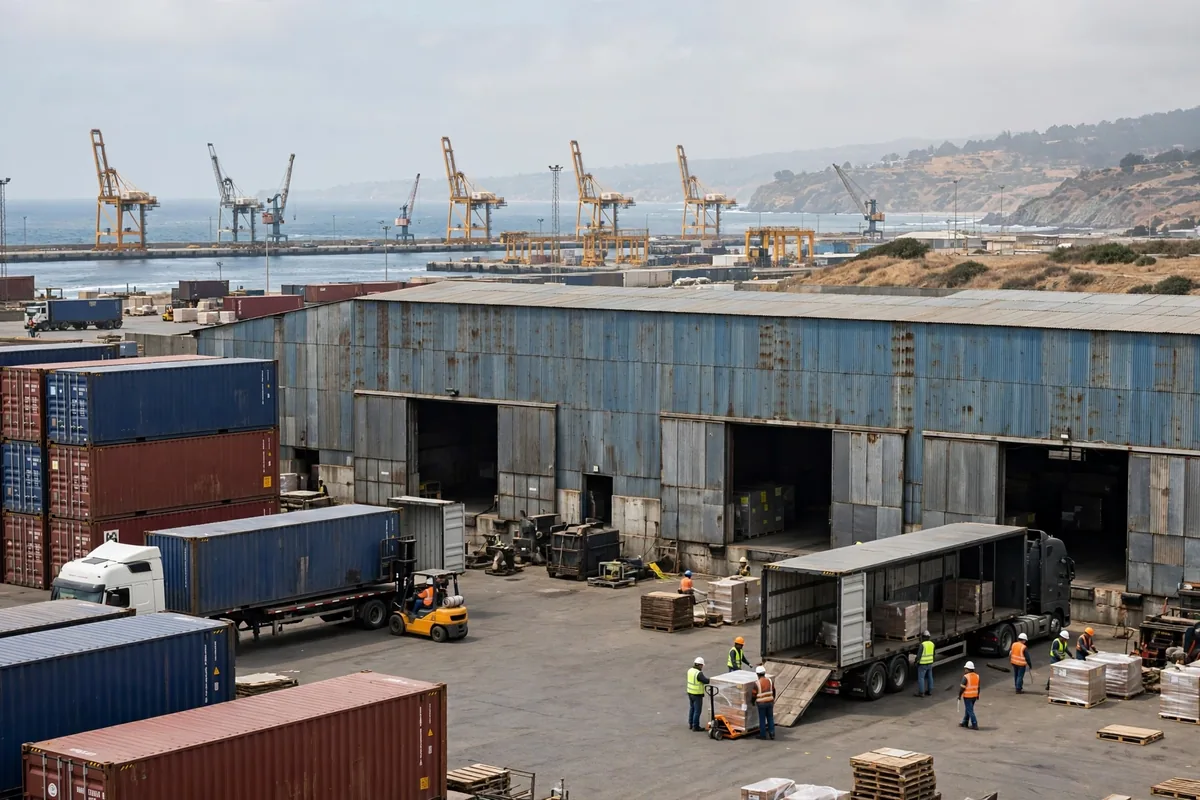
Concepcion is the capital of the Biobio Region, and its working port is right next door at Talcahuano. That short distance between dock and city is the location's biggest asset. The industrial base is no secret: forestry, timber, and pulp are the old backbone, fishing and seafood processing are substantial, and the city also distributes everyday consumer goods to the towns around it. If your freight is forest products, seafood-related cargo, or consumer goods sold to people in south-central Chile, a warehouse here follows the cargo. Supply is close, the port is close, and your customers are close.
What it is not is a national warehouse for all of Chile. Santiago is the country's largest consumer market, and it lies roughly five hundred-plus kilometers north by road. In normal conditions that is most of a day behind the wheel for a truck, and longer when traffic, weather, or holidays get in the way. If most of your buyers are in the Santiago metropolitan area and you put your stock five hundred kilometers away to save on rent, the freight bill and the slower delivery will eat the saving, then come back for more. I will say it plainly: this warehouse is a regional distribution point for the south-central zone from day one, not a national hub.
Cargo and radius decide whether concepcion chile warehouse logistics pays
Draw the circle honestly. From Concepcion, a truck can comfortably serve Chillan to the north, Los Angeles to the south, and onward toward Temuco. Inside that radius you have forest country, farm country, and several mid-sized cities, with steady movement in consumer goods, farm inputs, building materials, and supplies for the fishing and forestry trades. Push beyond it and the logic breaks. Northbound you compete with Santiago warehouses on their home ground. Further south the volume thins out and the empty return trip starts to hurt.
Let me give you an illustrative scenario, not a real company. Suppose a supplier to seafood processors lands cargo through Talcahuano but warehouses it in Santiago. Every load rides north to the capital, then a good share of it turns around and rides back south to plants around Concepcion. That is over a thousand kilometers of repeated road for freight that was already home. When that operator moved into a modest warehouse on the edge of Concepcion, inbound cargo went straight from port to shelf, nearby plants pulled what they needed, and only the share genuinely sold in Santiago traveled north. The saving was not rent. It was the deleted backtracking. Now flip it. An online seller of small household goods with ninety percent of orders in Santiago who rents in Concepcion to save money adds that long northern leg to every single parcel, delivers a day slower than local competitors, and pays again on every return. Same warehouse. Treasure for one operator, trap for the other. The difference is where the freight flows.
The table below is an illustrative scenario for structure only. Treat actual freight rates and rents as to be confirmed with current local quotes.
| Factor | Port-side warehouse (near Talcahuano) | Suburban warehouse (edge of Concepcion) |
|---|---|---|
| Distance to port | Short drayage from dock to door | Longer in-city transfer per container |
| Rent level (illustrative) | Higher, land is tight | Lower, room to expand |
| Best-fit cargo | Fast-turning forestry and seafood flows | Regional distribution stock for consumer goods |
| Line-haul to Santiago | Same five hundred-plus kilometers | Same five hundred-plus kilometers |
| Yard and dock space | Tight, limited truck maneuvering | Roomy docks and parking |
Read the Santiago row twice. Port-side or suburban changes the short leg and the rent. It does nothing to the long leg north. Do not let anyone sell you a location as if it shortens a road it does not touch.
Port-side or suburban depends on how long freight sleeps
A port-side warehouse earns its money on speed. Containers come off the ship, move a short hop, and are inside. For forestry and similar bulk flows that turn quickly, that efficiency is real money. The weaknesses are just as real: tight land, higher rent, cramped yards where big trucks struggle to turn and stage. If your cargo sits for a month at a time, you are paying premium rent to store stillness.
A suburban warehouse is the mirror image. Land is cheaper and wider, docks are easier to schedule, and it suits stock that fans out gradually across the region. The price is that every container rides a transfer leg from the port, and if that leg is badly scheduled you get trucks waiting on cargo and cargo waiting on trucks. After fifteen years on the road I can tell you waiting is where margins go to die, because a driver's hours are money whether the wheels turn or not. A suburban site only works if the drayage is locked down: a long-term arrangement with a local fleet, or your own pickup rhythm matched tightly to the warehouse receiving window.
One more thing owners forget. The long haul to Santiago needs a plan of its own, whichever site you pick: your own trucks, contracted trucks, or the local less-than-truckload and line-haul networks. South-central to capital volume is meaningful, and matching outbound loads with return loads decides what that road really costs you. An empty return is the most expensive trip in trucking. There is no close second. So in concepcion chile warehouse logistics, line up the carriers before you negotiate the lease. In a big-city market you shop warehouses first. Here you shop the road first.
Three pieces of plain advice before you sign anything
First, map the freight before you price the rent. Split a year of your volume by destination. If south-central Chile is the bulk of it, this warehouse stands up. If Santiago is the bulk, rent near Santiago and stop being clever. Second, keep the radius honest. Serve the Chillan-to-Temuco band well, with delivery times you can defend, instead of claiming national coverage that arrives a day late everywhere. Third, lock the two road relationships, port drayage and the Santiago line-haul, before you lock the building. Buildings can be replaced on a few months' notice. A reliable fleet that knows your cargo cannot.
Warehouses are dead things. Roads are alive. Get the freight moving smooth and a slightly expensive warehouse still makes money. Get the road wrong and the cheapest rent in Chile is just a slower way to lose it. Open the road first, then build your home beside it. That is how an old driver sees it.
By Shifu Zhao, Trucking Veteran (15 yrs)