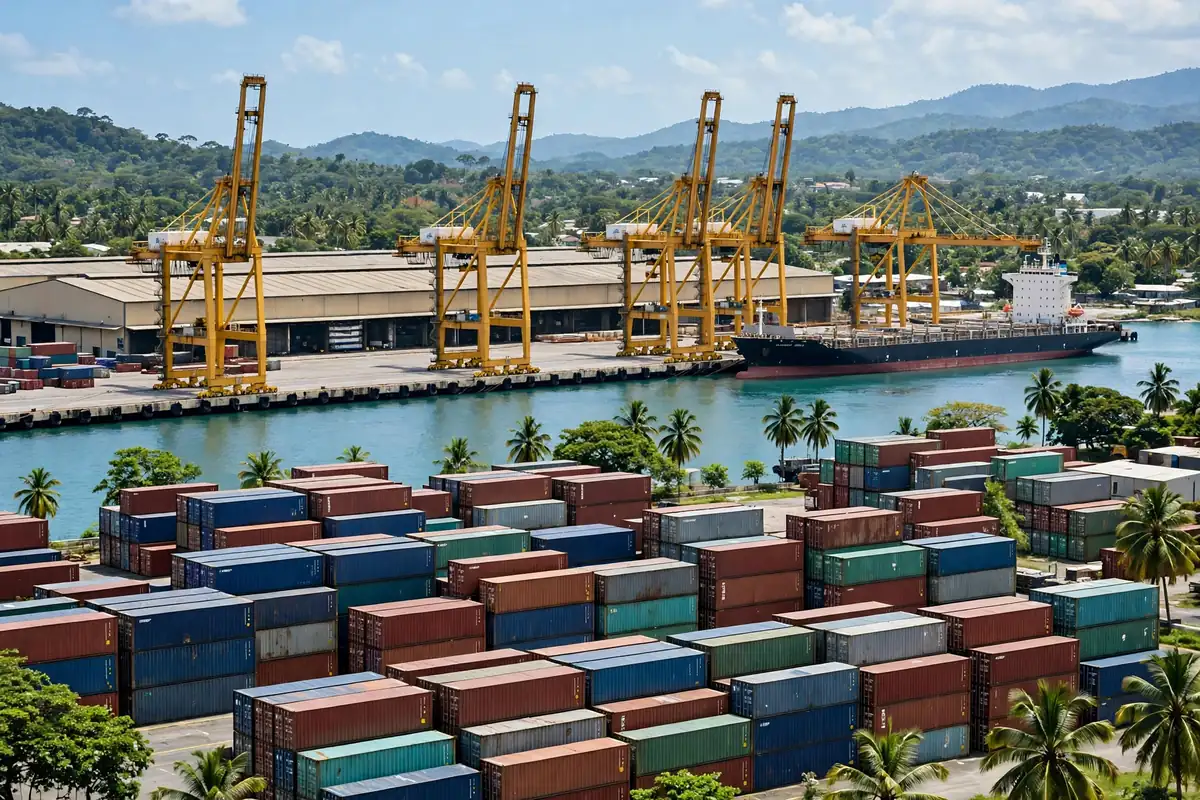
We had a client who sold small home appliances. In the spring of 2025 he shipped four containers from China to the Colon Free Zone in Panama, planning to break them down for buyers in Colombia, Ecuador, and the Dominican Republic. On arrival day he called me sounding like a man who had just cracked South America. Three months later the tone was different. The goods had moved, but sorting and repacking had run well past his budget, and one shipment sat at the port for days because a destination document did not match. He asked how that could happen in a free zone. I told him the tax break was real. It just was not the part of the bill that had hurt him.
The Colon Free Zone was set up in 1948 and is the largest free zone in the Americas. Inside the zone, goods can be imported, stored, repacked, and re-exported without customs duty and without the 7% ITBMS tax. That tax only applies when goods enter the Panamanian domestic market. Companies operating in the zone need an operating key, the clave de operación. In 2024, imports and exports through the zone added up to about $24 billion. The main product groups are pharmaceuticals and chemicals, textiles, machinery and electrical goods, and footwear. The main sources are China, Singapore, and the United States, and cargo moves through the ports of Manzanillo and Cristobal. A 2023 law, Law 412, widened the range of business allowed in the zone. What decides whether you make money is what happens after the cargo is inside.
What a warehouse in the Colon Free Zone actually saves you
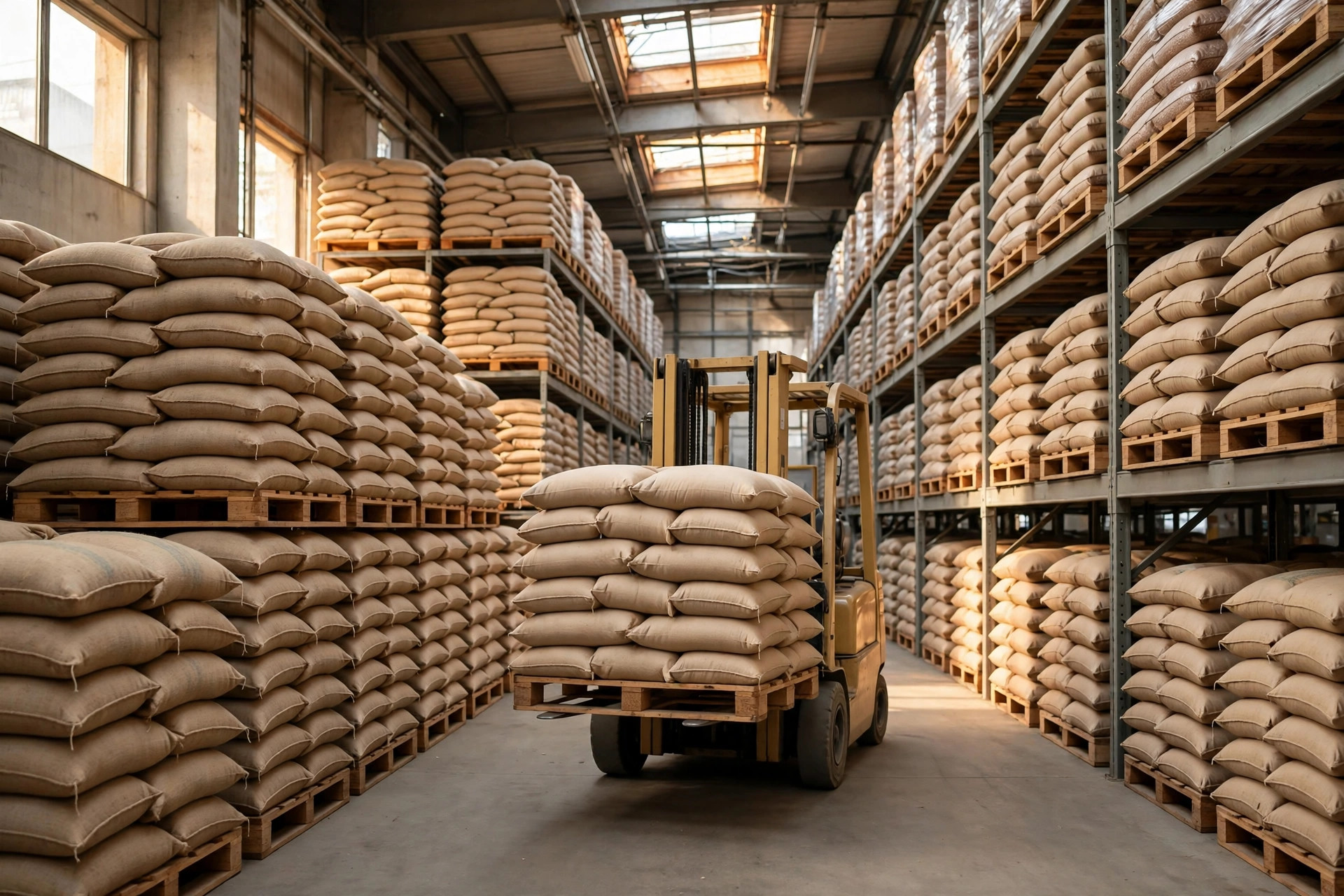
That client had planned to sell full containers to three buyers. Once the cargo landed, he found they wanted different quantities on different schedules: Colombia wanted its order fast, Ecuador wanted to wait out a store refit, and the Dominican buyer changed the model mix at the last minute. Shipping directly from China would have meant three separate international shipments and customs in three countries one by one. Inside the free zone, he could bring the cargo in as one lot, then split, repack, and relabel it for each destination, shipping only when each buyer confirmed.
That flexibility is the real value of warehouse logistics in transshipment and re-export trade. While the goods sit in the zone, the tax does not move. Only the warehouse work moves. Sorting, repacking, relabeling, and consolidating can all happen inside the zone, and the goods still leave tax-free. The trade-off is easy to miss: this model only pays when your orders are genuinely split across destinations or spread over time. If you have one buyer, one destination, and one container going out untouched, the zone adds a step in and a step out, and the tax you save may not cover the extra handling.
We had another client in footwear and textiles who learned the same lesson from the other side. Late in 2024 he wanted to use the zone as a staging point and then sell gradually into the Panamanian domestic market. He assumed that once the goods were in the zone, they were practically in Panama. They were not. Moving goods from the zone into the domestic market triggers the tax, including that 7% ITBMS, and he had not priced in the operating key. Without it, you cannot run a business in the zone at all. He split the plan: the domestic portion went in as ordinary imports, and only the cargo meant for re-export stayed in the zone. Once the two flows were separated, the numbers finally made sense.
Transshipment is where the money is made, or lost
The most common mistake in transshipment is over-sorting. Sorting itself is not the problem. Sorting too finely, relabeling too early, and breaking down cargo before a buyer has confirmed are the problems. Every split needs labor, floor space, documents, and a second check, and every split is another chance to pick the wrong item. Match the granularity of the split to the buyer's payment rhythm, not to your idea of a perfect warehouse. Do not break down cargo nobody has confirmed. Do not print labels for a model mix that is still changing. Fixing a wrong label costs more than shipping three days late.
Here is the counterintuitive part. A free zone does not save you cash so much as it saves you from paying tax before you need to. Goods can wait in the zone while a buyer decides, and you are not tying up money in tax on stock that has not sold. For a smaller seller with tight cash flow, that timing matters more than the tax rate. Storage and handling keep running while the goods wait, and the longer they sit, the messier the split becomes. Duty-free is not cost-free. I have watched buyers fixate on the storage rate and haggle it down, while never asking about handling, documentation, or exception charges. Then the invoice arrives and the tax they saved walks out through another line.
Compare the three routes before you choose one. The table below is the version we walk through with clients, and the price column stays blank until the warehouse fills it in.
| Route | Duty and tax | What the warehouse has to do | Best for |
|---|---|---|---|
| Re-export through the Colon Free Zone | Exempt inside the zone; no tax on re-export | Break bulk, sort, repack, consolidate, label for each destination | Several destinations, small repeat orders, model mixes that change often |
| Direct shipment to the destination | Tax under the destination country's rules | Customs clearance on arrival; little room to split afterward | One buyer, one destination, full containers moving untouched |
| Sale into the Panamanian domestic market | Tax applies when goods leave the zone for Panama | Stock to a domestic sales rhythm | Cargo with a confirmed buyer inside Panama |
A worked example helps, and I will label it clearly as a hypothetical, not a quote. Suppose a shipment is worth $100,000. If it enters the Panamanian domestic market, the 7% ITBMS alone comes to $7,000. If the same shipment is split inside the free zone and re-exported, that $7,000 does not arise at the zone stage. The question is what the sorting, repacking, and extra sailings cost. If that work eats the $7,000, the exemption only looks good on paper. If the work costs far less, the transshipment route genuinely wins. Check the official source for the latest terms before you commit.
Before you sign a warehouse contract in Panama
The question I dread most from a client is a request for one price. A warehouse quote is never one number. It is a bundle of actions, and the contract should say which actions are included and to what extent. Does the price include a second check after break-bulk, and does repacking include materials? Who pays when a label or a split is wrong? What happens when cargo stays longer than planned, and who fixes a document when the destination country sends it back? Answers written into the contract are worth far more than promises made on a call. A provider is rarely afraid of a client who negotiates hard. A provider is afraid of a client who signs without asking about the details, then runs the operation by a different understanding.
One piece of inside knowledge is worth more than a low storage rate: in a free zone, what you are buying is destination experience, not floor space. Splitting cargo for Colombia is not the same as splitting it for Ecuador, because documents, labels, and consolidation habits differ by country. Ask the warehouse to walk you through one real shipment to your destination, including any document that was returned and how it was fixed. A team that only talks about the size of the zone and how close it is to the port should make you pause.
The appliance client changed his routine after that first season. He stopped breaking down everything on arrival, split only the order a buyer had confirmed, and left the rest on pallets in the zone until the next order was confirmed. Labels went on only after the buyer signed off on the final mix. Three months later he told me the numbers worked, not because the tax saving had grown, but because he had stopped doing work nobody had asked for.
Next time you negotiate a contract, ask these three things: how many touches will this cargo need inside the zone, and which touches are inside the quoted price; where exactly does the tax fall for domestic sale versus re-export; and who carries the cost when a split is wrong or a document is returned. Get clear answers before you sign.
By Susan, 3PL Sales Director