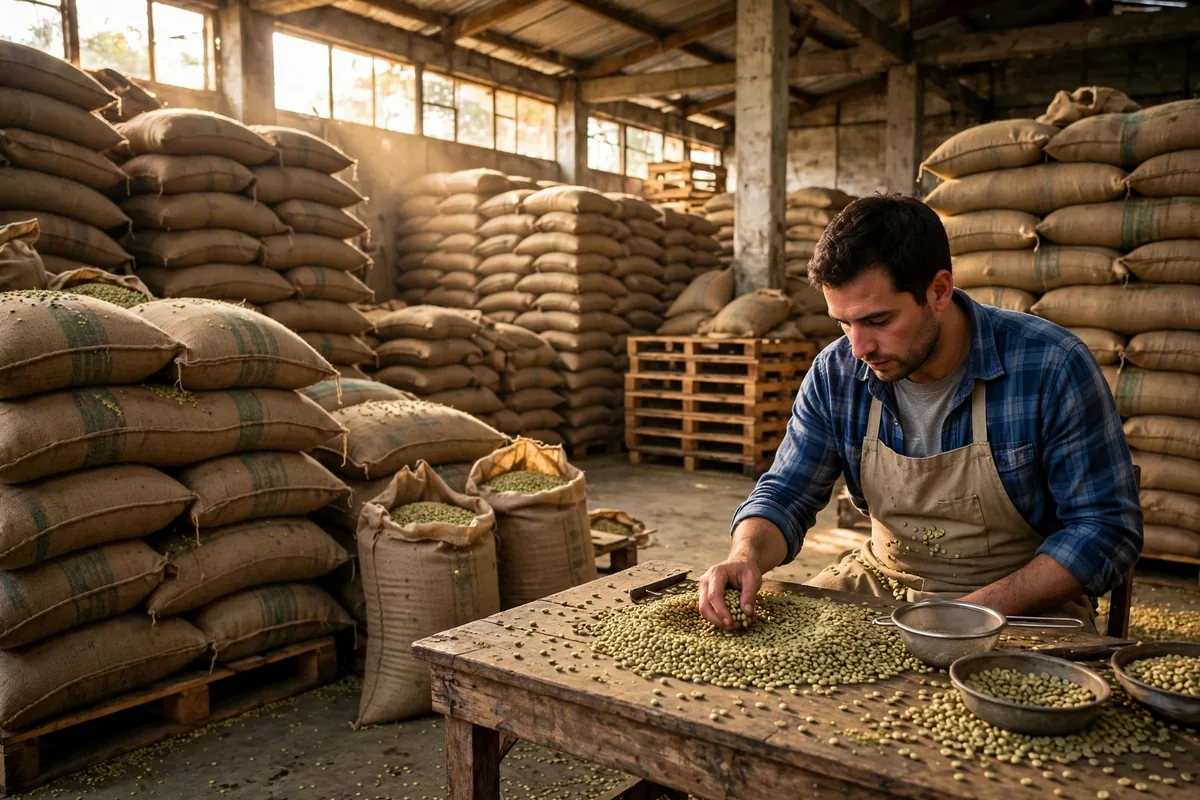
We had a client, a coffee chain, ordering green beans directly from Colombia for the first time last year — his crash course in Colombia coffee export warehouse storage. The coffee came from Huila, washed process, and the moisture reading at origin was 11%. When it landed in Shanghai and we re-tested it, the reading was 12.4%. The contract said only "moisture to meet export standards" — no number, no rule on whose re-test counted. The supplier said it was fine when it left. The client said it failed on arrival. More than 200 bags sat at the port for 9 days while everyone argued, and the demurrage plus the wasted time cost more than the price difference on the beans themselves.
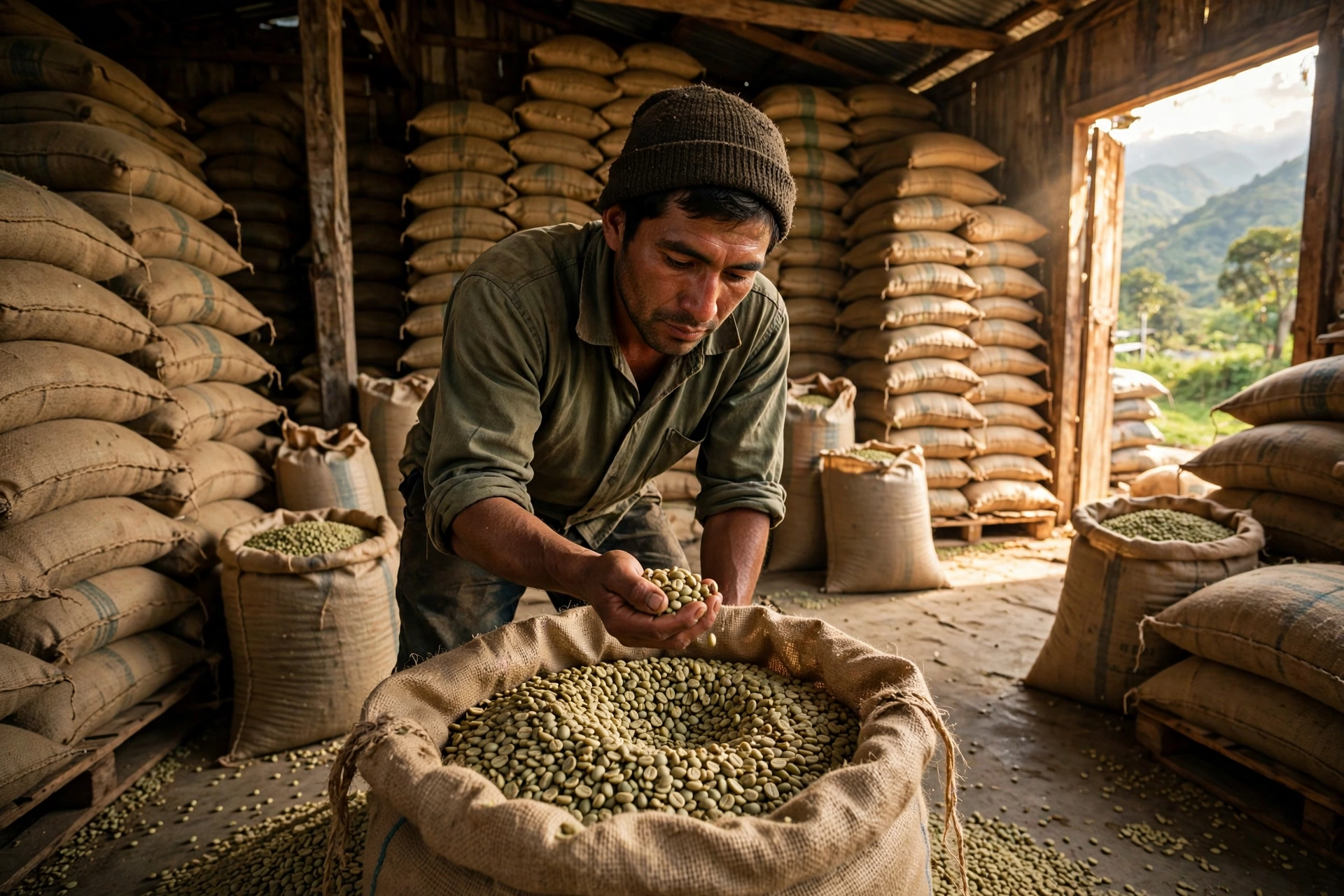
I tell this story several times a year, because clients keep treating coffee like rice — find a dry warehouse, stack it, done. Green coffee is a living seed. It hates damp, it picks up smells, it hates being sealed up warm. Miss one link in the chain and the whole container loses its flavor. And Colombia is one of the world's great washed arabica origins: farms spread along three branches of the Andes, Huila, Antioquia, Caldas, Tolima, Nariño, at 1,200 to 2,000 meters up, with small farm mills pulping, fermenting, washing, and sun-drying the coffee themselves before it ever reaches a buying station. Your Colombia coffee export warehouse storage bill starts at the farm, not at the port.
Moisture Comes First in Colombia Coffee Export Warehouse Storage
The export moisture line for green coffee is 10 to 12%, a standard exporters work to across the trade, with the lot re-checked by the local warehouse inspection body before shipment. Water activity is generally held below 0.70, the practical control line against mold and ochratoxin. Simple numbers. The execution is all detail.
After washing, beans dry slowly on patios or under parabolic dryers — how thick the layer is, how often it's turned, whether someone covers it when it rains, all of it down to the mill's experience. Fermentation is usually a dry ferment of 24 to 48 hours; run it long and off flavors creep in. Only when the beans reach 10 to 12% do they go into storage. That word "only" is worth a lot of money.
Here is a worked example, using assumed figures. Say the order is 300 bags at 60 kilos each, 18 tons in total. If moisture falls from 12% to 10.5%, the weight loss is 18,000 kilos times 1.5%, which is 270 kilos — about 4.5 bags. At specialty prices, 4.5 bags is real money. And the loss doesn't stop at weight: as beans dry out they turn brittle, and the roaster sees more cracking and breakage. So the contract needs three things on moisture, not one: the at-origin reading, a re-test clause on arrival, and what happens if it fails — price cut, rejection, or acceptance at a lower grade. The client in my first story had none of the three.
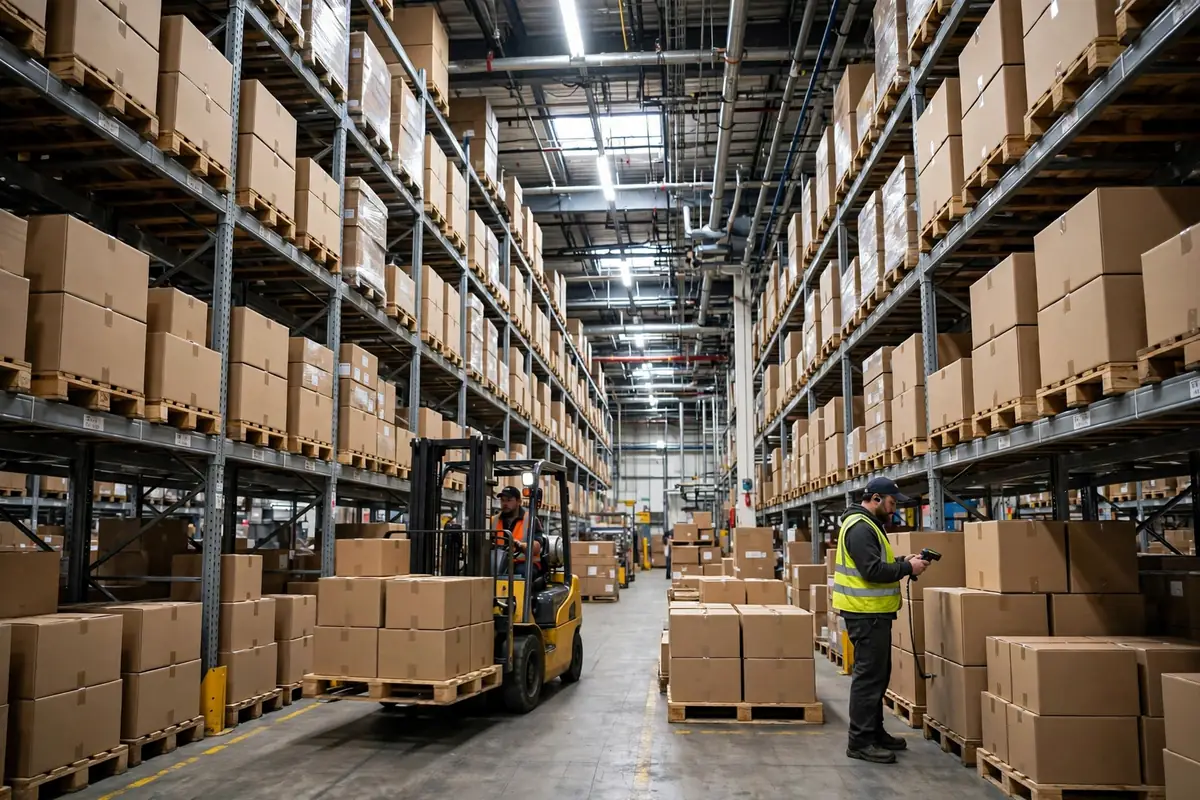
The other half of moisture control is keeping smells out. Green coffee absorbs odors fast. Store it next to fertilizer, spices, or rubber goods and the whole container is ruined. Export packing now commonly uses hermetic liners, and kept dry and cool the beans hold for about 12 months. But the liner is only the last line of defense — if the warehouse itself is damp, no bag will save the coffee. Before booking, I always ask one question: can the origin warehouse and the port warehouse show humidity records? If they can't produce them, think twice, however cheap the quote looks.
Where the Money Goes on the Colombia Coffee Export Warehouse Storage Bill
When clients ask me for a storage price, I ask back: storage for which leg? From the Andean farms to the ship at Buenaventura, there are six places where someone charges you. Quote them as one lump sum and the quote means nothing.
| Leg | Who pays | Where it usually goes wrong | | Farm mill processing | Farmer or cooperative | Over-fermentation, uneven drying | | Dry milling and grading | Exporter | Mixed screen sizes, lower grade passed off as higher | | Origin storage | Exporter | Damp, odor contamination, pests | | Inland transport | Buyer or exporter, per contract | Mountain roads, landslides in the rainy season | | Port storage and stuffing | Exporter | Demurrage, condensation inside the container | | Ocean freight | Buyer | Schedule delays, moisture in transshipment |
Grading is the step outsiders overlook. A common Colombian export spec is Excelso EP, screen 14 and up, with a cup score of 84-plus marking the specialty line. Screen size and cup score belong in the contract annex, with a cupping report per lot. Grading isn't cosmetic: same region, same process, one screen size down, and the price drops a full step. The counterintuitive part is that ocean freight is rarely the most expensive risk on this chain. It's the inland leg plus rework after damp damage. The farms are up in the mountains on winding roads; one landslide in the rainy season, trucks wait two extra days, and storage fees, detention charges, and damp risk all arrive together.
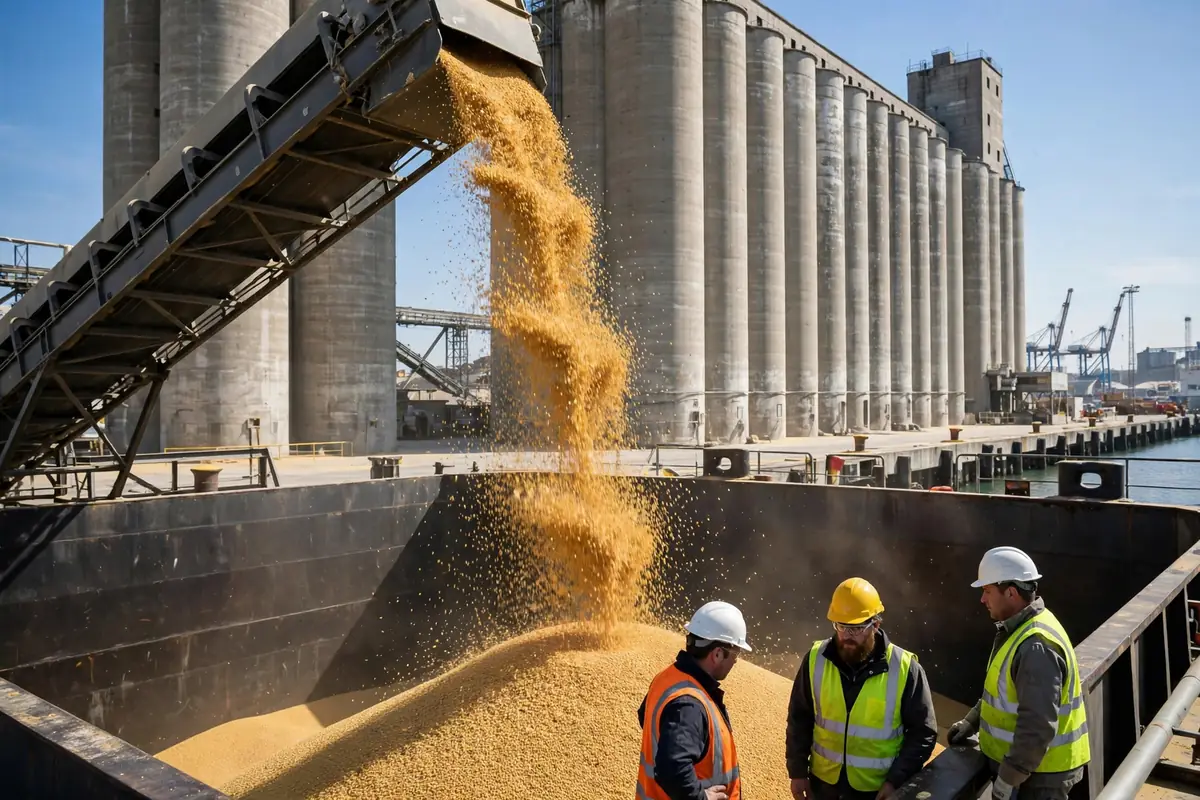
One number worth keeping in mind: Buenaventura handles more than 60% of Colombia's coffee exports — 64.9% in August 2025 alone — with Cartagena at roughly 30% and Santa Marta under 10%. Colombia ships around 13 million 60-kilo bags a year and ranks as the world's third-largest coffee producer. That concentration means something: when Buenaventura stops, most of the country's coffee exports stop with it.
The Port Isn't the Finish Line, It's Another Negotiation
We had a client whose container was on the road when the 7.4-magnitude earthquake hit on August 10, 2026. Buenaventura suspended operations, the highway to the port was blocked by landslides, the container couldn't get in, and the sailing kept slipping. The contract had no force majeure clause and no diversion clause, so the extra inland freight and port costs of rerouting through Cartagena took three weeks of arguing to settle.
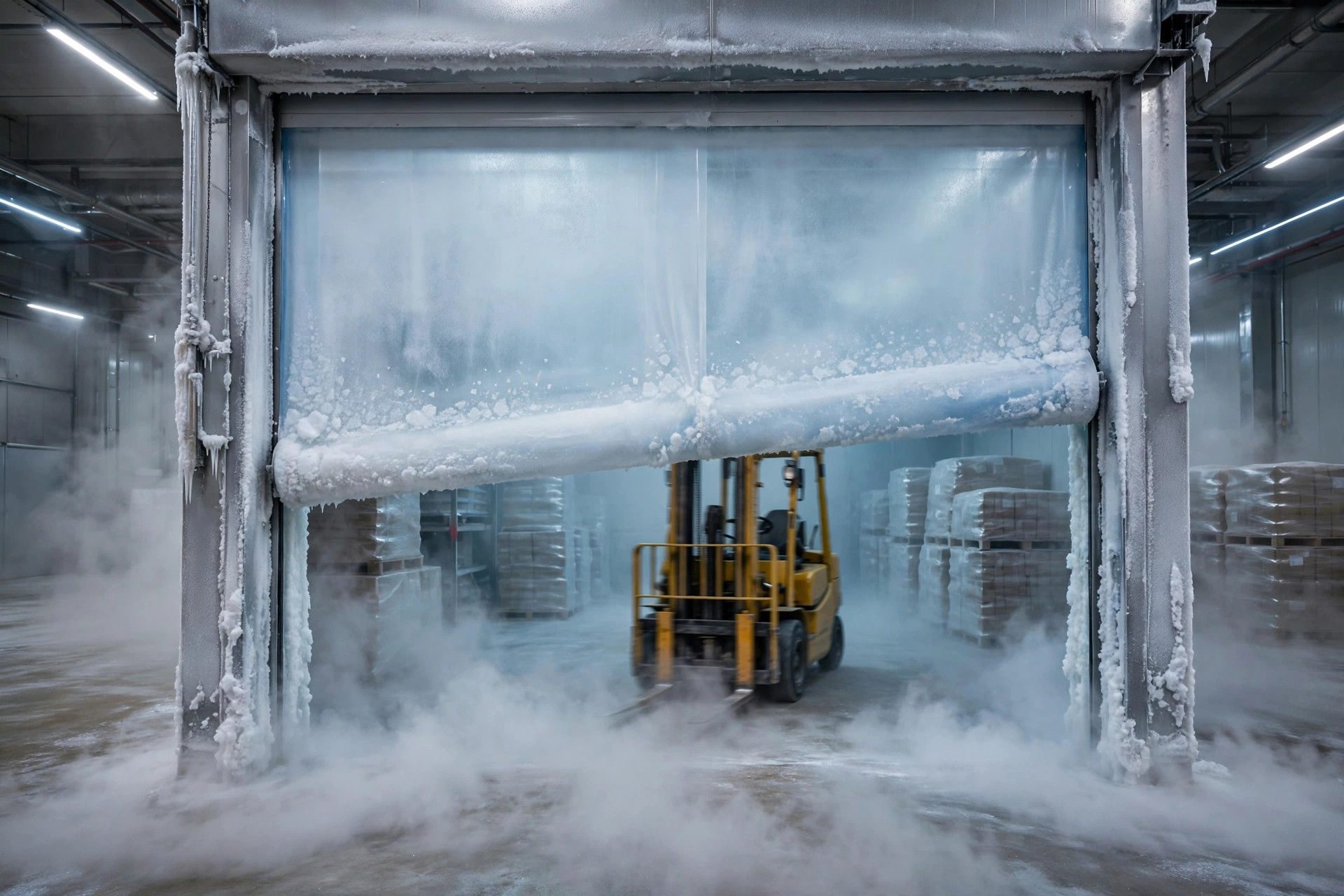
The lesson isn't about earthquakes. It's about the contract. Four things need settling for the port leg: one, when demurrage starts and where it caps; two, what triggers a port diversion and who pays for it; three, who owns condensation inside the container, with a handover record showing the container was dry and desiccants were placed before stuffing; four, who bears the cost when certificates — origin, phytosanitary — arrive a day late and the box waits another day.
Clients love to negotiate the storage rate down by a few cents and feel they've won. I always say the same thing: whatever you shave off storage comes back doubled in demurrage, rework, and claims. The thing worth negotiating is the vague clause.
Next time you're at the table, ask these three questions: does the moisture clause state the at-origin value or the arrival re-test, and what happens if it fails? Who owns humidity and odor control, and can they show the records? If the port suspends or the cargo diverts, who pays, and what triggers it? Get answers to those three, and the contract is ready to sign.
By Susan, 3PL Sales Director