Here is our situation, and I will not dress it up. We run a small warehouse, about 3,000 square meters, and we rent a cold-storage corner of a few hundred square meters for a fresh-produce customer. The first electricity bill arrived and I stared at the number for a long time, convinced the landlord had made a mistake. The refrigeration unit spun the meter like a slot machine. One month of cold-storage power cost more than the rest of the warehouse combined. That was the month I learned the truth about cold storage: building it is the cheap part. Feeding it electricity is the part that never stops.
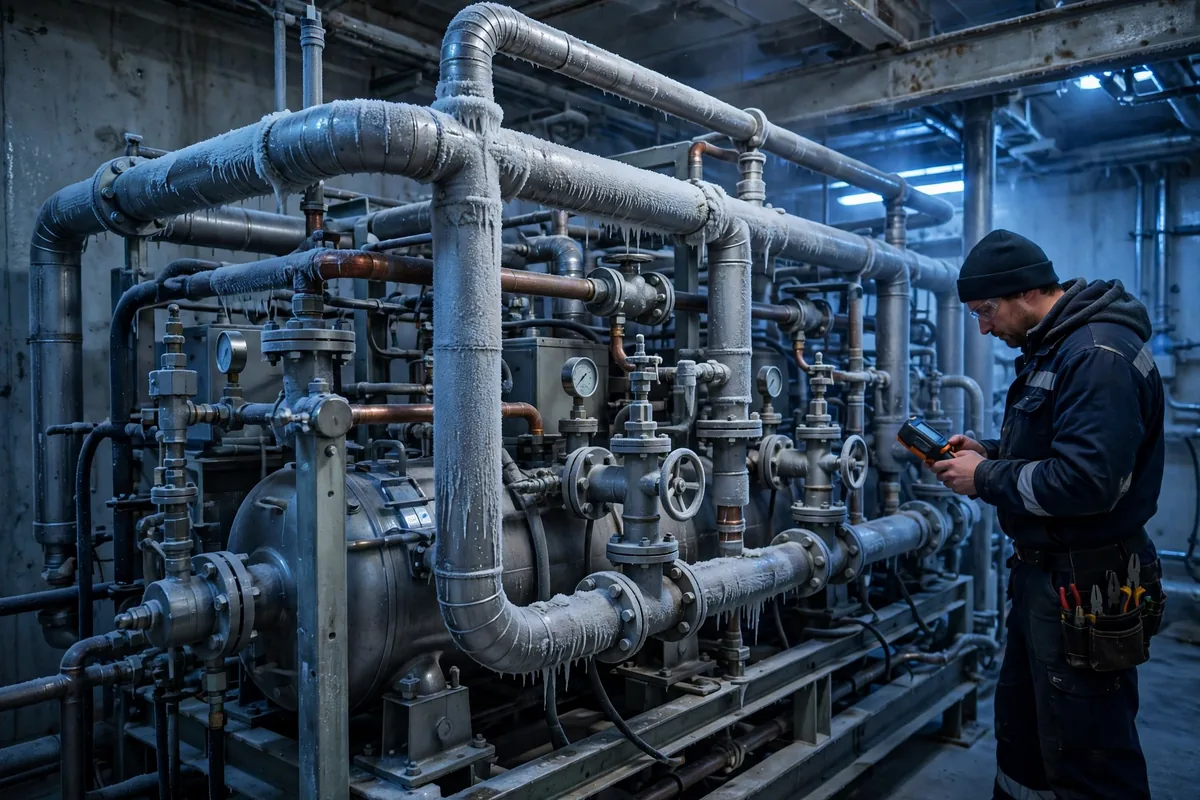
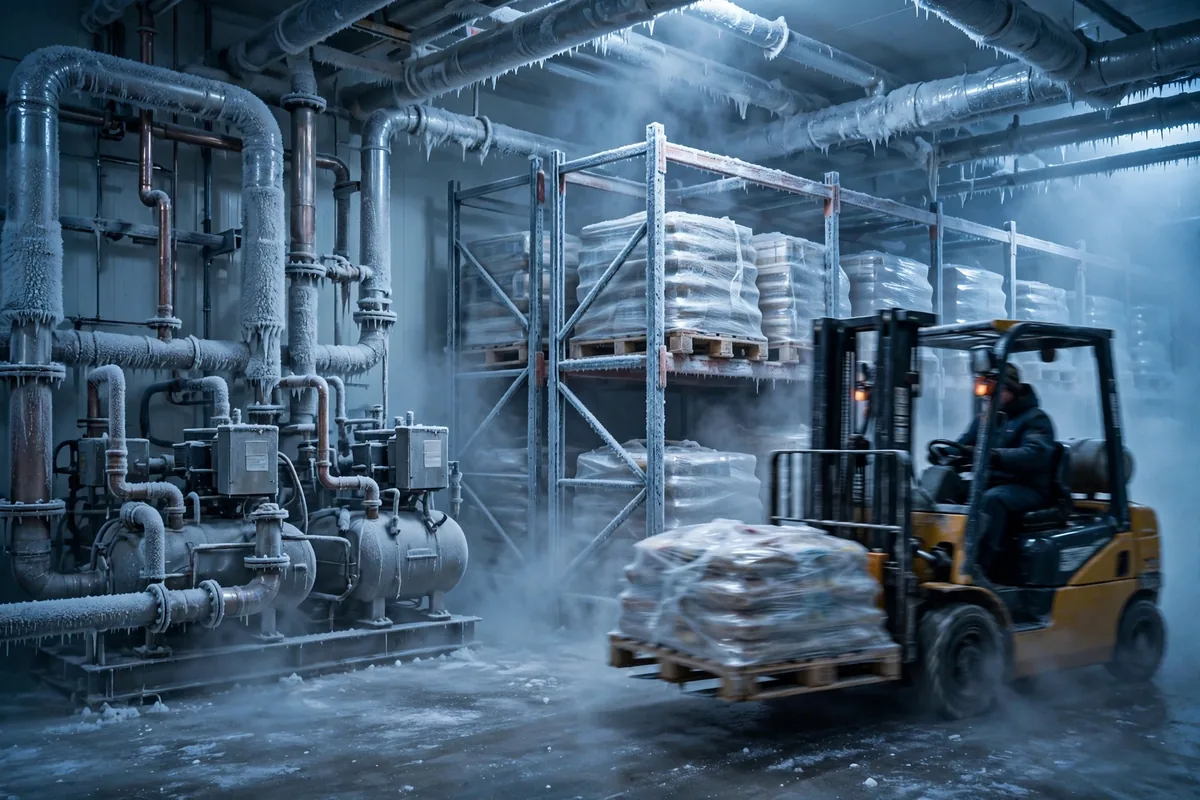
So where does cold storage warehouse electricity actually go? The compressor is the biggest bite by far. It hauls heat out of the room all day, and the colder the room and the bigger the gap with the outside air, the harder it works. Fans come second: evaporator fans and condenser fans spinning around the clock. Then comes defrost. A frosted evaporator has to be thawed on a schedule, and electric defrost means you are heating and cooling at the same time, fighting yourself. Door openings are the silent killer. Every time the door opens, warm humid air pours in and the compressor has to work overtime to throw it back out. Lighting and forklift charging add a little, but next to the big four they are rounding errors.
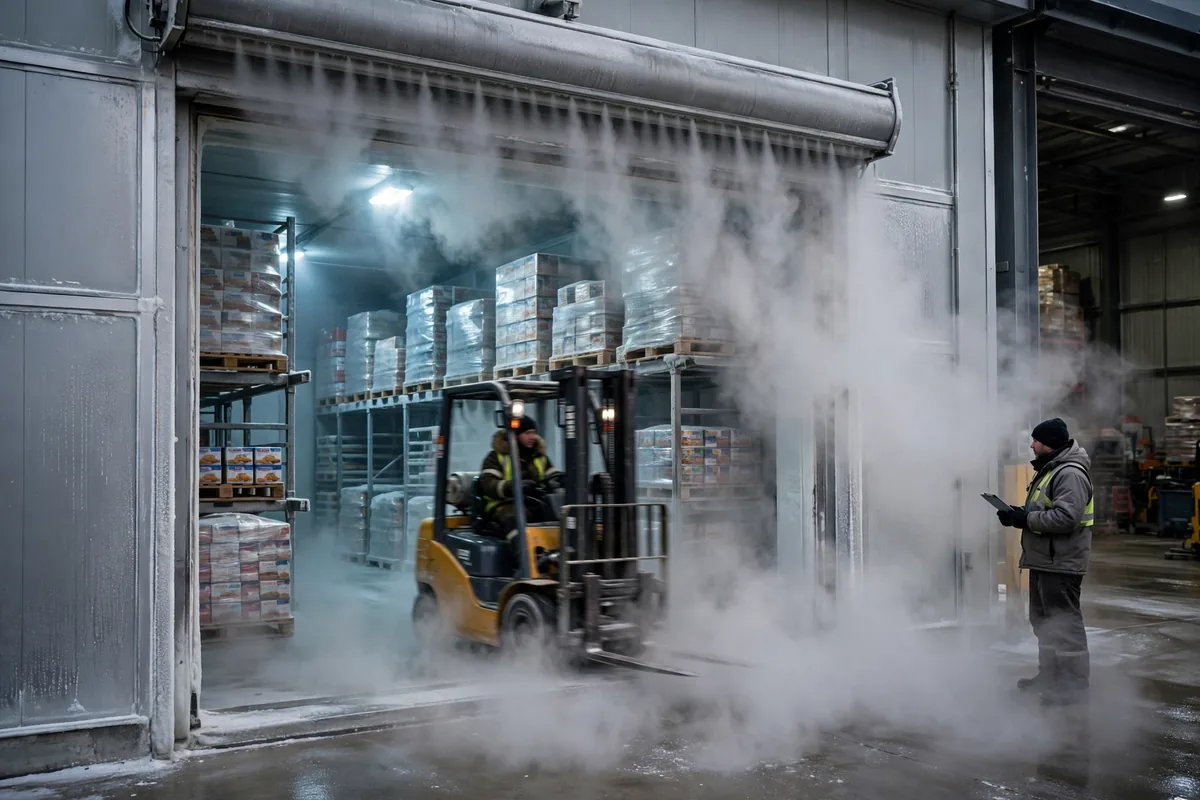
Illustrative scene: last summer, an imported-fruit customer of ours was moving dozens of loads a day in peak season, and the cold-storage door basically never closed properly. Forklifts rolled in and out, and the strip curtain got knocked up on one side. That month the compressor barely stopped, and the bill came in more than thirty percent higher than usual. I showed the invoice to the customer and asked if we could batch receiving into a morning window and an afternoon window, with the door shut tight in between. He pushed back at first, said it would slow his shipping. Then he looked at the bill and agreed on the spot. Doors look innocent. Leaking cold air is the most expensive habit in the building.
Cold Storage Electricity Saving: Variable Speed, Floating Head Pressure, and Night Pre-Cooling
Variable-speed drives are the most honest saving in cold storage, so let me start there. An old fixed-speed compressor has two modes: full blast or off. When the room only needs sixty percent cooling, it still runs at one hundred percent for a while, then shuts down, and the temperature swings up and down while the meter keeps spinning. A variable-speed drive matches compressor speed to real cooling demand. Need less cold, run slower, use less power. Published industry data puts variable-frequency-drive retrofits at a 16-20% cut in compressor energy use. Fans follow the same physics, and it is dramatic: cut a fan's speed by twenty percent and its power draw drops by roughly half, because fan power scales with the cube of speed. That is not my invention. That is how fans work.
Floating head pressure is the second move, and most small operators have never heard of it. Default controls hold condensing pressure at one fixed value all year, which means on a cool day the system still works as hard as it does in midsummer. Optimized controls let condensing pressure float down with the outdoor temperature, so the compressor does less work whenever the weather allows. Published industry data puts the saving at 10-20% of compressor energy in moderate climates. Put simply, you are teaching the system to read the weather.
Night pre-cooling is the third move, and it is our favorite small-warehouse trick because it costs almost nothing. Electricity is cheaper at night, the outdoor air is cooler, and the system runs more efficiently. So we pull the room temperature down a little extra overnight, and during the expensive daytime peak the compressors can rest while the stored cold carries the load. No new equipment, just a different schedule, and the effect shows up on the next bill. Here is the counterintuitive part: a lot of people think setting the room one degree colder makes the goods safer. It mostly makes the bill bigger, and the extra temperature swings can actually hurt product quality. Cold storage is not about the lowest number on the thermometer. It is about a stable number. Stability is worth more than cold.
Equipment sizing is where people step on a rake. Sales reps love to sell you a unit one size up, talking about safety margin. But a unit that spends its life running at low load is inefficient, and the electricity bill proves it. Size to the real load, keep a modest margin, and stop there. Defrost is the same story. Timed defrost fires on a clock whether the coil needs it or not, burning power for nothing. Demand-based defrost waits until frost actually builds up. The saving is real money.
The Payback Math: How Fast Cold Storage Electricity Savings Pay for Themselves
Let me show the money. The table below is a hypothetical example for a small cold room of a few hundred square meters. The numbers illustrate the structure, not any vendor's quote:
| Saving measure | Hypothetical cost | Hypothetical monthly saving | Hypothetical payback |
|---|---|---|---|
| Variable-speed retrofit, compressor and fans | About $4,000-7,000 | About $200-350 | About 1.5-2 years |
| Floating head pressure control tuning | About $700-1,400 | About $110-170 | About 6-12 months |
| High-speed door, strip curtain, seal repairs | About $1,100-2,100 | About $85-140 | About 1 year |
| Night pre-cooling and schedule changes | Almost zero | About $55-110 | Visible the same month |
| Efficient lighting with timers | About $400-700 | About $30-55 | About 1 year |
Published industry data generally puts variable-speed payback at 2-4 years — cold storage warehouse electricity is where that payback shows up first; our small room pencils out faster because our load swings so much. And a well-tuned control system can cut total energy use by 15-30% compared with the same hardware running on poorly tuned controls, a figure that shows up again and again in industry publications. The pattern in the table is the lesson: the cheapest moves pay back fastest. Night pre-cooling and schedule changes cost almost nothing and show up on the next bill. The variable-speed retrofit costs the most but saves the most, which makes sense for a warehouse planning to stay in the game.
Illustrative scene: that is exactly the order we did it in. First the free moves: night pre-cooling, batched receiving windows, a repaired strip curtain. Then the cheap moves: new seals on the high-speed door and an air curtain. The variable-speed retrofit came last, after we had saved up for half a year. After all of it, the bill dropped by more than twenty percent, the customer's fruit stayed perfectly frozen, and the room temperature actually swung less than before. That was the month I felt confident telling other small operators that cold-storage saving is not just a big-company game.
Three suggestions for warehouses like ours on cutting cold storage warehouse electricity. First, do not rush to buy equipment. Use up every free move first: pre-cool at night, batch the door traffic, close the door every time, and switch timed defrost to demand-based defrost. Second, run the payback math before spending anything, and think twice about any retrofit that takes more than three years to pay back. A small warehouse's cash flow cannot carry long bets. Third, set the temperature to what the goods actually need and stop chasing colder numbers. Stable beats cold, and product safety comes from stable temperatures, not from a pretty number on the display.
The big players can afford full automation and whole-system replacements. We cannot, and we do not need to. Every dollar saved on electricity is a dollar earned, and small warehouses have their own way of surviving. Use the cheap tricks right and the bill comes down just the same.
By Xiao Ma, Small Warehouse Owner