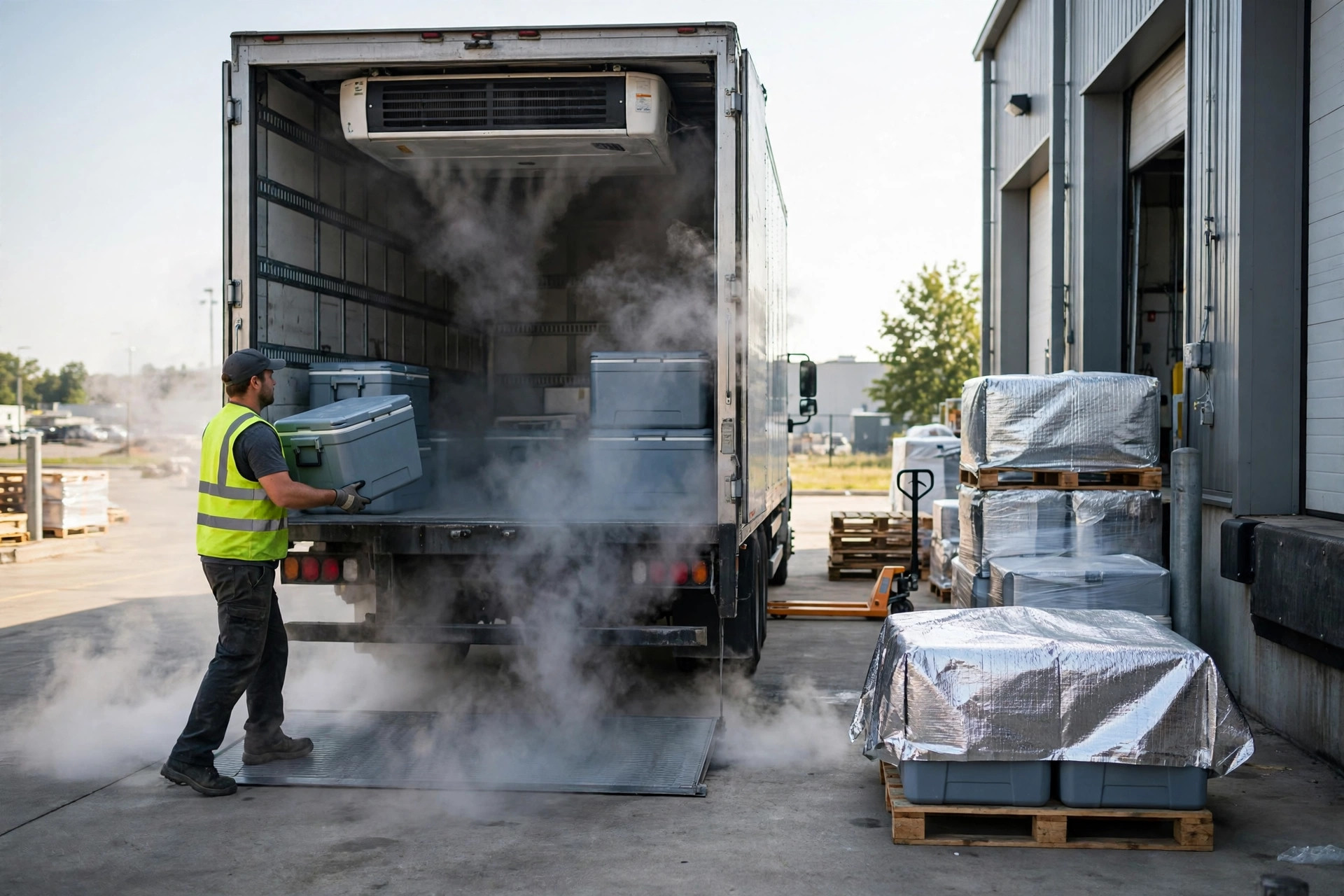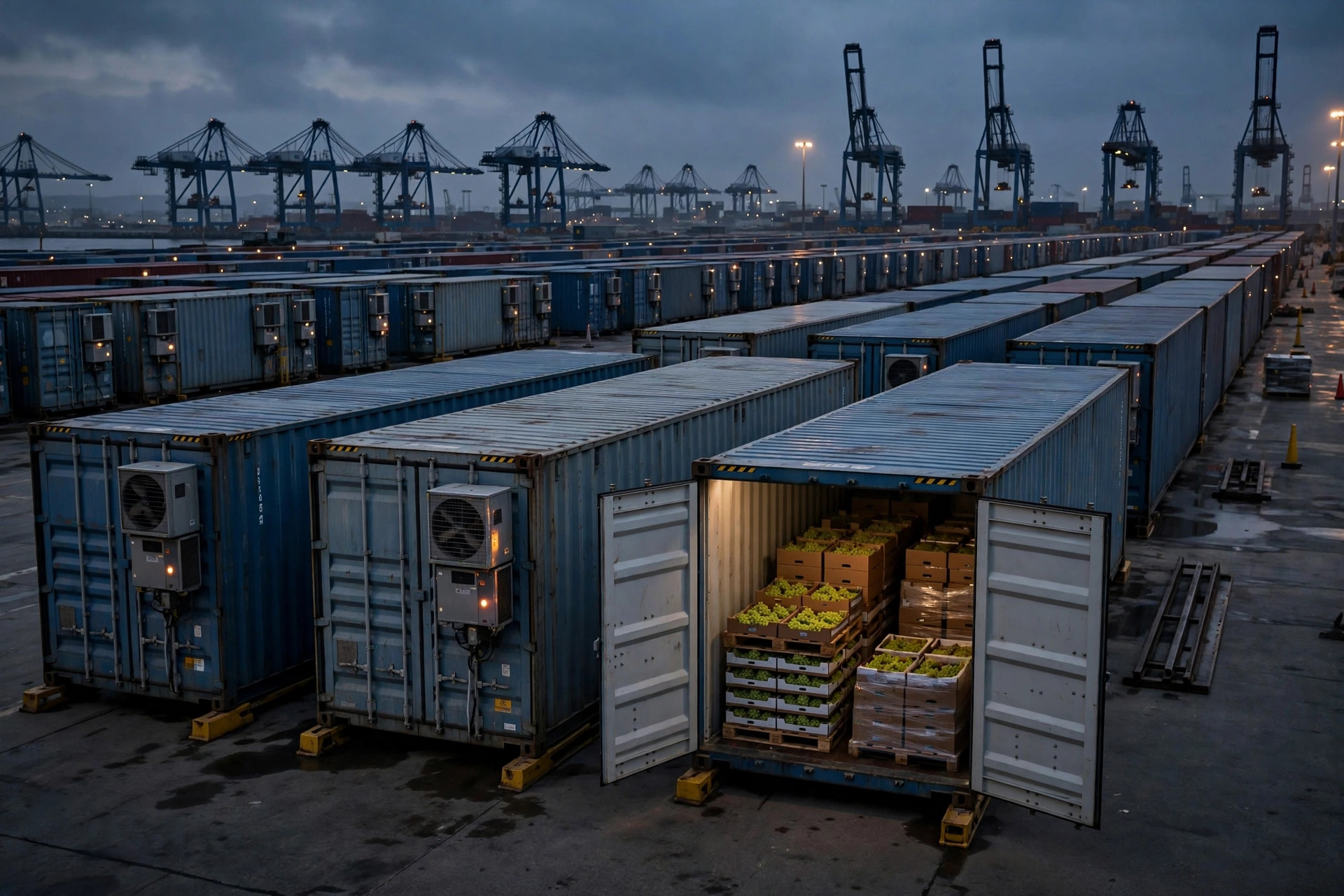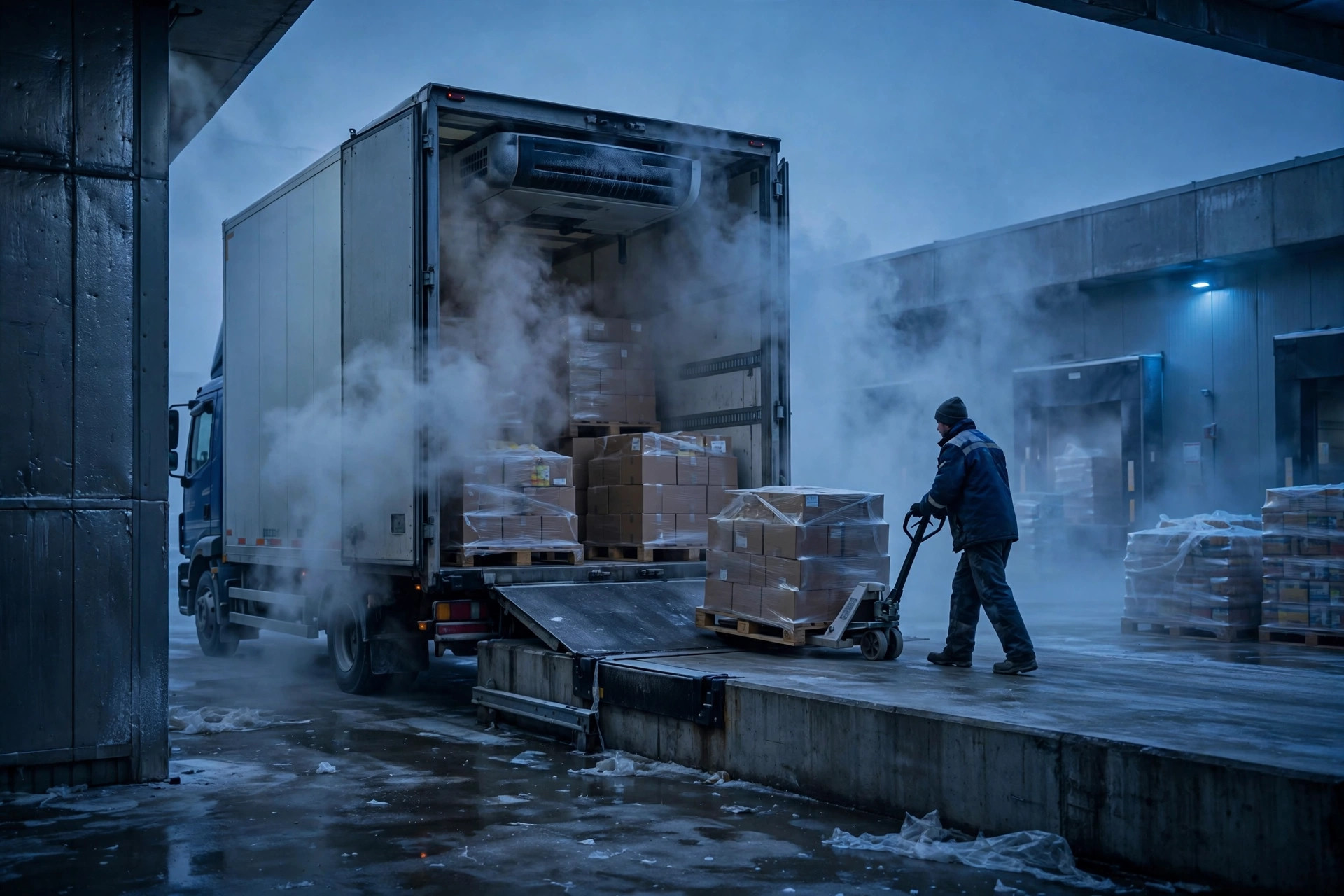
Let me tell you something about cold storage receiving. The scariest minute of the whole job isn't unloading — it's the minute the trailer door swings open. Cold air rolls out, the receiver sticks a probe into a carton, and the number comes back over spec. Then the dock turns into a shouting match. The driver swears his reefer ran fine the whole way; the warehouse guy swears his thermometer doesn't lie. I've spent fifteen years driving trucks and working these docks, and I've seen this movie more times than I can count. So let's talk it through, plain and simple: when inbound temperature fails spec, do you reject it, downgrade it, or accept it with a concession?
What Counts as "In Spec" for Inbound Temperature
Get the standard from the right source first. The FDA Food Code says refrigerated TCS foods must be received at 41°F (5°C) or below. Milk, raw shell eggs, and shellfish get a little slack — 45°F (7.2°C) or below. Frozen product has to be frozen solid; if it's soft to the touch, has water stains, or shows big ice crystals, treat it as thawed. USDA FSIS puts frozen storage at 0°F (-18°C) or below. And the danger zone, 41°F to 135°F, is where bacteria throw a party — the longer product sits in it, the worse the risk.
Two things to keep in mind. First, plenty of big customers write specs tougher than the regulation. Some want 38°F. Some want 40°F. The Food Code is the floor; the contract is what you'll actually be held to. Always go by the customer contract and the latest regulatory requirements. Second, the standard is only as good as your measurement.
How to Measure Inbound Temperature So It Holds Up
Most dock fights are really measurement fights. Get these right and your number holds up:
Measure the product core, not the air. A trailer thermostat reading 38°F does not mean the product is 38°F. The probe goes into the carton, into the product's core, and stays for an honest reading.
Probe at least three cartons — front, middle, back. The reefer sits up front; the tail is where trouble hides. One carton is the same as no carton.
Photograph everything: probe reading, carton number, trailer plate, timestamp — one photo. Your phone stamps the time. That's your evidence.
And don't let the driver roll until it's settled — temperature confirmed, paperwork signed, then he moves. Once that truck leaves, nobody agrees on what happened.
I saw the saddest version of this years back: a receiver waved an infrared gun at the box surface, got 36°F, and accepted the load. The customer complained the next day — the core was sitting at 50°F. Cold skin, rotten heart. An IR gun only sees the surface; a probe sees inside. That one habit can save you a fortune.

Reject, Downgrade, or Accept: Picking Your Fork
So the temperature is off. Three roads ahead. Fifteen years of watching this play out taught me one decision table — temperature deviation, cargo value, and customer type cross against each other, and the answer usually falls right out:
| Temperature deviation | Own product (your call) | 3PL (someone else's goods) | Big retail customer (strict rules) |
|---|---|---|---|
| Minor: refrigerated 42–45°F, frozen slightly soft on the surface but solid at the core | Accept with concession, segregate, shorten the shelf life | Photograph, document, and wait for the customer's written instruction — don't decide for them | Follow the contract; if it's over spec, it's over — no soft hearts |
| Moderate: refrigerated 45–50°F | Downgrade it — divert to promo or processing, but only if the math works | Downgrade or reject; get the customer's written sign-off. A verbal "sure" on the phone doesn't count | Reject by default; a downgrade needs written customer approval |
| Severe: refrigerated over 50°F, or frozen with thaw-refreeze signs (water stains, large ice crystals, soft cartons) | Reject | Reject | Reject |
A few things people get wrong here.
Accepting with concession is not closing your eyes. It requires the cargo owner — or yourself — to confirm the deviation in writing, and the lot goes into segregated storage with its own records and a shortened shelf life. Say the strawberries probe at 45°F against a 41°F contract, and the owner says "we'll move them tomorrow." Fine, take them — but flag the lot in the system for first-out and fewer days in the cooler. Accept it without a record and you may as well not have accepted it at all.
Downgrading is an accounting job. Example: a load of frozen chicken legs runs warm — not frozen hard enough for retail, but a prepared-foods processor will take it at 80% of the price. The downgrade only works if you run the numbers: discounted price minus the extra labor, sorting, and phone calls — is there anything left? If the math doesn't hold, rejecting outright is cheaper and faster.
Rejecting looks like the hardest call, mostly because of face. The driver drove all night; you tell him to turn around, and he's going to blow up. But remember: a rejection costs you one trip's freight. A bad load inside your building costs the whole shipment plus the customer's claim.
The Counterintuitive Part: Rejection Isn't the Expensive Option
Chew on that. People think rejection is the nuclear option. It's the opposite — rejection is the decision with the clearest liability and the most controlled cost.
Two stories, both real docks, both real loads.
August 2023, a 3PL cold storage south of Dallas. A load of strawberries arrives; the probe reads 47°F at the core against a 41°F contract. The warehouse manager hesitates — the driver's waited four hours, but the number is the number. The cargo owner is in California, phone going to voicemail. The manager rolls the dice, accepts the load, and skips the full write-up. Three days later the berries go soft and start weeping. The claim lands, the 3PL says it arrived like that, the owner demands the receiving records — the temperature column is blank. Two months of arguing; the 3PL eats most of the cargo value. The lawyers, the wasted time, the lost trust: ten times a rejection's cost.
Then winter 2024, an Oklahoma cold storage. A load of ice cream rolls in. Pop the doors: the trailer walls show melt-and-refreeze streaks, cartons carry water stains and squeeze soft. Classic en-route thaw. The receiver rejects it on the spot — photos, written record, driver's signature, done in twenty minutes. The driver cursed up a storm about diesel and lost hours. Then the investigation found the reefer unit had been dead for six hours mid-trip, and that product had soaked in the danger zone half the day. If it had gone inside, it wouldn't have been one load's problem — it would have put the whole building's inventory at cross-contamination risk.
See the pattern? Rejection is a small, known loss. Accepting a warm load is a bet with a big, unknown one — win it and you save a freight bill, lose it and you lose the shipment plus the customer. That dock minute is worth exactly what your evidence is.
Three Pieces of Advice for Shippers and Warehouses
First, put temperature terms and the liability line in the contract. What counts as in spec, who has the authority to reject, whose written approval a concession needs, how temperature records count as evidence — all of it, in writing. Verbal agreements evaporate the day something goes wrong.
Second, pin the receiving SOP to actual people. Who measures, how many spots, who has the final call on a deviation, whether they need to escalate first. The worst failures happen when three people stand on the dock and each one thinks it's someone else's decision — and the load rolls inside by default.
Third, use temperature loggers if you can. Most reefers and cold-chain containers log the whole trip now; print the curve at receiving and you can see every degree and every stop along the road. With that curve on the table, the dock argument basically never starts. Numbers don't shout.
Cold storage receiving is a business where the product is cold, the relationships are warm, and the rules need to be iron. A temperature failure isn't scary because the standard is strict. It's scary when there's no standard, no record, and nobody with the authority to decide.
There's an old saying for this: say the ugly things up front, and you'll have half the trouble later. Spend that receiving minute right — measure, record, ask — and whichever road you take, you'll stand on solid ground.
By Shifu Zhao, Trucking Veteran (15 yrs)