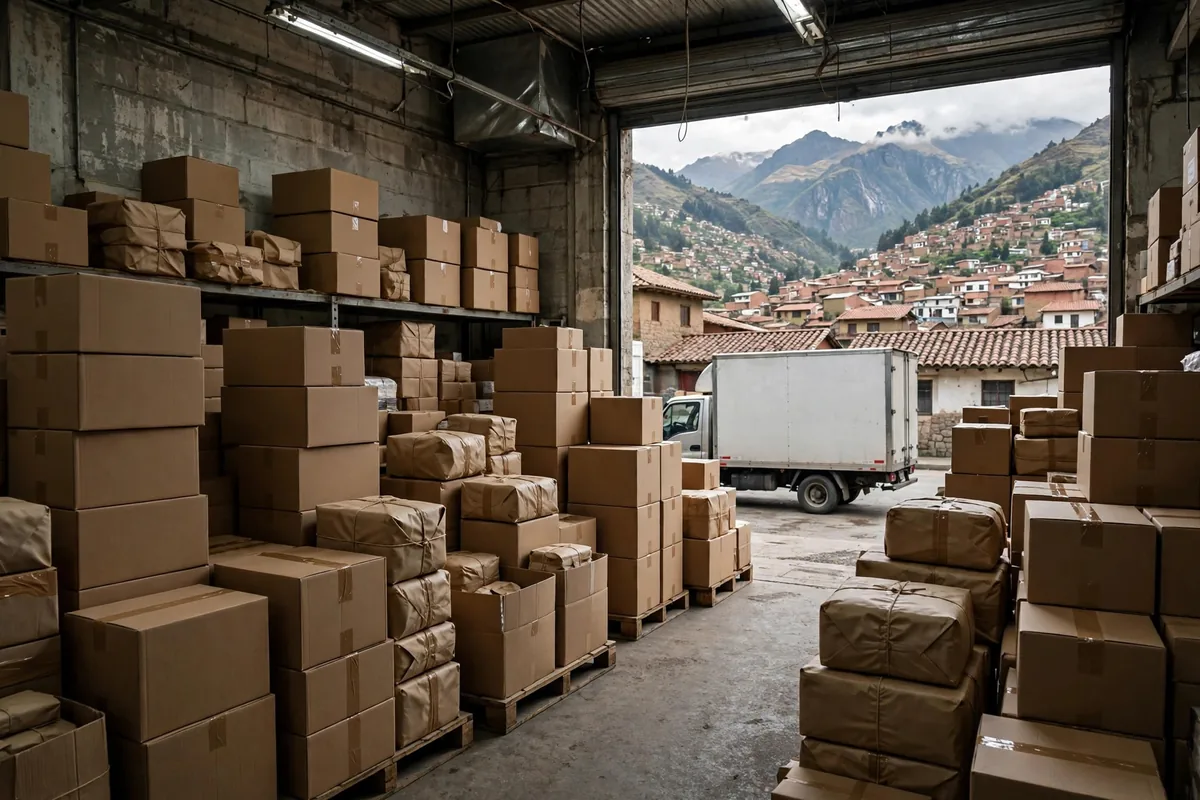
Let me complain first. People ask about cochabamba bolivia warehouse logistics and jump straight to rent prices, before they have figured out how their goods even enter Bolivia. Wrong order. Bolivia is landlocked. It has no seaport of its own. Your cargo lands at a port in a neighboring country first, then travels inland. Cochabamba sits in central Bolivia and is a major city in the middle of the country. It sounds like a perfect distribution point. But if you have not worked out your inbound route and your replenishment rhythm first, cheap rent will not save you. You will lose the money on stockouts and dead inventory instead. Five years of cross-border selling taught me that the expensive way. Here is the full lesson, once.
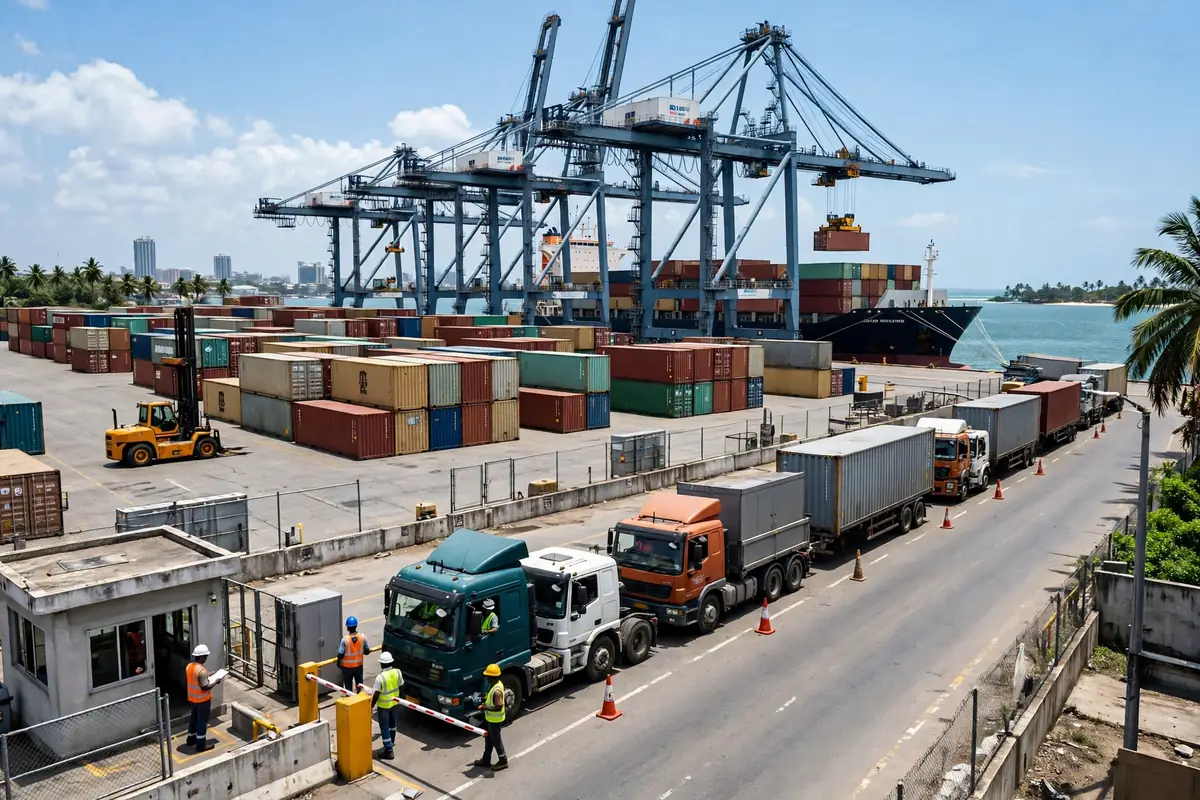
First, how goods get in. The common pattern is ocean freight to a port in Chile or Peru, then overland transfer into Bolivia, ending at an inland warehouse in a city like Cochabamba. Neither route wins in general. They fit different cargo. The Chile-side transfer is the path many Bolivia traders know best, with mature services and more carrier choice. The Peru-side transfer can connect more smoothly for certain origins and cargo types. Which one is right depends on where your goods ship from, how big your batches are, and how urgent your timeline is. For customs and transfer rules, always follow the latest official and carrier information. And never trust anyone who guarantees you a fixed number of days. That kind of promise is exactly how sellers get burned.
I learned this with real money. Illustrative scenario: I once pushed a whole batch through a single transfer route because it was simpler. That route hit a congested stretch, the cargo sat in transfer far longer than planned, my Cochabamba stock ran dry, and the store rating slid with it. Since then I run a main route for the bulk and a small test flow on a backup route. Whichever route runs smoother gets more volume. Inland markets reward redundancy. No redundancy, no safety.
What Belongs in a Hub: cochabamba bolivia warehouse logistics Fit Check
Short answer: not every product belongs in a Cochabamba distribution point. The products that fit share three traits. Small size. Stable repeat orders. And a rhythm slow enough to stock ahead. Everyday small goods, household basics, and phone accessories fit well. Ticket sizes are modest, orders are steady, and stocking a batch inland upgrades the buyer experience instantly. Local delivery beats a long cross-border parcel wait, and returns get easier too.
The misfits are just as clear. Keep bulky, heavy goods out. Every extra handling leg inland eats your margin through freight share. Keep seasonal and trend-driven items light. The replenishment chain is long, and by the time your restock arrives, the trend is over. And keep high-value, dispute-prone products out. A return traveling back through an inland chain is a nightmare, and the goods may not even come back in sellable shape.
Here is a hypothetical worked example. The numbers are illustrative only, not real rates — watch the method. Say a small product sells steadily. In a coastal warehouse model, you might stock about four weeks of sales because replenishment is fast. Move that same product to Cochabamba and you need a longer cover window. Double the stock to eight weeks and stockouts disappear, but your cash tied up in inventory doubles too, and the slow tail of that batch can turn into dead stock. Stock too little instead, and one stockout knocks your ranking and rating down. Climbing back costs several times the effort. Inland stocking is not coastal stocking with bigger numbers. It is a different formula.
| Product type | Fit for Cochabamba distribution | Why |
|---|---|---|
| Everyday small goods, household basics | Good fit | Steady orders, small size, stock ahead easily |
| Standard items like phone accessories | Good fit | Repeat demand, local delivery wins |
| Bulky, heavy goods | Poor fit | Transfer cost share kills margin |
| Seasonal and trend items | Risky | Long replenishment chain, easy to miss the season |
| High-value, dispute-prone goods | Poor fit | Long return chain, high loss risk |
Now the counterintuitive part. Most sellers assume an inland warehouse exists to sell more. I say the opposite. An inland warehouse exists first to sell steadily. A coastal warehouse can recover from a stockout with a fast emergency restock. An inland warehouse cannot. One stockout sends buyers to whoever has stock today, and your listing weight falls off a cliff. So in Cochabamba, protect continuity first, even if it costs you some turnover speed. Once you accept that, your whole stocking strategy changes.
Why a Cochabamba Warehouse Must Stock More Conservatively
Why must turnover and replenishment on an inland plateau run more conservatively than on the coast? Simple math of uncertainty. The longer the replenishment chain, the more places it can break. Coastal stock sits next to a port. Replenish, and goods show up fast. Cochabamba stock travels by sea, clears customs, crosses a border overland, then distributes locally. A delay at any single step pushes your arrival back. You cannot control every step. The only lever you fully own is how much safety stock sits on your shelf.
My system has three layers. Layer one is survival stock: core products, stocked a little heavy on purpose, never allowed to run dry. Layer two is test stock: new products enter small, prove they sell, then scale. Layer three is the never list: bulky goods and high seasonal risk stay out of the inland warehouse entirely, no matter how tempting the sales pitch looks.
Reorder points move earlier too. Do not wait until the shelf is nearly empty before ordering. Inland replenishment cannot survive that reaction gap. By the time you notice, you are already late.
Local fulfillment and returns have their own traps. Trap one is expectation management. Buyers assume local warehouse means local-speed delivery everywhere, but delivery network density between inland cities is nothing like the coast. State realistic delivery expectations on your product page, based on the carrier's latest published information. It beats collecting angry reviews later. Trap two is messy addresses and unreachable phone numbers. Parcels fail at the last step more often than you think. One extra confirmation step at checkout prevents a pile of arguments later. And returns: most sellers only price the outbound leg. Where returned goods land inland, who inspects them, whether they can be resold — every step costs money. My rule is simple. For low-value items, negotiate a no-return resolution and keep the customer happy. Reserve the formal return process for high-value items, and price that cost in from day one.
One more trap, on choosing a local warehouse partner. Options are limited inland, and some operators will promise you everything. Sign too fast and you get slow put-away and sloppy picking while you sit in another country watching it happen. My fix: ship one small real batch first and run the full cycle — receiving, shelving, picking, packing, dispatch, and a return — before signing anything serious. A test run is cheap. A failed partnership is not. And insist on regular inventory reconciliation. A warehouse whose counts never match is a warehouse you cannot afford, because lost inland stock has no easy replacement.
Advice for sellers shipping from China, all bought with my own money. One, test the route with small batches before scaling. Never push a full heavy shipment inland before the path has proven itself. Two, keep two routes alive for your core products, a main line and a backup. Redundancy is safety. Three, match your stocking rhythm to local buying rhythm instead of copying your home market's promotion calendar. Wrong timing hurts more than wrong quantity. Four, keep a cash buffer for transfer surprises. Inland business dies when cash flow breaks mid-route. Five, understand that cochabamba bolivia warehouse logistics is never really about finding a warehouse. It is about settling three questions before you sell a single unit: how goods get in, how stock gets replenished, and how returns get handled. Settle them first. Then move.
Inland markets are not impossible. They just punish coastal playbooks. Slow down the rhythm, guard the stock, and this market can give you a stability the crowded coastal routes no longer offer. Tried it myself. It works.
By Ah K, E-commerce Seller (5 yrs)