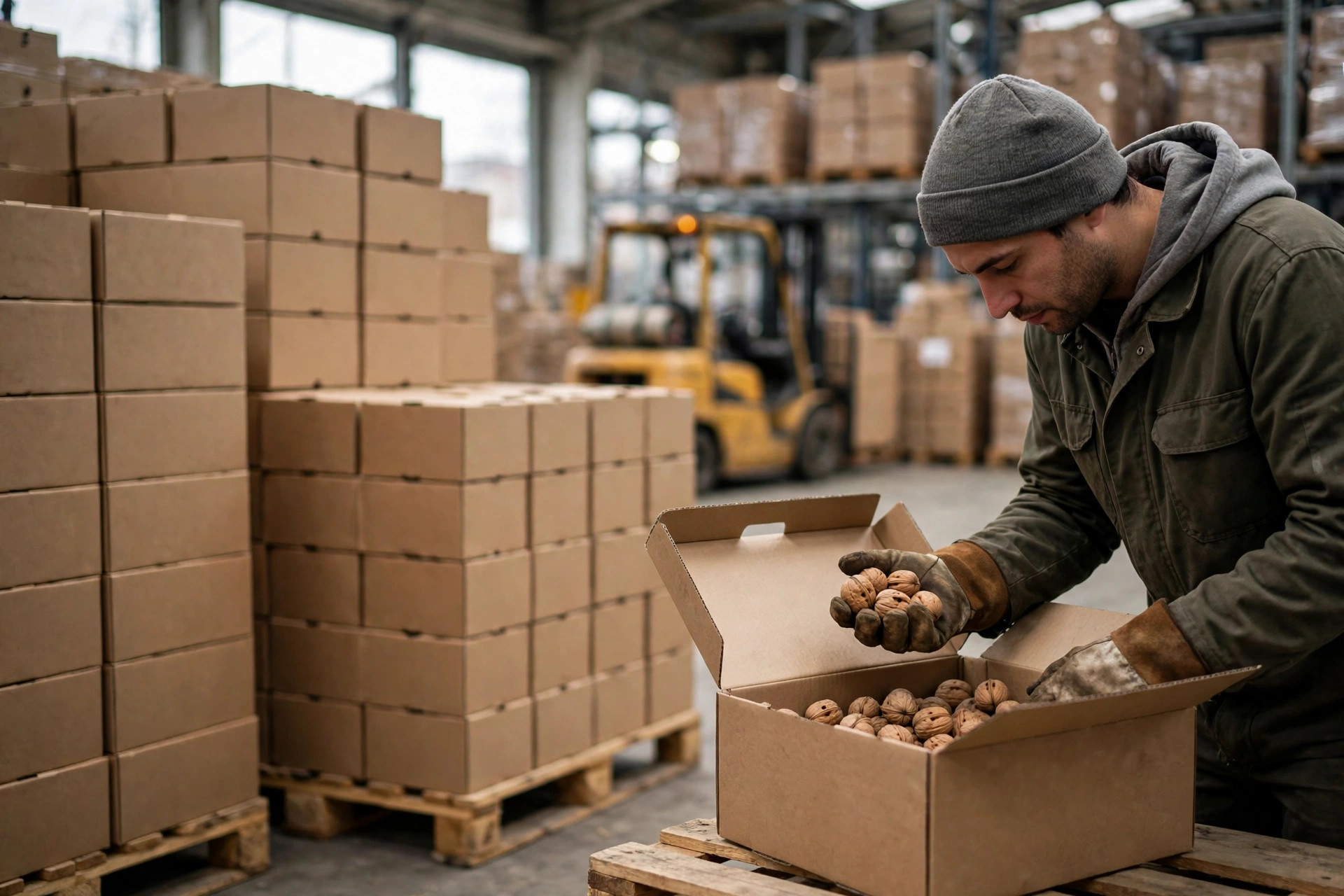
Chile walnut export warehouse storage is usually priced the wrong way. Ask a warehouse for its rent first, and you will get a tidy number that hides the real cost. The expensive part is rarely the monthly rate. It is what happens to the nuts while they sit there: moisture that never fully came down, oil slowly turning rancid, and a sailing that slips while good stock waits in a shed near the port. I have seen exporters argue hard over freight and rent, then lose the margin inside their own warehouse.
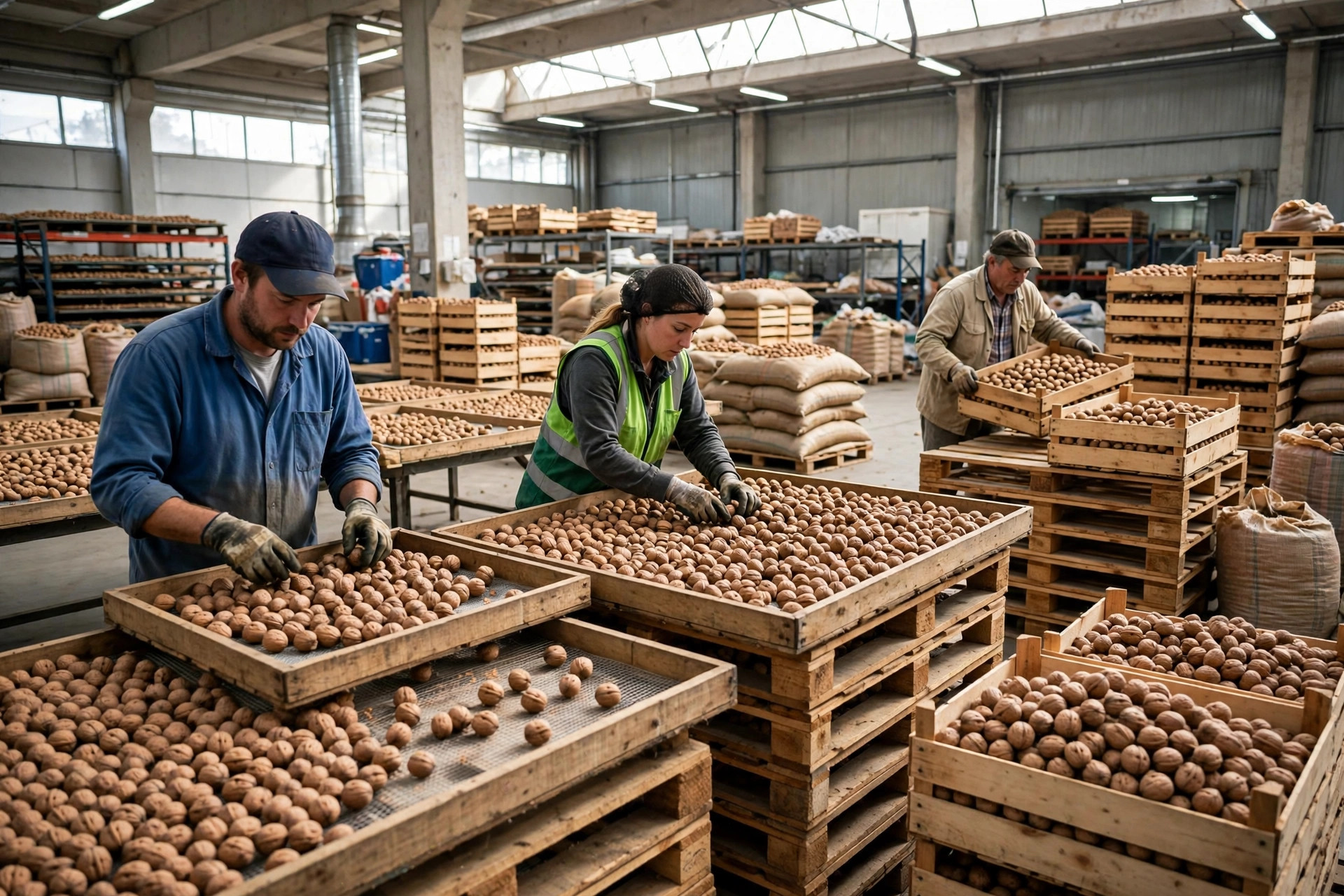
Consider a small exporter in the Central Valley. A load of in-shell walnuts came in wetter than planned, and the only drying area was an open concrete yard. A run of cloudy days slowed drying well behind schedule. Under pressure to meet a vessel, the exporter moved nuts into the warehouse before they were evenly dry, stacking pallets tight together with little air space between them. Before loading at the port, checks found damp patches and off odors in part of the load. That portion had to be separated and sold through a lower-priced channel, and the rest could no longer be offered to the buyer at the original grade. The loss was not a rent increase. It was the price gap between grades, plus the labor of sorting and moving the load twice. That is the first rule of this business: warehouse cost includes grade loss, not just the invoice from the warehouse.
A second case sits near Valparaíso. Another shipper, having learned the hard way, moved stock early to a warehouse close to the port, reasoning that proximity would remove risk. Then the sailing was delayed, and the nuts spent two extra weeks in a humid port-side shed. The warehouse had no strict stock rotation, so newly arrived pallets were placed in front of older ones. First in, first out quietly became last in, first out. When loading finally began, the oldest stock had been sitting longest, and it was the oldest stock that caused trouble. Being near the port was not the mistake. Treating a port warehouse as a safe box, rather than a transit point, was. Port storage earns its keep by shortening the handoff, not by holding stock.
The full bill for chile walnut export warehouse storage
Split one shipment into five cost blocks: yard drying, warehouse rent and handling, loss and downgrade, capital tied up in stock, and port timing. Most quotations show only the first two. The other three hide inside the cargo value and surface at month-end reconciliation. Fill in the table below with your own invoices, not someone else's rules of thumb.
| Cost block | Where it is usually underestimated | Where the saving sits | | Yard drying and rework | Cloudy days, second drying runs | Batch zones, clear the yard batch by batch | | Rent and handling | Restacking, sorting labor | Stack it right once, label every pallet position | | Loss and downgrade | Grade price gaps | Test on arrival, store by grade | | Capital in stock | Days sitting in the warehouse | Plan intake backwards from the sailing | | Port timing | Extra storage when a vessel slips | Use port warehouses for transit, not long storage |
Watch the downgrade line most closely. A rent rise of one tenth is visible on paper. A grade drop is usually larger, yet it is often booked as a sales problem rather than a warehouse problem. Record downgrade loss as its own line for three consecutive months, and the warehouse part of the business will finally show its true price.
The drying bill inside chile walnut export warehouse storage
Drying is not finished when nuts look dry. Nuts in the middle of a drying yard dry at a different pace from nuts at the edges, and the center of a stack holds moisture differently from its surface. Testing only the surface is like judging cargo by its face. The unglamorous method works: test at several depths before intake, divide the yard by batch, and clear one batch completely before the next one fills the same area. Never let fresh and older lots mix in one zone and get moved back and forth.
Timing matters as much as technique. A drying yard suffers less from nuts that dry slowly than from dried nuts with nowhere to go, or an empty warehouse waiting for cargo. Work backwards from the sailing date, and leave room for drying and inspection before loading. Leave slack for cloudy weather, equipment checks, and port congestion. Two lost days anywhere in the chain can break the whole schedule. Slack is not waste. It is cheap insurance, far cheaper than sorting a load after the fact.
The rancidity bill: time, oxygen, and temperature
Rancidity in walnuts is oil going off, driven by time, oxygen, and temperature. A warehouse mainly controls time and temperature; packaging and stacking handle much of the oxygen side. Time is the most direct lever: the longer stock sits, the higher the risk, so first in, first out must be a daily action, not a poster on the wall. Number the pallet positions, mark batch cards, and write intake dates where the forklift driver can see them without opening a file.
Temperature and airflow must be read together. A warehouse is not automatically better for being colder, nor for having stronger ventilation. What matters is stability and evenness. Leave air channels between stacks, keep stacks off the wall, and raise them off the floor before ground dampness reaches them. In hot, humid weather, someone must own the vents rather than leaving them in one position all day. Here is the counterintuitive point: spending more on drying and grading in the warehouse often looks like extra cost, yet it is frequently the highest-return spending in the whole shipment, because it protects the grade itself. Grade is the selling price. Cutting that spending saves small money and risks large money.
Close every shipment with three calculated numbers before intake. First, the planned days in storage, and what each extra day costs in storage and risk. Second, the downgrade share at which the margin on the shipment disappears. Third, whether the buffer before the sailing covers one delayed vessel. Once those three numbers are on paper, the warehouse size, the drying standard, and the days at the port warehouse answer themselves. That is how you tell whether the money was well spent or simply wasted.
By Lao Zhou, Logistics Cost Analyst