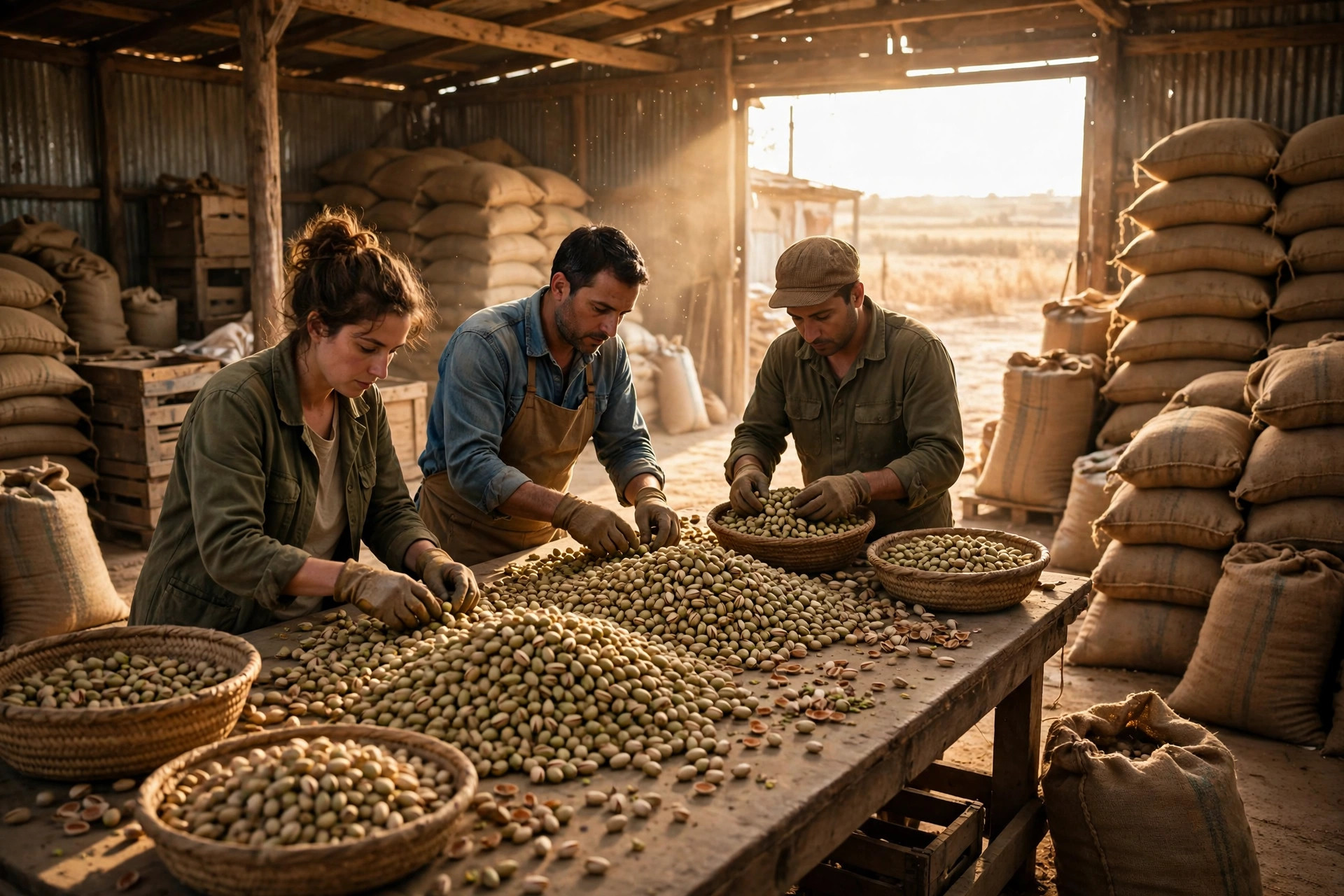
Verdict first: Tanzania clove export warehouse storage succeeds or fails on two repeatable jobs, keeping cloves dry and keeping grades separate. Volume is not the test. If either job depends on one experienced person remembering to do it, the warehouse will eventually fail a buyer inspection, and the discount will arrive all at once. I come to this topic sideways. My day job is warehouse systems, not spice trading, and that outsider view is useful here: I care less about market talk and more about whether a process survives a change of shift, a rainy week, and a rushed loading day.
Two scenes explain why those two jobs matter. The first took place on a drying yard in northern Zanzibar during the rainy season. Cloves were spread out in the morning sun, clouds gathered after lunch, and the crew was a few minutes late fetching the covers. Half the mats were covered when the rain arrived, half were not. The same delivery then had to be split, re-dried, and re-checked, doubling the handling work for no extra value. The second scene took place in a warehouse near Dar es Salaam port. The sample looked clean, but the bulk shipment mixed cloves of different appearance in the same bags. When the buyer sampled the bulk, the whole lot was priced at the lower grade. The seller felt cheated, the buyer felt justified, and the gap between those two views was simply grading work that had never been finished. I have seen this pitfall three times, and every time the cause was a missing step, not bad luck.
Tanzania clove export warehouse storage: three ledgers before you scale
Before expanding intake, settle three ledgers. If any ledger is vague, do not scale yet.
| Ledger | Cost of skipping it | Warehouse routine |
|---|---|---|
| Moisture ledger | Damp stock is downgraded, and badly damp stock can be lost entirely | One check at drying, intake, stacking, and sealing |
| Grading ledger | Mixed grades let the weakest bags set the price for the whole lot | Visible grading standard, retained samples, a label on every bag |
| Time ledger | Every extra day near the port adds handling, storage, and cash pressure | Fixed dispatch order, oldest stock first, and a loading buffer |
The moisture ledger is the one people underestimate. Dried does not mean finished. Between the drying yard, the warehouse, and the port, every transfer, every opened bag, and every careless stack can let damp air back in. My approach breaks moisture control into checkpoints: at drying, watch the weather, the ground, and how thickly the cloves are spread; at intake, handle the bags, read the labels, and check the previous batch record; at stacking, keep bags off walls and floors and leave air channels; before sealing, sample again. Each checkpoint names a person, an action, and a record. Vague phrases such as almost dry have no place on that list.
The grading ledger holds a counterintuitive judgment: grading is not mainly a way to chase a premium price. It is a way to stop poor stock from dragging good stock down. Skipping grading feels efficient until a buyer samples the bulk and prices everything at the lowest grade found. The hours saved by mixing grades are usually smaller than the value lost in that single price decision. Even two clear grades beat one mixed lot, because clear grades give the seller something specific to defend in negotiation.
From drying yard to port warehouse in five steps
Step one is intake inspection for moisture and foreign matter. Do not judge a delivery by the outside of its bags. Open a bag, take a handful, smell it, feel it, and check whether the colour is even. If foreign matter is present, sieve before the stock enters storage, not on loading day when everyone is already in a hurry.
Step two is grading immediately, while the delivery is fresh in everyone's mind. Grade against a written standard that is posted where the work happens, not kept in one person's head. Mark each grade with a different label colour, and write the batch, date, and grade clearly enough that the next shift can read it without asking anyone.
Step three is disciplined stacking. Bags should not sit directly against walls or floors. Raise the bottom layer, keep stacks stable, and leave channels for air, inspection, and dispatch. A channel looks like wasted space until the day an inspection requires moving half the warehouse to reach one stack. Space for access is working space, not lost space.
Step four is a complete intake record, written once and written properly. Batch, origin, grade, bag count, and storage position are the minimum fields. Records are not paperwork for its own sake. They let a warehouse locate a problem batch within an hour, instead of turning the whole building upside down. A warehouse without records can only search; it cannot target.
Step five is a go-live night checklist before dispatch. I borrowed this habit from system launches, and it fits warehouse work just as well: confirm grade labels, confirm bag counts, confirm seals, confirm loading order, and confirm accompanying documents. All five must pass before release. If one fails, stop and fix it first. A checklist is not ceremony. It is the last gate before a mistake leaves the building.
Tanzania clove export warehouse storage: three places it usually breaks
The first break is rainy-season optimism. A routine that works in dry weather cannot simply be repeated when rain is frequent. Covers, raised platforms, and ventilation must be ready before the rain arrives, not fetched during it. I have seen this pitfall three times, and the excuse is always the same: the rain was expected to be light. Warehouse work should not run on expectations. It should run on preparation.
The second break is the gap between sample and bulk. A sample is selected, bulk is mixed, and the buyer inspects the bulk. The only honest fix is random sampling, retained samples, and written results. Keep each retained sample apart from bulk stock, label it with its batch, and treat it as evidence if a grade is disputed later. Without a retained sample, a disagreement becomes one person's word against another's.
The third break is a port stage with no buffer. If documents, loading order, and vehicle timing are only checked on loading day, any single delay turns into waiting time at the port. Treat the port warehouse as a second grading point: re-check the lot on arrival, then set the loading order, rather than pushing every check into the final hours. A buffer is not idle time. It is the difference between a controlled dispatch and a rushed one.
If you are new to this trade, my advice is to start small and make the routine boring in a good way: one small warehouse, one batch at a time, and five simple records covering intake, grading, stacking, dispatch, and samples. Get those five records right before talking about larger intake or more locations. Warehouses rarely fail because they start too small. They fail because volume arrives before the process is strong enough to carry it. When moisture checks happen at every handover, when grades stay separate from intake to loading, and when records let you find any batch quickly, Tanzania clove export warehouse storage stops being a gamble and becomes a business you can repeat.
By Lin Xiao, WMS Implementation Consultant