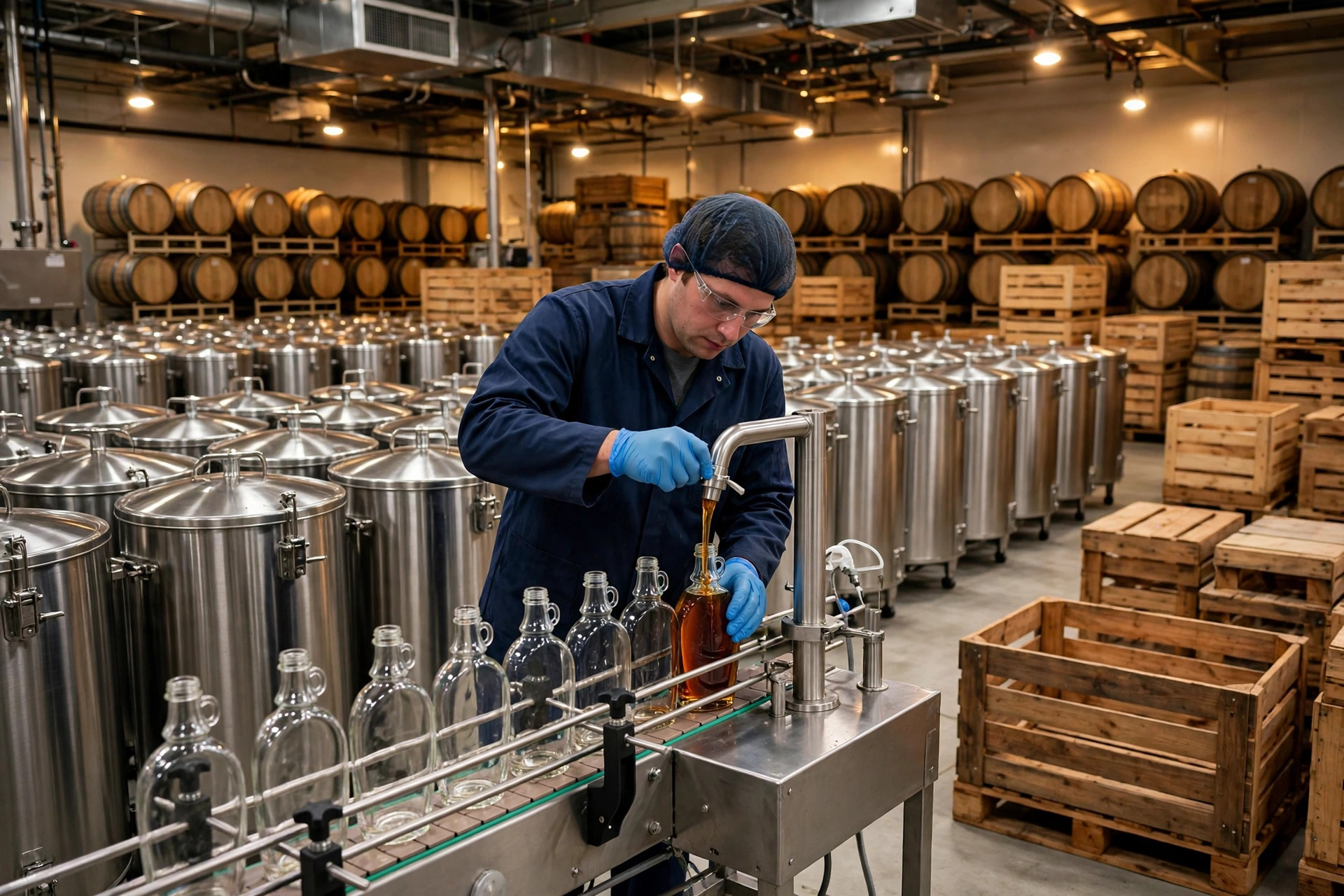
Let me start with a rant, because somebody needs to say it: most sellers getting into Canada maple syrup export warehousing get wrecked by one innocent-sounding phrase — "harvest season." They picture a pretty sugar bush, buckets on trees, maybe a nice photo for the listing. Then reality shows up. The sap runs for a few weeks. Your sales have to last all year. Everything in between — storage, grading, bottling, shipping rhythm — is where the money is made or lost. I learned that the expensive way.
Lesson One of Canada Maple Syrup Export Warehousing: A Few Weeks of Harvest, a Full Year of Stock
Maple syrup is not like other food products. The harvest window is brutally short, clustered in late winter and early spring, when days thaw and nights freeze again. When that window closes, there is no restocking. You wait until next year. That is it.
My first year, I made the classic rookie mistake. In March 2024, I signed my first bulk deal with a Quebec producer partner. The contract looked great on paper: weekly deliveries through the season. But I planned my inventory like a normal grocery seller — buy roughly what I expected to sell, keep it lean. Then the season ended two weeks early. Supply stopped cold, and I was left with about 40 days of stock. For two full months, my best-selling amber grade was out of stock while my ads kept running. Traffic came in, saw "out of stock," and left. The sales I lost in those two months would have paid for half a year of warehouse rent.
That disaster gave me a rule I still live by: for maple syrup, safety stock is not 30 or 45 days. It is the number of days between the end of one harvest and the start of the next, plus 30 extra days as a buffer. In practice, I now carry 120 to 150 days of stock. Sounds heavy? It is. But stockouts cost far more than warehouse fees.
One more thing sellers skip: receiving is not just stacking drums in a corner. Before anything goes into my warehouse, I require the supplier's grade test and density data for each batch, and I store by grade and batch from day one. Why? Because six months later, when you need one drum of dark grade for a bottling run, you do not want to dig through the whole warehouse to find it. Two extra hours of organization at receiving saves you countless hours of hunting later.
Grading Is Not a Label: It Is the Pricing Power in Canada Maple Syrup Export Warehousing
A lot of new sellers think grading is just swapping a bottle and a name. Wrong. Grading decides what your stock is worth and who will buy it.
Canada's current system grades by colour and flavour, roughly four classes: Golden with a delicate taste, Amber with a rich taste, Dark with a robust taste, and Very Dark with a strong taste. Colour darkens as the season goes on, and flavour gets stronger with it. The classes are measured by light transmission, and there is a minimum bottling density standard — I re-confirm the exact figures against the latest official standard before every shipment, and I never write them into a contract from memory.
My second expensive mistake was a grading mistake. In autumn 2024, I saw dark grade getting popular in baking circles, so I loaded up on bulk dark syrup, expecting a baking-season boom. Problem: my core buyers are households who drizzle syrup on pancakes and yogurt. They wanted amber. The dark stock sat in my warehouse for four solid months, barely moving, and I ended up clearing it at a discount — warehousing and freight costs included. Lesson learned.
Here is the counterintuitive truth most buyers get wrong, by the way: darker does not mean better. Grading is about flavour style, not quality rank. Golden delicate syrup from early in the season is not a lesser product — it takes just as much skill to produce, and it sells at a solid price. If you as a seller do not understand that, your listing copy will say something wrong, knowledgeable buyers will call it out, and your return rate will climb.
So now I work backwards: I look at the last 12 months of sales by grade, then set next season's buying mix from that data. Amber is the backbone, golden is second, dark and very dark are small batches aimed at baking and food-service channels. The mix gets tweaked every year, but never by gut feeling.
The Seasonal Stock Math: How I Actually Run the Numbers
Enough theory. Here is my working sheet, updated every year when the harvest ends:
| Item | My rule | Note | | Days of stock | Days until next harvest + 30 days buffer | Usually 120–150 days | | Grade mix | Set by trailing 12-month sales by grade | Amber leads, dark stays small | | Bottling rhythm | Start 45 days before big promotions, in three batches | Never bottle everything at once | | Slow-mover trigger | One grade unsold for 90 days → discount or channel shift | Nothing sits past a season |
The bottling rhythm deserves its own paragraph. Plenty of sellers bottle everything the moment the harvest ends, because full shelves feel safe. I did that too, once. The result: bottles, caps, cartons, and labour all paid upfront, and my cash flow choked for months. Now I bottle in three waves: the first covers everyday sales, the second lands before summer promotions, the third is saved for the year-end holiday season. Before each wave, I re-check which grades are actually moving. Flexibility is the whole game with seasonal stock.
Then there is warehouse hygiene, and I will not apologize for repeating it. Syrup is food. The warehouse has to be clean, dry, and shielded from light, and seal checks on every drum are a mandatory receiving step. I once lost a full drum because a small transit dent had loosened the seal, nobody caught it at receiving, and two months later the opened drum smelled off. The drum itself was not a fortune — but it taught me that food-grade warehousing has no "close enough." It is either checked or it is not.
Shipping deserves the same discipline. Cross-border transit is long, and temperature swings plus vibration test your packaging. My routine now: pick by destination before loading, add inner cushioning for bottled goods, re-check drum seals and outer cartons for bulk, and load heavy at the bottom. Finding a leak or a break at the destination warehouse costs several times the ex-works price to fix, and the buyer's experience is ruined. My checklist has one permanent line: the check is not done until the goods are on the truck.
Pitfalls to Dodge Before They Bite You
First, never mix grades in one storage zone. Zoned storage, grade labels, batch first-in-first-out — put all three on the warehouse checklist, and no one gets to skip them.
Second, never negotiate "flexible top-ups" during harvest season. Once the window closes, it closes. Your contract should spell out delivery weeks within the season, the grade mix per delivery, and the density testing standard. Verbal promises are worthless in this business.
Third, do not buy by your own taste. Set your grade mix from your buyer data, not from what you personally like to pour. You loving dark syrup does not mean your customers do.
Fourth, run a full pre-shipment check every single time: grade, density, seals, labels. All of it. Discovering a problem at the destination warehouse is the most expensive place to discover one.
At the end of the day, Canada maple syrup export warehousing is not a contest for who holds the most stock. It is a contest for who does the math most carefully. Short harvest, long selling season — the inventory management in between is the real moat. Grade it right, stock it honestly, bottle in waves, and check everything twice. I have run this playbook for two harvest seasons now, and both stockouts and dead stock are way down.
This one I have personally tested, and it works.
By Ah K, E-commerce Seller (5 yrs)