Let us start with the numbers, because that is where every warehousing decision for Burkina Faso cotton begins. In 2024 the country produced 769,440 tonnes of seed cotton, ranking tenth in the world according to FAOSTAT. That is a serious volume for a landlocked West African country — and every tonne of it has to travel from the field to a gin, into a bale warehouse, and then overland to a seaport in a neighbouring country before it earns a dollar. Each handoff is a cost, and each handoff can leak money. This article breaks down the warehousing bill on that chain: moisture, grading, and the new local-processing trend — which link burns the most money, and which lever pays back fastest.
Many people hear "African cotton" and think "cheap". That is only half right. Growing costs may be competitive, but for a landlocked exporter the farm-gate price is not the real price — the longer the chain to the port, the more warehousing and logistics eat into the margin. A bale that sits one extra month in a damp warehouse can drop a grade, and a dropped grade is a direct cut in value. That is where the real cost battle for Burkina Faso cotton is fought.
Burkina Faso Cotton: Four Handoffs From Field to Port
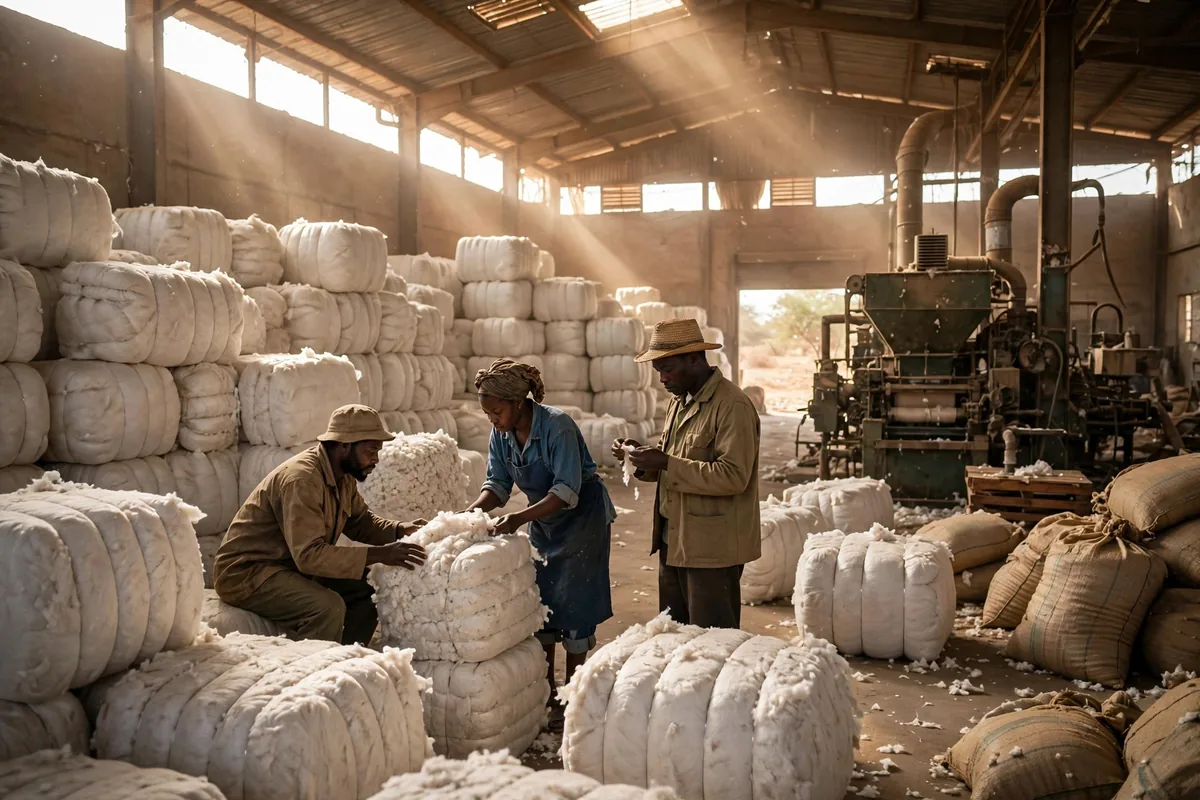
The chain runs like this: farmers deliver seed cotton to the gin, the gin produces bales, the bales wait in a warehouse for shipping schedules and paperwork, and then trucks carry them to a neighbouring country's port for export. Four nodes, three handoffs, and every handoff is a risk point.
The first risk sits at the gin gate. When harvest season peaks, seed cotton floods in faster than ginning capacity, and the overflow waits in open yards. Seed cotton hates rain and damp — one storm on an open stack pushes moisture content up, and the lint that comes out grades lower. That loss is not recoverable through cheaper freight; it is value destroyed at the source.
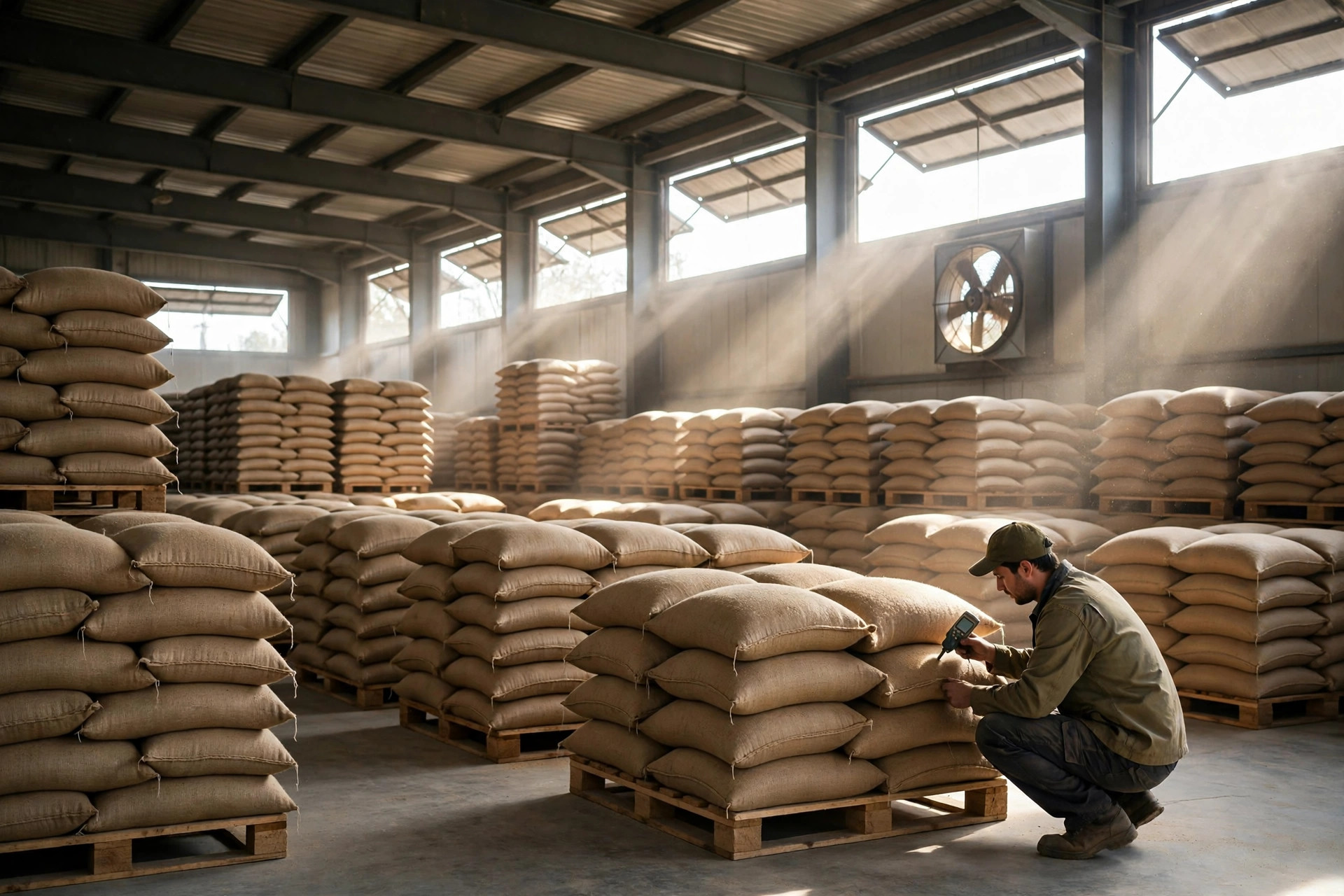
The second risk sits in the bale warehouse. Bales do not ship the day they are pressed. They wait for vessel schedules, consolidated loads and documents — often for weeks. If the warehouse is a basic shed, the rainy season brings rising damp from the floor and leaks from the roof, and the bottom bales take the hit first. A damp bale is not just heavier — damp fibre grows mould, discolours, drops a grade at classification, and can even be rejected by the buyer.
The third risk sits on the overland leg. With no coastline of its own, the country moves its bales by truck to a neighbour's port, and the transit warehouses along the way need the same moisture and security standards. One poorly kept transit shed can wipe out everything the earlier links saved.
Break the warehousing cost of this chain into its parts and there are really only three: the shed and yard itself, moisture control and ventilation running costs, and the hidden cost of grade loss and rework. The first two are visible line items. The third is the one most gins never book separately — they call the enclosed warehouse "too expensive" without ever recording what downgrades cost them in a season. My advice: from the next harvest season, book grade loss as its own line. One quarter of visible versus hidden costs, and the warehouse upgrade you actually need will show itself.
Here is the counterintuitive part: the link furthest from the port often decides the profit. Everyone negotiates ocean freight, while almost nobody prices the open stack at the gin gate — yet one grade lost there routinely costs more than the freight discount won at the negotiating table.
Keeping Burkina Faso Cotton Bales Dry: The Rainy-Season Ledger
Moisture control is best argued with a table. The figures below are a hypothetical example, built around a typical mid-sized gin to show the structure — not any real plant's accounts:
| Storage method | Investment per season (hypothetical) | Rainy-season damp bales (hypothetical) | Grade loss (hypothetical) |
|---|---|---|---|
| Open yard + tarpaulin | Lowest | ~8% | High |
| Basic shed + raised bale base | Medium | ~3% | Medium |
| Enclosed store + ventilation and dehumidifying | Highest | Under ~1% | Low |
Read it as a full-season cost, not a rent per square metre: the enclosed store looks most expensive until damp bales fall from 8% to under 1%, and the grade loss avoided usually repays the investment within a few seasons. The open yard's saving, by contrast, can be wiped out by a single rainy season of downgrades.
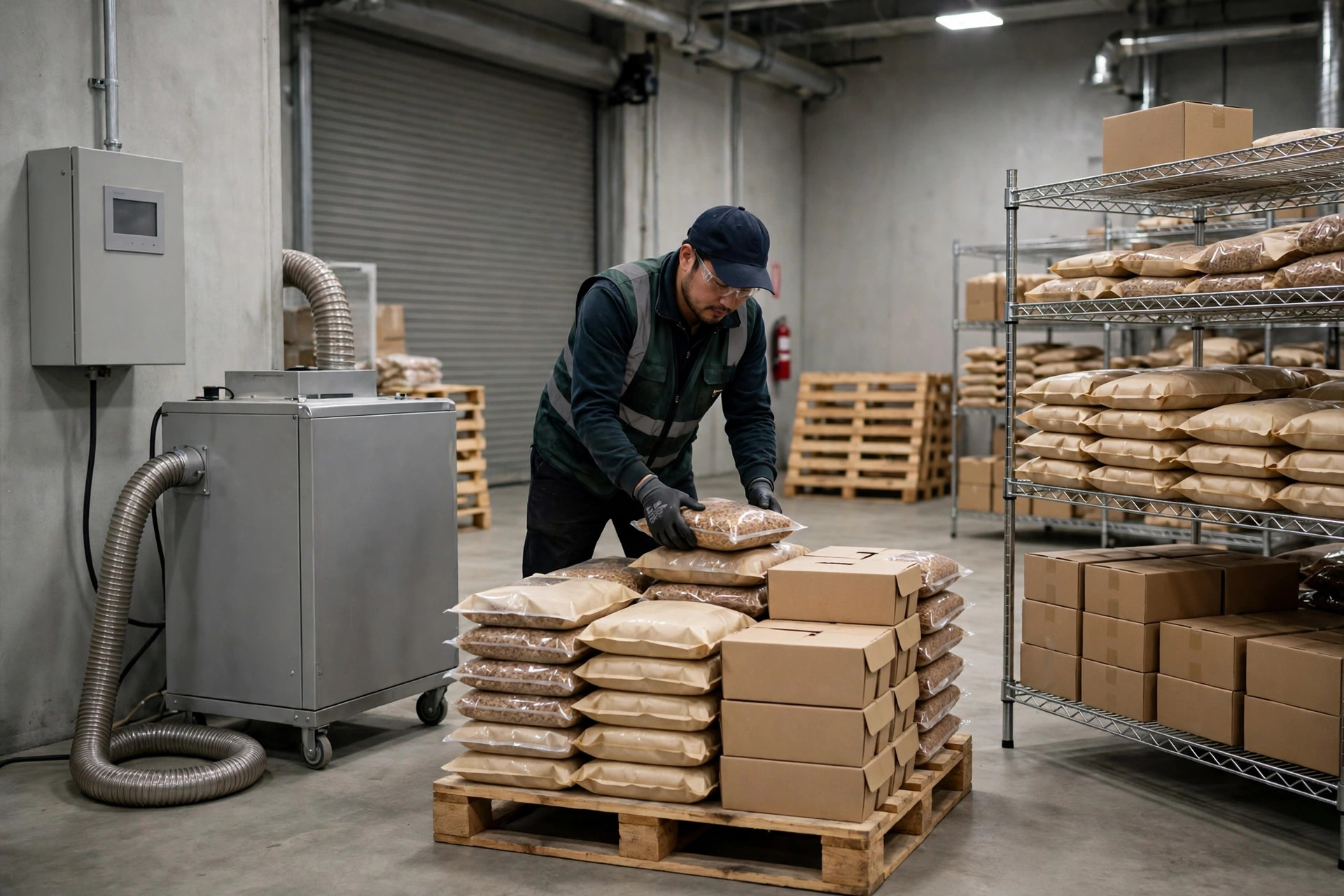
Three cheap measures do most of the work. First, raise every bale stack off the floor — rising damp is the bottom bale's worst enemy, and 30 centimetres of elevation plus a moisture barrier costs little and works immediately. Second, leave ventilation gaps between stacks: bales fear still air more than heat, and the unventilated corner is where mould starts. Third, inspect the roof and drainage before the rains, because a repair bill and a leak loss are not in the same league. None of this needs big capital. It needs someone to put it on the seasonal checklist.
Picture the arithmetic as a scenario: suppose a gin presses 5,000 bales in a season. At 8% damp in an open yard, 400 bales drop a grade; in an enclosed store with ventilation, under 1% means fewer than 50. The 350 bales in between are the return on the moisture investment. The numbers are hypothetical; the method is real — every point of damp rate avoided is value kept.
Grading, and the Local-Processing Shift
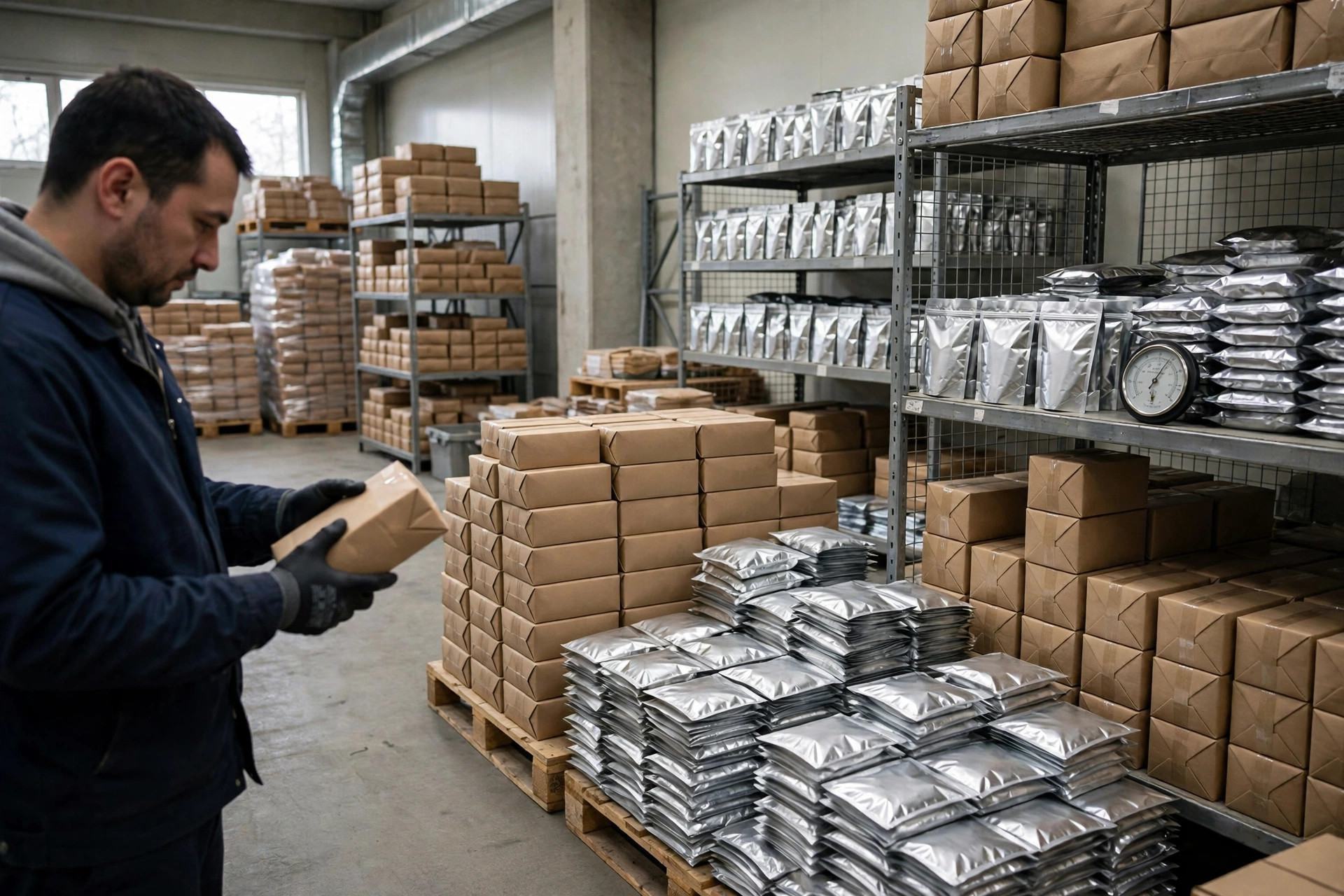
Grading is the chain's other big ledger. The same cotton, graded accurately, sells at a good price; mixed grades drag the good bales down with the bad. In the warehouse the rule is one line: store each grade in its own zone, label it clearly, never mix stacks. Mixing saves an hour today and costs rework and buyer discounts at dispatch — a trade that never pays.
Consider another scenario: suppose one export shipment carries 20% low-grade bales mixed in, and the buyer prices the whole lot at the low grade. The 80% of good cotton loses value with it, and a single shipment's loss can exceed a year's cost of running zoned storage. At that point, grade zoning is not "good practice" — it is the floor.
There is also a moving variable: local processing. On 9 November 2025, the National Cotton Handicraft Processing Support Centre (CNATAC), a joint venture with Italy, was inaugurated in Bobo-Dioulasso — a project worth over 1.5 billion CFA francs, about 2.6 million US dollars, with weaving, dyeing and sewing workshops. In September 2026, the TEXFORCES textile complex near Bobo-Dioulasso began operations, announcing investment of about 30 million US dollars to turn local cotton into fabric and uniforms.
For the warehousing bill, that changes the job. Until now, cotton left as raw material and the warehouse simply waited for a vessel. With local processing growing, part of the crop must leave the warehouse in batches against production orders, so storage shifts from "waiting for a ship" to "feeding a line". The gin warehouse now keeps two books: raw-material stock and processing feedstock, separately managed, first-in-first-out without exception. A production order's deadline is harder than a vessel schedule — one day of feedstock stockout stops the line for a day, and that loss is bigger than a downgrade.
So here is a conclusion you can calculate. The warehousing bill for Burkina Faso cotton is not about rent; it is grade loss plus stockout risk. Price moisture control on full-season cost: when an enclosed store with ventilation cuts the rainy-season damp rate from a hypothetical 8% to under 1%, the investment is typically repaid within a few seasons through avoided grade loss. Zone storage by grade to stop mixed lots, and keep a separate book for processing feedstock. Get those three ledgers straight and every handoff from field to port earns its keep. In one line: moisture control is the floor, grading is the profit, and local processing is the next variable — run all three numbers before talking about expansion. That is a calculation worth doing yourself if you work with West African cotton.
By Lao Zhou, Logistics Cost Analyst