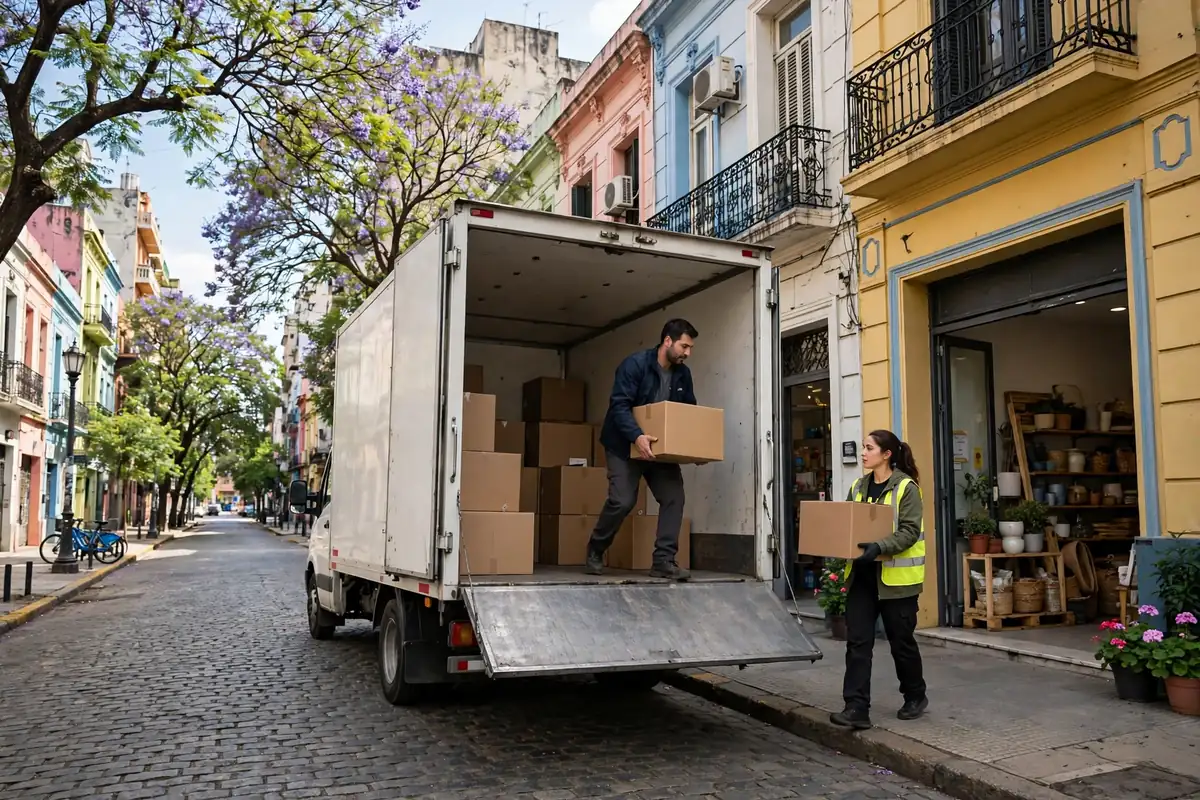
At 5:30 on a Tuesday morning I was parked on the shoulder outside the ring road, engine running, staring at a line of trucks that disappeared around the bend. That is Buenos Aires urban distribution in one picture: the freight is on the truck, the paperwork is in your hand, the city is right there — and you still cannot get in. Fifteen years behind the wheel, in plenty of cities, and Buenos Aires is one of the few that can still make an old hand nervous. It is not the roads. It is the rules, the old narrow streets, and a rhythm of its own. Bring another city's playbook and you will pay for it on day one.
That load was thirteen pallets for a supermarket in the old town, promised before eight in the morning. The satnav said a little over an hour from the suburban warehouse. I reached the ring road at half past five and spent more than two hours crawling in the queue. By the time I got to the store, the receiving clerk just shook his head: your window has passed, the next one is midday. A full truck, driven back to the warehouse. Fuel burned, hours lost, and the shop spent the day short on half its daily goods. The loss was not the freight bill. I had not learned this city's temper yet.
Getting In Is the Job: Buenos Aires Urban Distribution and Its Three Gates
The first gate is the time window. A big truck does not enter the city centre whenever it pleases. Plenty of streets restrict freight traffic during the day, and the morning and evening peaks are the tightest. You have to ask ahead: which streets, which hours, which vehicle, which papers. Do not trust the shortest line on the satnav — it does not know whether your truck is allowed on that street. I have watched rookies follow it into the old town until they could not reverse out and waited for the police to clear a path. Embarrassing and expensive in equal measure.
The second gate is the old town itself. These streets have been there a long time. They are narrow, they bend, and both sides are parked solid, so turning a big truck is a job in itself. Some lanes look passable until your mirror is a hand's width from the wall. My rule after all these years: the smaller the truck in the old town, the better. One big truck in a single trip sounds efficient. Two small vans sounds wasteful. But the vans arrive sooner, with no scrapes and no fines. Shippers doubt this until they have paid for one scrape and one missed window.
The third gate is the port queue. The port on the Río de la Plata is the front door for this city's freight. When a ship docks, the trucks line up to collect. Queuing cannot be hurried. Build the wait into the plan and never stack pickup hard against delivery. On pickup days I push the delivery slots back and promise a time I can actually keep. A customer can live with a late delivery. What they cannot live with is a promised eight o'clock that is still nowhere at eleven.
Those three gates add up to one lesson: in Buenos Aires urban distribution, the time on the road is not yours to decide. Follow the rules and you will get there, slow but sure. Fight them and the fastest truck will not help you.
City Warehouse or Suburban Warehouse? Run the Numbers
Every shipper who starts delivering in Buenos Aires has to answer the same question sooner or later: warehouse inside the city, or warehouse out in the suburbs? A city warehouse sits close to the customers and looks convenient. A suburban warehouse has space, easy access, and looks cheap. Both sides have a point. What matters is what you sell, where your customers are, and what time your trucks can move.
I ran the numbers once with a friend who distributes daily goods. He started in a small warehouse on the edge of the city, close to his biggest customers. But every morning his trucks struggled to get out, every evening they struggled to get back, and by day they fought private cars for the same roads. So he moved out to the suburbs, where the rent was lower and the yard bigger. Sorting moved to the night, after ten, and small vans ran the city deliveries by day. The road looked longer, but his team finished more trips a day.
Here is the comparison we sketched on paper that day. Fill it in with your own numbers:
| What to compare | City warehouse | Suburban warehouse |
|---|---|---|
| Distance to customers | Short, last mile is quick | Longer, one extra leg |
| Getting in and out | Restricted by day, lots of waiting | Easy access day and night |
| Rent | Higher per square metre, smaller space | Lower per square metre, bigger space |
| Sorting hours | Squeezed into the daytime | Done calmly at night |
| Best for | Small volumes, urgent orders | Big volumes, fixed routes |
The counterintuitive part sits right there in the table: the warehouse further from the centre can deliver faster. Those last few kilometres from a city warehouse look short, but if your truck cannot get in during the morning or out at night, the hours lost in traffic outweigh the extra leg from the suburbs. Do not measure the distance on the map. Measure the time the wheels are actually turning.
There is a second trade-off most people miss: a small city warehouse works best as a front store for your fastest-selling goods, topped up by small-van runs, while the suburban site does the heavy work as the main warehouse. Pair the two. In fifteen years I have yet to see one warehouse that solves every problem.
The Last Mile Is Won at Night
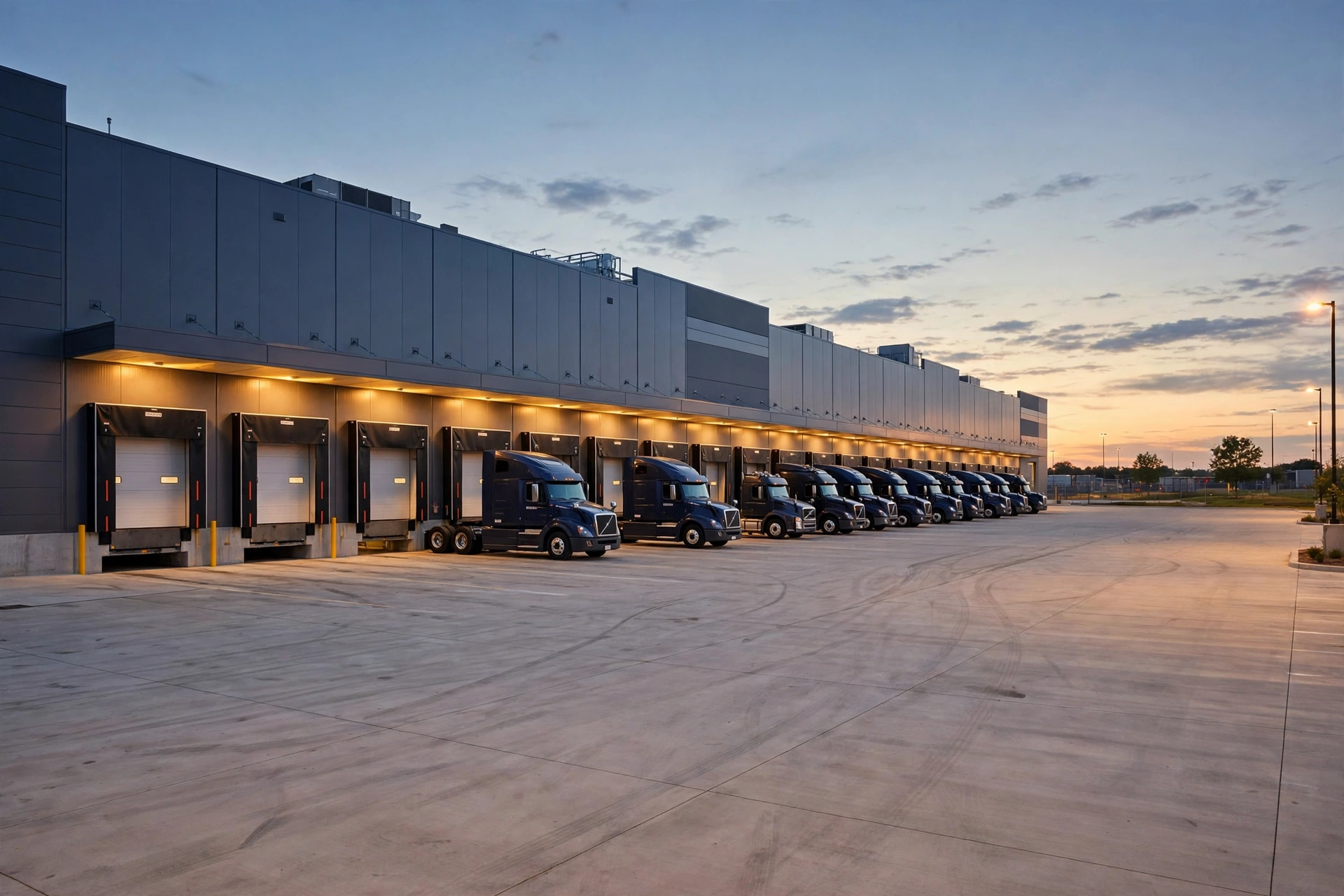
What changed my mind was a night shift at a suburban warehouse. By day the place was quiet. At nine every light came on and the forklifts, the picking, the loading ran in one smooth motion. By eleven the first small vans were rolling out along empty roads, and by two or three in the morning the goods were at the back doors of the shops. When the stores opened, the shelves were already full.
The trick has three parts. First, sort at night and deliver by day, dodging the worst hours of traffic. Second, let big trucks stay in the suburbs on the long leg, while small vans handle the narrow last stretch. Third, agree the receiving time with the customer instead of assuming it has to be eight in the morning. A midnight delivery with someone on site puts the goods on the shelf just the same, and saves a morning spent queuing at the door.
The money works the same way. One empty return trip costs a little in fuel and driver hours, but over a month those little amounts become a large one. One fine for entering outside the allowed hours, spread across the orders on that truck, eats the margin fast. Pay a little extra for the night shift instead, and you buy back two or three hours a day that would otherwise go to traffic. After fifteen years on the road, the rule I trust most is this: money saved on time is money really saved.
So here is my advice, in three plain sentences. First, before you come to Buenos Aires, talk to a local driver about the restrictions and the time windows, and treat the details as subject to the latest local rules. Second, do not rush to rent in the centre. Map your customers and delivery times first, then decide: main warehouse in the suburbs, front warehouse in the city. Third, do not fight the daytime traffic for the last mile. Sort at night, deliver in the early hours, try it for a month, and you will see how good this city is to drive at night.
There is an old saying among drivers: sharpen the axe before you cut the wood. In Buenos Aires, the axe is knowing how this city works. Once you know the rules, the warehouse, the roads, and the last mile all fall into place. Until you do, the best truck and the biggest warehouse will only leave you waiting outside the ring road. Ask your driver tomorrow morning: what exactly is our window into the city?
By Shifu Zhao, Trucking Veteran (15 yrs)