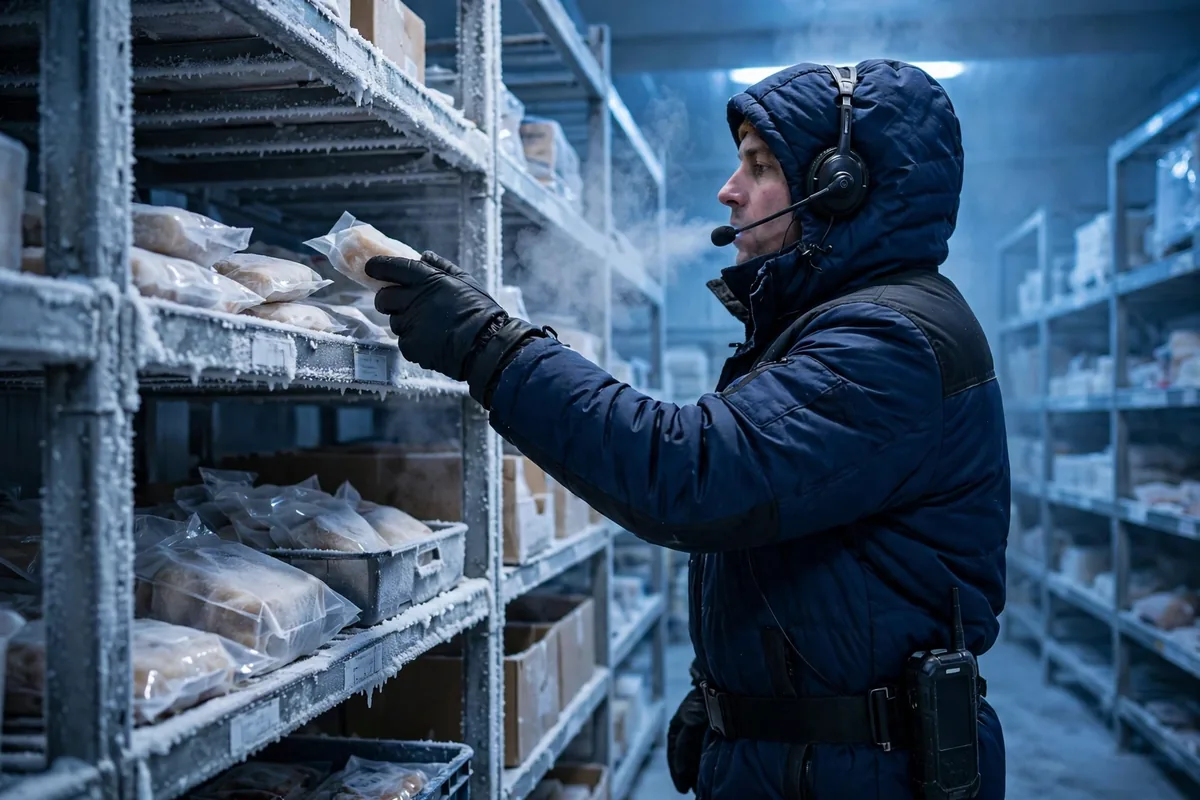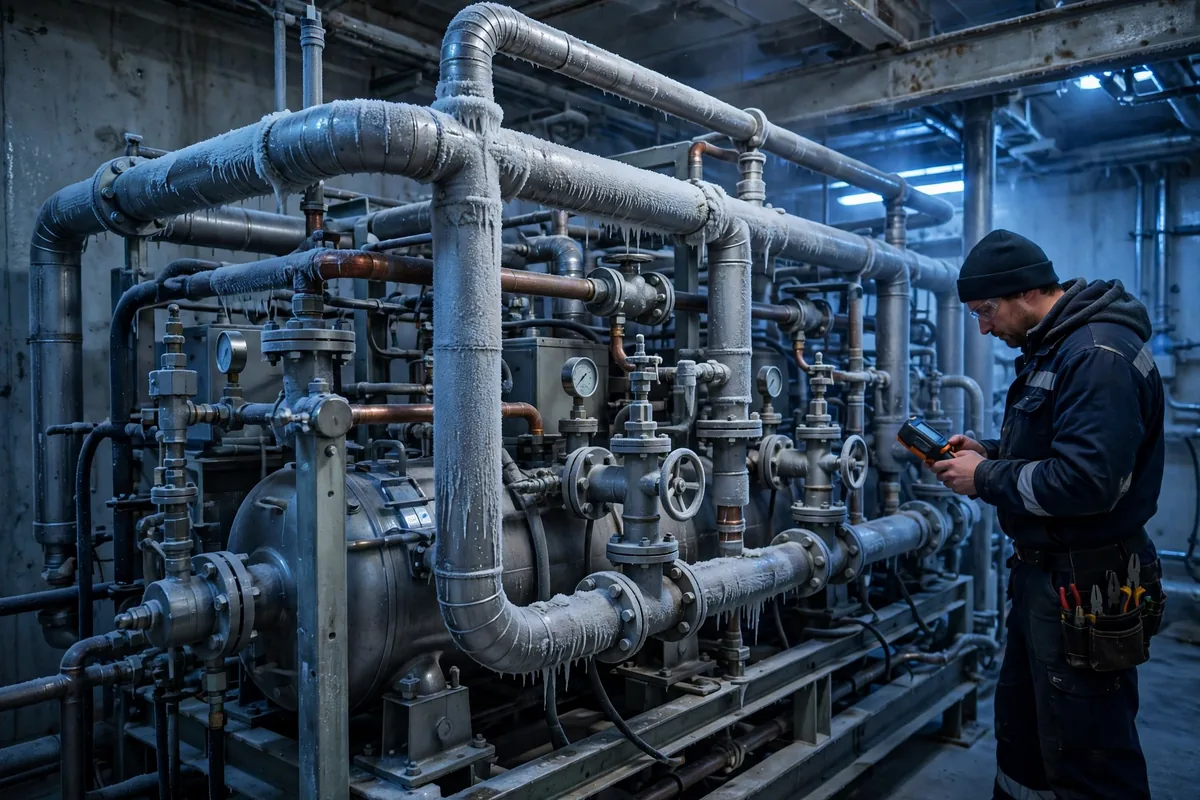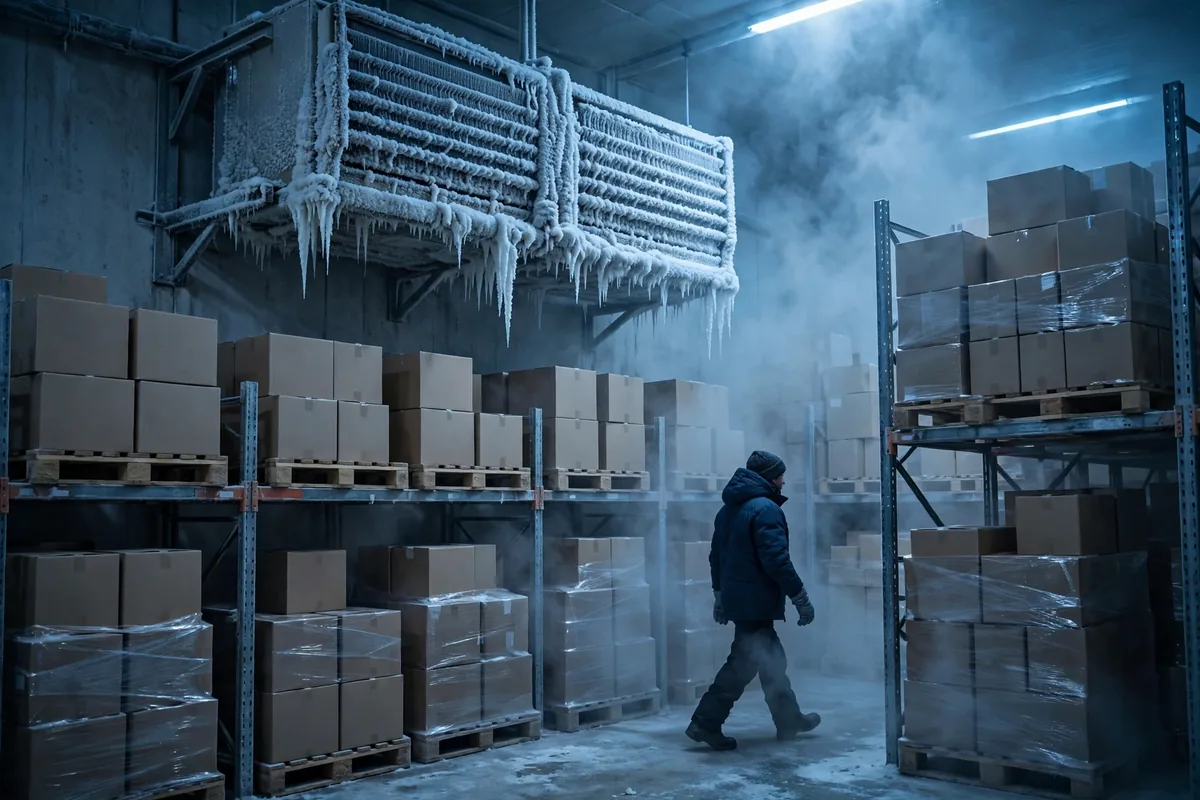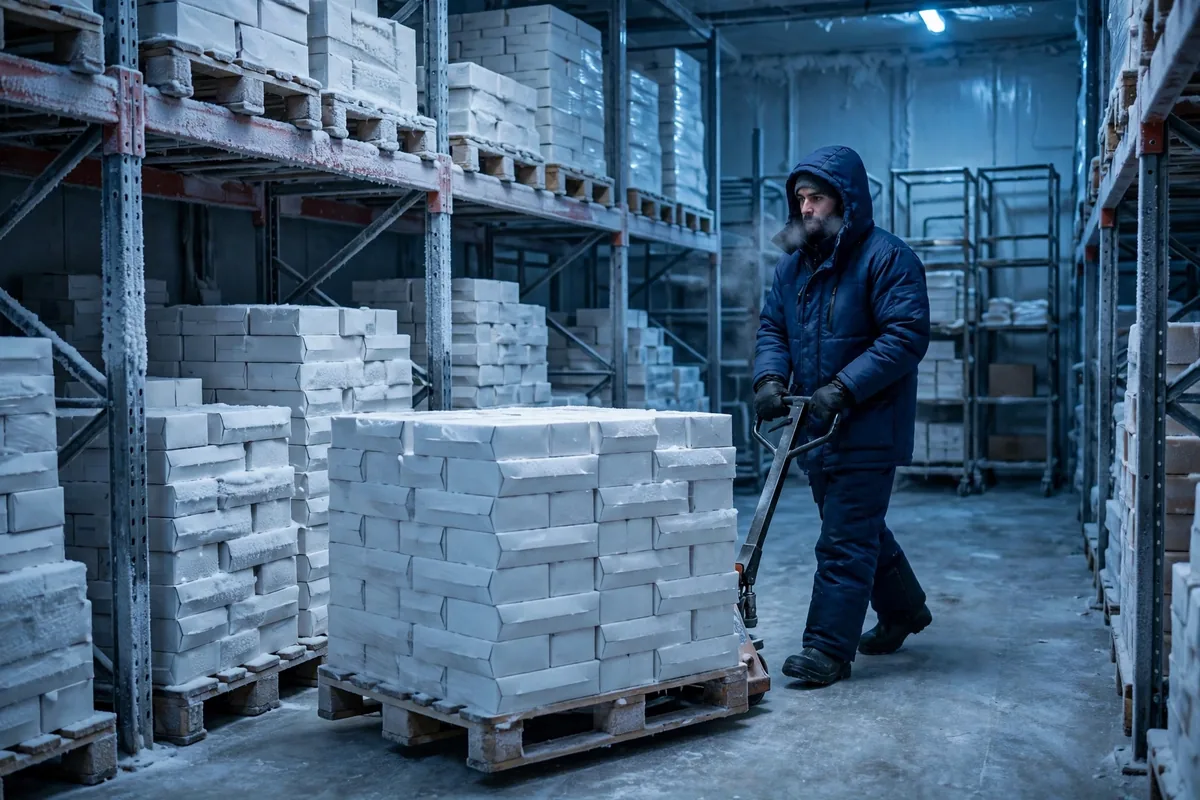
Two in the morning, the lights are still on outside the cold store, forklifts running load after load of freshly blast-frozen chicken inside, cold air spilling out through the door gap. Stand there for three minutes and your hands go numb. Old Liu on the night shift told me this batch has to be fully inside before dawn, or tomorrow's consolidation plan falls apart. I have run big warehouses, and I know this kind of night shift. In the brazil poultry export cold chain, time is not written on the roster. It is written on the thermometer.
The scale of the brazil poultry export cold chain is hard to overstate. In 2024 Brazil exported 5.295 million tonnes of poultry worth about 9.9 billion dollars, around 38.6% of world chicken trade, making it the largest chicken exporter on earth. In 2025 exports set another record at 5.324 million tonnes. Halal chicken alone runs above 2 million tonnes a year, also the largest in the world. The main markets are China, the United Arab Emirates, Japan, Saudi Arabia, and the European Union. Rio Grande do Sul alone accounts for about 13.5% of Brazil's chicken exports. When the volume is that big, a small cold chain mistake is measured in whole containers.
Brazil Poultry and the Blast Freezing Step You Cannot Skip
Here is a scenario illustration from a plant in Rio Grande do Sul during a busy month in 2025. Slaughter volume surged at night, and a queue formed at the blast freezing tunnel. One batch waited two extra hours in the processing hall before entering the tunnel. The surface looked frozen solid, but the core temperature had not dropped through. A spot check at cold storage passed, and only at consolidation in Santos did a recheck find the core running warm. The whole container was downgraded. Frozen goods fear exactly this: frozen on the outside, not frozen through on the inside. By the time you find it, it is too late.
To put it plainly, blast freezing is the step where you cannot cut corners. People tally cold chain costs by looking at cold storage electricity and freight, and the energy for blast freezing looks small next to those. But the life of frozen chicken is decided in the tunnel. Freeze slowly, the ice crystals grow large, the meat loses quality, and after thawing it weeps water. A customer can taste it straight away. That bill cannot be counted in kilowatt-hours. It has to be counted in cargo value. That is the leak no invoice shows in the brazil poultry export cold chain.
Our warehouse now runs two fixed checkpoints at this step, and they are crude but they work. One checkpoint is the clock: product that sits in the processing hall past the set limit triggers a red flag, and the shift leader has to come to the floor. The other checkpoint is core temperature sampling. We do not check the surface. We check the core, and the sampling rate goes on the handover sheet. Both checkpoints must pass before the goods enter cold storage. It makes the night harder, and it makes the daytime far easier.
Here is a counterintuitive call: a cold store holding its temperature does not mean the goods are fine. A cold store only maintains temperature. It cannot restore quality that was already lost. Product that left the blast freezer half-frozen will not be saved by a store running at minus eighteen. The low temperature only slows the damage. When something goes wrong, people blame the cold store, but the root cause sits in the blast freezing step. The cold store just takes the blame.
Brazil Poultry Consolidation Is About Temperature, Not Space
Frozen consolidation looks like a space problem, but it is really a temperature problem. Freight is the visible half of the brazil poultry export cold chain; the hidden half is the value lost when a container warms up. Different batches from different customers go into one container, and every door opening lets the cold out. Open the door once, the temperature climbs a little. The product thaws a little, freezes again, and loses a little more quality each cycle.
The table below is a hypothetical worked example. Do not read the numbers as real rates. Read the shape of the trade-off:
| Item | Option A: three customers in one container | Option B: two customers in one container |
|---|---|---|
| Loading rate per container | High | Lower |
| Door openings and loading time | Long | Short |
| Temperature swing inside | Large | Small |
| Risk of damage or downgrade | High | Low |
| Freight cost per container | Shared, cheaper | A bit more |
| Overall result | Saves freight, gambles value | Costs freight, protects value |
We have paid for this lesson ourselves. Once, to save one container of freight, we forced three customers' goods into a single box. Loading dragged on for most of the day, the door opened and closed, and the temperature inside kept climbing. The freight was saved. On arrival, one customer found excess thaw water and the batch was downgraded. The loss would have paid for several containers of freight. Since then we have a fixed rule: consolidation is judged on the temperature calculation before the space calculation. No matter how full the container looks, if the temperature math does not work, we do not consolidate.
Brazil Poultry When Avian Influenza Hits, You Spend the Slack You Saved
In May 2025, highly pathogenic avian influenza broke out on a commercial poultry farm in Brazil and hit trade. An event like that cannot be dodged from the warehouse side. Markets shift, sailings move, inspection requirements change, and stock in the cold store may have to sit extra days or switch ports and markets. A warehouse packed to the roof with zero slack has nothing to give when that day comes.
Here is another scenario illustration from the week the news broke. One exporter had three containers already queued at Santos when the destination port added an inspection requirement and the sailing slipped by several days. The goods sat extra days in reefer containers at the port, charges climbed, and the customer kept asking for delivery. What the exporter lacked most was not money. It was an empty slot in the cold store to hold goods for two extra days, and a document process ready to switch destinations at short notice. Empty space looks like waste on a normal day. On an emergency day, it is survival.
Emergency capacity is not built on the emergency day. It is saved up in advance. Our warehouse now keeps a small block of flexible slots permanently open, never filled, never borrowed, reserved for surprises. We also agreed a change-order process with the forwarder in advance: which documents can change, how long a change takes, what paperwork is needed, all written down and pinned on the duty room wall. When something really happens, we follow the sheet instead of improvising.
The sailing rhythm out of Santos comes down to one sentence: frozen goods cannot wait. Sailings, port yards, and reefer slots either line up or they do not, and when they do not, the cargo sits in the port burning money and quality. We check the sailing schedule every morning and again every afternoon, and the moment a sailing changes, the loading order for the day changes with it. Never wait until the goods are loaded to learn the ship has moved. By then, every fix is too late.
A reminder for fellow operators: frozen chicken stays frozen because four steps all hold together, blast freezing, cold storage, consolidation, and sailing out. None of them can carry the chain alone. The weakest points are almost always the handovers: processing hall to cold store, cold store to forwarder, forwarder to port. Put a temperature checkpoint at every handover. When those hold, the cargo holds. When they fail, everything before them was wasted effort.
By Chen Feng, Warehouse Operations Manager