Here is the bottom line first: Brazilian pork exports have genuinely taken off over the last couple of years, but what keeps a warehouse up at night is not the volume. It is a temperature break, or a document getting stuck, leaving a whole shipment stranded with nowhere to go. Rising volume is good news, but in cold chain, the faster things grow, the sooner you have to ask: what happens when it breaks?
In 2025, Brazil exported roughly 1.5 million tonnes of pork (ABPA figures), a record, up 11.6 percent on the previous year, worth about 3.62 billion US dollars. For the first time, Brazil passed Canada to become the world's third-largest pork exporter. The biggest buyer was the Philippines, which took 392,900 tonnes, up 54.5 percent year on year. On the production side, Brazil produced about 5.59 million tonnes in 2025, making it the fourth-largest pork producer in the world. The opportunity is real. So is the pressure. Brazil pork export cold chain warehouse work is where that pressure lands first.
When the Philippines buys half as much again in a single year and vessel schedules tighten, the queue of reefers outside the cold store gets longer. Every extra day cargo waits outside, the risk climbs a notch. I am not trying to scare anyone: a reefer waiting for a plug point warms up little by little, and by the time it finally gets into the store, the temperature record already looks bad. When volume rises, turnover is always the first thing to show strain, and what falls behind is not the equipment. It is the shift roster and the outbound sequence.
Put simply, when export volume jumps by half, everything has to jump with it: reefer plugs at the port, turnover inside the cold store, and the flow of documents. Whichever link does not keep up breaks first. I have seen this scene too many times: orders come in thick and fast while the warehouse turns chaotic, with nobody sure which batch ships first and which ships last, and near-expiry stock buried at the back of the cold store until someone notices it has only days left.
Brazil pork export cold chain: volume is up, can the warehouse keep up?
This is a trade-off, and both sides carry a cost. Turn orders down and you watch competitors take the market. Take them and the cold store's capacity, reefer plug points, and labor shifts all become hard constraints. When the Philippines buys half as much again in a single year and vessel schedules tighten, the queue of reefers outside the cold store gets longer. Every extra day cargo waits outside, the risk climbs a notch.
My advice to clients has always been to count the cost before counting the gain. Expanding cold storage costs money. Adding people costs money. Renting more reefers costs money. Those are the visible costs. The invisible one is what happens when turnover gets messy and first-expired-first-out stops being enforced: near-expiry stock sits inside while fresher stock ships first, and by the time anyone notices, the loss is already done. So when volume rises, the first job in the warehouse is not adding rack space. It is fixing the outbound sequence as a rule that nobody can override, not even the most experienced supervisor.
One more detail: expiry dates. Different batches of pork can have expiry dates days apart, and if they are not stored separately on intake, nobody can tell them apart at outbound. Our rule is first-expired-first-out, written into the system, and nobody gets to override it, no matter how experienced. A veteran supervisor's memory is good, but it is no match for a location map that shows expiry clearly. Memory works when volume is small. When volume is up by half, memory stops working.
The other trap is documentation. Pork export paperwork is more punishing than chicken: veterinary certificates, certificates of origin, and the destination's inspection requirements all have to be exactly right. The cargo sits in the cold store, the paperwork stalls somewhere, and the reefer stays plugged in with charges ticking by the day. There are two sides to this. Sometimes a document delay is a policy change in the destination country, and that is not your fault. But if you never checked the document checklist in advance, that one is on you.
The three things a cold-chain warehouse fears most
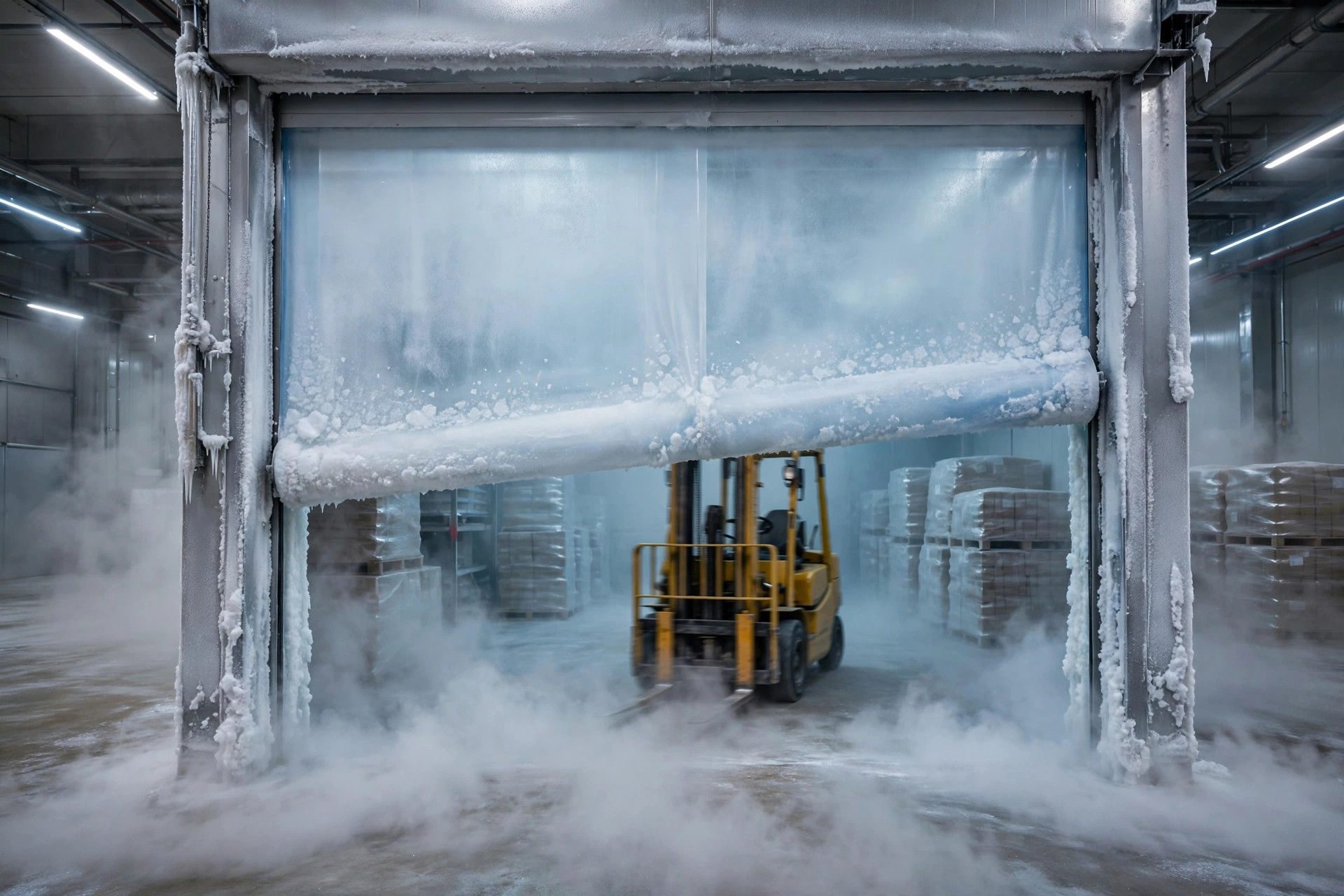
The first is a power cut. I have seen it too many times: nobody on duty over the weekend, power out for hours, and on Monday morning the whole cold store's temperature records are a mess. Whether the product can still be sold, whether it has to be downgraded, and who pays for it can take months to argue out. Reefers waiting at the port are no different. Plug points run short, containers queue for a socket, and after half a day the product temperature starts creeping up.
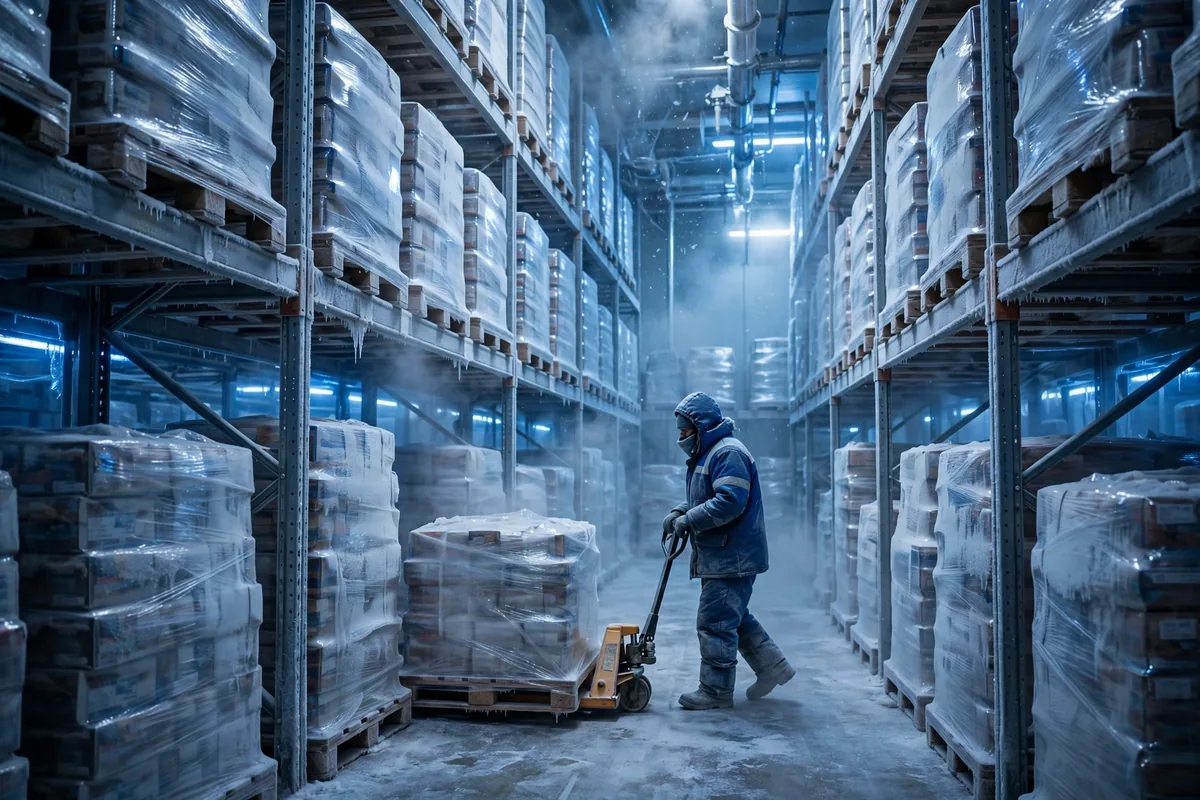
The second is mixed batches. Different batches with different expiry dates stacked together, and the wrong one gets picked. When the destination port finds out, the whole container can be held. Pork batch management is more complicated than it looks: product that arrived on the same day can have expiry dates days apart, and if the location map does not show that clearly, pickers fall back on experience. Experience is not something to bet a shipment on.
I have seen a warehouse where two batches arrived the same day with expiry dates days apart, nothing marked on the location map, and the picker grabbed one on feel. The destination port caught it and held the whole container. The shipper told me later that the cargo loss was the smaller part. What he lost was the buyer's trust, and from then on the Philippine buyer added an extra inspection to every order. That is the real price of a mixed batch: on the surface it is one container, underneath it is a customer relationship.
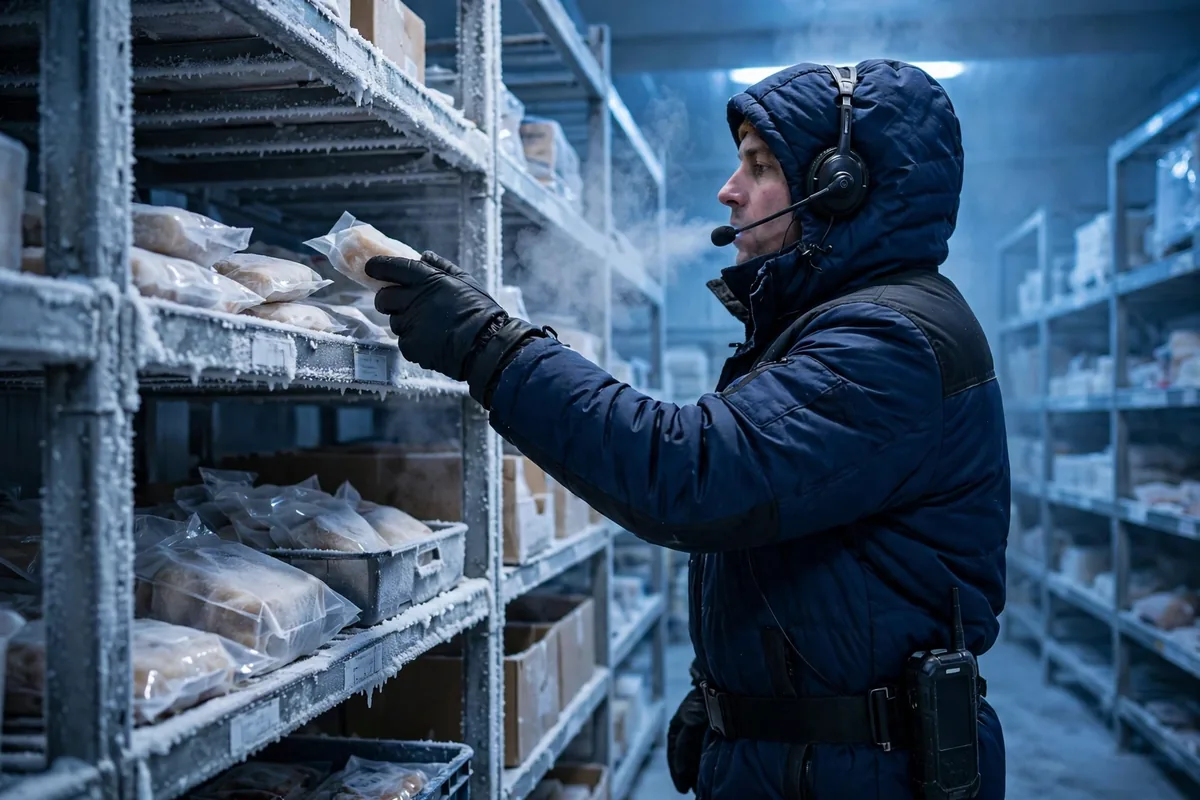
The third is watching volume and ignoring temperature. Many warehouses are measured on throughput alone: how many containers shipped today, how many tomorrow. Temperature records are the thing nobody reads every day. Temperature looks fine most of the time, and then a claim comes in and someone pulls the logger curve and finds the temperature spent several nights hovering right at the limit. By the time the cargo reaches the Philippines and the buyer inspects it, every problem surfaces at once.
There is one more point people overlook: the temperature loggers themselves. They need regular calibration, fresh batteries, and someone who actually reads the data every day, not only after something goes wrong. I have seen loggers run out of battery and leave gaps of several days in the data without the shipper even knowing. When a claim comes and you cannot produce a continuous temperature curve, even the strongest case falls apart.
At the end of the day, none of these three fears is an equipment problem. All three are people problems. Power cuts are feared because nobody is on duty. Mixed batches are feared because the location map is not marked. Temperature is feared because nobody reads the records daily. Equipment can be bought with money. Rules can only be built by people. When volume rises, fixing the rules first matters more than adding rack space. That is the reality of Brazil pork export cold chain warehouse work at today's volumes.
So is the cold chain math worth it?
It depends how you do the math. Count only freight and storage, and of course it looks good: volume up, unit cost down, margins better. But add in the cost of a break, one rejected container, one claim dragging on for months, one buyer who never orders again, and the math has to be redone. Cold-chain math can never be done only for the days when everything goes smoothly.
My advice comes down to one sentence: before taking the order, ask the warehouse three questions. If the power goes out, how fast will anyone notice, and how fast can it be restored? Does near-expiry stock have its own locations and outbound priority? If the documents get stuck, who pays for the reefer while it waits? If those three questions have no answer, the more orders you take, the bigger the hole you dig.
Brazil has just climbed to third place among world pork exporters. Whether it holds that spot will not be decided by how much export volume grows next year. It will be decided by whether these three things inside the warehouse actually hold. Volume is the face. A cold chain that does not break is the substance. On the Brazil pork export cold chain warehouse lane, the opportunity is real and so are the traps. If you want to stay in this business for the long run, fix those three things inside the warehouse first, then talk about how many orders to take.
By Lao Mi, Supply Chain Veteran (20 yrs)