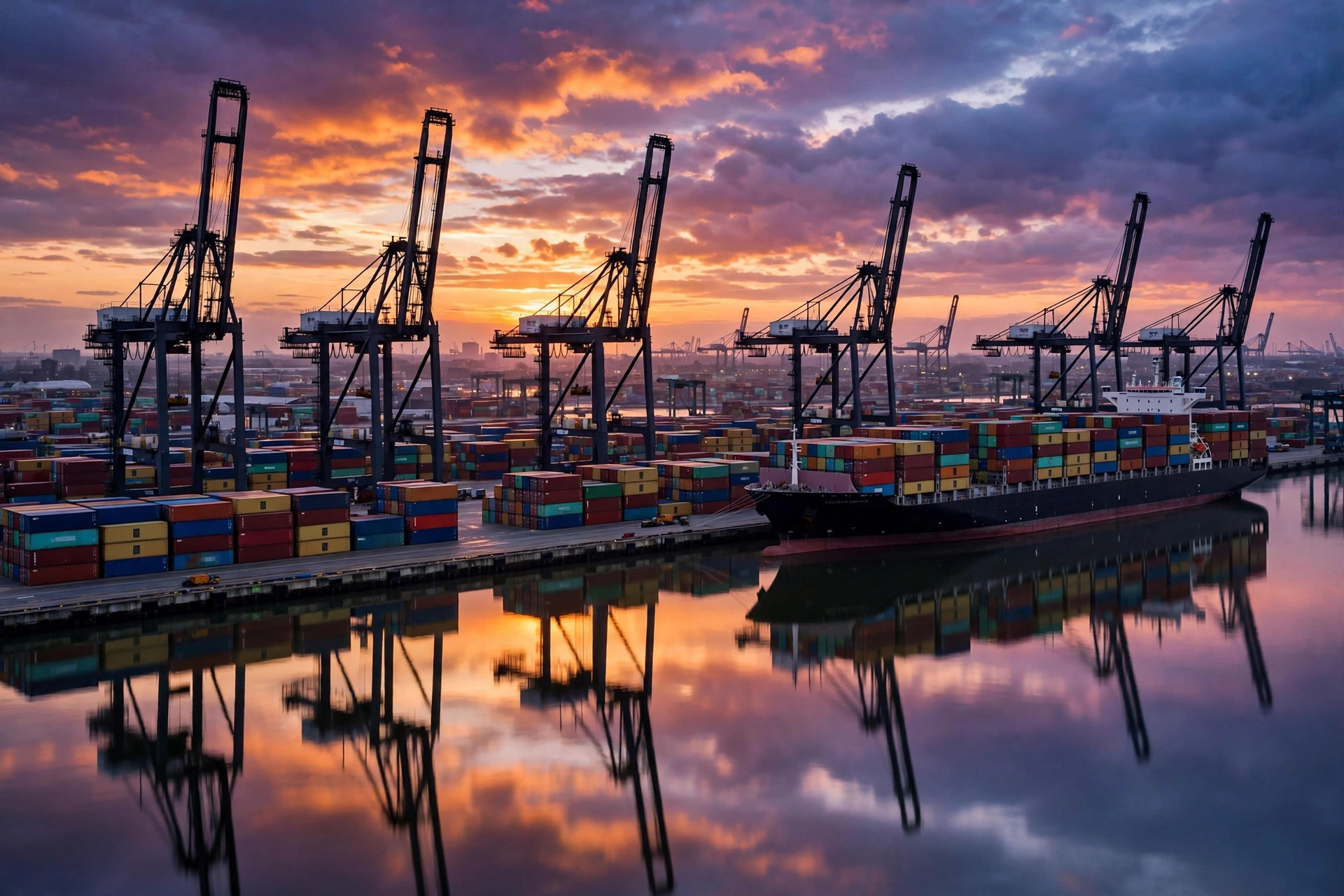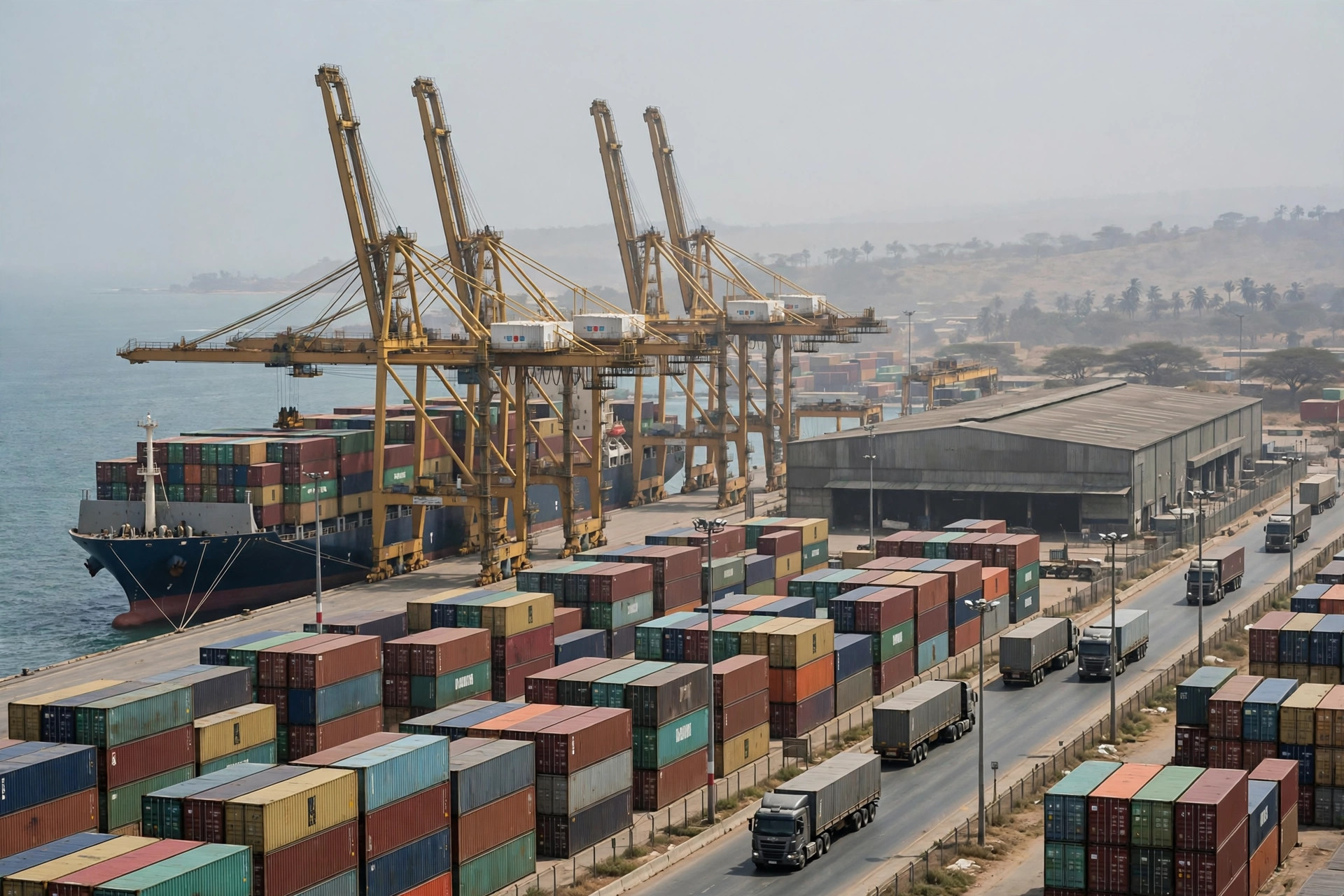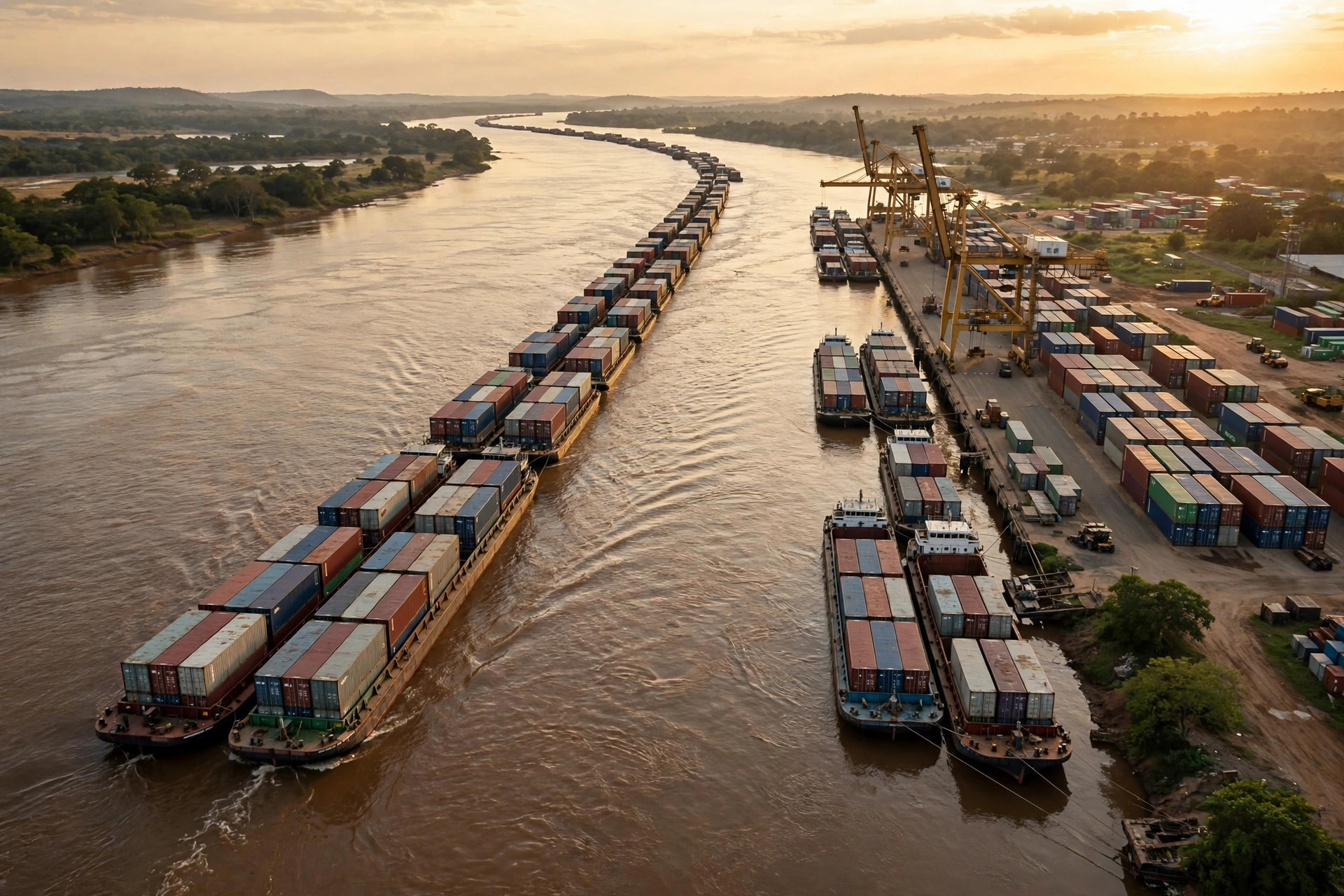
Start with the math on Panama Canal warehouse distribution. Same shipment, Shenzhen to Lima: how much separates direct shipping from the distribution play? Direct is simple — one 40-footer sails 30-plus days to Callao, clear, dray, deliver. But what if you're also supplying buyers in Panama, Colombia, Jamaica, and the Dominican Republic? Four countries direct means four boxes, four clearances, four drays. Run small-lot orders that way and logistics eats your margin down to the bone.
That's when you open the map and look at the Atlantic mouth of the canal: the Colón Free Zone. In 2023 the zone logged US$19.7 billion in imports, up 41.1% year on year, with more than 2,600 companies running re-export business (trade-press figures). The numbers say one thing: plenty of people have already done the math on Caribbean and Latin American distribution through Panama. You're the one who's late.
The Location Math: Why Colón
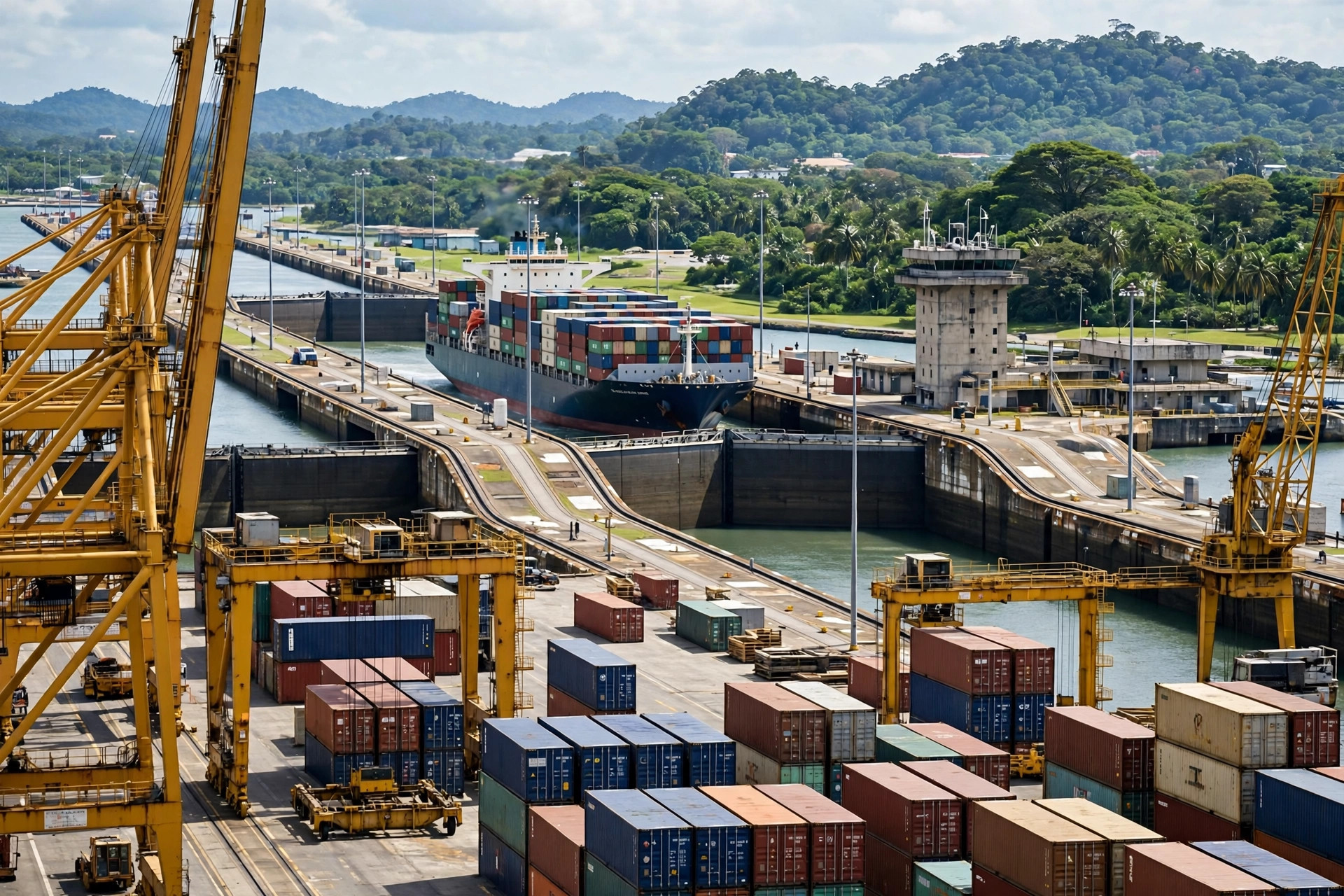
The Colón Free Zone sits at the Atlantic entrance of the Panama Canal, backed by the Atlantic-side container port cluster, with a 76-kilometer railway running south to Balboa on the Pacific side — holding both ends of the canal at once. Your Asia-origin cargo discharges at Colón and enters the zone; for South America's west coast, rail to the Pacific side and reload, or run Caribbean feeders straight from the Atlantic side.
For a distribution play, that location translates into money in two sentences: first, the headhaul rides large-vessel, full-container economics; second, the spokes to neighboring countries are short and frequent. One box into Colón, broken into ten lots for ten countries — each lot's headhaul cost is a fraction of a direct full container. That is the entire reason distribution centers exist: trading scale for fragmentation.
The Tax Math: Which Bills Disappear
The zone's tax framework fits in three lines: goods entering the zone are free of import duties; in-zone movements don't stack taxes; the income-tax treatment of re-exports follows the current registration regime — that last line gets fine-tuned regularly, so get it confirmed in writing by a Panamanian tax adviser before you sign. I'm not carrying that risk for you.
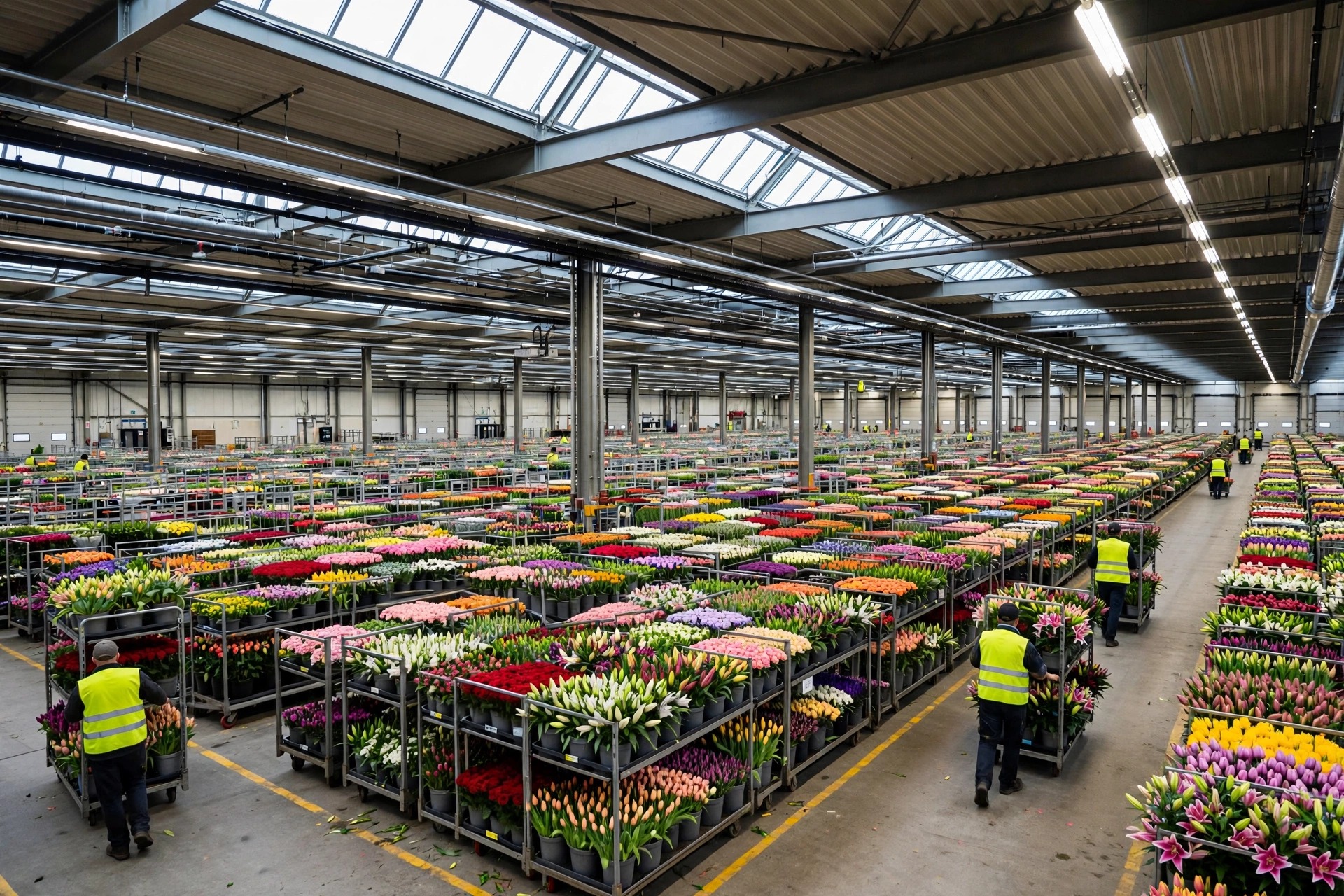
The zone also allows deconsolidation, relabeling, repackaging, assembly, and light manufacturing. So your "distribution" doesn't have to be pass-through: swap Chinese labels for Spanish ones, break bulk into retail packs, bundle SKUs into promo sets — do the value-add inside the zone, then distribute. The added value and the margin stay in your hands.
Two Ways to Play: Direct vs. Panama Canal Warehouse Distribution
A client of ours sells 3C accessories out of Shenzhen to distributors in seven or eight Caribbean and northern South American countries, often just dozens of cartons per order per country. They used to ship direct per country: never enough for a full box, so LCL — and LCL priced by volume makes small-lot freight brutally expensive per unit.
I ran the two plays side by side:
| Cost line | Play A: direct per country | Play B: Colón distribution |
|---|---|---|
| Headhaul ocean | Multiple LCL lots, high unit rate | Full container to Colón, lowest per-unit cost |
| Destination clearance | A full set per country — agent fees × N | One entry procedure into the zone |
| Warehousing | Safety stock parked in every country | Consolidated in Colón; total inventory drops |
| Spoke delivery | None (direct) | Short feeders Colón → each market |
| Cash tied up | Scattered across countries | Concentrated, but turns faster |
Play B came out more than 20% cheaper overall — but the real gap wasn't money, it was lead time. A distributor places a rush order; the Colón warehouse puts it on a feeder within 48 hours. Direct shipping waits two weeks to consolidate. Money well spent.
The mirror-image case: a transshipment trader moving Asia-to-east-coast-South-America cargo used to run pure pass-through — boxes transshipped at the Colón port without entering the zone. Then they moved relabeling and mixed-SKU consolidation inside the zone: duty-free entry, Spanish labels applied, then out. Destination clearance went through in one pass, inspection rates dropped. Put the value-add inside the duty-free zone and you save the destination country's tax base — and its headaches.
Three Ways to Waste the Money
Bluntly: not every cargo deserves the Colón treatment. Three cases where setting up there is money down the drain.
First, high value density, small lots. If your goods are worth hundreds of dollars per kilo, air freight direct to destination can beat "ocean to Colón plus warehousing plus feeder" on cost — and it's two weeks faster. Distribution saves scale money; when value density is extreme, scale can't cover the time cost.
Second, the Venezuela direction. The Colón zone has historically been a buying ground for Venezuelan merchants, but shipping to Venezuela today starts with sanctions screening (31 CFR Part 591, OFAC's SDN list plus the 50% rule). Cargo sits in Colón while the money route isn't cleared, and the warehouse rent keeps running. For that lane, compliance comes before site selection.
Third, Brazil. For Brazil, Santos direct-sailing frequency and rates beat a Colón detour. A distribution hub only works on the "many countries, small lots" structure; a single big market is always cheaper direct.
The decision framework is one line: value density × order fragmentation. Low value density, orders shattered like glass — go to Colón. Otherwise, ship direct and stop following the crowd.
Don't Forget the Last Mile
One last line item forwarders most often underprice: the few kilometers from the free-zone warehouse to the quay. The quote lists headhaul ocean, in-zone warehousing, feeder freight — and forgets the short-haul dray, port charges, and security escort. Around the Colón port area those few kilometers, plus peak-season queuing time, spread across small lots, are not cheap.
My rule: a distribution quote must carry a line for "in-zone drayage plus port charges," billed per box at actuals, never buried in a vague "miscellaneous." Vague miscellaneous always ends up paid by the forwarder.
The Verdict: A Formula You Can Compute
Whether to set up in Colón isn't a gut call. Run the formula:
(Annual direct-shipping logistics cost − annual Colón distribution total cost) ÷ annual fixed cost of the Colón setup > 1 → do it.
Numerator from your last 12 months of real shipment data; denominator from quotes by three in-zone warehouse providers. Above 1, the distribution center is a money printer; below 1, your volume isn't ready for the scale game yet — keep shipping direct.
The canal moved 13,404 transits in FY2025 on US$5.7 billion of revenue (canal authority preliminary figures), and Colón Free Zone re-exports were up 26.5% year on year through the first seven months of 2026. The big ships keep coming, which means this distribution corridor only gets busier. But the boom belongs to everyone; the math belongs to you. Calculate first, then move.
By Lao Zhou, Logistics Cost Analyst