A California 3PL turned phone returns from a cost center into its most profitable line. Here is how they built the operation: inspection benches, grading lines, certified data wiping, and the outsource-or-build call on refurbishment.
In early 2024, an 80,000-square-foot 3PL warehouse in Industry, California signed a new client: a seller of refurbished iPhones on Back Market, the marketplace for renewed electronics. The freight didn't come from a factory. It came back from all over the country — buyer returns inside the 30-day window, trade-in devices, warranty swaps. The first week brought 1,800 units, and the warehouse froze. Everything that made their forward operation fast — scan, put away, move on — was useless against a pile of phones where no two units were alike. Different cosmetic condition, different battery health, and some still locked to the previous owner's iCloud account.
The owner, Chen, told me something I've repeated ever since: "In forward logistics you manage SKUs. In reverse, you manage every single unit." Three months later the building was processing 400 to 600 devices a day — inspection, grading, refurbishment, relisting, one smooth line — and the reverse operation was out-earning forward storage on margin. Here's the playbook, in four parts.
The inspection bench is the heart of this business, not a side station
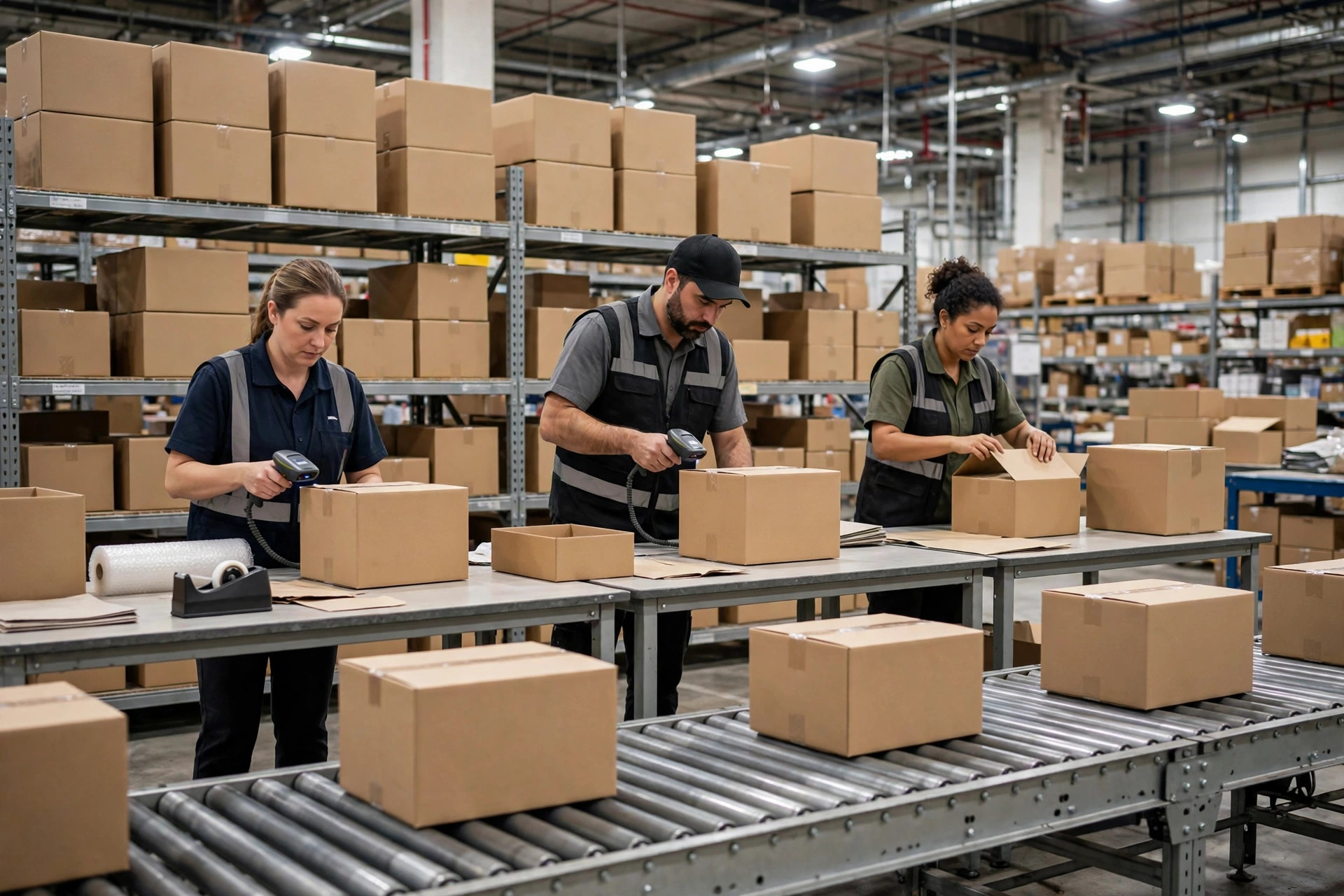
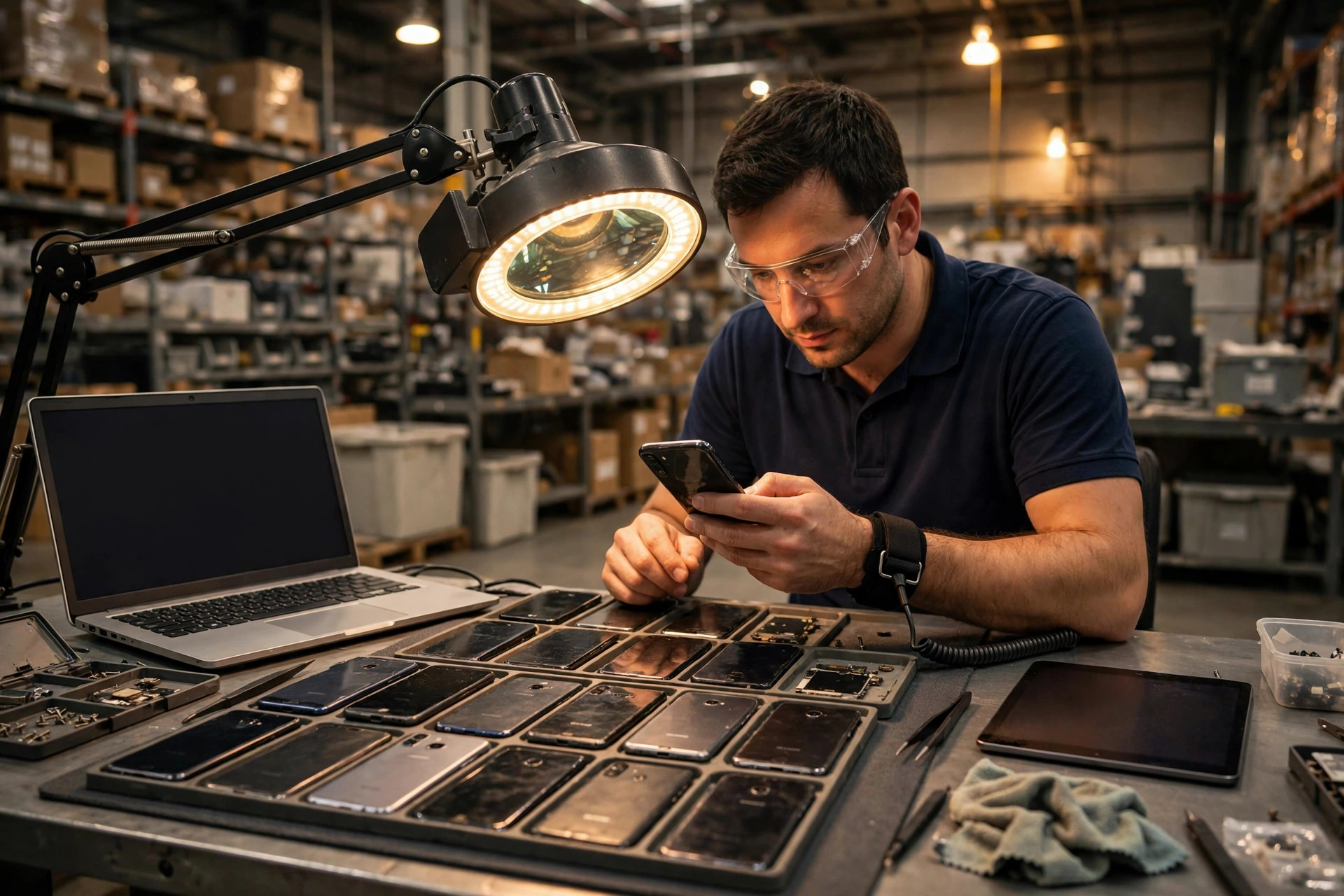
A forward receiving dock is built for speed. A reverse inspection area is built for accuracy. Chen converted two dock doors into a row of 12 inspection benches, each with an anti-static mat, a grounded wrist strap, a bright flashlight, and a barcode scanner. The sequence never changes: unbox, photograph all six sides, power on, scan the IMEI into the system, run diagnostics. The seller provides the diagnostic software — 30 seconds per phone, and it reports battery health, touch response, cameras, Face ID, and speakers, each one checked off.
A trained tech takes 8 to 12 minutes from unboxing to a finished inspection report. Rookies get burned in two places. First, iCloud activation lock: the phone boots to the welcome screen but is still signed into someone else's account. That unit is bricked — zero refurbishment value, straight to parts harvesting. Second, water damage: the outside looks mint, the logic board is green with corrosion. So the iron rule is that no unit gets graded until it has powered on and finished diagnostics, no matter how clean it looks. Every report is archived by IMEI, photos kept for 90 days — when a Back Market buyer disputes a listing as "not as described," that archive is the seller's evidence chain.
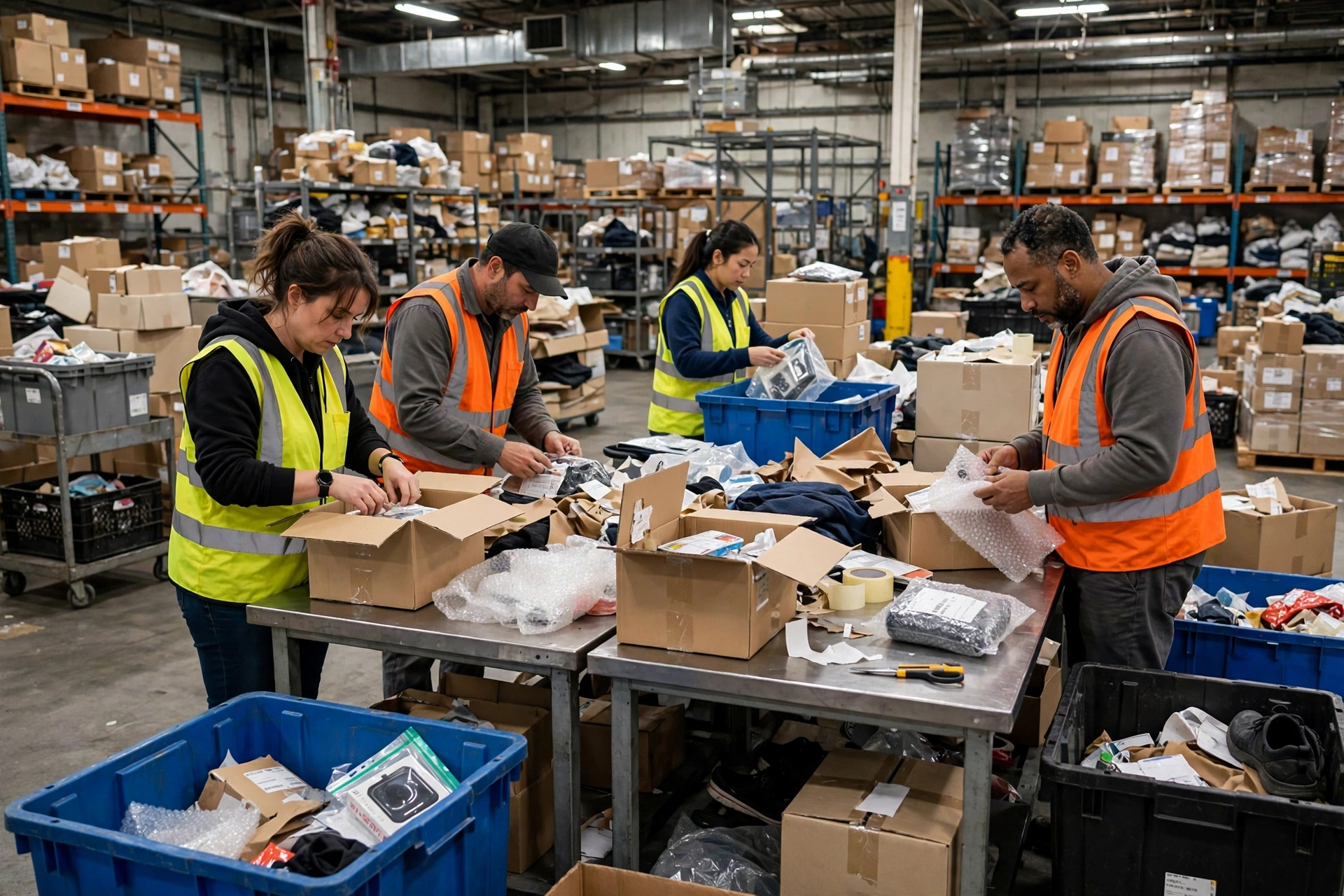
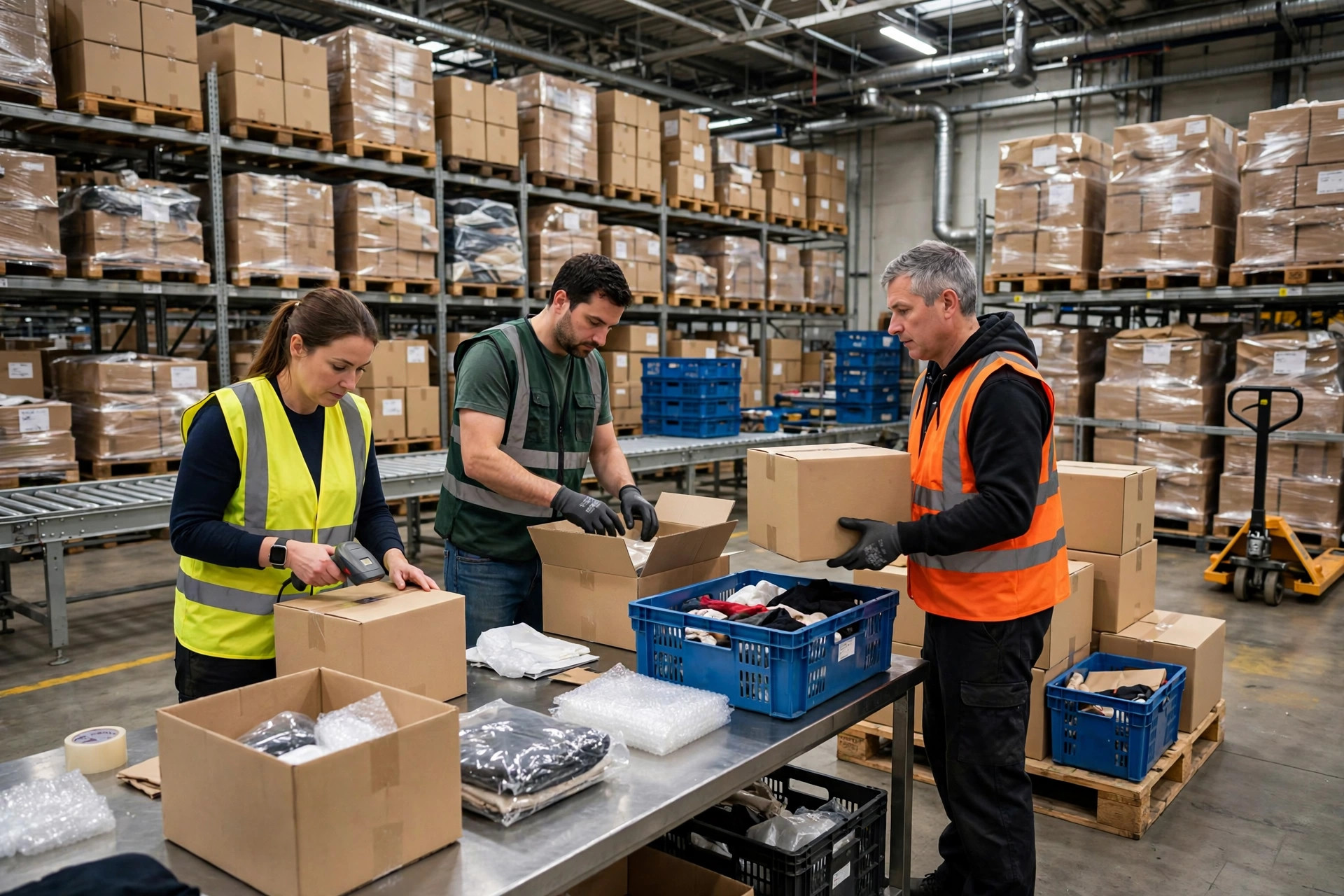
One more detail: the inspection area is physically separated from forward receiving. Refurbished returns arrive in chaos — random cartons, bubble mailers, bare devices — and the packaging waste gets recycled on its own stream. Mix it into forward packaging once, and your cycle counts stop reconciling.
Where you draw the A, B, and C lines is where your pricing power lives
There is no universal grading standard on the platform side (Back Market's specific cosmetic-description requirements change — check their current seller policy), so Chen's team built their own with the seller, three grades with lines drawn in concrete terms:
Grade A: no visible screen scratches (invisible under bright light at 30 cm), battery health above 90%, no frame dents. Sold as near-mint, the profit engine, roughly 30% of inbound volume.
Grade B: light screen scratches that don't affect the display, battery health 85-90%, one or two small frame dings allowed. About half of inbound volume, the workhorse, typically priced 15-25% below Grade A.
Grade C: heavy scratches or a non-original replacement screen, battery below 85%, obvious body damage. Don't chase margin here — some units get a new battery and sell as budget traffic-drivers, the rest get parted out. Screen assemblies, camera modules, logic boards: parts revenue is sometimes steadier than whole-unit sales.
Grading dies the moment it becomes vibes-based. Every bench has a laminated reference card with real photos showing exactly what an A, B, or C scratch looks like, and new hires study the cards for three days before touching a unit. Inspection and grading are done by two different people who check each other — the inspector wants to grade high to keep things moving, the grader owns post-sale disputes and wants to grade low. The tension keeps the standard honest.
If data wiping fails, everything before it was wasted
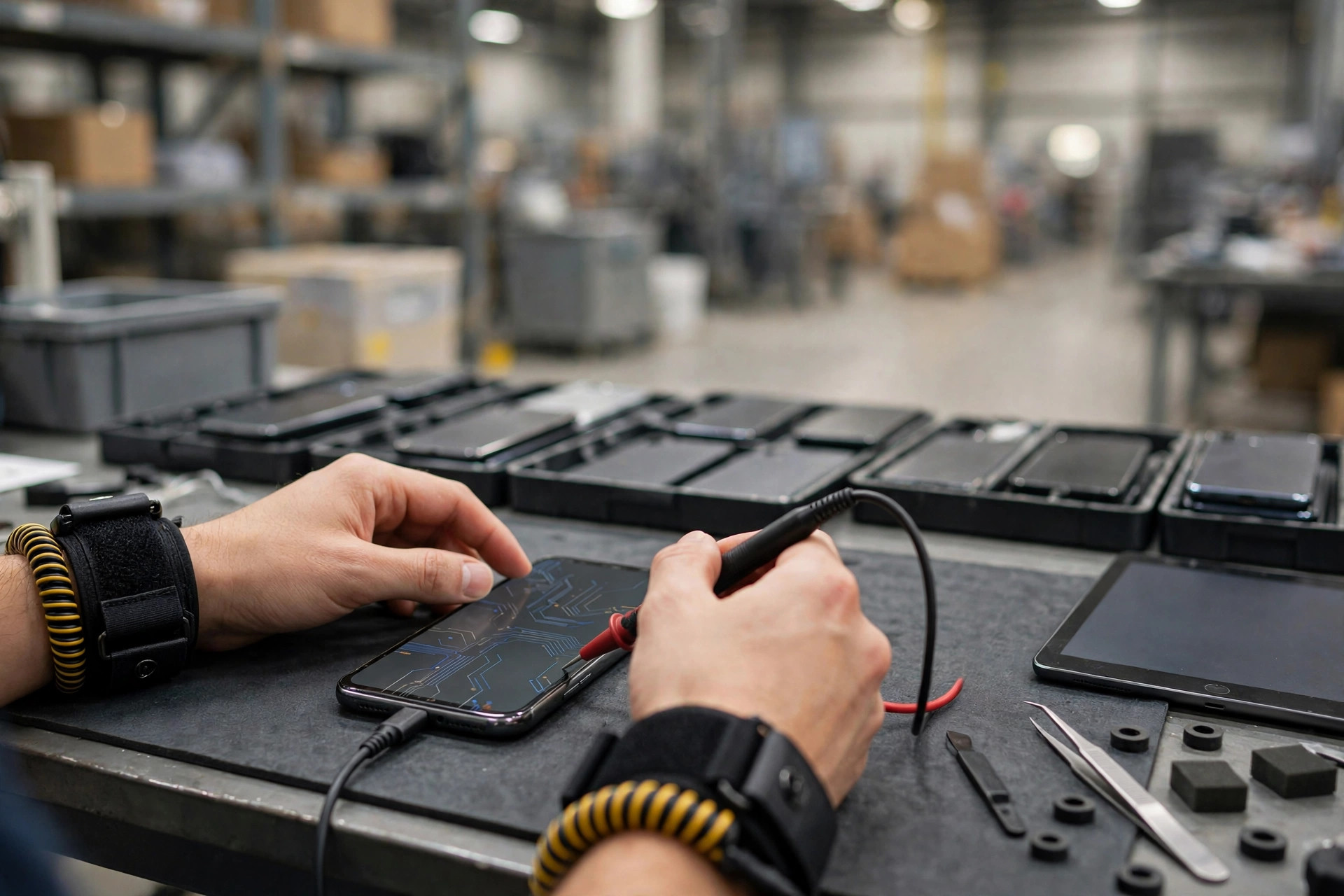
This is the one link in the chain with zero tolerance. A factory reset is not data sanitization — iPhones are relatively clean after an erase plus activation-lock removal, but Android devices can still surrender recoverable data fragments to forensic tools after a reset. Their process follows NIST 800-88, the US federal standard for media sanitization: every device gets cryptographic erase or overwrite, and each wipe generates a log with the IMEI, timestamp, and operator, retained for audit.
Why so serious? A 2023 California lawsuit over data left on a resold phone ended in a six-figure settlement. Since then, Chen's client writes data wiping into the contract as a KPI: one failed spot-check and the whole batch goes back for reprocessing. Grade C units headed for scrap go to an R2-certified recycler, with transfer manifests filed by batch — both the platform and California regulators want to see that paper trail.
Put simply: data wiping isn't a cost, it's the license to operate. Without an auditable wipe process, no serious seller hands you their inventory.
Refurbish in-house or outsource? Run the numbers
After grading, about 40% of Grade B units need surgery: new battery, new screen, new back glass. Chen's first instinct was to build a repair line. Then he did the math and walked away: ESD-safe benches, hot-air stations, soldering irons, oscilloscopes — and, worse, hundreds of thousands of dollars in batteries and screens across iPhone models sitting in parts inventory, all of it stranded the moment Apple refreshes the lineup.
He outsourced to a phone-repair shop in Industry with ten years in the business instead. Per-unit pricing — one price for a battery swap, another for a screen — the shop carries its own parts inventory and eats the cost of anything it breaks. The warehouse owns exactly two things: writing a proper repair ticket at grading time, and re-inspecting the unit when it comes back. Below about 8,000 units a month, outsourcing runs roughly 30% cheaper all-in than building the line. Chen's line: "My core skill is the warehouse, not the soldering iron."
But he kept one thing in-house no matter what: the software side. Flashing, diagnostics, data wiping, printing condition labels — all of that stays inside the warehouse's own systems, because the IMEI-level data trail can never break. Hardware can be outsourced. The data trail cannot.
Relisting: cadence matters more than pricing
Once units are ready, when to list and how much to stage follows a learnable rhythm. Their experience: returns peak after the holidays, with January inbound running about 1.5x normal — that wave has to clear by February or March or it ties up cash. Back-to-school season in August is a mini peak for used iPhones, so Grade A stock needs to be staged by July.
Listing cadence is chained to inspection capacity: a line that processes 500 units a day sets the ceiling for how fast you can list, because "listed but can't ship" tanks seller ratings. Their answer is a weekly production schedule — units inspected Monday must finish refurbishment by Wednesday and list by Friday. Work-in-progress lives in dedicated reverse-logistics locations in the WMS with three statuses: awaiting inspection, awaiting repair, awaiting listing. A unit doesn't move until its status moves.
Should you take this business? Answer three questions first
Chen gave me a decision framework. If you can't answer these, don't take the contract:
First, can you manage at the IMEI level? Forward warehouses manage SKUs — one barcode per pallet. Reverse means one serial number per unit, and your systems, processes, and people all have to change with it. Without per-unit tracking, volume turns into chaos.
Second, does residual value cover reverse costs? Do the math: average inbound value, your A/B/C mix, inspection labor, refurbishment cost, storage occupancy. Chen's line only works when Grade A holds at 25% or better of inbound. Below that, you're working for the platform.
Third, can you hold the data-compliance line? NIST 800-88 wipe procedures, an R2-certified recycler for the scrap stream — miss either one and serious clients won't sign. One data breach costs more than a year of profit.
Three yeses, then talk pricing. Any no, fix the gap first. The real barrier to entry in reverse logistics isn't square footage. It's whether you can treat every single device as its own SKU.