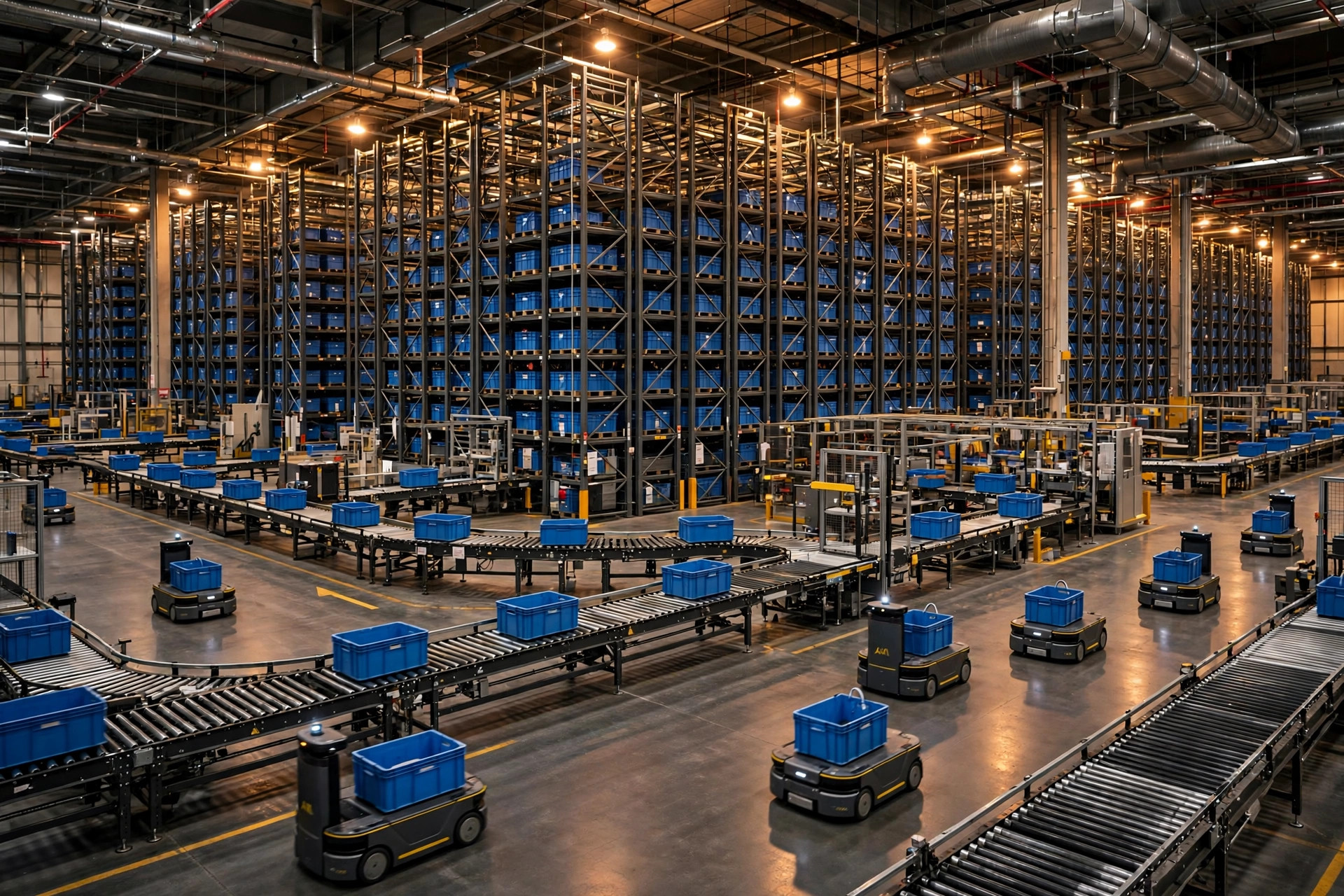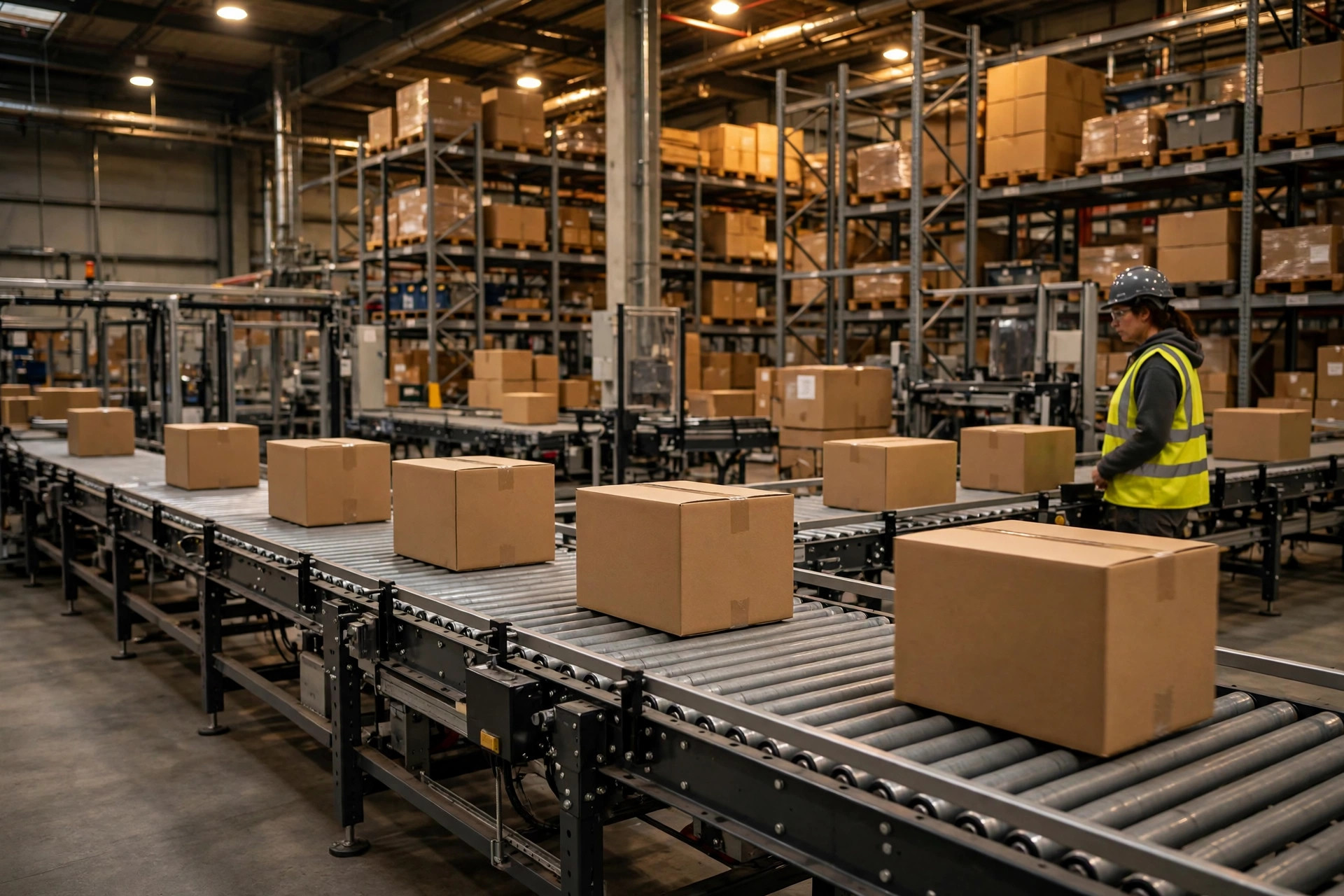
Early in 2024, I ran the numbers for a 3PL warehouse in Ontario, California. A conveyor sortation line quoted at $400,000 would, according to the vendor's proposal, replace nine pick-and-pack workers. The owner was ready to sign on the spot — nine people, roughly half a million a year in wages, payback in under twelve months?
I told him to slow down. "Labor savings" is almost never headcount times hourly wage. The real math splits into three ledgers: base headcount, overtime, and injury plus turnover. The first ledger appears on page one of every vendor proposal — and is the one most likely to be inflated. The other two rarely appear at all, yet they often decide whether the ROI actually holds up.
Ledger One: Base Headcount — The Easiest to Calculate, the Easiest to Overstate
Every proposal opens the same way: the equipment replaces N workers, N times average salary, equals annual savings. The arithmetic is fine. The assumptions are not.
The first broken assumption is "full replacement." Automation never turns nine pickers into zero people. It turns nine pickers into two line monitors and one exception handler. Somebody has to clear the jammed carton, reset the misread barcode, and respond when the AMR throws an alarm. Whenever a proposal claims "saves nine positions," mentally apply a 30% haircut before reading further.
The second broken assumption is using base wages only. In California's Inland Empire, frontline warehouse wages were hovering around $20 an hour in 2024 — but the employer's true cost runs 30 to 40 percent higher once you load in payroll taxes, health insurance, paid leave, and 401(k) matching. Run the headcount math on fully loaded cost or you will understate what you spend today and overstate what you will save tomorrow — wrong in both directions.
There is a subtler trap: is your headcount sized for the slow season or the peak? Plenty of warehouses run 30 people in February and 60 in November, with the extra 30 on temp contracts. If the automation displaces peak-season temps, you are saving premium short-term labor plus the agency markup. If it displaces off-season full-timers, you are saving permanent positions. Same machine, different people replaced, completely different ledger.
Run the Ontario example end to end: a 120,000-square-foot building shipping 8,000 orders a day, nine pickers supposedly displaced. Apply the 30% haircut first — call it six full positions actually saved. At a fully loaded cost of around $55,000 per person per year, that is roughly $330,000 a year. A long way from "pays for itself in twelve months," but still the largest of the three ledgers. The largest — not the whole story.
Ledger Two: Overtime — The Line Item That Never Makes the Proposal
This is the one I most want you to pay attention to. Any warehouse with real seasonal peaks is burning serious money on overtime, and it almost never shows up in an automation ROI.
The math is straightforward: three peak months, ten overtime hours per person per week, paid at time-and-a-half. For a 50-person building, the annual overtime bill alone can equal several full-time equivalents. The real value of automation is often not "fewer hires" but "a flatter peak" — equipment does not collect overtime, and it costs the same at 2 a.m. as at 2 p.m.
During the 2023 holiday season I watched an apparel e-commerce warehouse grind through overtime to hit ship dates — and pick error rates doubled under the fatigue. Returns and customer service costs followed. Overtime's true cost is not just the 1.5x multiplier; it is tired people making expensive mistakes. Savings here show up in finance, but operations feels them first.
Honesty cuts the other way too: automation has limited peak elasticity. A conveyor line has a rated throughput, and anything above it still needs human backup. When you run this ledger, only count overtime reduction within the equipment's rated capacity. Do not book savings for volume the machine cannot physically handle.
Ledger Three: Injury and Turnover — The Most Expensive, the Most Invisible
This ledger has two parts: workers' compensation claims, and the cost of hiring and losing people.
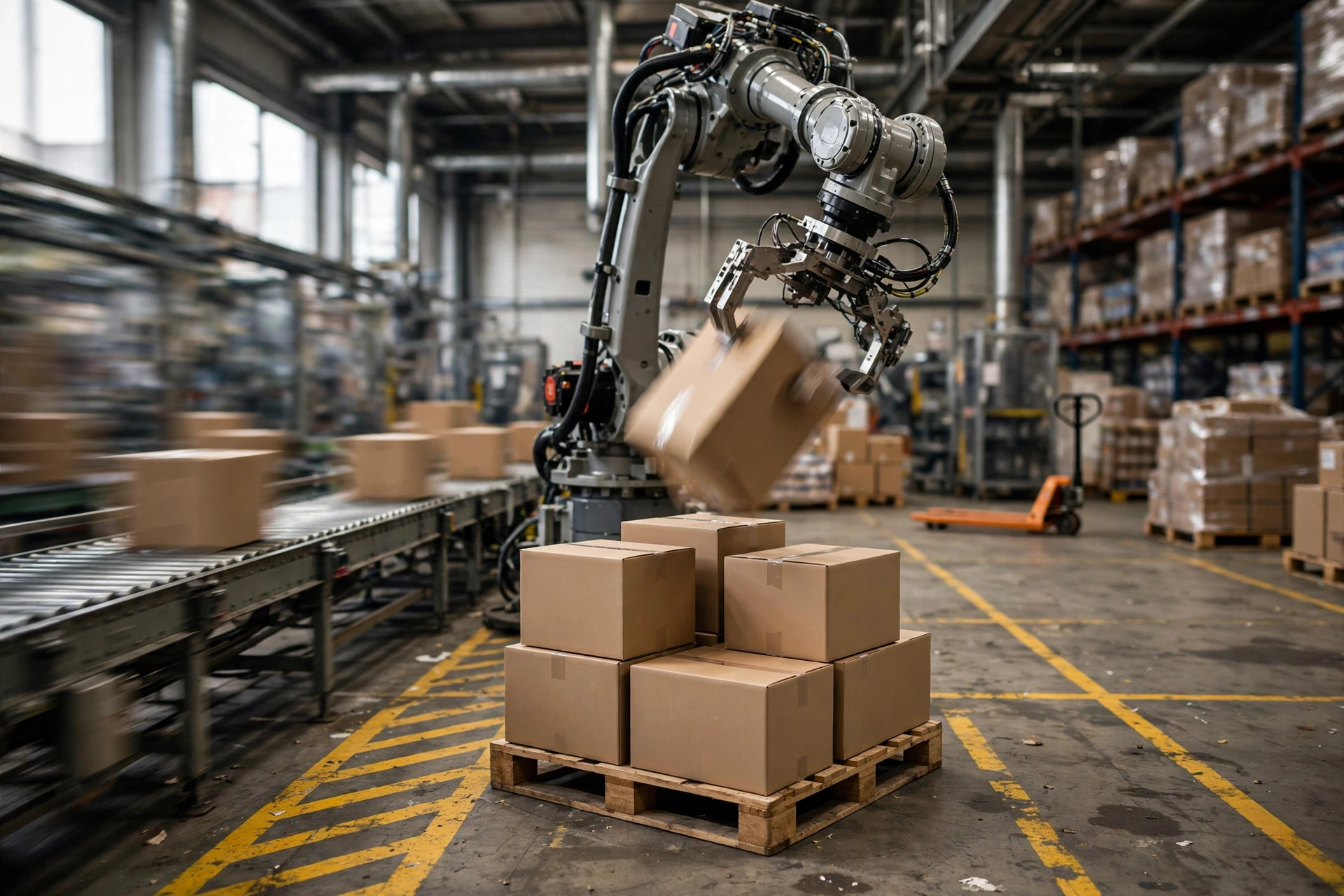
Start with injuries. The most common warehouse injuries are back strains and slip-and-falls, and a single back claim that requires surgery or extended physical therapy starts in the tens of thousands of dollars. Workers' comp premiums are experience-rated — one bad year follows you in higher rates for years afterward. Automate the heavy, repetitive lifting — palletizing, manual loading, high-bay picking — and that class of incident drops toward zero. The savings never appear on a payroll report, but they absolutely appear on the insurance bill.
Then turnover. Take a picker from job ad to fully productive: advertising, agency fees, onboarding, weeks of substandard output during training. Several thousand dollars per hire is normal, and annual frontline turnover above 30% is routine in U.S. warehousing — higher still for seasonal temps. A 100-person building can quietly burn the equivalent of a few hundred thousand dollars a year just churning people through the door. Automation takes over the heaviest, most monotonous, most quit-prone jobs; turnover falls, and recruiting and training spend falls with it.
Why does this ledger get ignored? Because no single department owns it. Wages belong to HR, overtime to operations, injuries to the insurance broker, recruiting to the staffing agency — four pockets, nobody assembling the full picture. The person making the automation decision is exactly the person who needs that picture.
The One-Line Formula for Your Boss
All three ledgers on the table — now compress them into one sentence you can carry into the budget meeting:
Annual labor savings ≈ (positions eliminated × fully loaded annual cost + peak overtime reduction + drop in injury claims and hiring costs) × 0.7
That 0.7 is my standing advice to everyone: take the vendor's number, apply a 30% haircut, and only buy if the ROI still works.
One more honest note before you run the numbers: the strongest automation business cases I have seen rarely rest on labor savings alone. The Ontario warehouse that started this article did eventually buy the line — not because the labor math alone cleared the bar, but because straighter, more predictable throughput let them take on a peak-season client they would previously have turned away. The three ledgers get you to a defensible savings number; the capacity story is what turns a good ROI into a great one. Automation never just saves headcount. It saves the leaky bucket of headcount, overtime, injuries, and turnover all at once. Measure the whole bucket before you buy the machine.