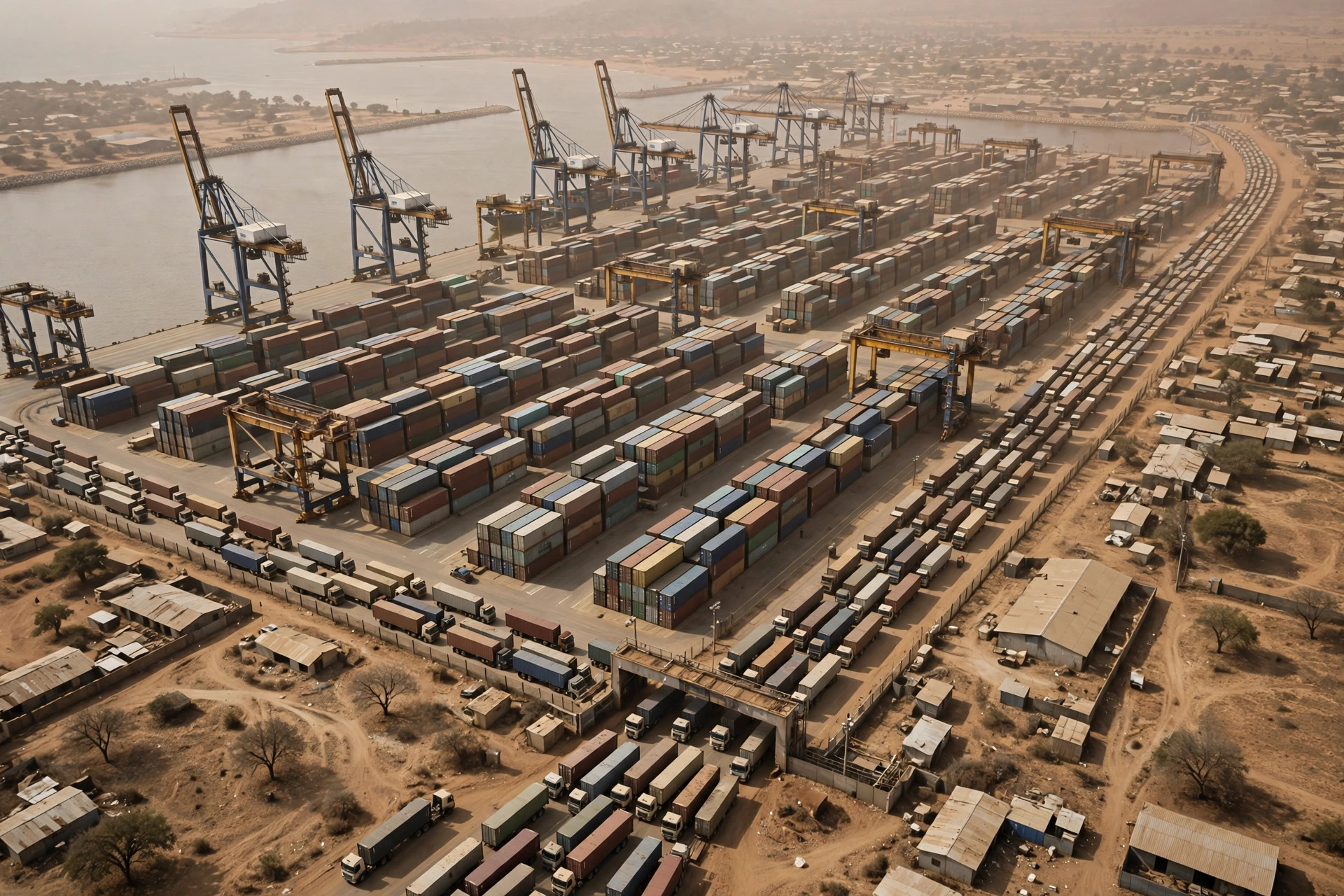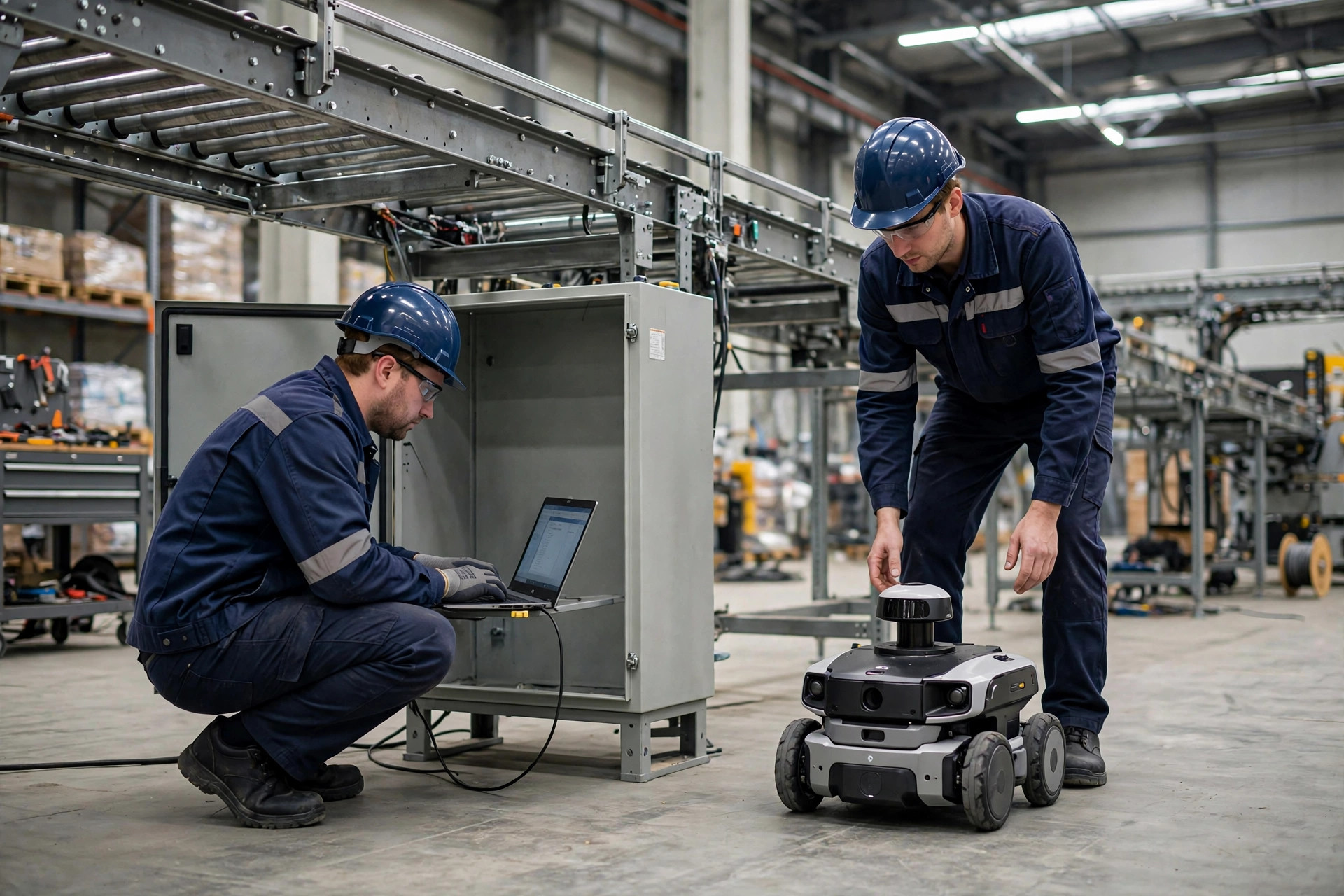
The call came on a Tuesday morning in October. Twelve crates of conveyor sections and four autonomous mobile robots had cleared customs at the Port of Long Beach. The drayage driver wanted to know where to drop them. And the manufacturer's lead commissioning engineer — the one person who actually knew how to bring the system up — had just learned his visa interview in Guangzhou was pushed back three weeks.
The warehouse manager asked me what to do. I told him the honest answer: there was nothing to do except pay. Pay the port storage. Pay the temporary warehouse we had rented for staging. Pay the local rigging crew that was now sitting idle. By the time the engineer finally landed, nineteen days late, the "savings" we had negotiated on the equipment price had evaporated.
I have watched this movie enough times to know the script. American companies buying automation equipment from China — AGVs, four-way shuttles, racking, conveyors — pour all their energy into selection and price negotiation. The equipment itself is rarely the problem. What sinks projects is everything after the ship docks: the engineer who can't get in, the local crew that was never lined up, the spare parts that don't match the list, the acceptance test nobody defined. On a half-million-dollar system, dying in the last mile is the most expensive way to fail.
Your Contract Is Your Visa Application
Here is a piece of compliance knowledge most buyers learn too late. When a manufacturer's engineer flies in to install equipment bought from a foreign company, they typically enter on a B-1 business visitor visa under the "commercial or industrial worker" provision. The State Department's Foreign Affairs Manual is explicit: three conditions must hold at the same time. The sales contract must specifically obligate the seller to provide installation services. The traveler must possess specialized knowledge essential to fulfilling that obligation — not just any technician, the person who actually knows the system. And they may not receive any pay from a U.S. source while here; the salary has to come from home.
Each condition is a trap. The first one kills the most projects. Plenty of contracts say "technical support" and nothing more, or leave installation to a handshake understanding. A consular officer doesn't do handshakes. Visa denied, reason: can't demonstrate the trip fulfills a contractual obligation. The second condition means the factory can't just send whoever is available — it has to be the commissioning engineer, with a record to prove it. The third means no cash "allowances" handed over on site, however well-intentioned. That's a red flag.
There is one more line you cannot cross: B-1 status does not cover building or construction work. Drilling anchors for racking, fixing uprights to the floor, running electrical conduit — the visiting engineer may supervise and instruct, but may not do the physical work. So the contract has to split the job clearly: the manufacturer's people handle commissioning and training; a licensed local contractor handles the construction-type work.
My practical advice: on the day you sign the purchase contract, get the factory to name the people coming, with passport bio-page copies and an English dispatch letter stating which contract clause this trip fulfills. The engineer carries that letter to the interview. Don't start this when the ship sails — consular interview wait times vary by post and season, so check the official scheduling site and build the buffer into your project plan.
Hire the Local Crew Before the Ship Docks
Three teams need to be lined up before the equipment arrives: the customs broker, the drayage company, and the local installation contractor. Everyone remembers the first two. The third is the one that gets forgotten.
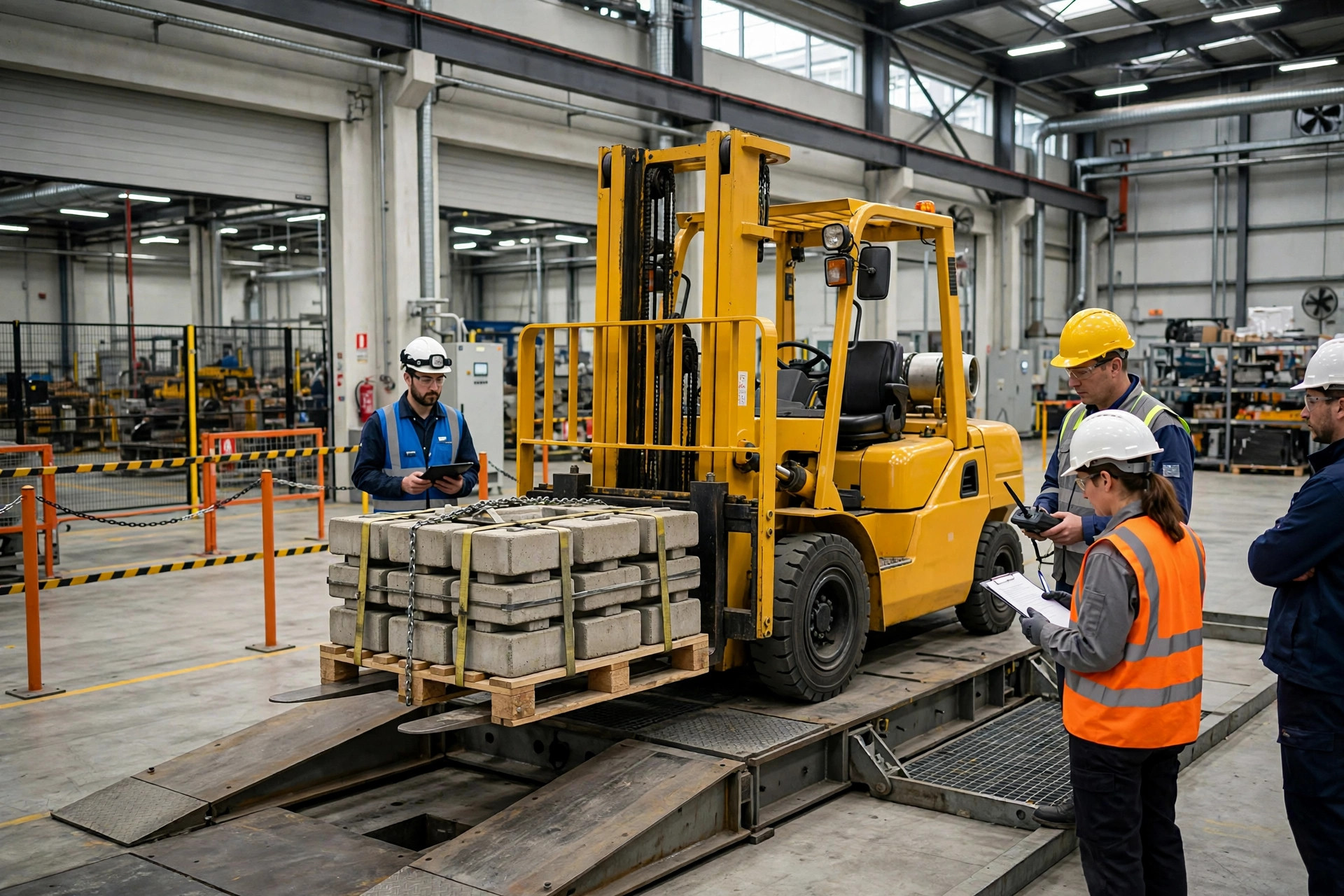
Getting crates out of the container is only step one. A four-way shuttle or a stacker crane section weighs several tons — you need forklifts, sometimes a crane rental. Racking installation means drilling and anchoring, which touches building safety, and plenty of U.S. cities require a permit for warehouse modifications. The visiting engineer can't do any of this work (see above), so a licensed local contractor has to.
There is a real trade-off here: turnkey through the manufacturer, or split the work yourself. Turnkey is simpler, but the management markup buried in the quote is routinely twenty to thirty percent. Splitting it saves money but puts all the coordination risk on you — and when something goes wrong, the factory and the local crew will point at each other. My call: local contractor for racking and construction-type work, factory engineers for commissioning the equipment itself. Write the split into the contract so there is nobody to point at.
Start talking to local industrial equipment installers when the ship sails, not when it docks. Good crews book out. And when you get quotes, ask what's included: crane and forklift rental, anchor drilling, debris removal. Those crates produce a mountain of lumber and foam, and hauling it away costs real money. Skip these questions and they show up as line items at settlement — death by a thousand invoices.
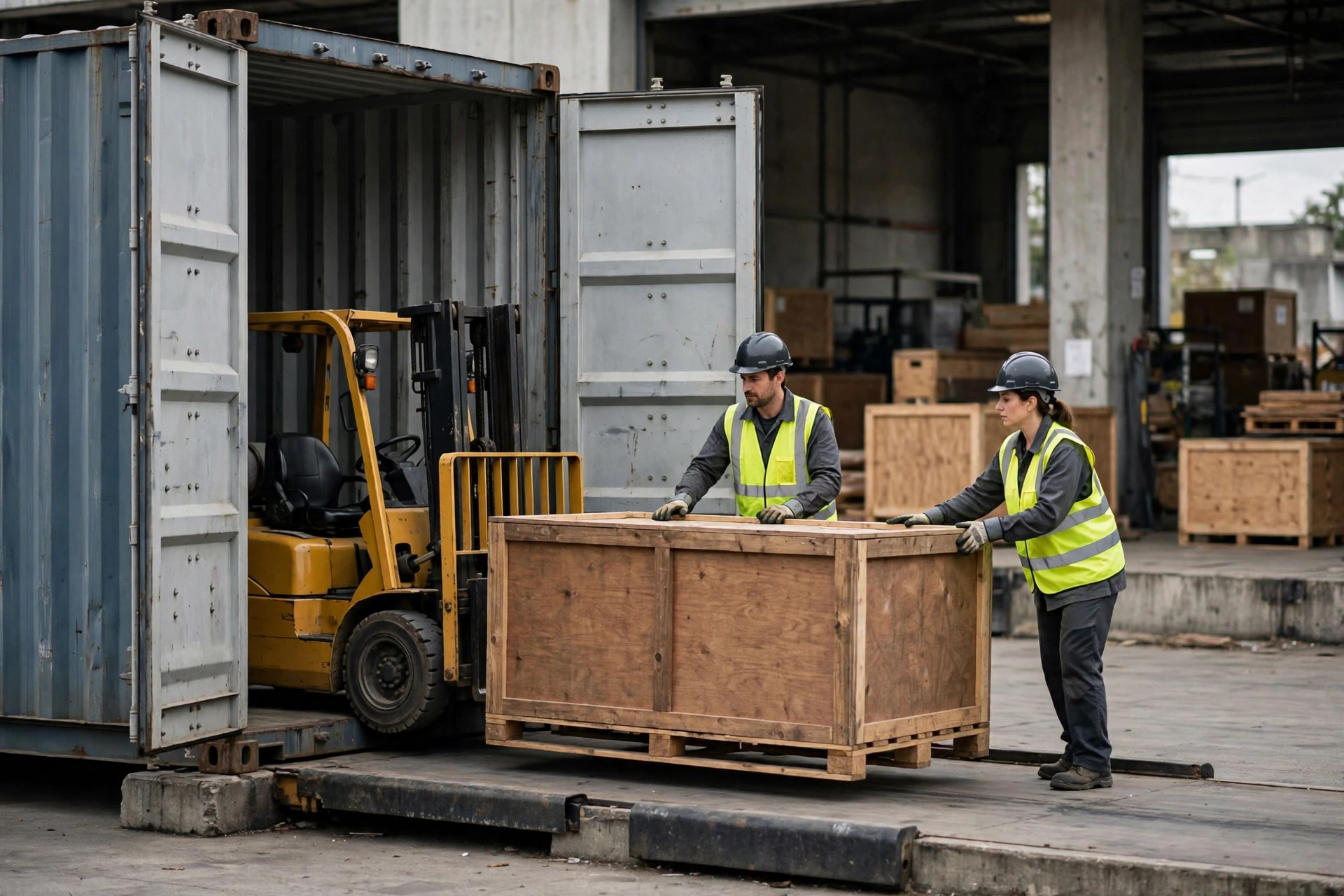
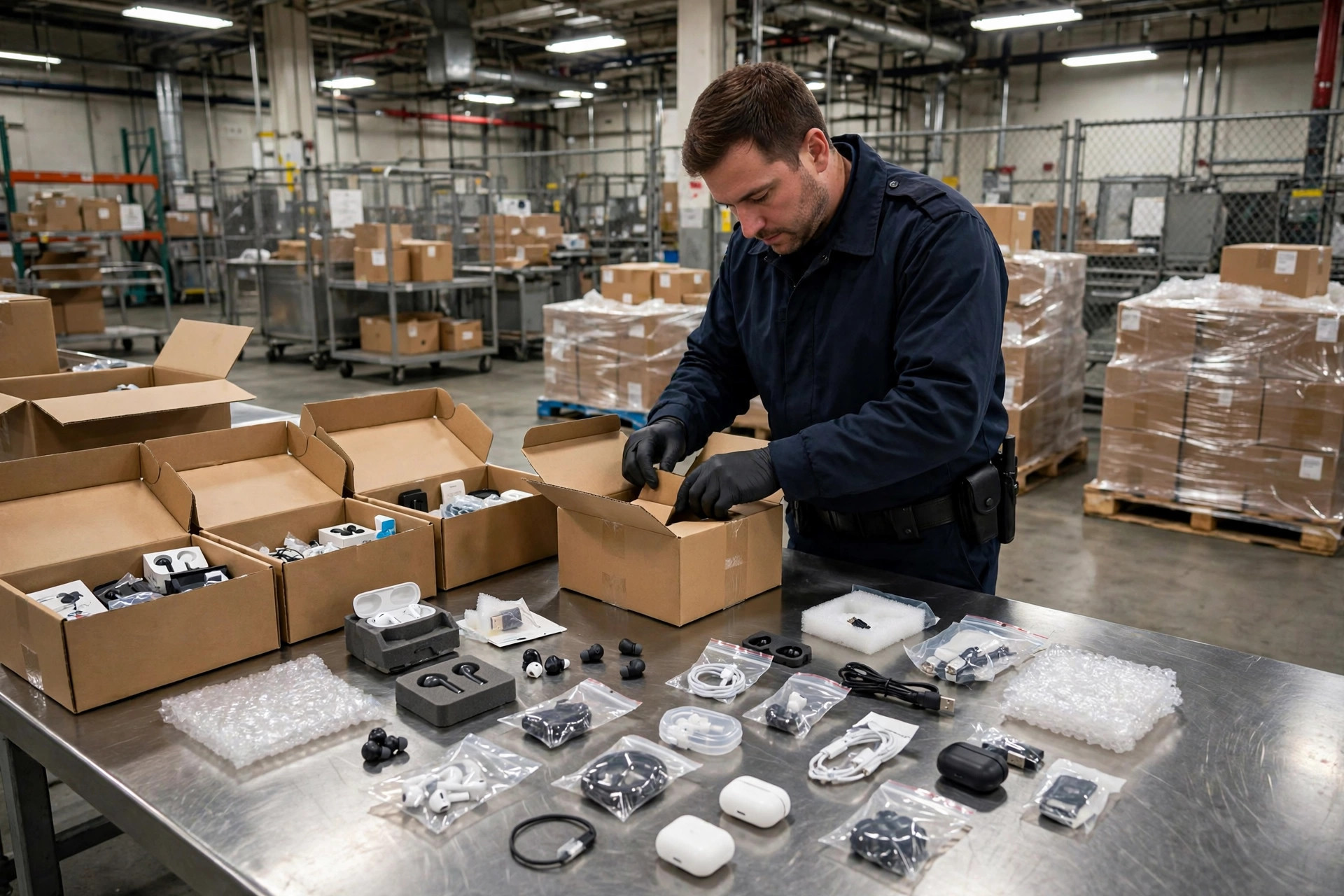
Be there on unboxing day — you, or someone you trust, with a camera. Photograph every crate as it opens, match crate numbers against the packing list. This isn't about distrusting the factory. It's about evidence. When a spare part doesn't match six months later, those photos are the only proof you have.
Sign the Acceptance Line by Line
Commissioning ends with acceptance, and acceptance is where most buyers get waved through the fastest — and where it matters most.
There should be two gates: a factory acceptance test before shipment, and a site acceptance test after installation. Many mid-size factories don't run a formal FAT; the machine "ran fine in our shop" counts as tested. Put the acceptance criteria in the contract instead: continuous run hours without fault for the shuttles, positioning accuracy of the AGVs under full load, throughput of the conveyor at rated speed. Make the numbers specific, and spell out what happens to the final payment if they're missed. I hold back ten to fifteen percent until acceptance is signed. That money is your only leverage — once it's paid, it's gone.
Spare parts are the other disaster zone. The contract usually includes a spare parts list, but the list is often in Chinese, the part numbers don't match, or items are simply missing. Inventory every item on unboxing day: boards, sensors, wear parts, special tools, one by one. Anything short, email the factory the same day and get a committed ship date for the replacement. Don't accept "we'll bring it with the next shipment" — when is the next shipment? When a sensor dies and the line is down, air-freighting one small part from China can cost ten times the part itself, and you'll wait two weeks. You can't afford either.
Then there's the commissioning window versus your operation. Plan on one to three weeks of commissioning, and the warehouse doesn't stop for it. Commission in phases: nights or a segregated zone first, cut over to live operation only when it's stable. The last safe window is about two months before peak season. I've seen teams still commissioning in the peak month — it always ends in overtime, and it always leaves safety issues behind.
One compliance note for the file: mobile robots in the U.S. fall under the ANSI/RIA R15.08 safety standard — ask the manufacturer for conformity documentation at acceptance. And if the equipment might ever be re-exported to Europe, the EU's new Machinery Regulation (EU) 2023/1230 applies in full from January 20, 2027; get the CE technical file from the factory now, not when you suddenly need it.
Here's something you can do tomorrow: pull out the purchase contract you're negotiating, find the installation clause, and count the lines. If it's less than half a page, send it back. You need five attachments: the personnel list, a dispatch letter template, the spare parts list, the acceptance criteria, and the payment holdback terms. The equipment spent two months crossing the ocean. Don't let it die in the last two weeks.
That Long Beach customer? The engineer arrived nineteen days late. Port storage, temp warehouse rent, the idle local crew — it added up to tens of thousands of dollars. He told me to chalk it up to tuition. I told him the tuition was optional. It was half a page of contract language.